About this book
Julien Sorel climbs from sawmill to salon, torn between the red of the army and the black of the church. Stendhal's 1830 novel, free to read online.
THE JAPANESE VASE
His heart does not at first understand all the excess of his misfortune: he is more disturbed than grieved. But as reason returns, he feels the depth of his calamity. All the pleasures of life are annihilated for him; he can feel only the keen stings of the despair that tears him. But what is the use of speaking of physical pain? What pain felt by the body alone is comparable to this one?
JEAN PAUL.
The dinner bell rang; Julien had only time to dress; he found Mathilde in the drawing room, urging her brother and M. de Croisenois not to go and spend the evening at Suresnes, at the house of the Maréchale de Fervagues.
It would have been difficult to be more seductive and more amiable to them. After dinner appeared MM. de Luz, de Caylus, and several of their friends. One would have said that Mademoiselle de La Mole had resumed, along with the cult of fraternal friendship, that of the most exact propriety. Although the weather was charming that evening, she insisted on not going into the garden; she wished that no one should move far from the bergère where Madame de La Mole was seated. The blue sofa was the centre of the group, as in winter.
Mathilde had a humour against the garden, or at least it seemed to her perfectly tedious: it was bound to the memory of Julien.
Misfortune diminishes the mind. Our hero had the awkwardness to stop beside that little straw chair which had once witnessed such brilliant triumphs. Today no one addressed a word to him; his presence was as though unnoticed, and worse still. Those of Mademoiselle de La Mole's friends who were placed near him at the end of the sofa affected in some sort to turn their backs on him, at least such was his idea.
It is a court disgrace, he thought. He wished to study for a moment the people who claimed to overwhelm him with their disdain.
M. de Luz's uncle held a great office near the King, whence it followed that this fine officer placed at the beginning of his conversation, with every interlocutor who came up, this piquant particularity: his uncle had set out at seven o'clock for Saint-Cloud, and in the evening he counted on sleeping there. This detail was introduced with every appearance of good nature, but it always came.
Observing M. de Croisenois with the severe eye of misfortune, Julien remarked the extreme influence that this amiable and good young man supposed to occult causes. It was to such a point that he grew sad and took ill humour if he saw an event of some importance attributed to a simple and altogether natural cause. There is a little madness there, said Julien to himself. This character has a striking relation to that of the Emperor Alexander, as Prince Korasoff described him to me. During the first year of his stay in Paris, poor Julien, fresh from the seminary, dazzled by the graces so new to him of all these amiable young men, could only admire them. Their true character was only beginning to take shape in his eyes.
I am playing an undignified role here, he thought suddenly. It was a matter of leaving his little straw chair in a way that should not be too awkward. He wished to invent, he asked something new of an imagination wholly occupied elsewhere. He had to have recourse to memory: his own was, it must be admitted, but poorly furnished with resources of this kind; the poor boy still had very little experience, so he was of a perfect awkwardness, remarked by all, when he rose to leave the drawing room. Misfortune was too evident in his whole manner of being. For three quarters of an hour he had been playing the role of an important subordinate for whom no one takes the trouble to conceal what is thought of him.
The critical observations he had just made upon his rivals prevented him, however, from taking his misfortune too tragically; he had, to sustain his pride, the memory of what had passed the evening before last. Whatever their advantages over me, he thought as he entered the garden alone, Mathilde has been for none of them what twice in my life she has deigned to be for me.
His wisdom went no further. He did not at all understand the character of the singular person whom chance had just made absolute mistress of all his happiness.
He confined himself the following day to killing himself and his horse with fatigue.
He no longer tried to draw near, in the evening, to the blue sofa, to which Mathilde was faithful. He remarked that the Comte Norbert did not even deign to look at him on meeting him in the house. He must be doing strange violence to himself, he thought, he who is naturally so polite.
For Julien, sleep would have been happiness. In spite of physical fatigue, too seductive memories were beginning to invade all his imagination. He had not the genius to see that by his long rides on horseback in the woods around Paris, acting only upon himself and in no way upon the heart or the mind of Mathilde, he was leaving to chance the disposal of his fate.
It seemed to him that one thing would bring infinite relief to his sorrow: it would be to speak to Mathilde. But what, however, would he dare to say to her?
This was what he was dreaming deeply about one morning at seven o'clock, when suddenly he saw her enter the library.
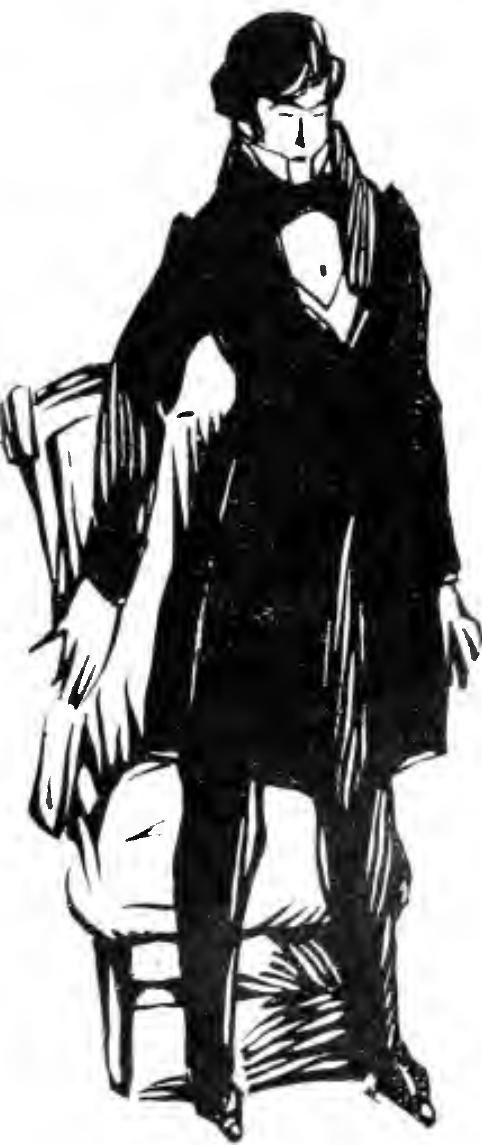
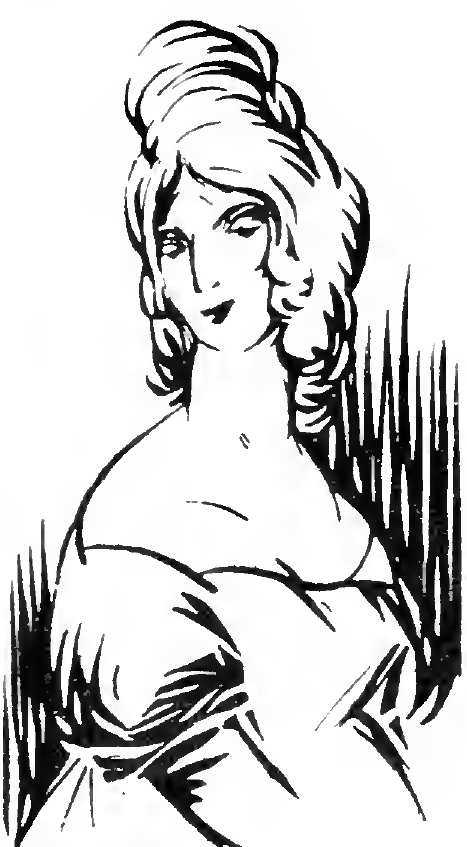
"I know, Monsieur, that you desire to speak to me."
"Great God! who told you so?"
"I know it; what does it matter to you? If you are wanting in honour, you can ruin me, or at least attempt it; but this danger, which I do not believe real, will certainly not prevent me from being sincere. I no longer love you, Monsieur; my foolish imagination deceived me..."
At this terrible blow, beside himself with love and misfortune, Julien tried to justify himself. Nothing could be more absurd. Does one justify oneself for being displeasing? But reason had no longer any empire over his actions. A blind instinct urged him to delay the decision of his fate. It seemed to him that as long as he spoke, all was not yet over. Mathilde did not listen to his words; their sound irritated her; she could not conceive that he had the audacity to interrupt her.
The remorse of virtue and that of pride made her equally unhappy that morning. She was in some sort annihilated by the dreadful idea of having given rights over herself to a little abbé, the son of a peasant. It is almost, she said to herself in the moments when she exaggerated her misfortune, as if I had to reproach myself for a weakness for one of the lackeys.
In bold and proud characters there is but a step from anger against oneself to fury against others; the transports of rage are in this case a keen pleasure.
In an instant, Mademoiselle de La Mole reached the point of overwhelming Julien with the most excessive marks of contempt. She had infinite wit, and that wit triumphed in the art of torturing self-esteem and inflicting cruel wounds upon it.
For the first time in his life, Julien found himself subjected to the action of a superior mind animated against him by the most violent hatred. Far from thinking in the least of defending himself in that moment, he came to despise himself. On hearing himself overwhelmed with marks of contempt so cruel, and calculated with so much wit to destroy every good opinion he could have of himself, it seemed to him that Mathilde was right, and that she was not saying enough.
As for her, she found a delicious pleasure of pride in thus punishing herself and him for the adoration she had felt a few days earlier.
She had no need to invent and think for the first time the cruel things she addressed to him with such complacency. She was merely repeating what for eight days the advocate of the party opposed to love had been saying in her heart.
Each word hundredfolded Julien's dreadful misery. He wanted to flee; Mademoiselle de La Mole held him back by the arm with authority.
"Deign to notice," he said to her, "that you are speaking very loudly; you will be heard from the next room."
"What does it matter!" Mademoiselle de La Mole resumed proudly. "Who will dare tell me that I am heard? I wish to cure your petty self-esteem forever of the ideas it may have formed about me."
When Julien was able to leave the library, he was so astonished that he felt his misfortune less. Well then! she no longer loves me, he repeated to himself, speaking aloud as if to teach himself his position. It seems she loved me for eight or ten days, and I shall love her all my life.
Is it really possible, she was nothing! nothing to my heart, so few days ago!
The joys of pride flooded Mathilde's heart; so she had been able to break with him forever! To triumph so completely over so powerful an inclination would make her perfectly happy. Thus this little gentleman would understand, and once and for all, that he neither has nor ever will have any dominion over me. She was so happy that in reality she no longer felt any love at that moment.
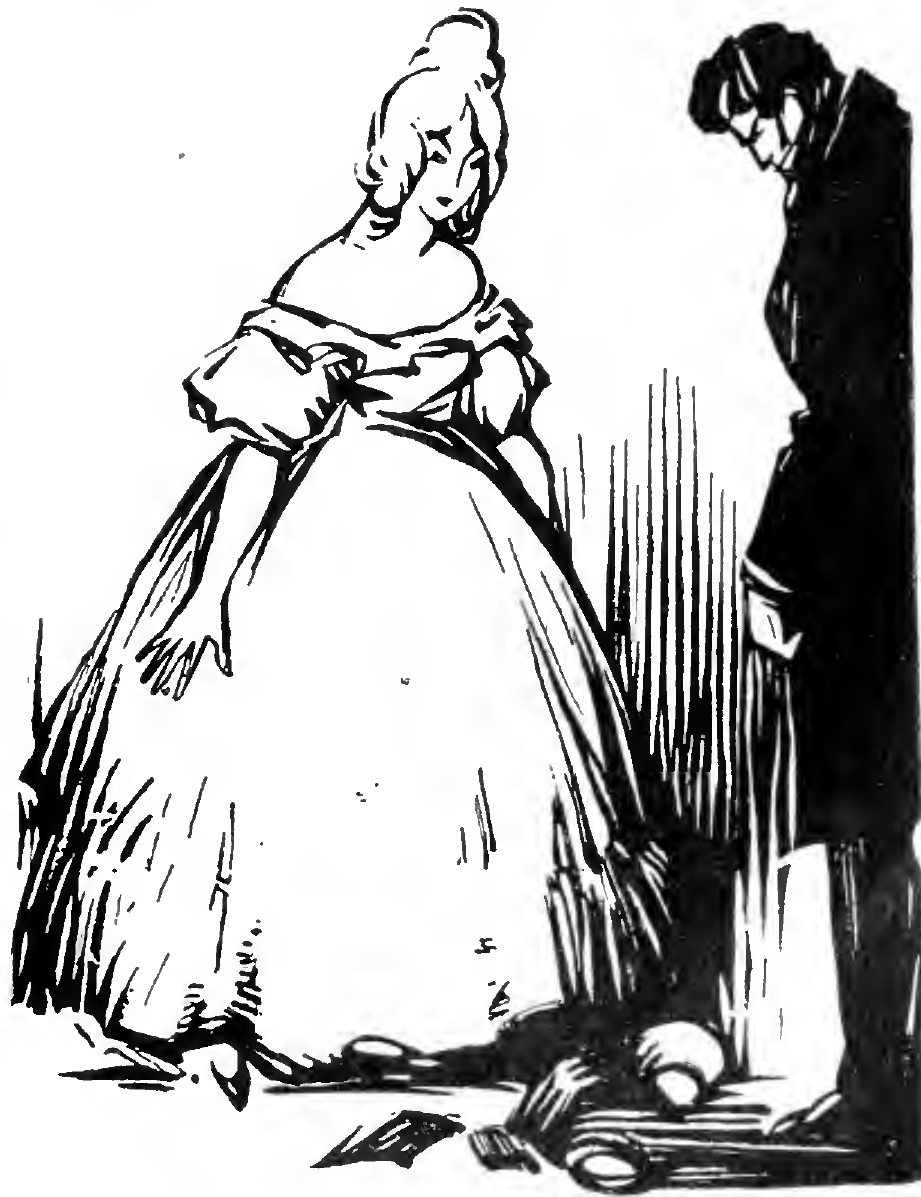
After a scene so atrocious, so humiliating, in a being less passionate than Julien, love would have become impossible. Without deviating for a single instant from what she owed to herself, Mademoiselle de La Mole had addressed to him those disagreeable things, so well calculated that they can appear a truth even when one remembers them in cold blood.
The conclusion that Julien drew in the first moment of so astonishing a scene was that Mathilde had an infinite pride. He firmly believed that all was finished forever between them, and yet the next day, at luncheon, he was awkward and timid before her. It was a defect that no one had been able to reproach him with until then. In small things as in great, he knew clearly what he ought and wished to do, and he did it.
That day, after luncheon, as Madame de La Mole asked him for a seditious pamphlet, and yet rather rare, which that morning her curé had brought her secretly, Julien, taking it from a console table, knocked over an old blue porcelain vase, as ugly as could be.
Madame de La Mole rose with a cry of distress, and came to consider closely the ruins of her cherished vase. It was old Japanese, she said, it came to me from my great-aunt the abbess of Chelles; it was a present from the Dutch to the Duke of Orléans, regent, who had given it to his daughter...
Mathilde had followed her mother's movement, delighted to see broken this blue vase which seemed to her horribly ugly. Julien was silent and not too disturbed; he saw Mademoiselle de La Mole close beside him.
— That vase, he said to her, is forever destroyed, thus it is with a sentiment that was formerly the master of my heart; I beg you to accept my apologies for all the follies it has made me commit; and he went out.
— One would say in truth, said Madame de La Mole as he went away, that this M. Sorel is proud and pleased with what he has just done.
That word fell directly upon Mathilde's heart. It is true, she said to herself, my mother has guessed rightly, such is the sentiment that animates him. Only then did the joy of the scene she had made for him the evening before cease. Well, all is finished, she said to herself with apparent calm; there remains to me a great example; this error is frightful, humiliating! it will earn me wisdom for all the rest of my life.
Why have I not spoken the truth? thought Julien, why does the love I had for this madwoman still torment me?
.
This love, far from being extinguished as he had hoped, made rapid progress. She is mad, it is true, he said to himself, is she any the less adorable? is it possible to be prettier? All that the most elegant civilization can present of keen pleasures was it not gathered as if in rivalry in Mademoiselle de La Mole? These memories of past happiness took possession of Julien, and soon destroyed all the work of reason.
Reason struggles in vain against memories of this kind; its severe attempts only increase the charm.
Twenty-four hours after the breaking of the old Japanese vase, Julien was decidedly one of the most unhappy of men.