About this book
Julien Sorel climbs from sawmill to salon, torn between the red of the army and the black of the church. Stendhal's 1830 novel, free to read online.
AN ATTACK OF THE GOUT
And I had advancement, not for my merit, but because my master had read gout.
BERTOLOTTI.
THE reader is perhaps surprised at this free and almost friendly tone; we have forgotten to say that for six weeks the Marquis had been kept at home by the gout.
Mademoiselle de La Mole and her mother were at Hyères, near the Marquise's mother. Count Norbert saw his father only for brief moments; they were on very good terms with each other, but had nothing to say to one another. M. de La Mole, reduced to Julien, was astonished to find ideas in him. He had the newspapers read to him. Soon the young secretary was capable of choosing the interesting passages. There was a new journal that the Marquis abhorred; he had sworn never to read it, and every day he spoke of it. Julien laughed. The Marquis, irritated against the present time, had Livy read to him; the translation improvised from the Latin text amused him.
One day the Marquis said, in that tone of excessive politeness which often impatiented Julien:
"Allow me, my dear Sorel, to make you a present of a blue coat: when it suits you to put it on and come to my house, you will be, in my eyes, the younger brother of the Comte de Chaulnes, that is to say the son of my friend the old Duke."
Julien did not quite understand what it was about; that same evening he attempted a visit in a blue coat. The Marquis treated him as an equal. Julien had a heart worthy of feeling true politeness, but he had no idea of its nuances. He would have sworn, before this whim of the Marquis, that it was impossible to be received by him with greater regard. What an admirable talent! said Julien to himself; when he rose to leave, the Marquis apologized for not being able to accompany him because of his gout.
This singular idea occupied Julien: Is he making fun of me? he thought. He went to ask advice of the Abbé Pirard, who, less polite than the Marquis, answered him only by whistling and talking of something else. The next morning Julien presented himself to the Marquis, in a black coat, with his portfolio and his letters to be signed. He was received in the old manner. In the evening, in a blue coat, it was a wholly different tone and absolutely as polite as the day before.
"Since you are not too bored by the visits you have the kindness to pay to a poor sick old man," the Marquis said to him, "you should speak to him of all the little incidents of your life, but frankly and without thinking of anything but telling them clearly and in an amusing way. For one must amuse oneself," continued the Marquis, "that is the only real thing in life. A man cannot save my life in war every day, or make me a present of a million every day; but if I had Rivarol here, beside my chaise longue, every day he would take away an hour of my suffering and boredom. I knew him well at Hamburg, during the emigration."
And the Marquis told Julien anecdotes of Rivarol with the
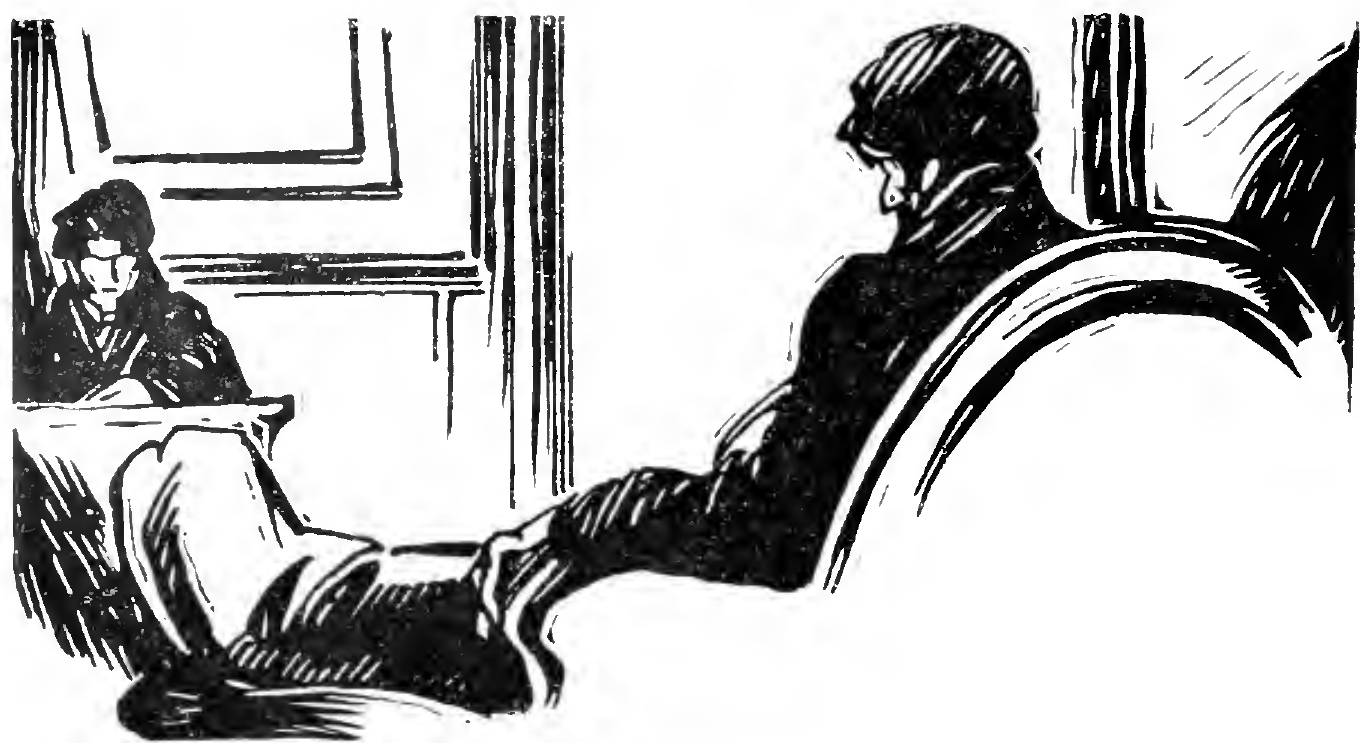
Hamburgers, who joined four together to understand a witticism.
M. de La Mole, reduced to the society of this little abbé, wished to sharpen him. He stung Julien's pride through his sense of honour. Since he was asked for the truth, Julien resolved to tell all, but keeping silent on two things: his fanatical admiration for a name that put the Marquis in a bad humour, and the perfect incredulity that did not sit too well with a future curé. His little affair with the Chevalier de Beauvoisis arrived very opportunely. The Marquis laughed till he wept at the scene in the café in the rue Saint-Honoré, with the coachman who overwhelmed him with filthy insults. This was the period of perfect frankness in the relations between the master and the protégé.
M. de La Mole took an interest in this singular character. At first he fondled Julien's ridiculous traits, in order to enjoy them; soon he found more interest in gently correcting the false ways of seeing of this young man. The other provincials who arrive in Paris admire everything, thought the Marquis; this one hates everything. They have too much affectation, he has not enough, and fools take him for a fool.
The attack of gout was prolonged by the great cold of the winter and lasted several months.
One becomes attached to a fine spaniel, said the Marquis to himself; why am I so ashamed of becoming attached to this little abbé? He is original. I treat him like a son, well then! where is the harm? This whim, if it lasts, will cost me a diamond of five hundred louis in my will.
Once the Marquis had understood the firm character of his protégé, every day he entrusted him with some new affair.
Julien remarked with fright that it happened to this great nobleman to give him contradictory decisions on the same subject.
This could gravely compromise him. Julien no longer worked with him without bringing a register on which he wrote the decisions, and the Marquis initialled them. Julien had taken a clerk who transcribed the decisions relating to each affair in a separate register. This register also received the copy of all the letters.
This idea at first seemed the height of absurdity and boredom. But in less than two months the Marquis felt its advantages. Julien proposed that he take on a clerk fresh from a banker's office, who would keep a double-entry account of all the receipts and all the expenses of the estates that Julien was charged with administering.
These measures so enlightened the Marquis as to his own affairs that he was able to give himself the pleasure of undertaking two or three new speculations without the help of his dummy partner who was robbing him.
"Take three thousand francs for yourself," he said one day to his young minister.
"Monsieur, my conduct may be slandered."
"What do you want, then?" resumed the Marquis with ill humour.
"That you should be so good as to draw up an order and write it in your own hand in the register; this order will give me a sum of three thousand francs. Besides, it was M. l'abbé Pirard who had the idea of all this bookkeeping. The Marquis, with the bored air of the Marquis de Moncade listening to the accounts of M. Poisson, his steward, wrote the decision.
In the evening, when Julien appeared in a blue coat, there was never any question of business. The Marquis's kindnesses were so flattering to the always wounded self-esteem of our hero that soon, in spite of himself, he felt a sort of attachment for this amiable old man. It was not that Julien was sensitive, as the word is understood in Paris; but he was not a monster, and no one, since the death of the old surgeon-major, had spoken to him with so much kindness. He noticed with astonishment that the Marquis had for his self-esteem a considerateness of politeness that he had never found in the old surgeon. He understood at last that the surgeon was prouder of his cross than the Marquis of his blue ribbon. The Marquis's father was a great nobleman.
:
One day, at the end of a morning audience, in black coat and on business, Julien amused the Marquis, who kept him for two hours, and insisted on giving him some banknotes that his agent had just brought him from the Stock Exchange.
"I hope, Monsieur le Marquis, that I am not departing from the profound respect I owe you in imploring you to allow me a word."
"Speak, my friend."
"May Monsieur le Marquis deign to suffer me to refuse this gift. It is not addressed to the man in the black coat, and it would quite spoil the manners that people are kind enough to tolerate in the man in the blue coat." He bowed with great respect, and left without looking back.
This trait amused the Marquis. He recounted it that evening to the Abbé Pirard.
"I must at last confess something to you, my dear Abbé. I know Julien's birth, and I authorize you not to keep this confidence secret from me."
His behavior this morning is noble, thought the Marquis, and I am ennobling him.
Some time later, the Marquis was at last able to go out.
"Go and spend two months at Lourdes," he said to Julien. "The special couriers and others will bring you the letters I receive with my notes. You will write the replies and send them back to me, putting each letter inside its response. I have calculated that the delay will be only five days."
Riding the post on the road to Calais, Julien was astonished at the futility of the supposed business for which he was being sent.
We shall not say with what feeling of hatred and almost of horror he touched English soil. His mad passion for Bonaparte is known. He saw in every officer a Sir Hudson Lowe, in
every great lord a Lord Bathurst, ordering the infamies of Saint Helena, receiving his reward through ten years of ministry.
In London, he at last came to know lofty fatuity. He had become acquainted with some young Russian lords who initiated him.
"You are predestined, my dear Sorel," they told him. "You naturally have that cold air, a thousand leagues from the present sensation, which we strive so hard to give ourselves."
"You have not understood your century," Prince Korasoff told him. "Always do the opposite of what is expected of you. That, upon my honor, is the only religion of the age. Be neither mad nor affected, for then people would expect mad and affected behavior from you, and the precept would no longer be fulfilled."
Julien covered himself with glory one day in the drawing room of the Duc de Fitz-Folke, who had invited him to dinner, along with Prince Korasoff. They waited for an hour. The way Julien conducted himself amid the twenty people who were waiting is still cited among the young embassy secretaries in London. His countenance was priceless.
Despite the dandies who were his friends, he wished to see the celebrated Philip Vane, the only philosopher England has had since Locke. He found him finishing his seventh year of prison. Aristocracy does not jest in this country, thought Julien; besides, Vane is disgraced, vilified, etc.
Julien found him cheerful; the fury of the aristocracy bored him less. There, said Julien to himself as he left the prison, is the only cheerful man I have seen in England.
The most useful idea for tyrants is that of God, Vane had told him...
We suppress the rest of the system as cynical.
On his return: "What amusing idea do you bring me from England?" M. de La Mole said to him... He remained silent. "What idea do you bring, amusing or not?" the Marquis resumed vivaciously.
"First," said Julien, "the wisest Englishman is mad one hour a day; he is visited by the demon of suicide, who is the god of the country;
"Second, wit and genius lose twenty-five percent of their value upon landing in England;
"Third, nothing in the world is beautiful, admirable, touching like English landscapes."
"My turn," said the Marquis:
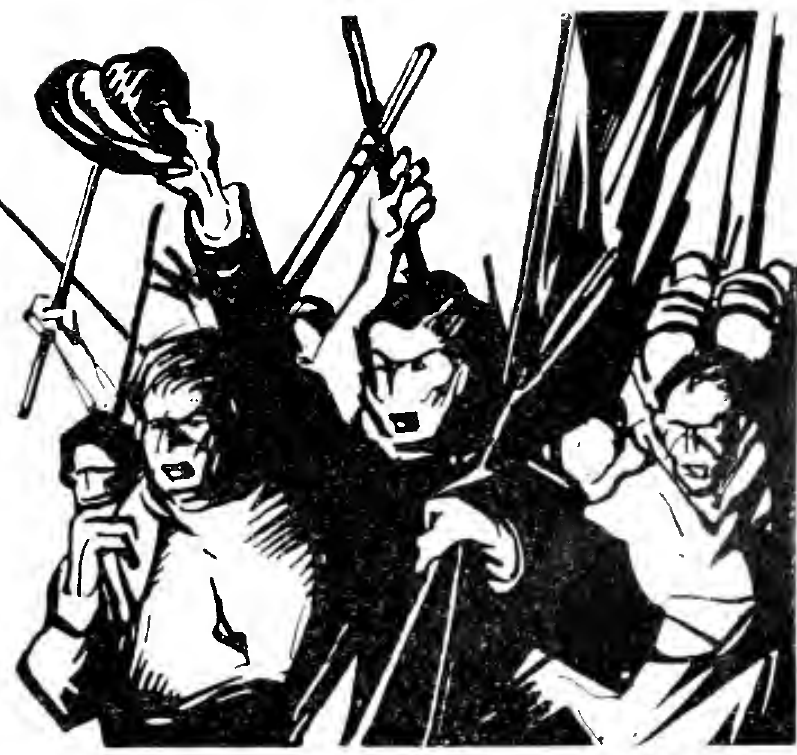
"First, why did you go and say, at the ball at the Russian ambassador's, that there are in France three hundred thousand young men of twenty-five who passionately desire war? Do you believe that is obliging to kings?"
"One does not know how to behave when speaking to our great diplomats," said Julien. "They have a mania for opening serious discussions. If one sticks to the commonplaces of the newspapers, one passes for a fool. If one permits oneself something true and new, they are astonished, do not know what to answer, and the next day, at seven o'clock, they have the first secretary of the embassy tell you that you were improper."
"Not bad," said the Marquis, laughing. "Besides, I wager, Monsieur the profound man, that you did not guess what you went to England to do."
"Forgive me," replied Julien; "I went there to dine once a week with the king's ambassador, who is the most polite of men."
"You went to fetch the cross you see here," the Marquis told him. "I do not wish to make you leave your black coat, and I am accustomed to the more amusing tone I have adopted with the man wearing the blue coat. Until further notice, understand this clearly: when I see this cross, you will be the younger son of my friend the Duc de Chaulnes, who, without suspecting it, has been employed in diplomacy for six months. Note," added the Marquis, with a very serious air, and cutting short the thanks, "that I do not mean to take you out of your station. It is always a fault and a misfortune for protector and protégé alike. When my lawsuits bore you, or you no longer suit me, I shall ask for a good living for you, like that of our friend the Abbé Pirard; and nothing more," added the Marquis in a very dry tone.
This cross set Julien's pride at ease; he spoke much more freely. He felt less often offended and singled out by those remarks, susceptible of some impolite explanation, which, in an animated conversation, may escape anyone.
This cross earned him a singular visit: that of Monsieur the Baron de Valenod, who had come to Paris to thank the ministry for his barony and to come to an understanding with it. He was about to be appointed mayor of Verrières in place of M. de Rênal.
Julien laughed heartily, inwardly, when M. Valenod gave him to understand that it had just been discovered that M. de Rênal was a Jacobin. The fact is that, in a re-election that was being prepared, the new baron was the ministry's candidate, and in the departmental grand electoral college, in truth very ultra, it was M. de Rênal who was put forward by the liberals.
It was in vain that Julien tried to learn something of Madame de Rênal; the baron appeared to remember their former rivalry, and was impenetrable. He ended by asking Julien for his father's vote in the elections that were about to take place. Julien promised to write.
"You should, Monsieur le Chevalier, present me to Monsieur le Marquis de La Mole."
Indeed, I should, thought Julien; but such a scoundrel!...
"In truth," he replied, "I am too small a boy at the Hôtel de La Mole to take it upon myself to present anyone."
Julien told the Marquis everything: that evening he recounted to him Valenod's pretension, as well as his deeds and actions since 1814.
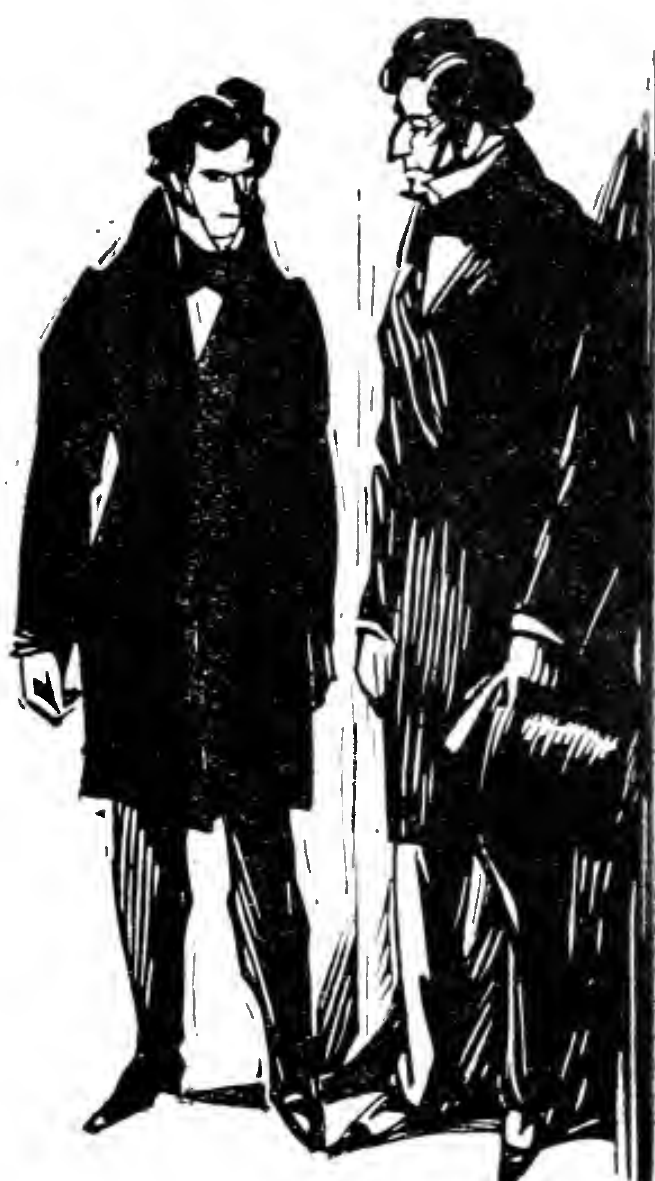
"Not only," replied M. de La Mole, with a very serious air, "will you present the new baron to me tomorrow, but I invite him to dinner for the day after. He will be one of our new prefects."
“In that case,” Julien replied coldly, “I ask for the post of director of the poorhouse for my father.”
“Good,” said the Marquis, putting on a cheerful air; “granted. I was expecting some moralizing. You are shaping up.”
M. de Valenod informed Julien that the holder of the lottery office in Verrières had just died; Julien found it amusing to give this post to M. de Cholin, that old imbecile whose petition he had once picked up in M. de La Mole’s room. The Marquis laughed heartily at the petition, which Julien recited while making him sign the letter requesting this post from the Minister of Finance.
Scarcely had M. de Cholin been appointed when Julien learned that this post had been requested by the departmental deputation for M. Gros, the famous geometer: this generous man had only fourteen hundred francs of income, and each year lent six hundred francs to the holder who had just died, to help him raise his family.
Julien was astonished at what he had done. It is nothing, he said to himself; I shall have to come to many other injustices, if I wish to succeed, and even know how to hide them beneath fine sentimental words: poor M. Gros! it is he who deserved the cross, it is I who have it, and I must act in the sense of the government that gives it to me.