About this book
Julien Sorel climbs from sawmill to salon, torn between the red of the army and the black of the church. Stendhal's 1830 novel, free to read online.
THE OPERA BOUFFE
O how this spring of love resembleth The uncertain glory of an April day; Which now shows all the beauty of the sun And by, and by a cloud takes all away! Shakspeare. Occupied with the future and the singular role she hoped to play, Mathilde soon came to regret the dry and metaphysical discussions she had often had with Julien. Weary of such lofty thoughts, sometimes too she regretted the moments of happiness she had found in his company; these lattermemories did not appear without remorse, she was overwhelmed by them at certain moments.
But one has a weakness, she said to herself, it is worthy of a girl such as I am to forget her duties only for a man of merit; it shall not be said that it was his handsome moustaches or his grace on horseback that seduced me, but his profound discussions on the future that awaits France, his ideas on the resemblance that the events about to fall upon us may bear to the revolution of 1688 in England. I was seduced, she replied to her remorse, I am a weak woman, but at least I was not led astray like a doll by outward advantages.
If there is a revolution, why should not Julien Sorel play the role of Roland, and I that of Madame Roland? I prefer that role to that of Madame de Staël: the immorality of the conduct will be an obstacle in our century. Certainly I shall not be reproached with a second weakness; I should die of shame.
Mathilde's reveries were not all as grave, it must be admitted, as the thoughts we have just transcribed.
She looked at Julien, she found a charming grace in his slightest actions.
Doubtless, she said to herself, I have succeeded in destroying in him even the smallest idea he has of his rights.
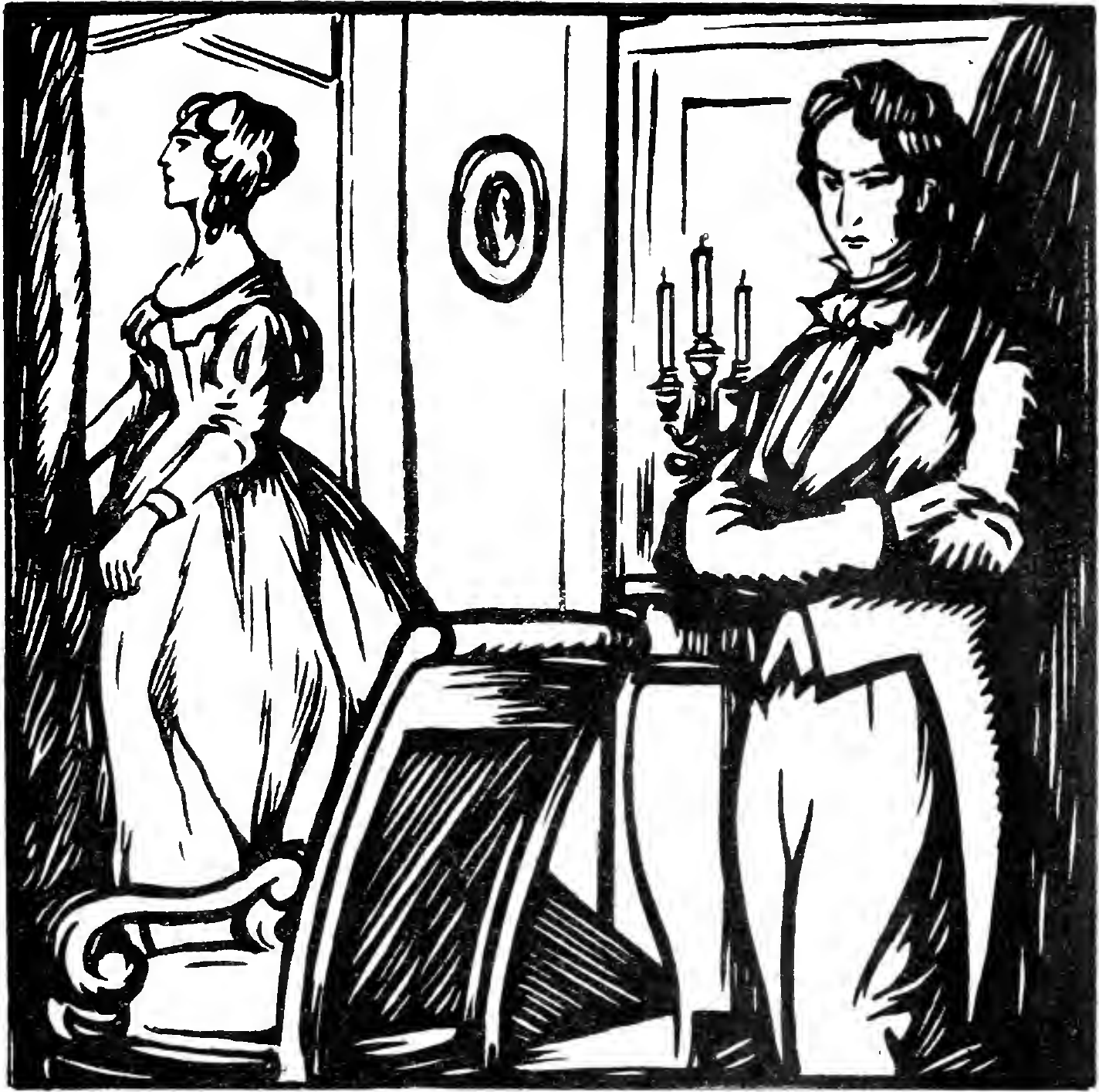
The air of unhappiness and deep passion with which the poor boy said that word of love to me eight days ago proves it, moreover; I must confess that I was very extraordinary to be angry at a word in which shone so much respect, so much passion. Am I not his wife? that word was quite natural, and, it must be admitted, it was quite lovable. Julien still loved me after eternal conversations in which I had spoken to him, and with great cruelty, I confess, only of the vague stirrings of love that the weariness of the life I lead had inspired in me for those young men of society of whom he is so jealous. Ah! if he knew how little dangerous they are to me! how, beside him, they seem to me stunted and all copies of one another.
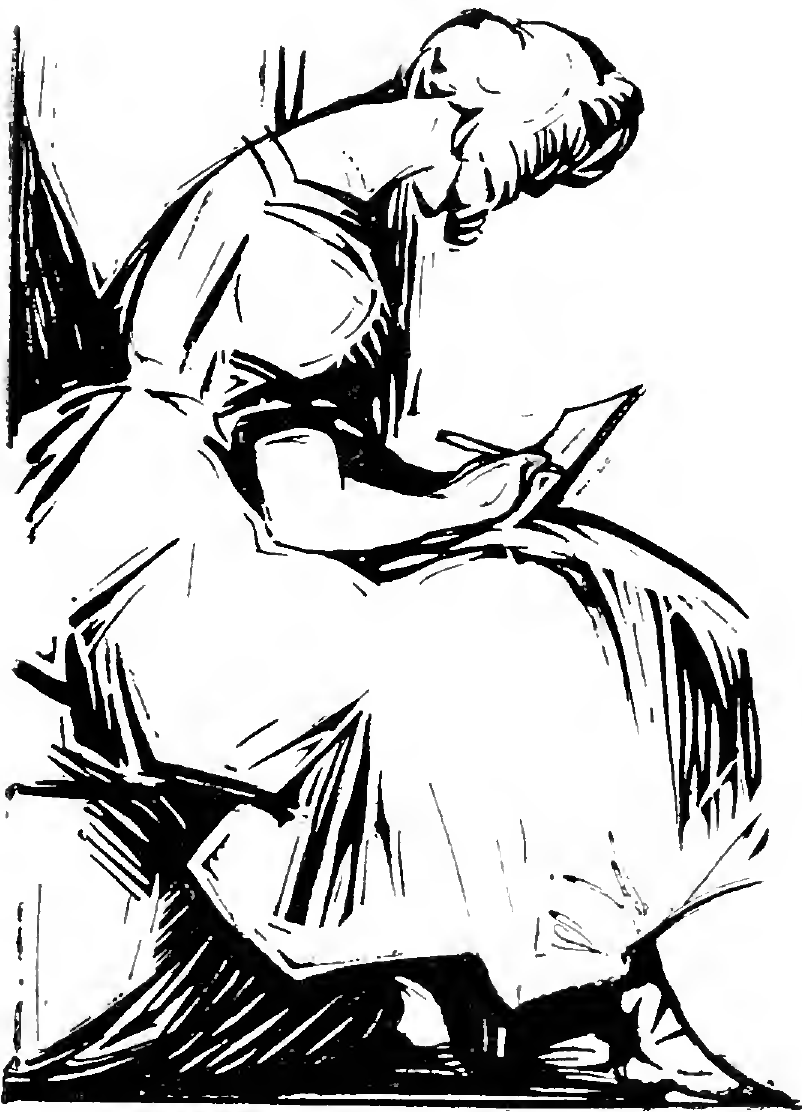
While making these reflections, Mathilde was idly tracing pencil strokes on a sheet of her album. One of the profiles she had just finished astonished her, delighted her: it resembled Julien in a striking manner. It is the voice of heaven! here is one of the miracles of love, she cried out in transport: without knowing it I have drawn his portrait.
She fled to her room, shut herself in, applied herself greatly, seriously tried to draw Julien's portrait, but she could notsucceed; the profile traced at random proved always the most lifelike; Mathilde was enchanted by it, she saw in it an evident proof of great passion.
She did not leave her album until very late, when the Marquise sent for her to go to the Italian Opera. She had but one idea, to seek Julien with her eyes so that her mother might engage him to accompany them.
He did not appear; these ladies had only vulgar beings in their box. During the first act of the opera, Mathilde dreamed of the man she loved with the transports of the most vivid passion; but in the second act a maxim of love sung, it must be admitted, to a melody worthy of Cimarosa, penetrated her heart. The heroine of the opera was saying: I must be punished for the excess of adoration that I feel for him, I love him too much!
From the moment she heard that sublime cantilena, everything that existed in the world disappeared for Mathilde. People spoke to her; she did not answer; her mother scolded her, she could scarcely bring herself to look at her. Her ecstasy reached a state of exaltation and passion comparable to the most
violent emotions that Julien had felt for her these past days. The cantilena, full of a divine grace, to which was sung the maxim that seemed to her to apply so strikingly to her situation, occupied every moment when she was not thinking directly of Julien. Thanks to her love of music, she was that evening as Madame de Rênal was always in thinking of Julien. Love of the head has doubtless more wit than true love, but it has only moments of enthusiasm; it knows itself too well, it judges itself ceaselessly; far from leading thought astray, it is built only by dint of thoughts.
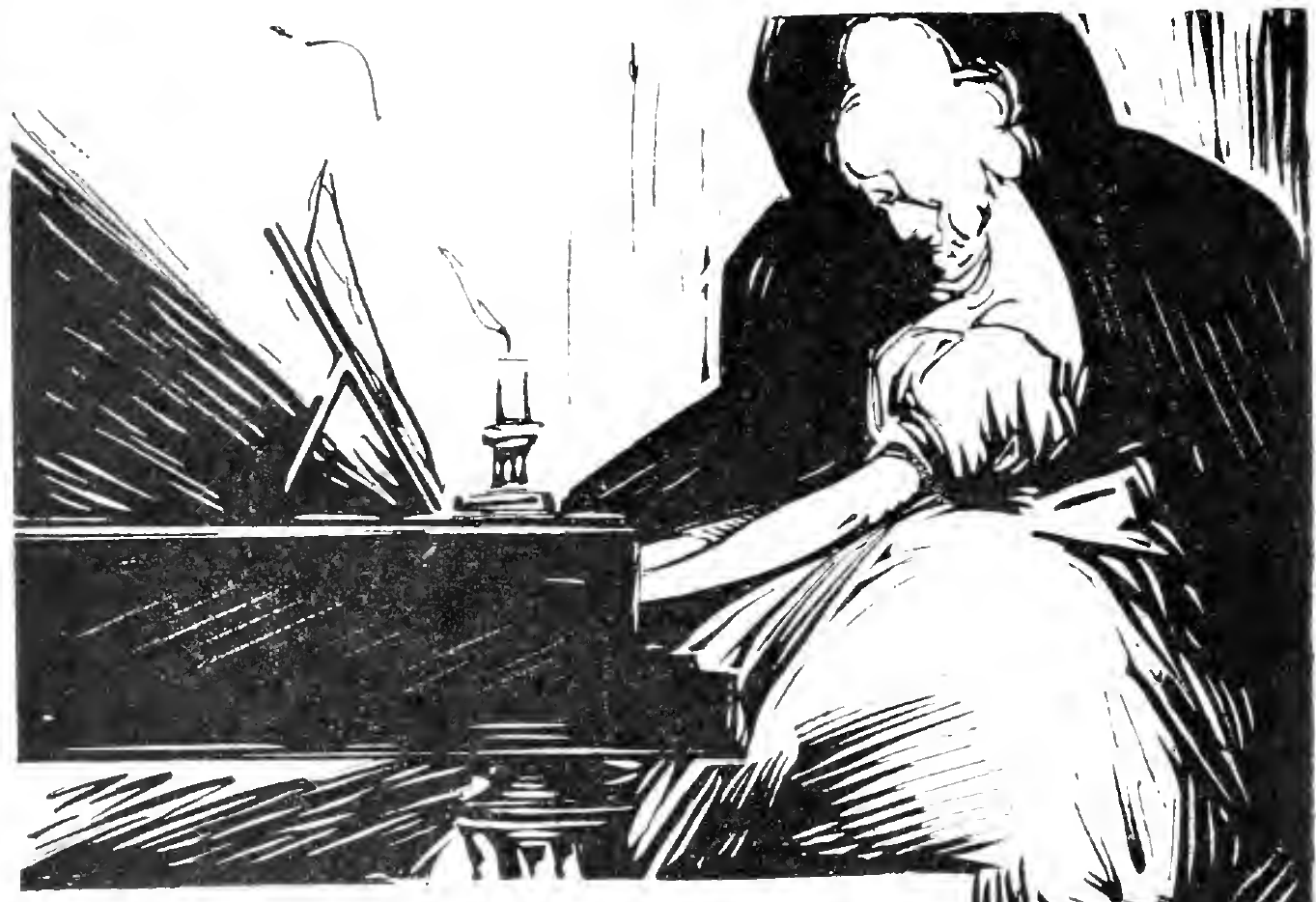
On returning home, whatever Madame de La Mole might say, Mathilde claimed to have a fever, and passed part of the night repeating that cantilena on her piano. She sang the words of the famous air that had charmed her:Devo punirmi, devo punirmi, Se troppo amai, etc.
The result of that night of madness was that she believed she had succeeded in triumphing over her love. (This page will be harmful in more than one way to the unfortunate author. Icy souls will accuse him of indecency. He does not do the young persons who shine in the drawing rooms of Paris the injury of supposing that a single one among them is susceptible to the movements of madness that degrade the character of Mathilde. This personage is entirely imaginary, and even imagined well outside the social habits which, among all the centuries, will assure so distinguished a rank to the civilization of the nineteenth century.
It is not prudence that is lacking in the young girls who have been the ornament of the balls this winter.)
I do not think, either, that they can be accused of despising too much a brilliant fortune, horses, fine lands, and everything that ensures an agreeable position in the world. Far from seeing only boredom in these advantages, they are in general the object of the most constant desires, and if there is passion in their hearts, it is for them. Nor is it love that takes charge of the fortune of young men endowed with some talent, like Julien; they attach themselves with an invincible embrace to a coterie, and when the coterie makes its fortune, all the good things of society rain down upon them. Woe to the man of study who belongs to no coterie; he will be reproached even for small and very uncertain successes, and lofty virtue will triumph in robbing him. Ah, sir, a novel is a mirror carried along a great road. Now it reflects to your eyes the azure of the skies, now the mire of the puddles on the road. And the man who carries the mirror in his basket will be accused by you of being immoral! His mirror shows the mire, and you accuse the mirror! Accuse rather the great road where the puddle is, and still more the road inspector who lets the water stagnate and the puddle form.
Now that it is well agreed that Mathilde's character is impossible in our century, no less prudent than virtuous, I fear less to irritate by continuing the account of the follies of this amiable girl.)
Throughout the whole of the following day she watched for opportunities to assure herself of her triumph over her mad passion. Her great aim was to displease Julien in everything; but none of his movements escaped her.
Throughout the whole of the following day she watched for opportunities to assure herself of her triumph over her mad passion. Her great aim was to displease Julien in everything; but none of his movements escaped her.
Julien was too unhappy and above all too agitated to guess at a maneuver of passion so complicated, still less could he see all that it had favorable to him: he was its victim; never perhaps had his unhappiness been so excessive. His actions were so little under the direction of his mind that if some sorrowful philosopher had said to him: "Think of quickly profiting from the dispositions that are about to be favorable to you; in this kind of head-love, such as one sees in Paris, the same manner of being cannot last more than two days," he would not have understood it. But however exact he might be, Julien had honor. His first duty was discretion; he understood it. To ask advice, to recount his torment to the first comer, would have been a happiness comparable to that of the unfortunate man who, crossing a fiery desert, receives from the sky a drop of icy water. He knew the peril, he feared to answer with a torrent of tears the indiscreet person who might question him; he shut himself up at home.
She watched Mathilde stay in the garden for a long time; when she had finally left it, he went down; he approached a rosebush where she had picked a flower.
The night was dark, he could give himself over to all his unhappiness without fear of being seen. It was obvious to him that Mademoiselle de La Mole loved one of those young officers with whom she had just been talking so gaily. She had loved him, but she had come to know his small worth.
And indeed, I have very little! Julien said to himself with full conviction; I am on the whole a very flat, very vulgar being, very boring to others, very unbearable to myself. He was mortally disgusted with all his good qualities, with all the things he had loved with enthusiasm; and in this state of overturned imagination, he undertook to judge life with his imagination. This error belongs to a superior man.
Several times the idea of suicide presented itself to him; this image was full of charms, it was like a delicious rest; it was the glass of ice water offered to the wretch who, in the desert, is dying of thirst and heat.
My death will increase the contempt she has for me! he cried. What a memory I will leave!
Fallen into this last abyss of misfortune, a human being has no resource but courage. Julien did not have enough genius to say to himself: One must dare; but as he looked at the window of Mathilde's room, he saw through the shutters that she was putting out her light; he pictured that charming room which he had seen, alas! once in his life. His imagination went no further.
A clock struck one; to hear the sound of the bell and to say to himself: I am going up with the ladder, was but a moment.
It was the flash of a genius, good reasons arrived in crowds. Can I be happier! he said to himself. He ran to the ladder; the gardener had chained it. With the aid of the dog of one of his small pistols, which he broke, Julien, animated at that moment by a superhuman strength, twisted one of the links of the chain that held the ladder; he was master of it in a few minutes, and placed it against Mathilde's window.
She will get angry, overwhelm me with contempt, what does it matter? I give her a kiss, a last kiss, I go up to my room and I kill myself...; my lips will touch her cheek before dying!
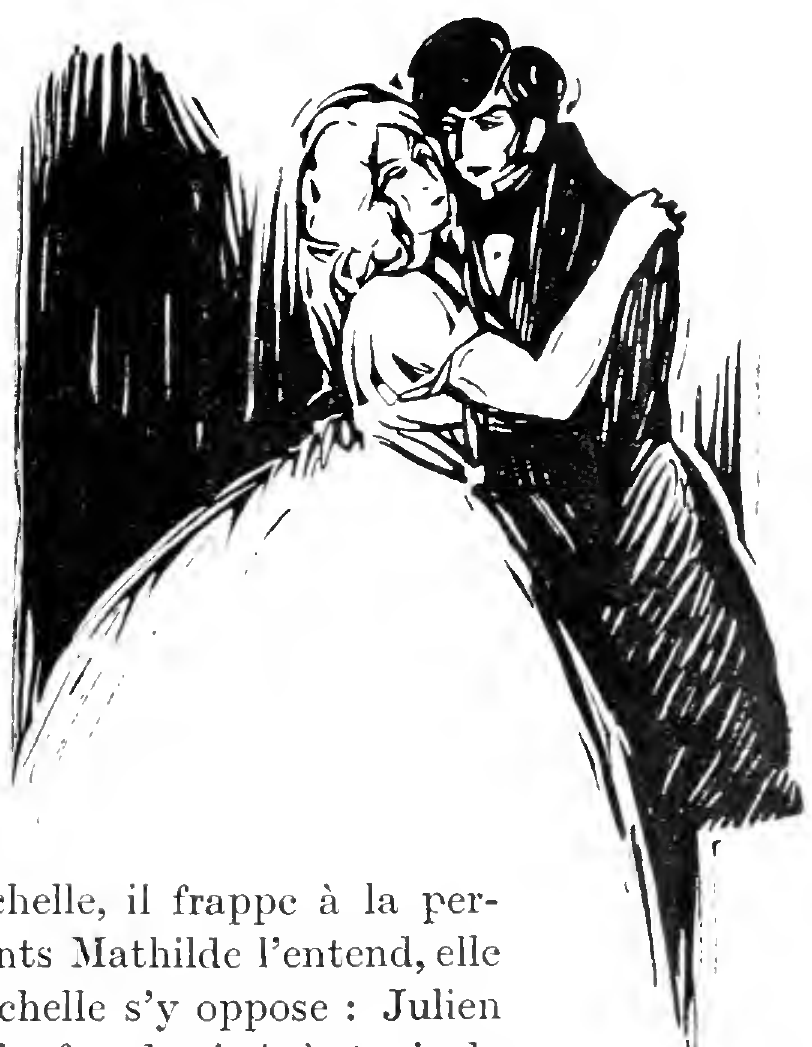
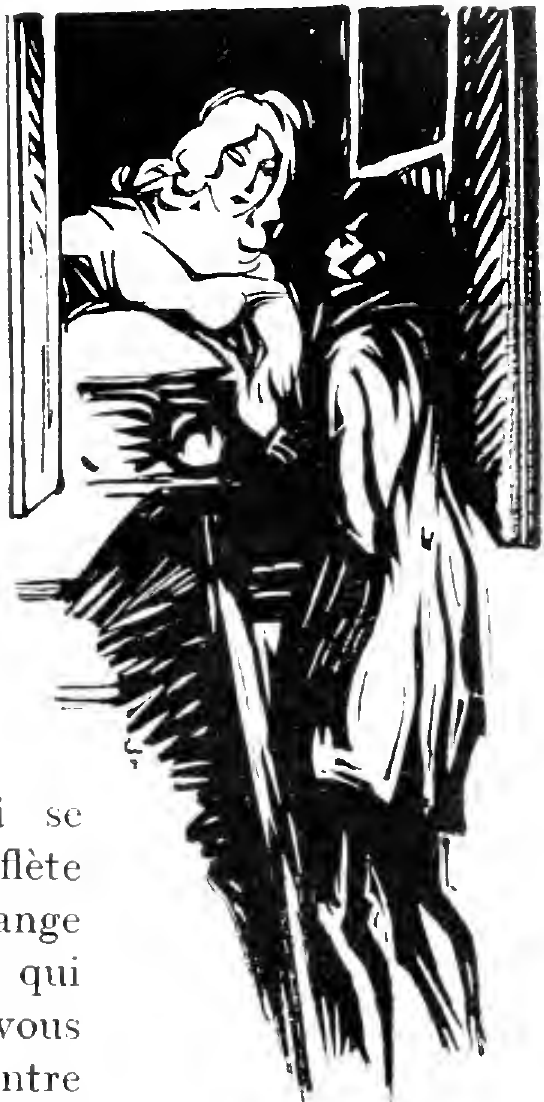
He flew up the ladder, he knocked at the shutter: after a few moments Mathilde heard him, she wanted to open the shutter, the ladder opposed it: Julien clung to the iron hook intended to hold the shutter open, and, at the risk of falling headlong a thousand times, gave a violent shake to the ladder, and moved it a little. Mathilde could open the shutter. He threw himself into the room more dead than alive. So it is you! she said, rushing into his arms...
Who could describe the excess of Julien's happiness? Mathilde's was almost equal. She spoke against herself, she denounced herself to him.
Punish me for my atrocious pride, she said to him, pressing him in her arms so as to stifle him: you are my master, I am your slave, I must ask your pardon on my knees for having wanted to rebel against you. She left his arms to fall at his feet. Yes, you are my master, she said to him again, drunk with happiness and love; reign forever over me, punish your slave severely when she wants to rebel.
At another moment she tore herself from his arms, lit the candle, and Julien had the greatest difficulty in the world in preventing her from cutting off a whole side of her hair. I want to remember, she said to him, that I am your servant: if ever an execrable pride comes to lead me astray, show me this hair and say: There is no longer any question of love, it is not a matter of the emotion that your soul may feel at this moment, you have sworn to obey, obey on your honor.
But it is wiser to suppress the description of such a degree of delirium and felicity.
Julien's virtue was equal to his happiness: I must go down by the ladder, he said to Mathilde, when he saw the dawn of day appear on the distant chimneys toward the east, beyond the gardens. The sacrifice I impose on myself is worthy of you, I deprive myself of a few hours of the most astonishing happiness that a human soul can taste, it is a sacrifice I make to your reputation: if you knew my heart, you would understand the violence I do to myself. Will you always be to me what you are at this moment? but honor speaks, it is enough. Learn that, at our first meeting, all suspicions were not directed against thieves. M. de La Mole had a guard posted in the garden. M. de Croisenois is surrounded by spies, it is known what he does every night...
At this idea, Mathilde burst out laughing. Her mother and a servant woman were awakened; suddenly they spoke to her through the door. Julien looked at her, she turned pale while scolding the maid and did not deign to address a word to her mother.
— But if they take it into their heads to open the window, they will see the ladder! Julien said to her.
He pressed her in his arms once more, threw himself onto the ladder and let himself slide rather than climb down; in a moment he was on the ground.
Three seconds later the ladder was under the avenue of lime trees, and Mathilde's honor was saved. Julien, come back to himself, found himself all covered in blood and almost naked: he had wounded himself in letting himself slide down without precaution.
The excess of happiness had restored to him all the energy of his character: twenty men might have appeared, and to attack them alone, in that instant, would have been but one pleasure more. Fortunately his military virtue was not put to the test: he laid the ladder in its usual place; he replaced the chain that held it; he did not forget to efface the imprint that the ladder had left in the bed of exotic flowers under Mathilde's window.
As in the darkness he passed his hand over the soft earth to make sure that the imprint was entirely effaced, he felt something fall on his hands; it was a whole side of Mathilde's hair, which she had cut off and was throwing to him.
She was at the window.
— There is what your servant sends you, she said to him rather loudly, it is the sign of eternal gratitude. I renounce the exercise of my reason, be my master.
Julien, vanquished, was on the point of going to take the ladder again and going back up to her. Finally reason was the stronger.
To get back from the garden into the hotel was not an easy thing. He succeeded in forcing the door of a cellar; once in the house, he was obliged to force open the door of his room as silently as possible. In his agitation he had left, in the little room he had just abandoned so rapidly, even the key that was in the pocket of his coat. Provided, he thought, that she thinks to hide all that mortal remains.
Finally, fatigue overcame happiness, and as the sun was rising, he fell into a deep sleep.
The lunch bell had great difficulty in waking him; he appeared in the dining room. Soon afterward Mathilde entered it. Julien's pride had a happy moment in seeing the love that blazed in the eyes of this person so beautiful and surrounded by so many tributes; but soon his prudence had cause to be frightened.
Under the pretext of the little time she had had to care for her hair, Mathilde had arranged her hair in such a way that Julien could see at the first glance the whole extent of the sacrifice she had made for him by cutting it the previous night. If so beautiful a face could have been spoiled by anything, Mathilde would have succeeded in it; a whole side of her beautiful hair, of an ash blond, was cut half an inch from her head.
At lunch, Mathilde's entire manner responded to that first imprudence. One would have said that she made it her task to let everyone know the mad passion she had for Julien. Fortunately, that day, M. de La Mole and the marquise were very busy with a promotion of cordons bleus that was about to take place, and in which M. de Chaulnes was not included. Toward the end of the meal, it happened that Mathilde, who was speaking to Julien, called him my master. He blushed to the whites of his eyes.
Whether by chance or by design on the part of Madame de La Mole, Mathilde was not alone for a single moment that day. In the evening, while passing from the dining room to the drawing room, she nonetheless found the moment to say to Julien:
"Will you believe that this is a pretext on my part? Mamma has just decided that one of her women will establish herself at night in my apartment."
That day passed like a flash. Julien was at the height of happiness. From seven o'clock in the morning, the next day, he was installed in the library; he hoped that Mademoiselle de La Mole would deign to appear there; he had written her an endless letter.
He did not see her until many hours later, at lunch. She was that day coiffed with the greatest care; a marvelous art had taken charge of hiding the place of the cut hair. She looked at Julien once or twice, but with polite and calm eyes; it was no longer a question of calling him my master.
Julien's astonishment prevented him from breathing... Mathilde almost reproached herself for everything she had done for him.
Thinking it over maturely, she had decided that he was a being,
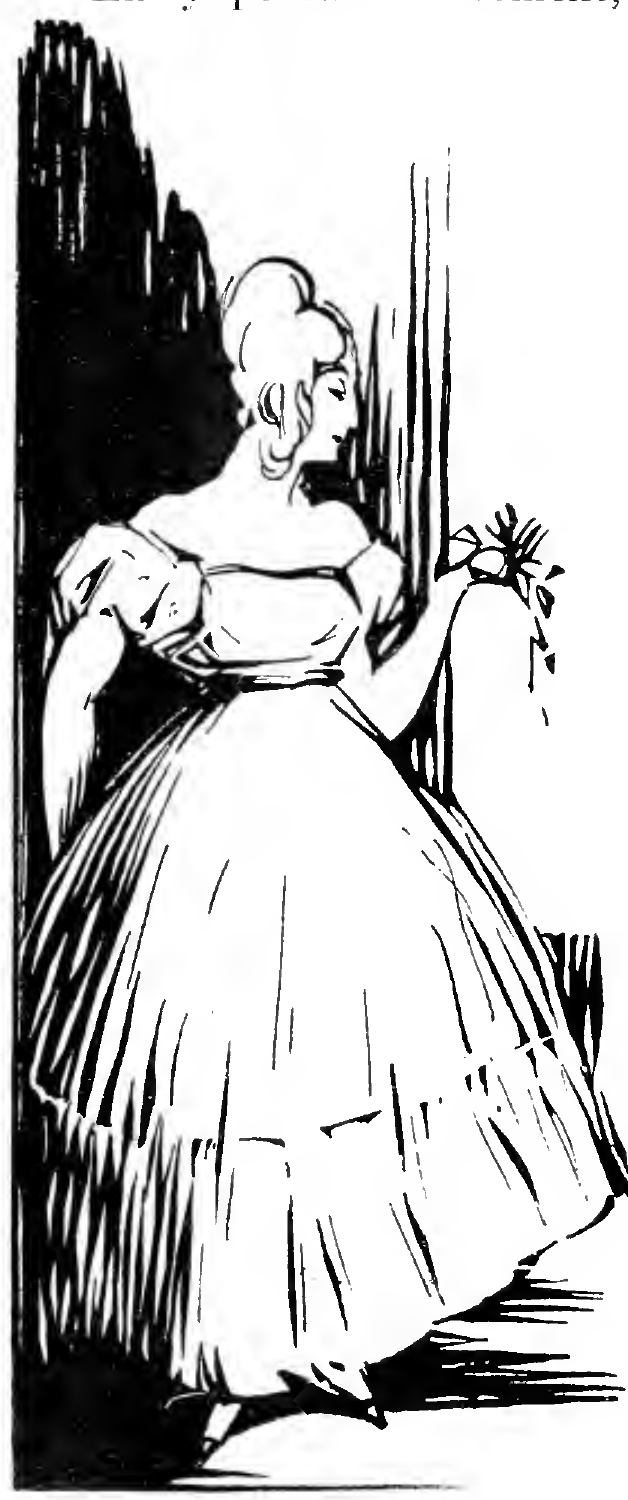
if not entirely common, at least not sufficiently out of the ordinary line to merit all the strange follies she had dared for him. On the whole, she scarcely thought of love; that day, she was weary of loving.
For Julien, the movements of his heart were those of a boy of sixteen. Hideous doubt, astonishment, and despair occupied him in turn during the luncheon, which seemed to him of an eternal duration.
As soon as he could decently rise from the table, he rushed rather than ran to the stable, saddled his horse himself, and set off at a gallop: he feared to dishonour himself by some weakness. I must kill my heart by dint of physical fatigue, he said to himself as he galloped through the woods of Meudon. What have I done, what have I said, to deserve such disgrace?
I must do nothing, say nothing today, he thought as he returned to the house, be dead physically as I am morally. Julien no longer lives; it is his corpse that still stirs.
;
;
;
;
;
;
;
;
;
;
;