About this book
Julien Sorel climbs from sawmill to salon, torn between the red of the army and the black of the church. Stendhal's 1830 novel, free to read online.
A PROCESSION
Every heart was moved. The presence of God seemed to have descended upon these narrow Gothic streets, hung on every side with drapery, and carefully strewn with sand by the zeal of the faithful.
YOUNG.
Julien might make himself as small and as stupid as he pleased, he could not please; he was too different. Yet, he said to himself, all these professors are very subtle people, chosen from among a thousand; how is it that they do not like my humility? One alone seemed to me to presume upon his readiness to believe everything and to appear the dupe of everything. This was the abbé Chas-Bernard, director of the ceremonies of the cathedral, where, for fifteen years past, he had been led to hope for a canonry; meanwhile he taught sacred eloquence at the seminary. In the days of his blindness, this was one of the classes in which Julien was most usually first. The abbé Chas had started from that point to show him friendship, and, as he left his class, would willingly take him by the arm and walk a few turns in the garden.
Where does he mean to lead? Julien asked himself. He saw with astonishment that, for whole hours together, the abbé talked to him of the ornaments possessed by the cathedral. It had seventeen chasubles trimmed with lace, besides the mourning ornaments. Much was expected from the old présidente de Rubenpré; this lady, ninety years of age, had kept, for at least seventy years, her wedding robes, in superb stuffs of Lyons, brocaded with gold. Just imagine, my friend, said the abbé Chas, stopping short and opening wide eyes, that these stuffs stand upright, so much gold is there in them. It is generally believed in Besançon that, by the will of the présidente, the treasury of the cathedral will be increased by more than ten chasubles, without counting four or five copes for the great festivals. I will go further, added the abbé Chas in a lower voice, I have reasons for thinking that the présidente will leave us eight magnificent silver-gilt candlesticks, supposed to have been bought in Italy by the Duke of Burgundy, Charles the Bold, one of whose ancestors was his favourite minister.
But where does this man want to go with all this old-clothes shop? Julien was thinking. This clever preparation has been going on for a century, and nothing shows. He must be very much on his guard against me! He is cleverer than all the others, whose secret aim one guesses so well in a fortnight. I understand: this man's ambition has been suffering for fifteen years!
One evening, in the middle of the fencing lesson, Julien was summoned to Abbé Pirard, who said to him: Tomorrow is the feast of Corpus Domini (the Feast of God). Abbé Chas-Bernard needs you to help him decorate the cathedral; go and obey. Abbé Pirard called him back and, with an air of commiseration, added: It is for you to see whether you wish to take advantage of the occasion to stray into the town.
— Incedo per ignes, replied Julien (I have hidden enemies).
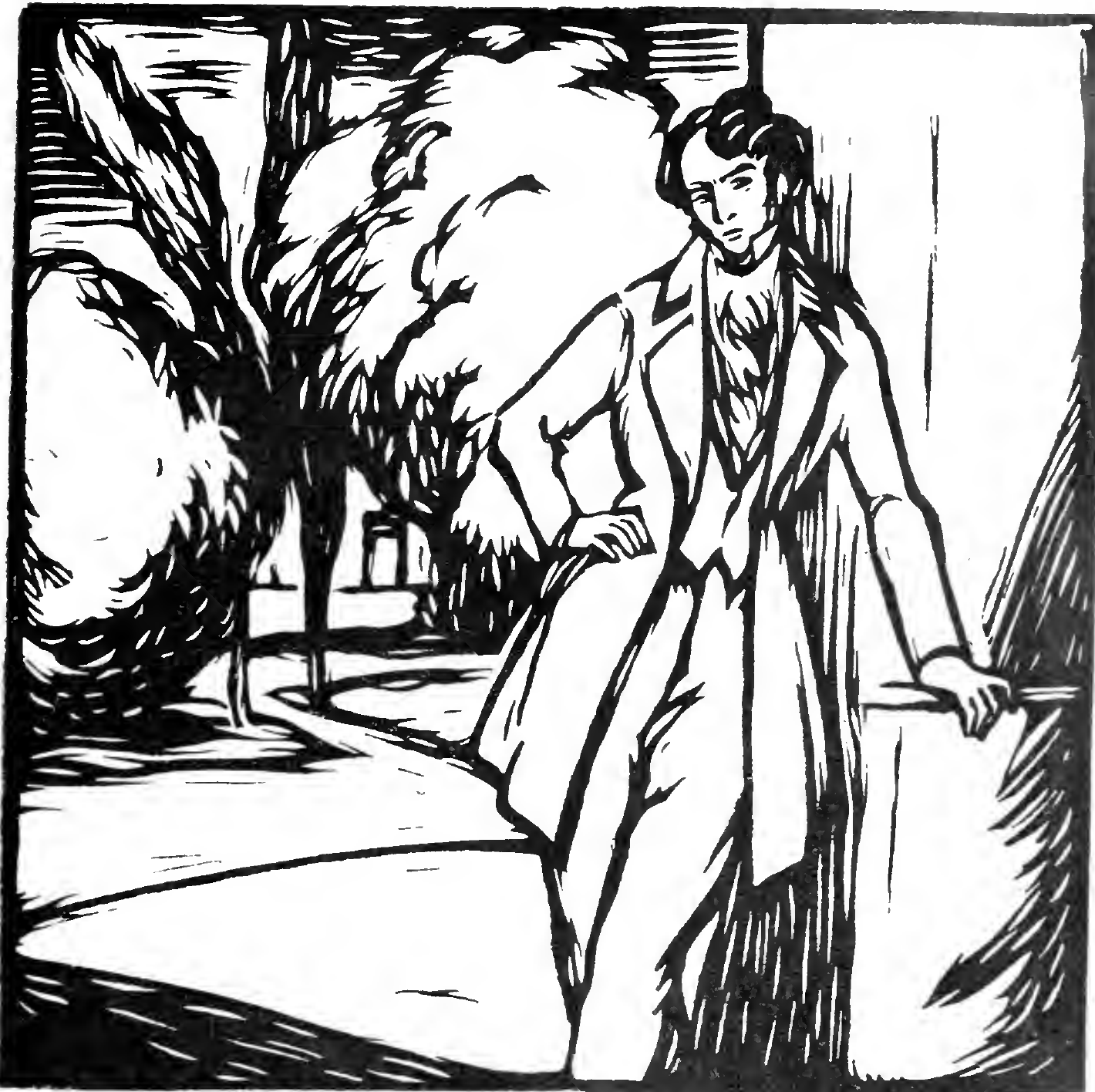
The next day, very early in the morning, Julien made his way to the cathedral, his eyes lowered. The appearance of the streets and of the activity that was beginning to prevail in the town did him good. On every side people were stretching awnings in front of the houses for the procession. All the time he had spent at the seminary seemed to him no more than an instant. His thoughts were at Vergy and with that pretty Amanda Binet whom he might meet, for her café was not very far away. He caught sight of Abbé Chas-Bernard in the distance on the door of his beloved cathedral; he was a stout man with a cheerful face and an open air. That day he was triumphant: I was waiting for you, my dear son, he cried, as soon as he saw Julien from afar, be welcome. The task of this day will be long and hard; let us fortify ourselves with a first breakfast; the second will come at ten o'clock, during high mass.
— I desire, Monsieur, Julien said to him with a grave air, not to be alone for a single instant; deign to notice, he added, showing him the clock above their heads, that I arrive at one minute to five.
— Ah! these little wretches of the seminary frighten you! You are very good to think of them, said Abbé Chas; is a road less beautiful because there are thorns in the hedges that border it?
Travelers go their way and leave the wicked thorns to wither in their place. Besides, to work,
Abbé Chas was right to say that the task would be hard. There had been a great funeral ceremony at the cathedral the day before; nothing could have been prepared; it was therefore necessary, in a single morning, to clothe all the Gothic pillars that form the three naves in a sort of garment of red damask rising thirty feet high. Monseigneur the bishop had sent for four upholsterers from Paris by the mail coach, but these gentlemen could not suffice for everything, and far from encouraging the clumsiness of their Besançon comrades, they redoubled it by mocking them.
Julien saw that he must go up the ladder himself; his agility served him well. He took charge of directing the town's upholsterers. Abbé Chas, enchanted, watched him flit from ladder to ladder. When all the pillars had been clothed in damask, it was a question of going to place five enormous bunches of feathers on the great baldachin, above the high altar. A rich crowning of gilded wood is supported by eight great twisted columns of Italian marble. But, to reach the center of the baldachin, above the tabernacle, one had to walk on an old wooden cornice, perhaps worm-eaten and forty feet above the ground.
The appearance of this arduous path had extinguished the hitherto so brilliant gaiety of the Parisian upholsterers; they looked up from below, argued a great deal, and did not climb. Julien seized the bunches of feathers and ran up the ladder. He placed them very well on the crown-shaped ornament, in the center of the baldachin. As he came down the ladder, Abbé Chas-Bernard clasped him in his arms:
— Optimè, cried the good priest, I shall tell Monseigneur about this.
The ten o'clock breakfast was very merry. Never had Abbé Chas seen his church so beautiful.
— Dear disciple, he was saying to Julien, my mother was a chair-keeper in this venerable basilica, so that I was nourished in this great edifice. Robespierre's Terror ruined us, but, at the age of eight, which I was then, I was already serving masses in private rooms, and I was fed on the day of the mass. No one knew how to fold a chasuble better than I; never were the galloons cut. Since the re-establishment of worship by Napoleon, I have the happiness of directing everything in this venerable metropolis. Five times a year my eyes see it adorned with these so beautiful ornaments. But never has it been so resplendent, never have the strips of damask been so well attached as today, so clinging to the pillars.
At last he is going to tell me his secret, thought Julien, here he is speaking to me of himself; there is an outpouring. But nothing imprudent was said by this evidently exalted man. And yet he has worked a great deal; he is happy, said Julien to himself, the good wine has not been spared. What a man! what an example for me; he takes the prize. (It was a vulgar expression that he had from the old surgeon.)
As the Sanctus of high mass rang out, Julien wanted to take a surplice to follow the bishop in the superb procession.
— And the thieves, my friend, and the thieves! cried Abbé Chas, you are not thinking of them. The procession is going to go out; we shall keep watch, you and I. We shall be very lucky if we are short only a couple of ells of this beautiful galloon that surrounds the base of the pillars. It is still a gift from Madame de Rubempré; it comes from the famous count, her great-grandfather; it is pure gold, my dear friend, added the abbé, speaking to him in his ear, and with an evidently exalted air, nothing false! I entrust you
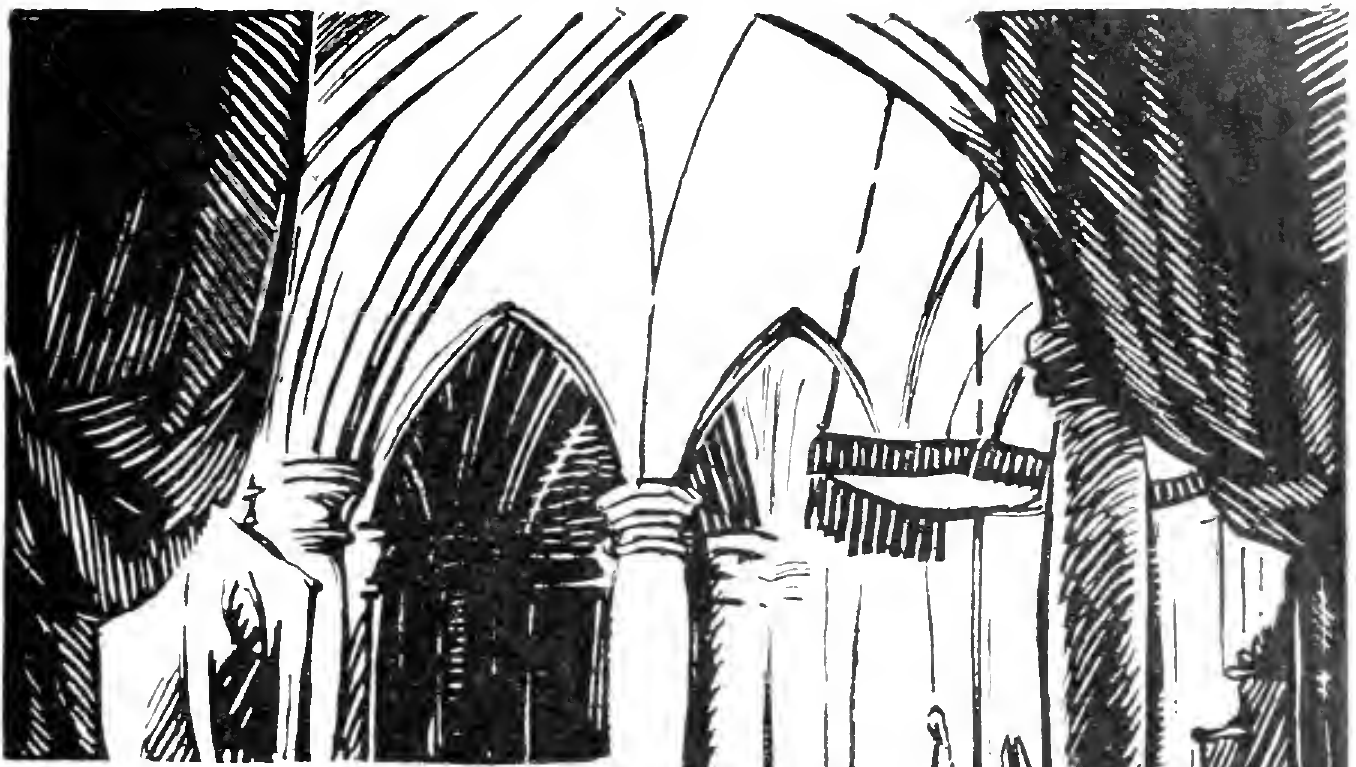
with the inspection of the north aisle, do not leave it. I keep for myself the south aisle and the great nave. Watch the confessionals; it is from there that the thieves' spies watch for the moment when our backs are turned.
As he finished speaking, a quarter to twelve struck; at once the great bell made itself heard. It was ringing at full peal; these sounds so full and so solemn stirred Julien. His imagination was no longer on earth.
The smell of incense and of rose leaves thrown before the holy sacrament by the little children dressed as Saint John completed his exaltation.
The grave sounds of this bell should have awakened in Julien only the idea of the labor of twenty men paid at fifty centimes, and perhaps helped by fifteen or twenty faithful. He should have thought of the wear of the ropes, of that of the framework, of the danger of the bell itself, which falls every two centuries, and reflected on the means of reducing the wages of the ringers, or of paying them with some indulgence or other grace drawn from the treasures of the Church, and which does not flatten his purse.
Instead of these wise reflections, Julien's soul, exalted by these sounds so manly and so full, wandered in imaginary spaces. Never will he make either a good priest or a good administrator. Souls that are thus stirred are good at most for producing an artist. Here Julien's presumption bursts forth in broad daylight. Fifty, perhaps, of the seminarians his comrades, made attentive to the reality of life by public hatred and the Jacobinism that is shown to them lying in ambush behind every hedge, on hearing the great bell of the cathedral, would have thought only of the ringers' wages. They would have examined with the genius of Barême whether the degree of emotion of the public was worth the money given to the ringers. If Julien had wished to think of the material interests of the cathedral, his imagination, soaring beyond the goal, would have thought of saving forty francs for the fabric, and let slip the occasion of avoiding an expense of twenty-five centimes.
While, on the most beautiful day in the world, the procession slowly traversed Besançon and stopped at the brilliant resting-places raised in emulation by the authorities, the church had remained in a profound silence. A half-darkness, an agreeable coolness reigned there; it was still embalmed with the perfume of flowers and incense.
The silence, the profound solitude, the coolness of the long naves made Julien's reverie sweeter. He did not fearbeing disturbed by Abbé Chas, occupied in another part of the building. His soul had almost abandoned its mortal envelope, which walked with slow steps in the north aisle entrusted to his surveillance. He was all the more tranquil because he had assured himself that there were only a few pious women in the confessionals; his eye looked without seeing.
However, his distraction was half overcome by the sight of two very well-dressed women who were kneeling, one in a confessional and the other, very near the first, on a chair. He looked without seeing; yet, whether from a vague sense of his duties or from admiration for the noble and simple attire of these ladies, he noticed that there was no priest in that confessional. It is singular, he thought, that these beautiful ladies are not kneeling before some repository if they are devout; or advantageously placed in the first row of some balcony if they are of the world. How well that dress is fitted! what grace! He slowed his pace to try to see them.
The one who was kneeling in the confessional turned her head slightly upon hearing the sound of Julien's footsteps in the midst of that great silence. Suddenly she uttered a loud cry and fainted.
Losing her strength, this lady fell backward onto her knees; her friend, who was near her, rushed to help her. At the same time Julien saw the shoulders of the lady falling backward. A necklace of large fine pearls in a twisted strand, well known to him, caught his eye. What became of him upon recognizing the hair of Madame de Rênal! It was she. The lady who was trying to support her head and prevent her from falling completely was Madame Derville. Julien, beside himself, rushed forward; Madame de Rênal's fall might perhaps have dragged down her friend, had Julien not supported them. He saw Madame de Rênal's head, pale, utterly deprived of feeling, floating on her shoulder. He helped Madame Derville place that charming head against the back of a straw chair; he was on his knees.
Madame Derville turned around and recognized him.
"Flee, Monsieur, flee!" she said to him with the accent of the most vivid anger. "Above all, do not let her see you again. Your sight must indeed fill her with horror; she was so happy before you! Your conduct is atrocious: Flee; go away, if you have any decency left."
This word was spoken with such authority, and Julien was so weak at that moment, that he went away. She has always hated me, he said to himself, thinking of Madame Derville.
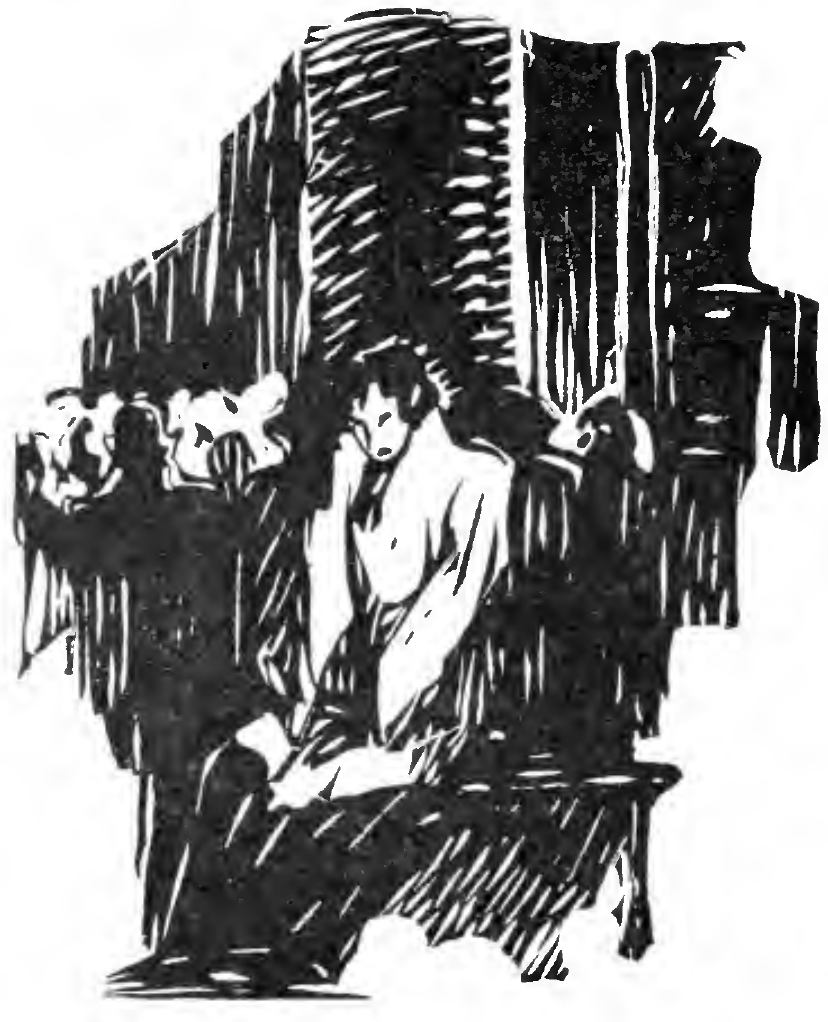
At that very instant, the nasal chanting of the first priests of the procession resounded in the church; it was returning. Abbé Chas-Bernard called Julien several times, who at first did not hear him; he finally came and took him by the arm behind a pillar where Julien had taken refuge, half dead. He wanted to present him to the bishop.
"You are feeling unwell, my child," the abbé said to him, seeing him so pale and almost unable to walk; "you have worked too hard." The abbé gave him his arm. "Come, sit down on this little bench of the holy water bearer, behind me; I will hide you." They were then beside the great door. "Calm yourself, we still have a good twenty minutes before Monseigneur appears. Try to recover yourself; when he passes, I will lift you up; for I am strong and vigorous, despite my age."
But when the bishop passed, Julien was trembling so much that Abbé Chas gave up the idea of presenting him.
"Do not distress yourself too much," he said to him, "I will find another opportunity."
In the evening, he had ten pounds of candles carried to the seminary chapel, saved, he said, through Julien's care and the promptness with which he had had them extinguished. Nothing could be less true. The poor boy was himself extinguished; he had not had a single idea since the sight of Madame de Rênal.