About this book
Julien Sorel climbs from sawmill to salon, torn between the red of the army and the black of the church. Stendhal's 1830 novel, free to read online.
A NEGOTIATION
Cunctando restituit rem.
E N N I U S .
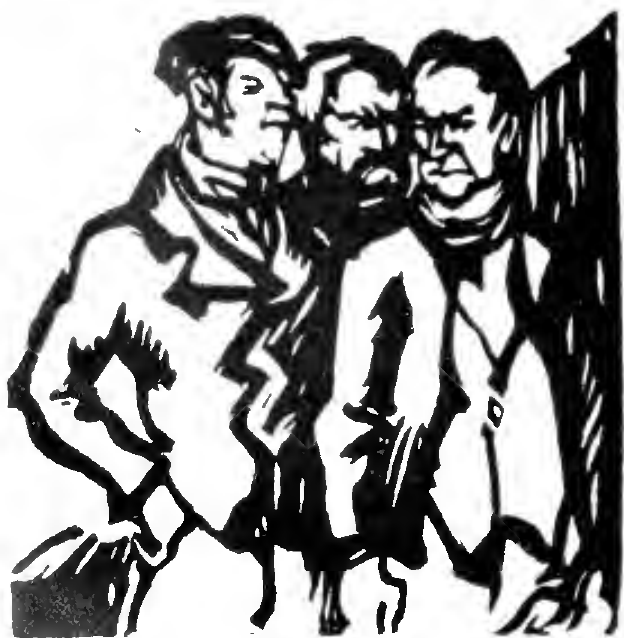
ANSWER me without lying, if you can, you miserable bookworm; where do you know Madame de Renal from? when have you spoken to her? — I have never spoken to her, replied Julien, I have never seen that lady except at church.
— But you will have looked at her, you wicked impudent fellow?
-
— Never! You know that at church I see only God, added Julien with a little hypocritical air, quite proper, in his opinion, to ward off the return of the blows.
— There is something behind all this, nevertheless, replied the cunning peasant, and he was silent for a moment; but I shall learn nothing from you, you damned hypocrite. As a matter of fact, I am going to be delivered from you, and my saw will go all the better for it. You have won over M. the cure or someone else, who has procured you a fine place. Go and make up your bundle, and I will take you to M. de Renal's, where you will be tutor to the children.
— What shall I get for that?
— Food, clothing, and three hundred francs in wages.
— I do not want to be a servant.
— Animal, who is talking to you about being a servant? would I want my son to be a servant?
— But with whom shall I eat?
This question disconcerted old Sorel; he felt that in speaking he might commit some imprudence; he flew into a rage against Julien, whom he overwhelmed with insults, accusing him of gluttony, and left him to go and consult his other sons.
Julien saw them soon after, each leaning on his axe and holding council. After watching them for a long time, Julien, seeing that he could divine nothing, went and placed himself on the other side of the saw, to avoid being surprised. He wanted to think about this unexpected announcement which would change his lot, but he felt himself incapable of prudence; his imagination was wholly occupied in picturing to himself what he would see in the fine house of M. de Renal.
I must give up all that, he said to himself, rather than let myself be reduced to eating with the servants. My father will want to force me to it;
rather die. I have fifteen francs eight sous in savings, I shall run away tonight; in two days, by cross roads where I fear no gendarme, I shall be at Besancon; there I shall enlist as a soldier, and, if need be, I shall go over into Switzerland. But then no more advancement, no more of that fine priestly state which leads to everything.
This horror of eating with the servants was not natural to Julien; he would have done things far more painful to arrive at fortune. He drew this repugnance from the Confessions of Rousseau. It was the only book with whose help his imagination pictured the world. The collection of the bulletins of the grand army and the Memorial of Saint Helena completed his Koran. He would have let himself be killed for those three works. He never believed in any other. According to a word of the old surgeon-major, he regarded all the other books in the world as liars, and written by knaves to get advancement.
With a soul of fire, Julien had one of those astonishing memories so often united with stupidity. To win over the old cure Chelan, on whom he clearly saw his future lot depended, he had learned by heart the New Testament in Latin; he also knew M. de Maistre's book on the Pope, and believed in the one as little as in the other.
As though by mutual agreement, Sorel and his son avoided speaking to each other that day. Towards evening, Julien went to take his theology lesson at the cure's, but he did not judge it prudent to say anything to him about the strange proposal that had been made to his father. Perhaps it is a trap, he said to himself; I must pretend to have forgotten it.
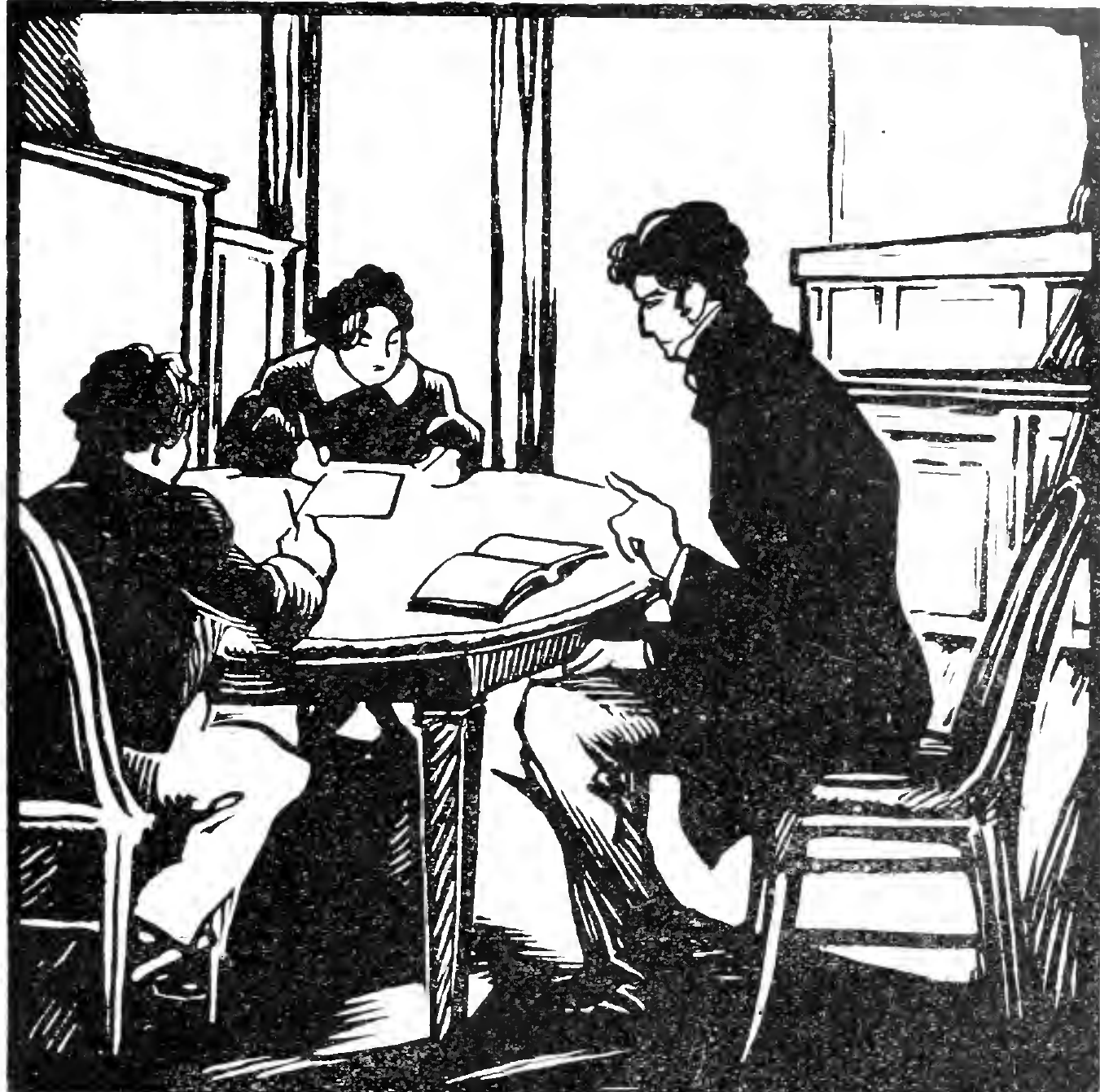
Early the next day, M. de Rênal summoned old Sorel, who, after keeping him waiting an hour or two, finally arrived, offering a hundred apologies from the doorstep, mingled with as many bows. By dint of trotting out every kind of objection, Sorel came to understand that his son would eat with the master and mistress of the house, and on days when there was company, alone in a separate room with the children. Always more inclined to raise difficulties as he perceived a genuine eagerness in the mayor, and moreover full of distrust and astonishment, Sorel asked to see the room where his son would sleep. It was a large room, very neatly furnished, but in which they were already busy moving in the three children's beds.
This circumstance was a flash of light for the old peasant; he at once asked with assurance to see the coat that would be given to his son. M. de Rênal opened his desk and took out a hundred francs.
— With this money, your son will go to M. Durand, the draper, and order a complete black suit.
— And even if I were to take him away from you, said the peasant, who had suddenly forgotten his reverent manners, this black suit will remain his?
— Without a doubt.
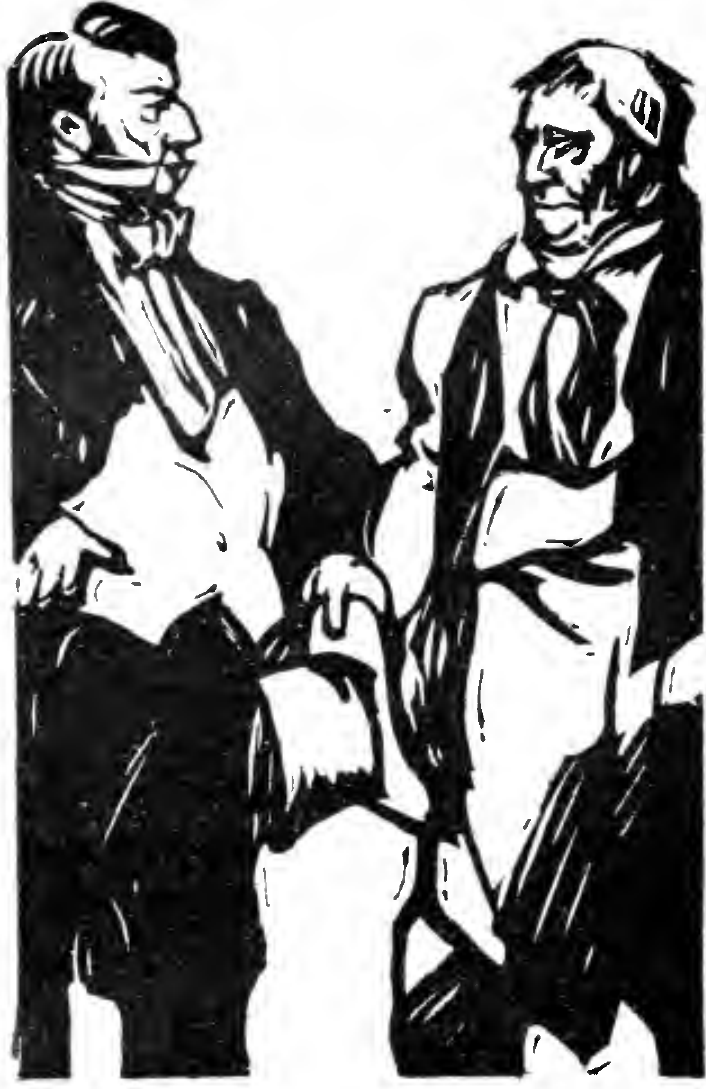
Oh well! said Sorel in a drawling tone, then there remains only one thing for us to agree on: the money you will give him.
What! cried M. de Rênal indignantly, we have been agreed since yesterday: I give three hundred francs; I believe that is a great deal, and perhaps too much.
That was your offer, I do not deny it, said old Sorel, speaking still more slowly; and, by a stroke of genius that will astonish only those who do not know the peasants of Franche-Comté, he added, fixing his eyes on M. de Rênal: We can find better elsewhere.
At these words the mayor's face was thrown into confusion. He recovered himself, however, and after a clever conversation of two full hours, in which not a word was said at random, the peasant's cunning prevailed over the cunning of the rich man, who has no need of it in order to live. All the numerous articles that were to govern Julien's new existence were settled; not only was his salary fixed at four hundred francs, but it was to be paid in advance, on the first of each month.
“Well then! I’ll give him thirty-five francs,” said M. de Rênal.
“To make the sum round,” said the peasant in a wheedling voice, “a rich and generous man like monsieur our mayor will surely go as far as thirty-six francs.”
“So be it,” said M. de Rênal, “but let us have done with it.”
This time anger gave him a tone of firmness. The peasant saw that he must stop advancing. Then, in his turn, M. de Rênal made progress. He would never consent to hand over the first month of thirty-six francs to old Sorel, who was very eager to receive it for his son. M. de Rênal came to think that he would be obliged to tell his wife the role he had played in the whole negotiation.
“Give me back the hundred francs I handed you,” he said irritably. “M. Durand owes me something. I will go with your son to collect the black cloth.”
After this act of vigor, Sorel prudently returned to his respectful formulas; they took a good quarter of an hour. At last, seeing that there was decidedly nothing more to be gained, he withdrew. His final bow ended with these words:
“I am going to send my son to the château.”
This was how M. the mayor’s administered subjects called his house when they wished to please him.
Back at his mill, Sorel searched in vain for his son. Suspecting what might happen, Julien had gone out in the middle of the night. He had wanted to put his books and his Legion of Honor cross in safety. He had carried everything to a young timber merchant, his friend, named Fouqué, who lived in the high mountain overlooking Verrières.
When he reappeared: “God knows, you cursed lazybones,” his father said to him, “whether you will ever have enough honor to pay me the price of your food, which I have been advancing for so many years! Take your rags and go to M. the mayor’s.”
Julien, astonished not to be beaten, hastened to leave. But scarcely out of sight of his terrible father, he slowed his pace. He judged that it would be useful to his hypocrisy to go and make a stop at the church.
Does this word surprise you? Before arriving at this horrible word, the soul of the young peasant had had a long way to travel.
From his earliest childhood, the sight of certain dragoons of the 6th(1), in long white cloaks and with heads covered by helmets with long black manes, who were returning from Italy, and whom Julien saw tying their horses at the barred window of his father’s house, made him mad for the military profession. Later he listened with rapture to the accounts of the battles of the bridge of Lodi, of Arcole, of Rivoli, which the old surgeon-major told him. He noticed the fiery looks the old man cast upon his cross.
But when Julien was fourteen, they began to build at Verrières a church that may be called magnificent for so small a town. There were above all four marble columns whose sight struck Julien; they became famous in the country because of the mortal hatred they aroused between the justice of the peace and the young vicar, sent fromBesançon, who was said to be the spy of the congregation. The justice of the peace was on the point of losing his place, at least such was the common opinion. Had he not dared to have a dispute with a priest who, almost every fortnight, went to Besançon, where he saw, it was said, Monseigneur the bishop?
Meanwhile, the justice of the peace, father of a numerous family, handed down several sentences that seemed unjust; all were pronounced against those inhabitants who read the Constitutionnel. The good party triumphed. It was true that only sums of three or five francs were involved; but one of these small fines had to be paid by a nailmaker, Julien’s godfather. In his anger, this man exclaimed: “What a change! and to think that for more than twenty years the justice of the peace passed for so honest a man!” The surgeon-major, Julien’s friend, was dead.
Suddenly Julien stopped speaking of Napoleon; he announced his plan to become a priest, and he was constantly seen, in his father’s sawmill, occupied in learning by heart a Latin Bible that the curé had lent him. This good old man, amazed at his progress, spent entire evenings teaching him theology. Julien showed before him only pious sentiments. Who could have guessed that this girlish face, so pale and so gentle, concealed the unshakable resolve to expose himself to a thousand deaths rather than fail to make his fortune?
For Julien, to make his fortune was first of all to leave Verrières; he abhorred his native town. Everything he saw there froze his imagination.
From his earliest childhood, he had had moments of exaltation. Then he would delightedly think that one day he would be presented to the pretty women of Paris; he would know how to attract their attention by some brilliant action. Why should he not be loved by one of them, as Bonaparte, still poor, had been loved by the brilliant Madame de Beauharnais? For many years, Julien perhaps did not pass an hour of his life without saying to himself that Bonaparte, an obscure and fortune-less lieutenant, had made himself master of the world with his sword. This idea consoled him for his misfortunes, which he believed great, and redoubled his joy when he had any.
The building of the church and the sentences of the justice of the peace suddenly enlightened him; an idea that came to him made him almost mad for some weeks, and at last took possession of him with all the power of the first idea that a passionate soul believes it has invented.
“When Bonaparte made people talk of him, France was afraid of being invaded; military merit was necessary and in fashion. Todayone sees priests of forty with a hundred thousand francs in stipends, that is to say three times as much as Napoleon’s famous divisional generals. They need men to second them. There is that justice of the peace, so good a head, so honest a man until now, so old, who dishonors himself for fear of displeasing a young vicar of thirty. One must be a priest.”
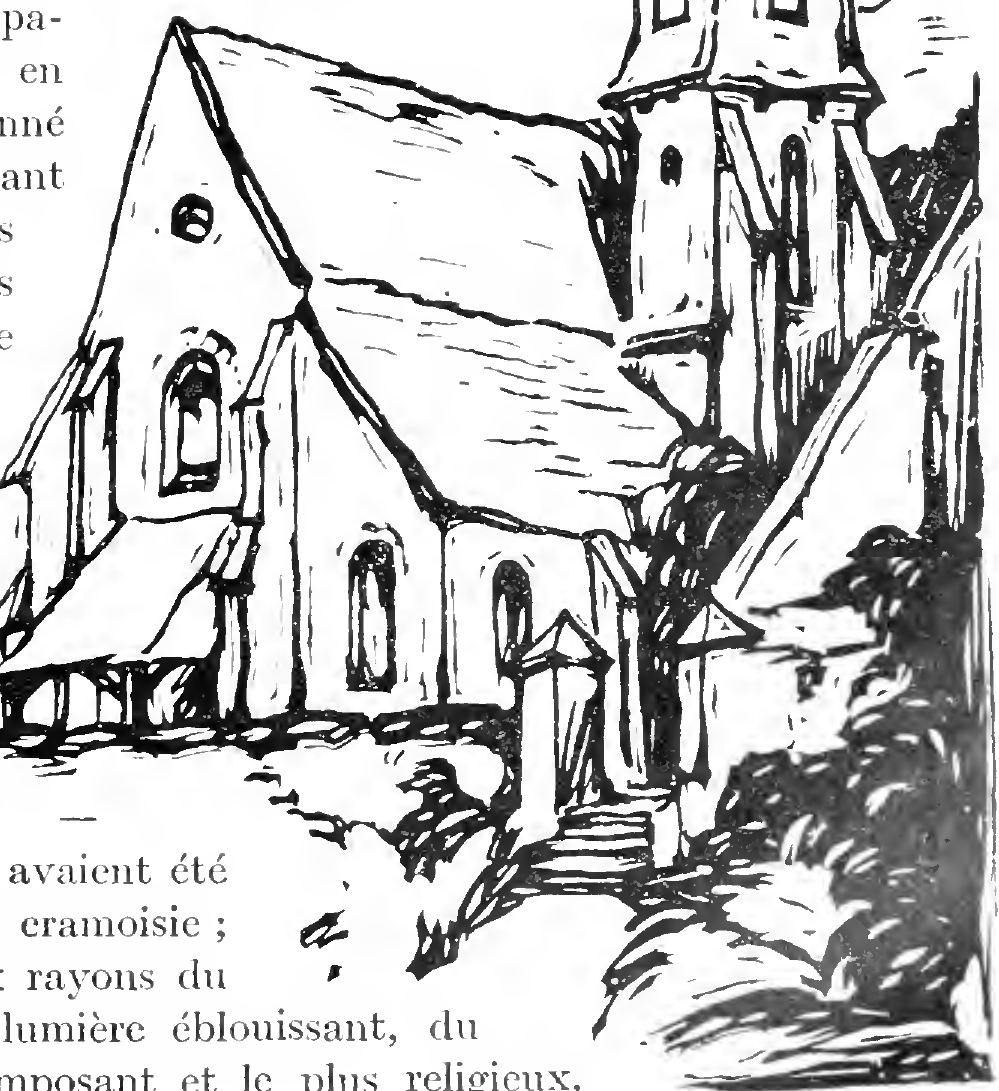
Once, in the midst of his new piety, when Julien had already been studying theology for two years, he was betrayed by a sudden eruption of the fire that devoured his soul; it was at M. Chélan’s; at a dinner of priests to which the good curé had presented him as a prodigy of learning, it happened that he praised Napoleon furiously. He bound his right arm against his chest, claimed to have dislocated it while moving a fir plank, and carried it in that awkward position for two months. After this afflictive penance, he forgave himself. There is the young man of eighteen, but weak in appearance, and to whom one would have given at most seventeen, who, carrying a small package under his arm, was entering the magnificent church of Verrières.
He found it dark and solitary. On the occasion of a festival, all the casements of the building had been covered with crimson cloth; the result, in the sun's rays, was a dazzling effect of light, of the most imposing and the most religious character.
Julien shuddered. Alone in the church, he settled himself in the pew that had the finest appearance. It bore the arms of M. de Rênal.
On the prie-dieu, Julien noticed a piece of printed paper, laid out there as if to be read. He cast his eyes on it and saw:
Details of the execution and last moments of Louis Jenrel, executed at Besançon, on the...
The paper was torn. On the back one read the first two words of a line, which were: The first step...
"Who could have put this paper there?" said Julien. "Poor wretch!" he added with a sigh, "his name ends like mine..." and he crumpled the paper.
On going out, Julien thought he saw blood near the holy water font; it was holy water that had been spilled: the reflection of the red curtains that covered the windows made it look like blood.
At last, Julien was ashamed of his secret terror.
"Would I be a coward?" he said to himself; "to arms!"
This word so often repeated in the old surgeon's accounts of battles was heroic to Julien. He rose and walked rapidly toward M. de Rênal's house.
Despite these fine resolutions, as soon as he saw it twenty paces from him, he was seized with an invincible shyness. The iron gate was open; it seemed magnificent to him. He had to go in there.
Julien was not the only person whose heart was troubled by his arrival in this house. Madame de Rênal's extreme timidity was disconcerted by the idea of this stranger, who, according to his duties, was going to be constantly between her and her children. She was accustomed to seeing her sons lying in her room. In the morning, many tears had flowed when she saw their little beds carried into the apartment intended for the tutor. It was in vain that she asked her husband that the bed of Stanislas-Xavier, the youngest, be brought back into her room.
Womanly delicacy was pushed to an excessive point in Madame de Rênal. She formed the most disagreeable image of a coarse and unkempt being, charged with scolding her children, solely because he knew Latin, a barbarous language for which her sons would be whipped.