About this book
Julien Sorel climbs from sawmill to salon, torn between the red of the army and the black of the church. Stendhal's 1830 novel, free to read online.
THE HÔTEL DE LA MOLE
What does he do? will he like it there? will he think he pleases there?
RONSARD.
IF everything seemed strange to Julien in the noble drawing-room of the Hôtel de La Mole, the pale young man in black seemed, in his turn, highly singular to the persons who deigned to notice him. Madame de La Mole suggested to her husband that he should send him on a mission on the days when certain personages were coming to dinner.
"I have a mind to carry the experiment to the end," replied the Marquis. "The Abbé Pirard maintains that we are wrong to wound the self-esteem of the people whom we admit to our society. One leans only upon what resists, etc. This fellow is offensive only by his unknown face; he is, for the rest, a deaf-mute."
"In order that I may find my bearings," Julien told himself, "I must write down the names and a word about the character of the personages whom I see arriving in this drawing-room."
He placed in the first rank five or six friends of the house, who paid court to him at random, believing him protected by a caprice of the Marquis. These were poor wretches, more or less flat; but, it must be said to the credit of that class of men as it is found to-day in the drawing-rooms of the aristocracy, they were not equally flat to all. Such a one among them would have allowed himself to be roughly handled by the Marquis, who would have rebelled against a harsh word addressed to him by Madame de La Mole.
There was too much pride and too much boredom at the bottom of the characters of the masters of the house; they were too accustomed to insulting people to be able to unbend, for them to hope for true friends. But, except on rainy days, and in moments of savage boredom, which were rare, they were always found to be perfectly polite.
If the five or six obliging persons who showed so paternal a friendship for Julien had deserted the Hôtel de La Mole, the Marquise would have been exposed to great moments of solitude; and, in the eyes of women of that rank, solitude is frightful: it is the emblem of disgrace.
The Marquis was perfect to his wife; he saw to it that her drawing-room was sufficiently furnished; not with peers, he found his new colleagues not noble enough to come to his house as friends, nor amusing enough to be admitted there as subordinates.
It was only much later that Julien penetrated these secrets. The governing politics that keeps bourgeois households going is broached in those of the marquis's class only in moments of distress.
Such is still, even in this bored century, the empire of the necessity to amuse oneself, that even on dinner days, scarcely had the marquis left the drawing room than everyone fled. Provided one did not jest about God, nor about priests, nor about the king, nor about people in place, nor about artists protected by the court, nor about anything that is established; provided one said no good of Béranger, nor of the opposition newspapers, nor of Voltaire, nor of Rousseau, nor of anything that allows itself a little plain speaking; provided above all that one never spoke politics, one could freely reason about everything.
There is no hundred thousand écus of income nor blue ribbon that can contend against such a drawing-room charter. The slightest lively idea seemed a coarseness. Despite good tone, perfect politeness, the desire to be agreeable, boredom was read on every brow. The young people who came to pay their respects, fearing to speak of something that might suggest a thought, or to betray some prohibited reading, fell silent after a few very elegant words about Rossini and the weather.
Julien observed that the conversation was ordinarily kept alive by two viscounts and five barons whom M. de La Mole had known during the Emigration. These gentlemen enjoyed six to eight thousand livres of income; four held for the Quotidienne, and three for the Gazette de France. One of them had every day to recount some anecdote of the Château in which the word admirable was not spared. Julien noticed that he had five crosses, the others generally had only three.
On the other hand, one saw in the antechamber ten lackeys in livery, and all evening one had ices or tea every quarter of an hour; and, toward midnight, a kind of supper with champagne.
That was the reason that sometimes kept Julien to the end; for the rest, he almost could not understand how one could seriously listen to the ordinary conversation of this drawing room, so magnificently gilded. Sometimes he looked at the interlocutors, to see whether they themselves were not mocking what they said. My M. de Maistre, whom I know by heart, has said a hundred times better, he thought, and even he is very tedious.
Julien was not alone in perceiving the moral asphyxia. Some consoled themselves by taking quantities of ices; others by the pleasure of saying for the rest of the evening: I have just come from the hôtel de La Mole, where I learned that Russia, etc.
Julien learned from one of the complaisant gentlemen that it was not yet six months since Madame de La Mole had rewarded an assiduity of more than twenty years by making prefect the poor baron Le Bourguignon, sub-prefect since the Restoration.
This great event had re-tempered the zeal of all these gentlemen; they would have taken offense at very little before, they no longer took offense at anything. Rarely was the lack of regard direct, but Julien had already caught, at table, two or three brief little dialogues between the marquis and his wife, cruel for those placed near them. These noble personages did not conceal their sincere contempt for everything that did not issue from people who rode in the king's carriages. Julien observed that the word crusade was the only one that gave their faces the expression of profound seriousness, mingled with respect. Ordinary respect always had a nuance of complaisance.
In the midst of this magnificence and this boredom, Julien took interest in nothing but M. de La Mole; he heard him with pleasure protesting one day that he had nothing to do with the advancement of that poor Le Bourguignon. It was an attention for the marquise; Julien knew the truth from abbé Pirard.
One morning when the abbé was working with Julien, in the marquis's library, on the eternal Frilair lawsuit:
— Monsieur, said Julien suddenly, dining every day with Madame la marquise, is that one of my duties, or is it a kindness that is shown me?
— It is a signal honor! replied the abbé, scandalized. Never has M. N..., the academician, who for fifteen years has paid an assiduous court, been able to obtain it for his nephew M. Tambeau.
— For me, Monsieur, it is the most painful part of my employment. I was less bored at the seminary. I sometimes see even Mademoiselle de La Mole yawning, though she must be accustomed to the amiability of the friends of the house. I am afraid of falling asleep. For pity's sake, obtain for me permission to go and dine for forty sous in some obscure inn.
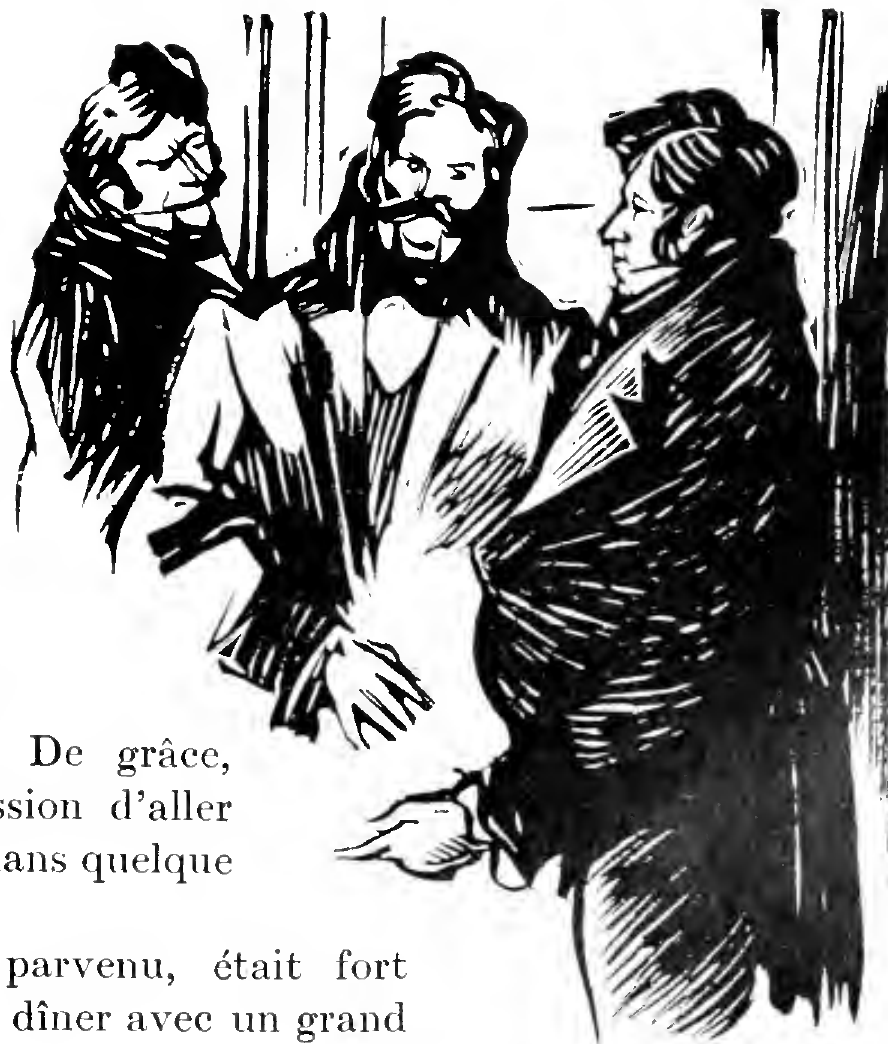
The abbé, a true parvenu, was highly sensitive to the honor of dining with a great
1
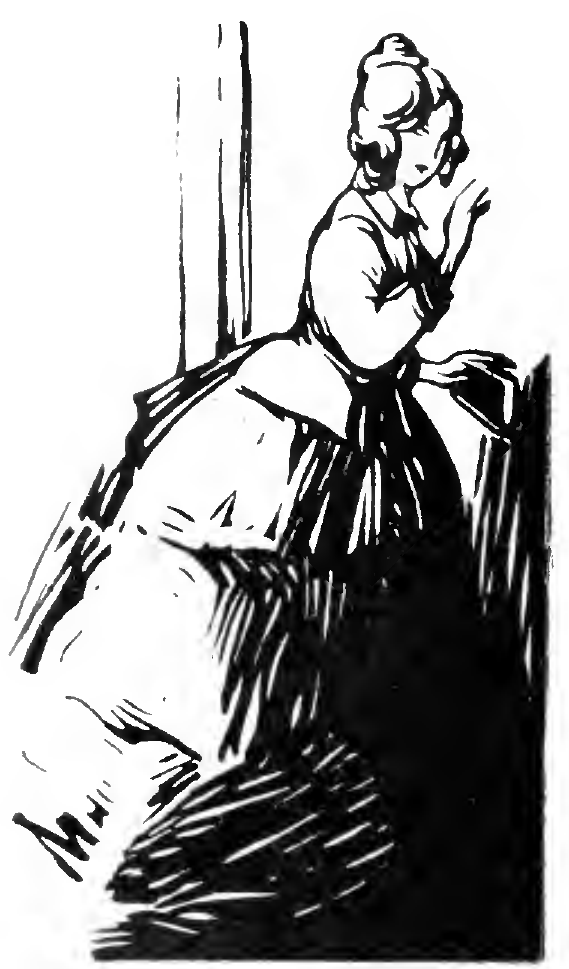
lord. While he was striving to make Julien understand this feeling, a slight noise made them turn their heads. Julien saw Mademoiselle de La Mole who was listening. He blushed. She had come to fetch a book and had heard everything; she conceived some consideration for Julien. That one was not born on his knees, thought she, like this old abbé. Good God! how ugly he is.
At dinner, Julien did not dare look at Mademoiselle de La Mole, but she had the kindness to address him. That day, many people were expected, she urged him to stay. The young girls of Paris do not much like people of a certain age, especially when they are dressed without care. Julien had not needed much sagacity to perceive that the colleagues of M. Le Bourguignon, remaining in the drawing room, had the honor of being the ordinary subject of Mademoiselle de La Mole's pleasantries. That day, whether or not there was affectation on her part, she was cruel to the bores.
Mademoiselle de La Mole was the center of a little group that formed almost every evening behind the marquise's immense bergère. There were the marquis de Croisenois, the comte de Caylus, the vicomte de Luz, and two or three other young officers, friends of Norbert or of his sister. These gentlemen sat on a large blue sofa. At the end of the sofa opposite the one occupied by the brilliant Mathilde, Julien was placed silently on a rather low little straw chair. This modest post was envied by all the complaisant gentlemen; Norbert maintained him there decently, the young secretary of his father, by addressing the word to him or by naming him once or twice in the evening. That day, Mademoiselle de La Mole asked him what might be the height of the mountain on which the citadel of Besançon is situated. Julien was never able to say whether this mountain was higher or lower than Montmartre. Often he laughed heartily at what was said in this little group; but he felt incapable of inventing anything similar. It was like a foreign language that he understood, but could not speak.
Mathilde's friends that day were in continual hostility with the people who arrived in this vast drawing room. The friends of the house had the preference at first, as being better known. One may judge whether Julien was attentive; everything interested him, both the substance of things and the manner of jesting about them.
— Ah! here is M. Descoulis, said Mathilde, he has no more wig; is it that he would like to reach the prefecture by genius? he displays that bald brow which he says is filled with lofty thoughts.
"It's a man who knows the whole world," said the Marquis de Croisenois; "he also comes to my uncle the cardinal's. He is capable of cultivating a lie with each of his friends, for years on end, and he has two or three hundred friends. He knows how to feed friendship—that is his talent. As you see him there, he is already bespattered with mud, at the door of one of his friends, from seven o'clock in the morning, in winter.He quarrels from time to time, and he writes seven or eight letters for the quarrel. Then he makes it up, and he has seven or eight letters for the transports of friendship. But it is in the frank and sincere outpouring of the honest man who keeps nothing back in his heart that he shines most. This maneuver appears when he has some service to ask. One of my uncle's grand vicars is admirable when he recounts the life of M. Descoulis since the Restoration. I will bring him to you."
"Bah! I would not believe such talk; it is professional jealousy among little people," said the Comte de Caylus.
"M. Descoulis will have a name in history," resumed the marquis: "he made the Restoration with the Abbé de Pradt, and MM. de Talleyrand and Pozzo di Borgo."
"That man has handled millions," said Norbert, "and I cannot conceive why he comes here to embalm my father's epigrams, which are often abominable. 'How many times have you betrayed your friends, my dear Descoulis?' he cried to him the other day, from one end of the table to the other."
"But is it true that he has betrayed?" said Mademoiselle de La Mole. "Who has not betrayed?"
"What! " said the Comte de Caylus to Norbert, "you have M. Sainclair, that famous liberal, at your house, and what the devil has he come there to do? I must get near him, speak to him, make him talk; they say he has so much wit."
"But how is your mother going to receive him?" said M. de Croisenois. "He has such extravagant, such generous, such independent ideas..."
"Look," said Mademoiselle de La Mole, "there is the independent man,bowing to the ground before M. Descoulis, and seizing his hand. I almost thought he was going to carry it to his lips."
“Descoulis must be on better terms with the government than we think,” resumed M. de Croisenois.
“Sainclair comes here to get into the Academy,” said Norbert. “Look how he bows to Baron L—, Croisenois.”
“He would be less abject if he went down on his knees,” put in M. de Luz.
“My dear Sorel,” said Norbert, “you who have wit, though you have just come down from your mountains, try never to bow as that great poet does, even if it were God the Father.”
“Ah! here comes the man of wit par excellence, Baron Bâton,” said Mademoiselle de La Mole, imitating somewhat the voice of the footman who had just announced him.
“I believe even your servants make fun of him. What a name, Baron Bâton!” said M. de Caylus.
“What does a name matter? he said to us the other day,” resumed Mathilde. “Picture to yourself the Duc de Bouillon being announced for the first time: the public, in my case, only lacks a little habit...”
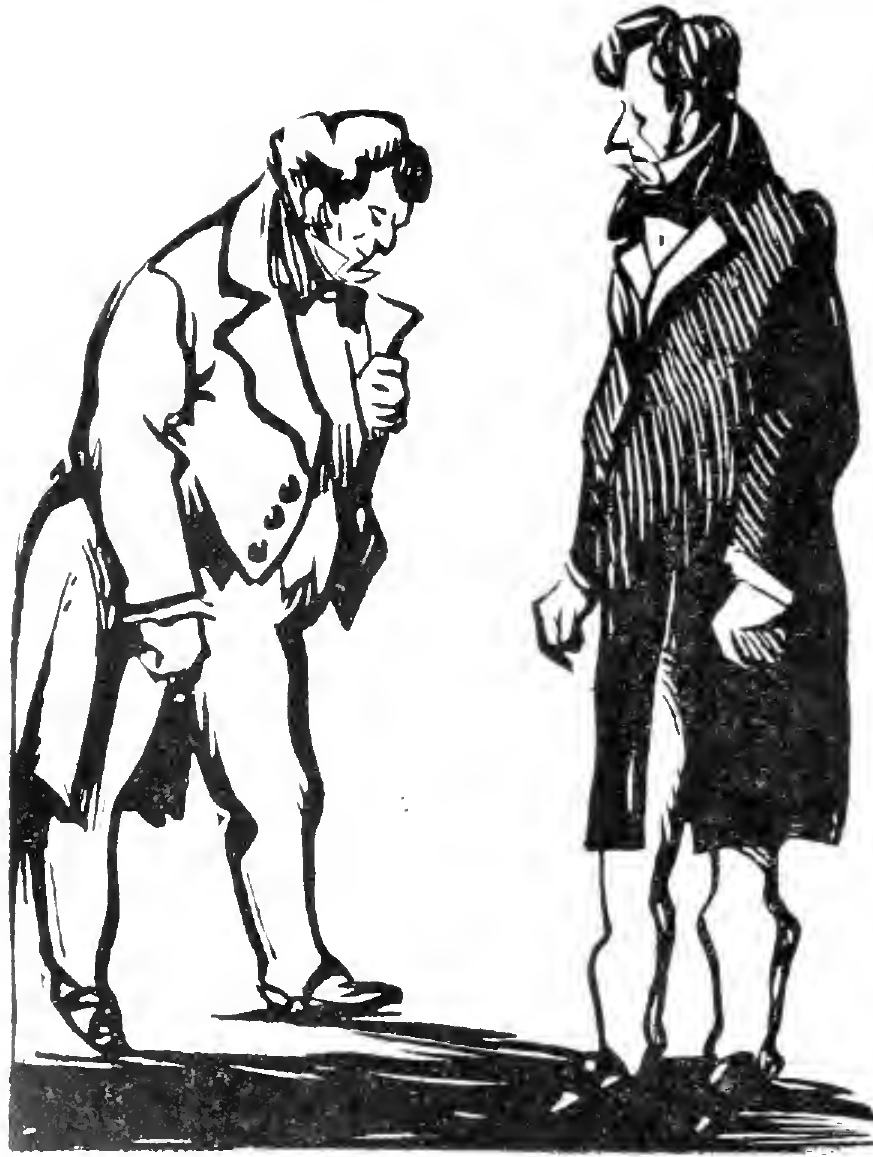
Julien left the neighbourhood of the sofa. Still little sensitive to the charming subtleties of light mockery, to laugh at a jest he insisted that it should be founded on reason. He saw in the remarks of these young people only the tone of general denigration, and was shocked by it. His provincial or English prudence went so far as to see envy in it, in which assuredly he was mistaken.
Count Norbert, he said to himself, whom I have seen make three rough drafts for a letter of twenty lines to his colonel, would be very happy if he had written in his life a page like those of M. Sainclair.
:
Passing unnoticed because of his unimportance, Julien approached several groups in succession; he followed the Baron Bâton at a distance and wanted to hear him. This man of so much wit had an anxious air, and Julien did not see him recover a little until he had found three or four stinging phrases. It seemed to Julien that this kind of wit needed space.
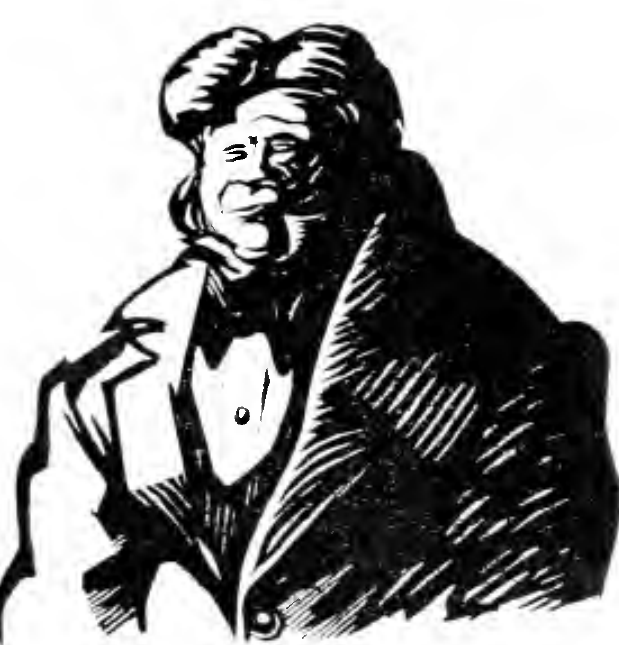
The baron could not say mots; he needed at least four sentences of six lines each to be brilliant.
“This man dissertates, he does not converse,” said someone behind Julien. He turned round and blushed with pleasure when he heard the name of Count Chalvet. “He is the most subtle man of the century.” Julien had often found his name in the Mémorial de Sainte-Hélène and in the fragments of history dictated by Napoleon. Count Chalvet was brief in his speech; his strokes were flashes, exact, lively, profound. If he spoke of a matter, at once one saw the discussion take a step forward. He brought facts to it, it was a pleasure to hear him. In politics, moreover, he was cynically shameless.
“I am independent, I am,” he was saying to a gentleman wearing three decorations, and of whom he was apparently making fun. “Why should I be expected to hold today the same opinion as I held six weeks ago? In that case my opinion would be my tyrant.”
Four grave young men, who surrounded him, pulled a face; these gentlemen did not like the jesting manner. The count saw that he had gone too far. Fortunately he caught sight of the honest M. Balland, a hypocrite of honesty. The count began to talk to him; people drew nearer, and it was understood that poor Balland was about to be sacrificed. By dint of morality and moralizing, although horribly ugly, and after first steps in society difficult to describe, M. Balland had married a very rich woman, who had died; then a second very rich woman, whom one never sees in society. He enjoys in all humility sixty thousand livres a year, and has flatterers of his own. Count Chalvet spoke to him of all this, and without pity. Soon there was a circle of thirty people around them.
Everybody was smiling, even the grave young men, the hope of the century.
Why does he come to M. de La Mole’s, where he is obviously the butt? thought Julien. He drew nearer to Abbé Pirard, to ask him.
M. Balland slipped away.
“Good!” said Norbert, “there goes one of my father’s spies; there remains only the little lame Napier.”
Can this be the key to the riddle? thought Julien. But, in that case, why does the Marquis receive M. Balland?
The severe Abbé Pirard was pulling a face in a corner of the drawing room, as he heard the footmen announce.
“It is a den, then,” he was saying like Basile, “I see nothing arrive but tainted people.”
It was because the severe abbé did not know what pertains to high society. But, through his Jansenist friends, he had very exact notions about these men who arrive in drawing rooms only by their extreme subtlety in the service of all parties, or by their scandalous fortune. For a few minutes that evening he answered with abundant heart the eager questions of Julien, then stopped short, distressed at always having difficulty in speaking ill of everybody, and imputing it to himself as a sin. Bilious, Jansenist, and believing in the duty of Christian charity, his life in society was a combat.
“What a face that Abbé Pirard has!” said Mademoiselle de La Mole, as Julien drew nearer the sofa.
Julien felt irritated, but nevertheless she was right. M. Pirard was incontestably the most honest man in the drawing room, but his blotchy face, which twitched with the surfeit of his conscience, made him hideous at this moment. Believe in physiognomies after that, thought Julien; it is at the moment when the delicacy of Abbé Pirard reproaches himself with some trifling peccadillo that he looks atrocious; while on the face of that Napier, a spy known to all, one reads a pure and tranquil happiness. Abbé Pirard had nevertheless made great concessions to his party, he had taken a servant, he was very well dressed.
1
Julien noticed something singular in the drawing room: it was a movement of all eyes towards the door, and a sudden half-silence. The footman was announcing the famous Baron de Tolly, on whom the elections had just fixed all eyes. Julien stepped forward and saw him very well. The baron presided over a college; he had had the luminous idea of spiriting away the little squares of paper bearing the votes of one of the parties. But, so that there should be compensation, he replaced them as he went along with other little pieces of paper bearing a name agreeable to him. This decisive manoeuvre was perceived by some electors who hastened to compliment Baron de Tolly. The good man was still pale from this great affair. Ill-disposed minds had uttered the word galleys. M. de La Mole received him coldly. The poor baron escaped.
(1)“If he leaves us so quickly, it is to go to M. Comte’s,” said Count Chalvet; and they laughed.
In the midst of a few silent great lords, and of intriguers, most of them tainted, but all men of wit, who that evening abounded in succession in M. de La Mole’s drawing room (people were talking of him for a ministry), little Tanbeau was making his first campaign. If he did not yet have the subtlety of perception, he made up for it, as will be seen, by the energy of his words.
Why not condemn this man to ten years in prison? he was saying at the moment when Julien approached his group: it is in the depths of a dungeon that these reptiles must be confined; they must be made to die in the shade, otherwise their venom is excited and becomes more dangerous. What is the good of condemning him to a fine of a thousand écus? He is poor, so be it, so much the better; but his party will pay for him. It needed a fine of five hundred francs and ten years in a dungeon.
Eh! good God! what is this monster they are talking about? thought Julien, who admired the vehement tone and the jerky gestures of his colleague. The thin, drawn little face of the academician’s nephew was hideous at this moment. Julien soon learned that it was a question of the greatest poet of the period.
— Ah, monster! cried Julien, half aloud, and generous tears came to wet his eyes. Ah, little wretch! he thought, I will repay you for that remark. Yet these,
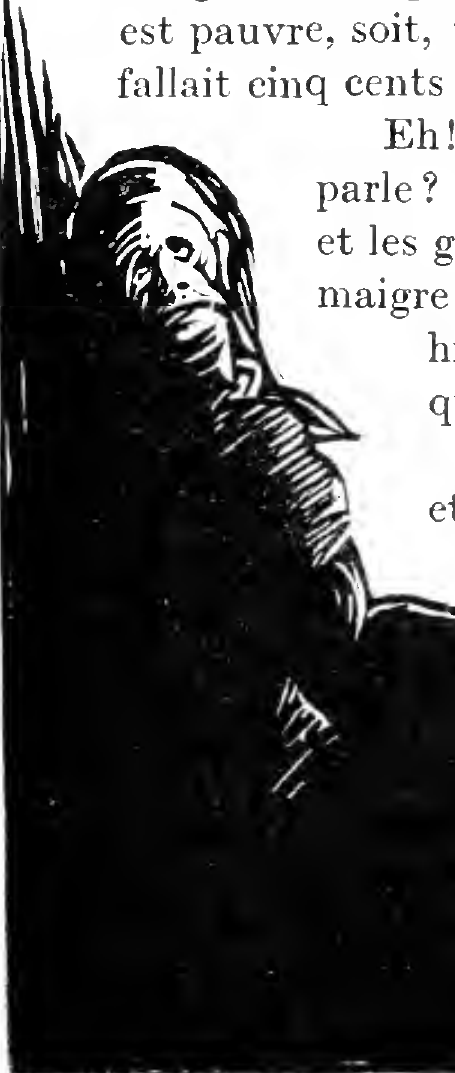
he thought, are the lost children of the party of which the Marquis is one of the chiefs! And that illustrious man whom he slanders, how many crosses, how many sinecures would he not have accumulated, had he sold himself, I do not say to the base ministry of M. de Nerval, but to any one of those passably honest ministers whom we have seen succeed one another?
The abbé Pirard made a sign to Julien from a distance; M. de La Mole had just said a word to him. But when Julien, who at that moment was listening, with downcast eyes, to the groans of a bishop, was free at last and able to approach his friend, he found him exasperated by that abominable little Tanbeau. This little monster loathed him as the source of Julien's favour, and had come to pay court to him.
When will death deliver us from this old rot? It was in these terms, of biblical energy, that the little man of letters was at that moment speaking of the respectable Lord Holland. His merit was to know very well the biography of living men, and he had just made a rapid review of all the men who might aspire to some influence under the reign of the new king of England.
The abbé Pirard passed into a neighbouring drawing room: Julien followed him.
— The Marquis does not like scribblers, I warn you; that is his only antipathy. Know Latin, Greek, if you can, the history of the Egyptians, the Persians, etc., he will honour and protect you as a scholar. But do not go writing a page in French, and especially on grave matters and above your position in the world, he would call you a scribbler, and would take you in dislike. How is it, living in a great lord's mansion, that you do not know the Duke de Castries's remark about d'Alembert and Rousseau: That wants to reason about everything, and has not a thousand écus of income?
Everything becomes known, thought Julien, here as at the seminary! He had written eight or ten pages that were rather emphatic: it was a sort of historical eulogy of the old surgeon-major who, he said, had made a man of him. And this little notebook, said Julien to himself, has always been kept under lock and key! He went up to his room, burned his manuscript, and returned to the drawing-room. The brilliant scoundrels had left him; there remained only the men with decorations.
Around the table, which the servants had just brought in fully set, were seven or eight women, very noble, very devout, very affected, between thirty and thirty-five years of age. The brilliant Maréchale de Fervagues entered, apologising for the lateness of the hour. It was after midnight; she went to take her place beside the Marquise. Julien was deeply moved; she had the eyes and the gaze of Madame de Rénal.
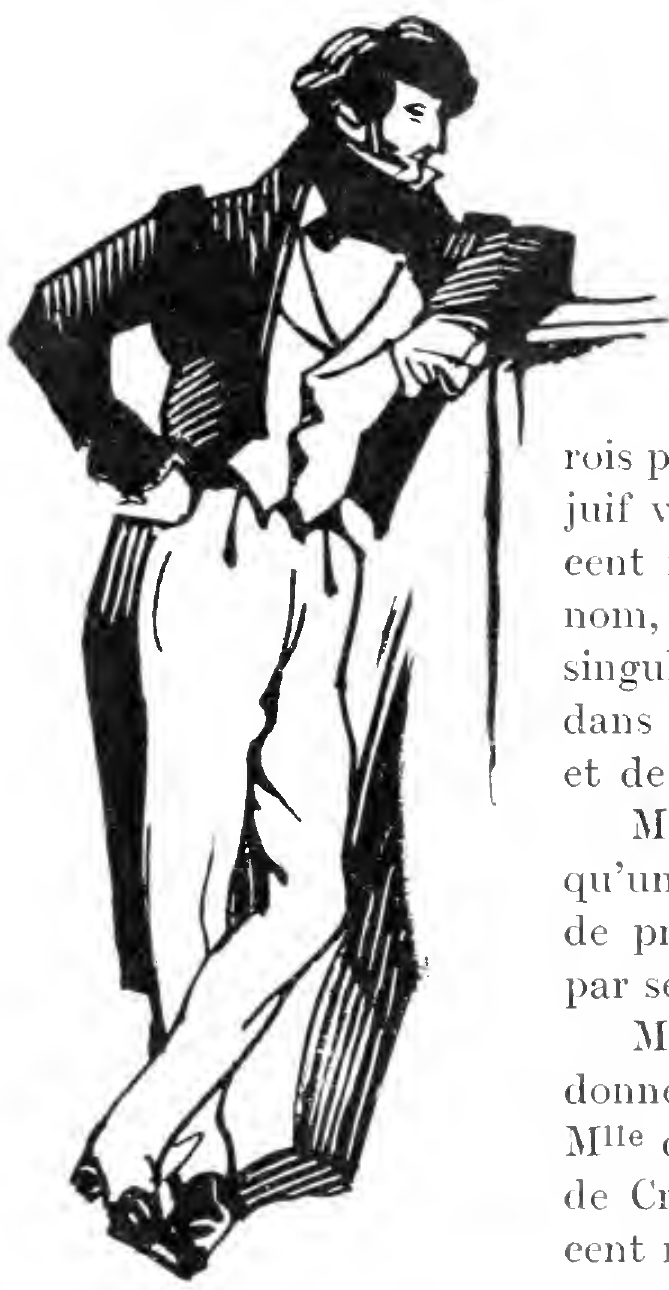
Mademoiselle de La Mole's group was still crowded. She was occupied with her friends in making fun of the unfortunate Comte de Thaler. He was the only son of that famous Jew, celebrated for the riches he had acquired by lending money to kings for making war upon peoples. The Jew had just died, leaving his son a hundred thousand écus of income a month, and a name, alas, too well known! This singular position would have demanded simplicity of character, or much strength and will-power.
Unfortunately, the Count was merely a good fellow stuffed with every sort of pretension inspired in him by his flatterers.
M. de Caylus maintained that he had been given the will to ask for Mademoiselle de La Mole's hand in marriage, to whom the Marquis de Croisenois, who was to have an income of a hundred thousand livres, was paying court.
Ah! do not accuse him of havinga will, said Norbert piteously.
What this poor Comte de Thaler lacked most, perhaps, was the faculty of willing. In this side of his character he would have been worthy to be a king. Taking counsel of everybody, he had not the courage to follow any advice through to the end.
His physiognomy would have sufficed by itself, said Mademoiselle de La Mole, to inspire one with eternal joy. It was a singular mixture of uneasiness and disappointment; but from time to time one distinguished very clearly in it gusts of self-importance and of that sharp tone which the richest man in France ought to have, especially when he is also rather well made in person and is not yet thirty-six. He is timidly insolent, said M. de Croisenois. The Comte de Caylus, Norbert and two or three young men with moustaches peppered him as much as they pleased, without his suspecting it, and at last sent him away as one o'clock struck.
Is it your famous Arab horses that are waiting for you at the door in this weather? Norbert said to him.
No; it is a new team, far less expensive, replied M. de Thaler. The horse on the left costs me five thousand francs, and the one on the right is worth only a hundred louis; but I beg you to believe that he is only harnessed at night. It is because his trot is perfectly similar to the other's.
Norbert's remark made the Count reflect that it was decent for a man like him to have a passion for horses, and that he must not let his own get wet. He departed, and these gentlemen went out a moment afterwards, laughing at him.
Thus, thought Julien, hearing them laugh on the staircase, it has been granted me to see the other extreme of my situation! I have not twenty louis of income, and I have found myself side by side with a man who has twenty louis of income per hour, and they were laughing at him... Such a sight cures one of envy.