About this book
Julien Sorel climbs from sawmill to salon, torn between the red of the army and the black of the church. Stendhal's 1830 novel, free to read online.
LIXIX THE INTRIGUE
Castres, 1676. — A brother has just murdered his sister in the house next to mine; this gentleman was already guilty of a murder. His father, by secretly distributing five hundred écus to the councillors, saved his life.
Locke, Voyage in France.
On leaving the bishop's palace, Mathilde did not hesitate to send a courier to Madame de Fervaques; the fear of compromising herself did not stop her for a second. She implored her rival to obtain a letter for M. de Frilair, written entirely in the hand of Monseigneur the bishop of ***. She went so far as to beg her to hastenherself to Besançon. This stroke was heroic on the part of a jealous and proud soul.
\[ \text{1.
On Fouqué's advice, she had had the prudence to say nothing to Julien of her steps. His presence disturbed him enough without that. More honest a man as death approached than he had been during his life, he had remorse not only toward M. de La Mole, but also toward Mathilde.
What then! he said to himself, I find moments of distraction and even of boredom in her company. She is ruining herself for me, and this is how I reward her! Am I then a wicked man? This question would have occupied him very little when he was ambitious; then, to fail was the only shame in his eyes.
His moral uneasiness in Mathilde's company was all the more decided, since he inspired in her at this moment the most extraordinary and the most insane passion. She spoke only of the strange sacrifices she wished to make to save him.
Exalted by a sentiment of which she was proud and which overrode all her pride, she would have wished not to let a single instant of her life pass without filling it with some extraordinary step. The strangest projects, the most perilous for her, filled her long conversations with Julien. The jailers, well paid, let her reign in the prison. Mathilde's ideas were not confined to the sacrifice of her reputation; she cared little about making her condition known to all society. To throw herself on her knees to beg for Julien's pardon before the king's carriage going at a gallop, to attract the prince's attention at the risk of being crushed a thousand times, was one of the least chimeras dreamed by this exalted and courageous imagination. Through her friends employed about the king, she was sure of being admitted to the reserved parts of the park of Saint-Cloud.
Julien found himself little worthy of so much devotion; to tell the truth, he was tired of heroism. It was to a simple, naive, and almost timid tenderness that he would have been sensitive, whereas, on the contrary, the idea of a public and of others was always necessary to Mathilde's haughty soul.
In the midst of all her anguish, of all her fears for the life of this lover, whom she did not wish to survive, she had a secret need to astonish the public by the excess of her love and the sublimity of her undertakings.
Julien took offense at not finding himself touched by all this heroism. What would it have been, had he known all the follies with which Mathilde overwhelmed the devoted but eminently reasonable and limited mind of good Fouqué?
He did not know quite what to blame in Mathilde's devotion; for he too would have sacrificed all his fortune and exposed his life to the greatest hazards to save Julien. He was stupefied by the quantity of gold thrown about by Mathilde. The first days, the sums thus spent imposed on Fouqué, who had for money all the veneration of a provincial.
At last, he discovered that Mademoiselle de La Mole's projects often varied, and, to his great relief, found a word to blame this character so fatiguing to him: she was changeable. From this epithet to that of featherbrain, the greatest anathema in the provinces, there is only a step.
It is strange, Julien said to himself one day as Mathilde was leaving his prison, that a passion so vivid and of which I am the object leaves me so insensitive! and I adored her two months ago! I had indeed read that the approach of death disinterests one from everything; but it is dreadful to feel ungrateful and to be unable to change. Am I then anegoist? He addressed to himself on this subject the most humiliating reproaches.
Ambition was dead in his heart, another passion had risen from its ashes; he called it remorse for having murdered Madame de Rénal.
In fact, he was madly in love with her. He found a singular sweetness when, left absolutely alone and without fear of being interrupted, he could give himself up entirely to the memory of the happy days he had formerly spent at Verrières or at Vergy. The slightest incidents of those times too rapidly flown had for him a freshness and a charm irresistible. Never did he think of his successes in Paris; he was bored by them.
These dispositions, which increased from day to day, were partly guessed by Mathilde's jealousy. She perceived very clearly that she had to struggle against the love of solitude. Sometimes she pronounced with terror the name of Madame de Rénal. She saw Julien shudder. Her passion henceforth had neither bounds nor measure.
If he dies, I die after him, she said to herself with all possible good faith. What would the salons of Paris say on seeing a girl of my rank adore to this degree a lover destined to death? To find such sentiments, one must go back to the time of the heroes; it was loves of this kind that made the hearts of the age of Charles IX and of Henri III palpitate.
In the midst of the most vivid transports, when she pressed Julien's head to her heart: What! she said to herself with horror, this charming head would be destined to fall! Well then! she added, inflamed with a heroism that was not without happiness, my lips, which press against this pretty hair, will be cold less than twenty-four hours after.
The memories of these moments of heroism and of frightful voluptuousness bound her with an invincible embrace. The idea of suicide, so engrossing in itself, and hitherto so distant from this haughty soul, penetrated it, and soon reigned there with absolute empire. No, the blood of my ancestors has not grown cold in descending to me, Mathilde said to herself with pride.
:
:
:
:
:
:
:
— I have a favor to ask of you, her lover said to her one day: put your child out to nurse at Verrières; Madame de Rénal will watch over the nurse.
— What you say to me there is very hard... And Mathilde turned pale.
"It is true, and I beg your pardon for it a thousand times," cried Julien coming out of his reverie, and clasping her in his arms.
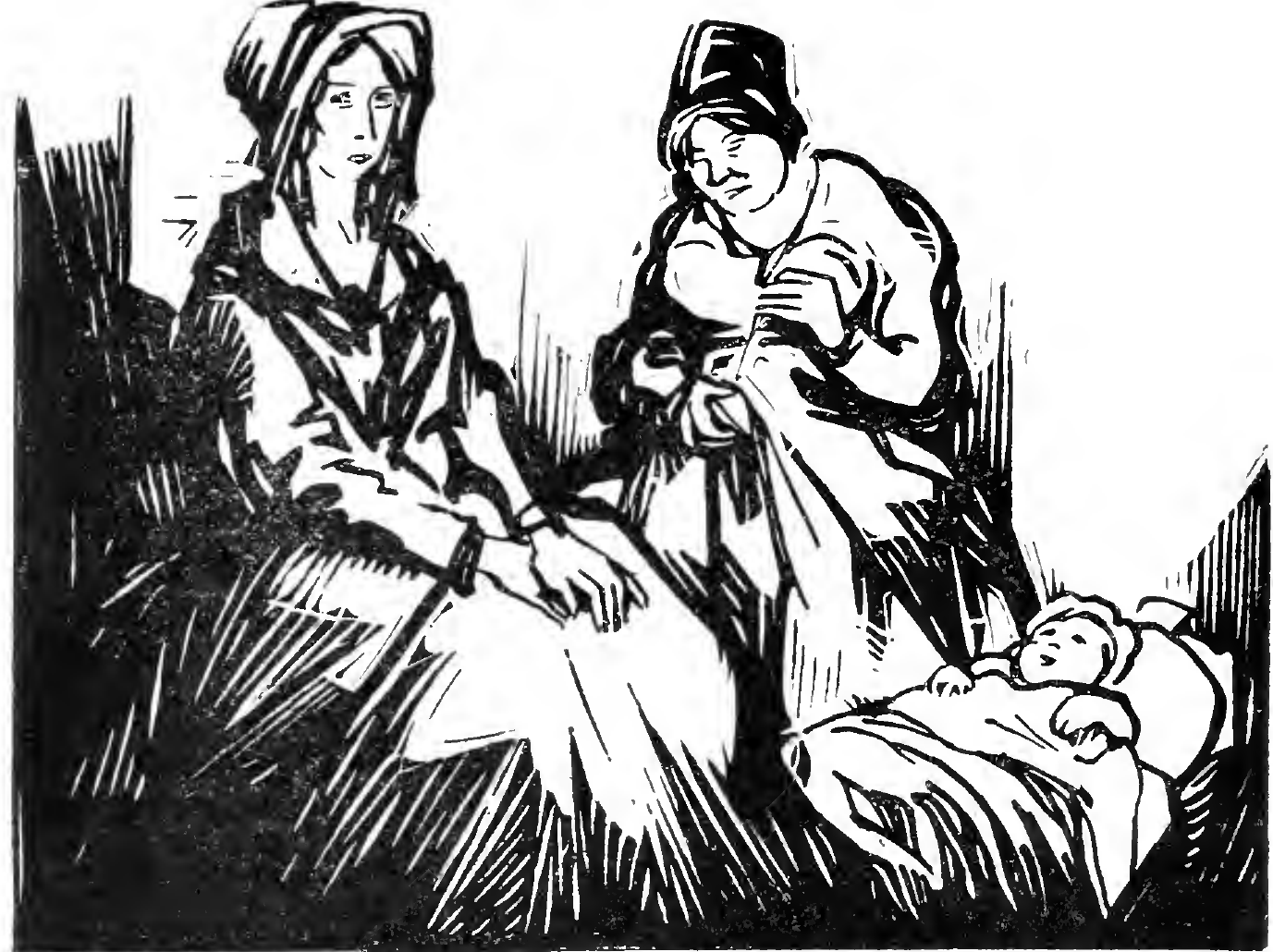
After having dried her tears, he returned to his idea, but with more skill. He had given the conversation a turn of melancholy philosophy. He spoke of that future which was so soon to close for him. "We must agree, dear friend, that the passions are an accident in life, but that accident is only met with in superior souls... The death of my son would at bottom be a happiness for the pride of your family, that is what the subordinates will guess. Neglect will be the lot of this child of misfortune and shame... I hope that at an epoch which I do not wish to fix, but which nevertheless my courage foresees, you will obey my last recommendations: You will marry the Marquis de Croisenois.
:
"What, dishonoured!"
"Dishonour cannot attach to a name such as yours. You will be a widow, and the widow of a madman, that is all. I will go further: my crime, having no money as its motive, will not be dishonouring. Perhaps, at that epoch, some philosophic legislator will have obtained from the prejudices of his contemporaries the abolition of the death penalty. Then some friendly voice will say by way of example: 'Look, the first husband of Mademoiselle de La Mole was a madman, but not a wicked man, not a villain. It was absurd to cut off that head...' Then my memory will not be infamous; at least after a certain time... Your position in the world, your fortune, and, permit me to say it, your genius, will make M. de Croisenois, become your husband, play a role which by himself alone he could not attain. He has only birth and bravery, and those qualities alone, which made a accomplished man in 1729, are an anachronism a century later, and give only pretensions. Other things are still needed to place oneself at the head of the youth of France.
You will bring the support of a firm and enterprising character to the political party into which you will throw your husband. You will be able to succeed the Chevreuses and the Longuevilles of the Fronde... But then, dear friend, the celestial fire which animates you at this moment will be a little cooled.
Permit me to tell you so," he added after many other preparatory phrases, "in fifteen years you will look upon as an excusable folly, but nevertheless as a folly, the love you have had for me..."
He stopped suddenly and became dreamy. He found himself once more face to face with this idea so shocking to Mathilde: In fifteen years Madame de Rênal will adore my son, and you will have forgotten him.