About this book
Julien Sorel climbs from sawmill to salon, torn between the red of the army and the black of the church. Stendhal's 1830 novel, free to read online.
MORAL LOVE
There also was of course in Adeline That calm patrician polish in the address, Which ne'er can pass the equinoctial line Of any thing which Nature would express: Just as a Mandarin finds nothing fine, At least his manner suffers not to guess That any thing he views can greatly please.
DON JUAN, c. XIII, stanza 84.
There is a little folly in the way of seeing of this whole family, thought the marshal's wife; they are infatuated with their young abbé, who knows only how to listen, with rather fine eyes, it is true.
Julien, for his part, found in the marshal's wife's manners an almost perfect example of that patrician calm which breathes an exact politeness and still more the impossibility of any vivid emotion. The unforeseen in movements, the lack of self-command, would have scandalized Madame de Fervagues almost as much as the absence of majesty toward inferiors. The slightest sign of sensibility would have been in her eyes a sort of moral intoxication of which one must be ashamed, and which greatly harms what a person of high rank owes to himself. Her great happiness was to speak of the king's last hunt, her favorite book the Mémoires of the Duke de Saint-Simon, especially the genealogical part.
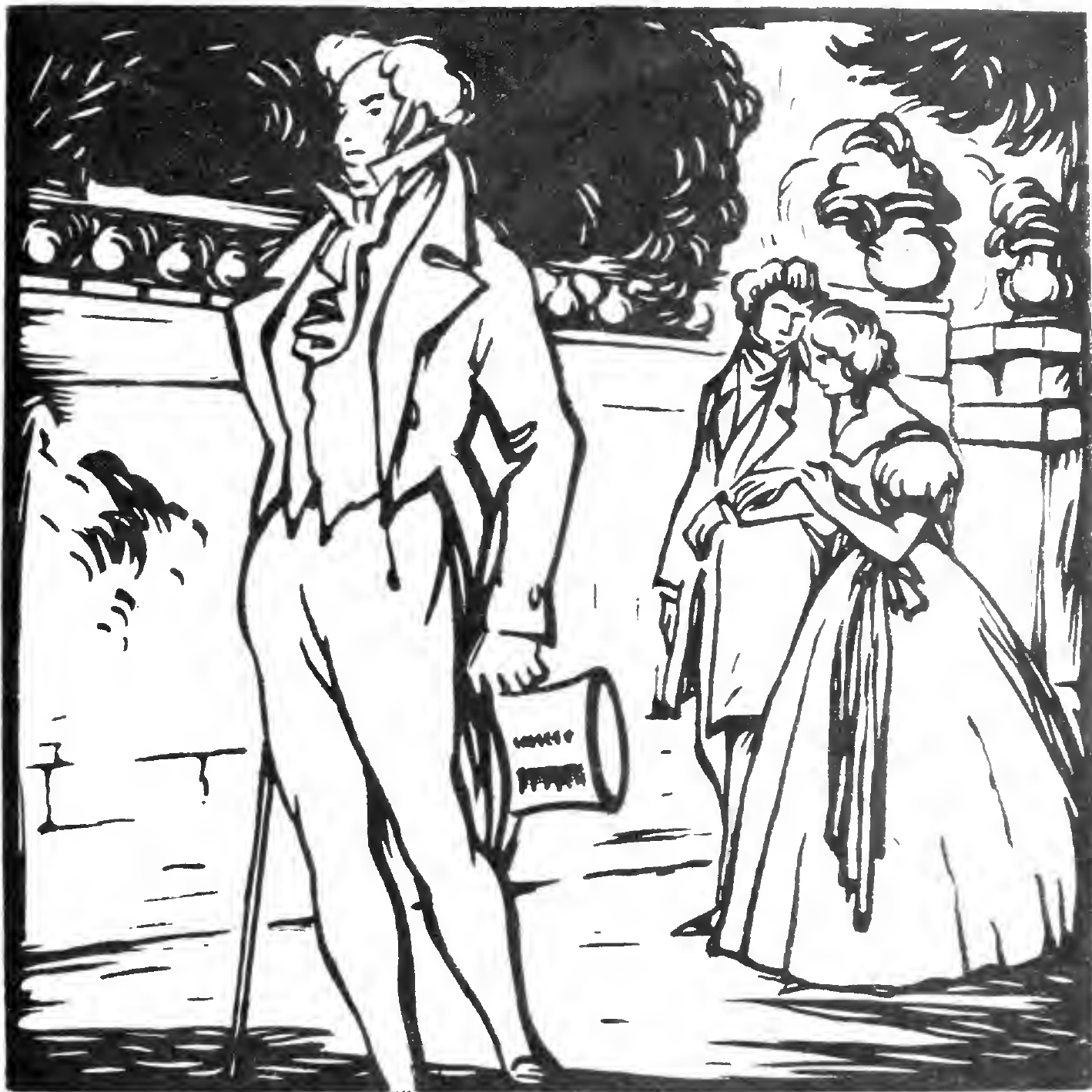
Julien knew the place which, according to the arrangement of the lights, suited Madame de Fervagues's kind of beauty. He was there in advance, but took great care to turn his chair so as not to perceive Mathilde. Astonished by this constancy in hiding from her, one day she left the blue sofa and came to work at a small table near the marshal's wife's armchair. Julien saw her rather close, from beneath Madame de Fervagues's hat. Those eyes that disposed of his fate frightened him at first, then violently cast him out of his usual apathy: he spoke, and very well.
He addressed the marshal's wife, but his sole aim was to act upon Mathilde's soul. He animated himself so much that Madame de Fervagues came to no longer understand what he was saying.
This was a first merit. If Julien had had the idea of completing it with a few phrases of German mysticity, of high religiosity and of Jesuitism, the marshal's wife would have ranked him at once among the superior men called to regenerate the century.
Since he has rather bad taste, said Mademoiselle de La Mole to herself, in speaking so long and with so much fire to Madame de Fervagues, I shall listen to him no more. During all the end of that evening she kept her word, though with difficulty.
At midnight, when she took her mother's candlestick to accompany her to her room, Madame de La Mole stopped on the staircase to make a complete eulogy of Julien. Mathilde finished by becoming ill-humored; she could not find sleep. One idea calmed her: What I despise can still make a man of great merit in the marshal's wife's eyes.
As for Julien, he had acted, he was less unhappy; his eyes fell by chance on the Russia-leather portfolio in which Prince Korasoff had enclosed the fifty-three love letters he had made him a gift of. Julien saw a note at the bottom of the first letter: No. 1 is sent eight days after the first sight.
I am late! cried Julien, for it is a long time since I saw Madame de Fervagues. He at once set about transcribing this first love letter; it was a homily full of phrases on virtue and boring to death; Julien had the good fortune to fall asleep at the second page.
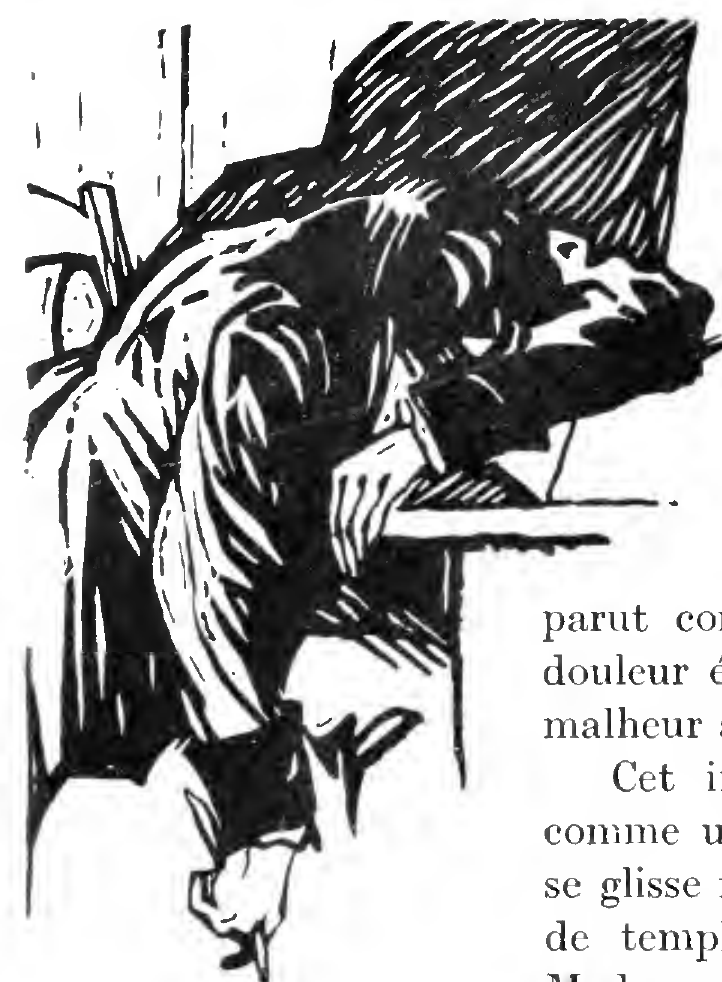
A few hours later, the great sun surprised him leaning on his table. One of the most painful moments of life was that in which each morning, on waking, he learned of his misfortune. That day he finished the copy of his letter almost laughing. Is it possible, he said to himself, that there ever was a young man to write thus! He counted several sentences of nine lines. At the bottom of the original, he perceived a note in pencil.
These letters are delivered in person: on horseback, black cravat, blue frock coat. The letter is handed to the porter with a contrite air; profound melancholy in the gaze. If one perceives some chambermaid, wipe one's eyes furtively, address a word to the chambermaid.
All this was executed faithfully.
What I am doing is very bold, thought Julien as he left the Hôtel de Fervagues, but so much the worse for Korasoff. To dare to write to so celebrated a virtue! I am going to be treated with the last contempt, and nothing will amuse me more. It is at bottom the only comedy to which I can be sensitive. Yes, to cover with ridicule this being so odious, whom I call myself, will amuse me. If I believed myself, I would commit some crime to divert myself.
For a month, the finest moment of Julien's life was that in which he handed his horse to the stable. Korasoff had expressly forbidden him to look, under whatever pretext, at the mistress who had left him. But the step of this horse that she knew so well, the manner in which Julien struck with his whip at the stable door to call a man, sometimes drew Mathilde behind the curtain of the window. The muslin was so light that Julien saw through it. By looking in a certain way beneath the brim of his hat, he perceived Mathilde's figure without seeing her eyes. Consequently, he said to himself, she cannot see mine, and this is not looking at her.
In the evening, Madame de Fervagues behaved toward him exactly as if she had not received the philosophical, mystical, and religious dissertation
that he had handed to her porter that morning with such melancholy. The day before, chance had revealed to Julien the means of being eloquent; he arranged things so as to see Mathilde's eyes. She, for her part, a moment after the marshal's arrival, left the blue sofa: this was deserting her usual company. M. de Croisenois appeared dismayed by this new caprice; his evident sorrow removed from Julien what was most atrocious in his misfortune.
This unforeseen event in his life made him speak like an angel; and as self-love steals even into hearts that serve as temples to the most august virtue: Madame de La Mole is right, said the marshal to herself as she got back into her carriage, this young priest has distinction. My presence must have intimidated him during the first days. In fact, everything one encounters in this house is very frivolous; I see there only virtues aided by old age, and which had great need of the chill of age. This young man will have known how to see the difference; he writes well; but I greatly fear that this request he makes in his letter, that I enlighten him with my counsels, is at bottom only a sentiment that is unaware of itself.
However, how many conversions have begun in this way! What makes me augur well of this one is the difference between his style and that of the young people whose letters I have had occasion to see. It is impossible not to recognize unction, a profound seriousness, and much conviction in the prose of this young levite; he will have the gentle virtue of Massillon.