About this book
Julien Sorel climbs from sawmill to salon, torn between the red of the army and the black of the church. Stendhal's 1830 novel, free to read online.
SAD DETAILS
Do not expect any weakness from me. I am avenged. I have deserved death, and here I am. Pray for my soul.
SCHILLER.
ULIEN remained motionless, he no longer saw anything. When he came a little to himself, he perceived all the faithful fleeing from the church; the priest had left the altar. Julien began to follow at a rather slow pace some women who were going away screaming. A woman who wished to flee faster than the others pushed him roughly, he fell.
His feet had become entangled in a chair overturned by the crowd; on rising, he felt his neck seized; it was a gendarme in full uniform who was arresting him. Mechanically Julien wished to have recourse to his small pistols; but a second gendarme was seizing his arms.
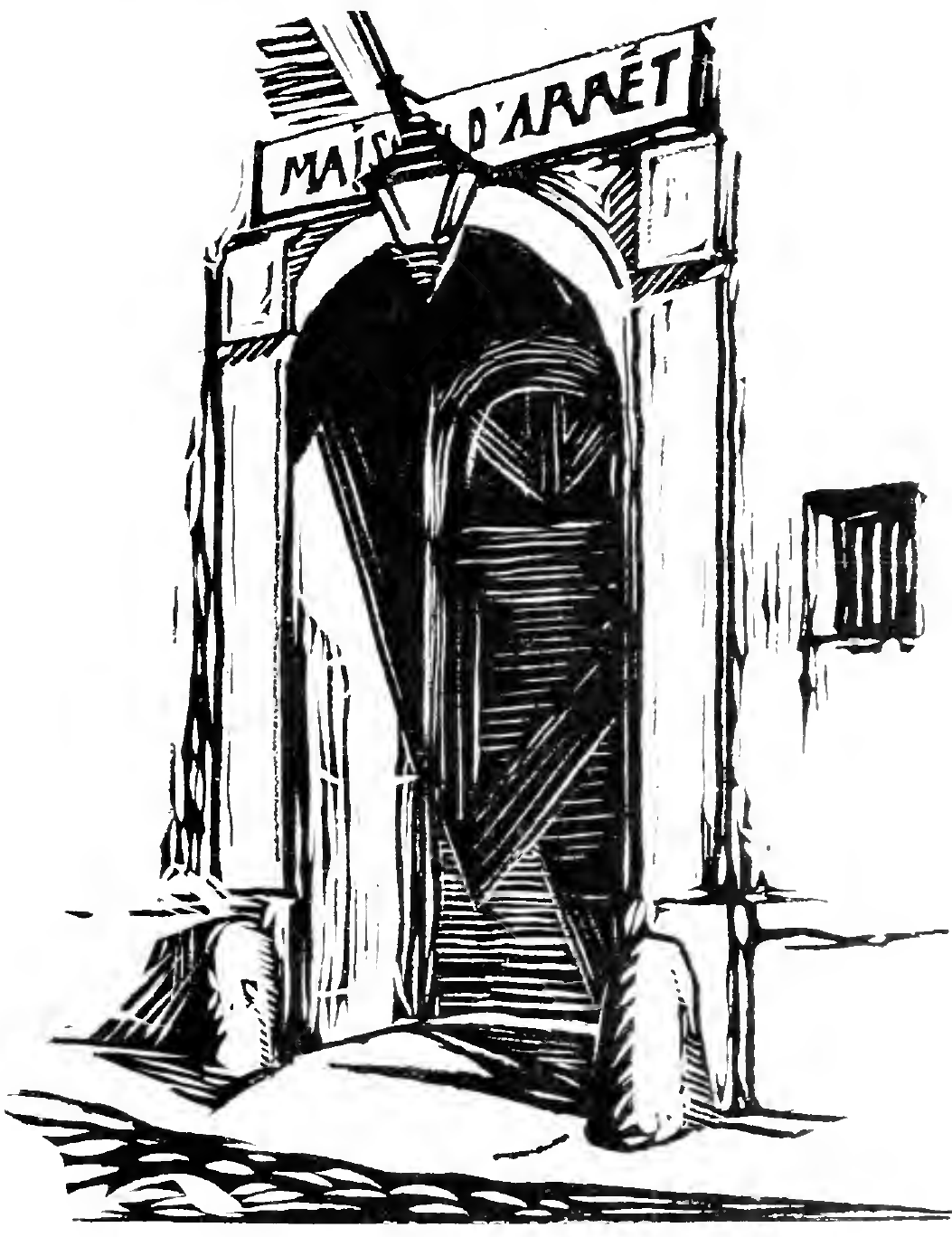
He was conducted to the prison. They entered a room, they put irons on his hands, they left him alone; the door closed upon him with a double turn; all this was executed very quickly, and he was insensible to it.
"Faith, all is over," he said aloud on coming to himself... "Yes, in a fortnight the guillotine... or to kill myself before then."
His reasoning went no further; he felt his head as if it had been violently compressed. He looked to see if anyone was holding him. After a few moments, he fell into a deep sleep.
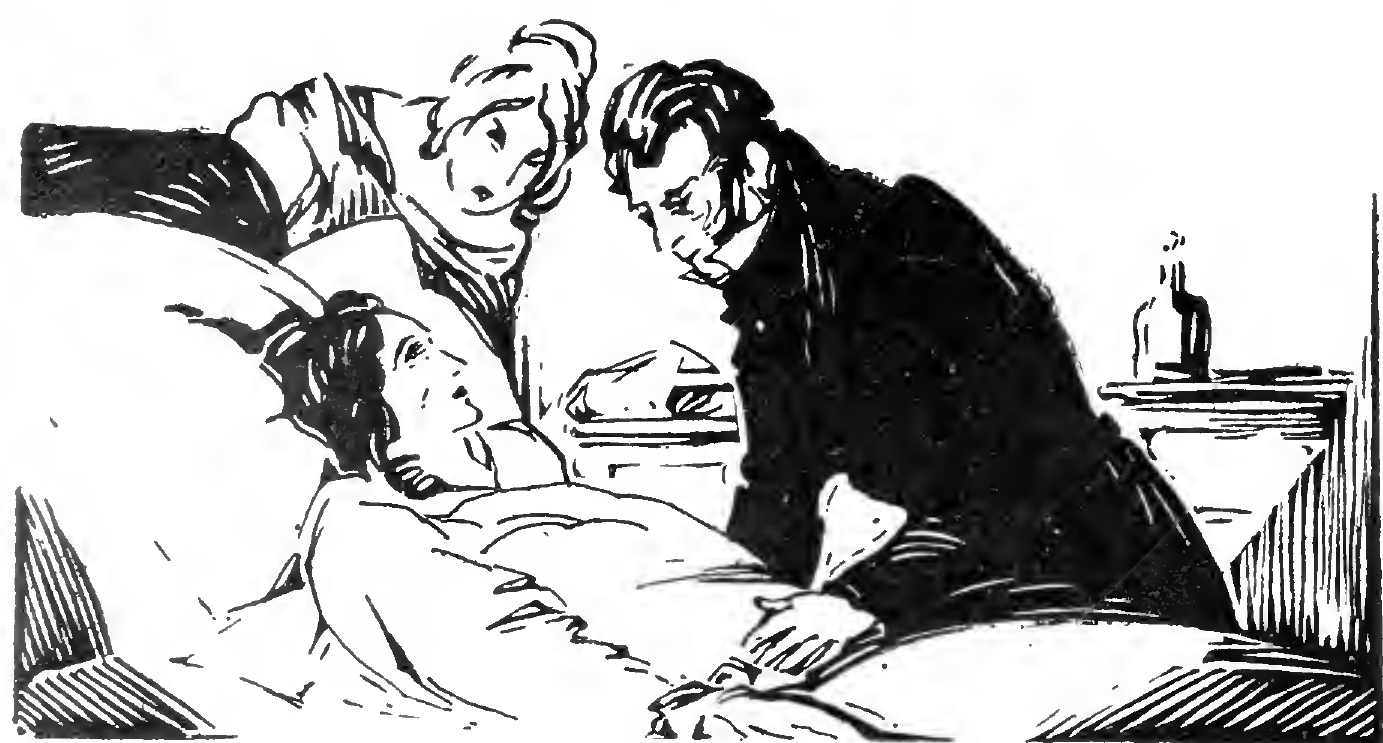
Madame de Rênal was not mortally wounded. The first ball had pierced her hat; as she turned round, the second shot had gone off. The ball had struck her in the shoulder, and, wonderful to relate, had been deflected by the shoulder bone, which it nevertheless broke, against a Gothic pillar, from which it detached an enormous splinter of stone.
When, after a long and painful dressing, the surgeon, a grave man, said to Madame de Rênal: I answer for your life as for my own, she was profoundly afflicted.
For a long time she had sincerely desired death. The letter which had been imposed upon her by her present confessor, and which she had written to M. de La Mole, had given the last blow to this being weakened by too constant a misfortune. This misfortune was the absence of Julien; she called it, she, remorse. The director, a young ecclesiastic, virtuous and fervent, recently arrived from Dijon, was not mistaken about it.
To die thus, but not by my own hand, is not a sin, thought Madame de Rênal. God will perhaps pardon me for rejoicing in my death. She did not dare to add: And to die by Julien's hand is the height of felicity.
Scarcely was she rid of the surgeon's presence and of all the friends who had flocked to the house, than she sent for Élisa, her maid. "The gaoler," she said to her, blushing deeply, "is a cruel man. No doubt he will ill-treat him, believing that in so doing he is doing me a kindness... I cannot bear the thought. Could you not go, as though of your own accord, and hand the gaoler this little packet containing a few louis? You will tell him that religion does not permit him to ill-treat him... Above all, he must not go and speak of this sending of money."
It was to the circumstance we have just mentioned that Julien owed
the humanity of the gaoler of Verrières; it was still that same M. Noiroud, the perfect ministerialist, whom we have seen thrown into such a fine fright by the presence of M. Appert.
A judge appeared in the prison. "I have given death with premeditation," Julien told him; "I bought and had the pistols loaded at such a one's, a gunsmith's. Article 1342 of the Penal Code is clear, I deserve death, and I await it." The judge, astonished at this manner of answering, wished to multiply his questions so as to make the accused trip himself up in his replies.
"But do you not see," Julien said to him with a smile, "that I am making myself as guilty as you could wish? Go on, Monsieur, you will not miss the prey you are pursuing. You will have the pleasure of condemning me. Spare me your presence."
I have one tedious duty left to perform, thought Julien; I must write to Mademoiselle de La Mole.
"I have avenged myself," he told her. "Unfortunately, my name will appear in the newspapers, and I cannot escape from this world incognito. I shall die in two months. The vengeance has been atrocious, as has been the pain of being separated from you. From this moment I forbid myself to write or to pronounce your name. Never speak of me, even to my son; silence is the only way to honour me. For ordinary men I shall be a vulgar murderer... Allow me the truth in this supreme moment: you will forget me. This great catastrophe, of which I advise you never to open your mouth to any living soul, will have exhausted for several years all that I saw of the romantic and the over-adventurous in your character. You were made to live with the heroes of the Middle Ages; show their firm character. Let what must happen be accomplished in secret and without compromising you. You will take a false name, and have no confidant. If you absolutely must have the help of a friend, I bequeath you the abbé Pirard.
-
“Speak to no one else, especially not to people of your class: the de Luzes, the Caylus.
“One year after my death, marry M. de Croisenois; I command you to as your husband. Do not write to me, I will not answer. Much less wicked than Iago, it seems to me, I shall say as he did: From this time forth I never will speak word.
“I shall be seen neither speaking nor writing; you will have had my last words as my last adorations.
“J. S.”
It was after having sent off this letter that, for the first time, Julien, somewhat returned to himself, was very unhappy. Each of ambition’s hopes had to be torn successively from his heart by that great word: I shall die. Death, in itself, was not horrible in his eyes. His whole life had been nothing but a long preparation for misfortune, and he had taken care not to forget the one that passes for the greatest of all.
What then! he said to himself, if in sixty days I were to fight a duel with a man very strong in arms, would I have the weakness to think of it incessantly, and with terror in my soul?
He spent more than an hour trying to know himself well in this respect.
When he had seen clearly into his soul, and the truth appeared before his eyes as distinctly as one of the pillars of his prison, he thought of remorse!
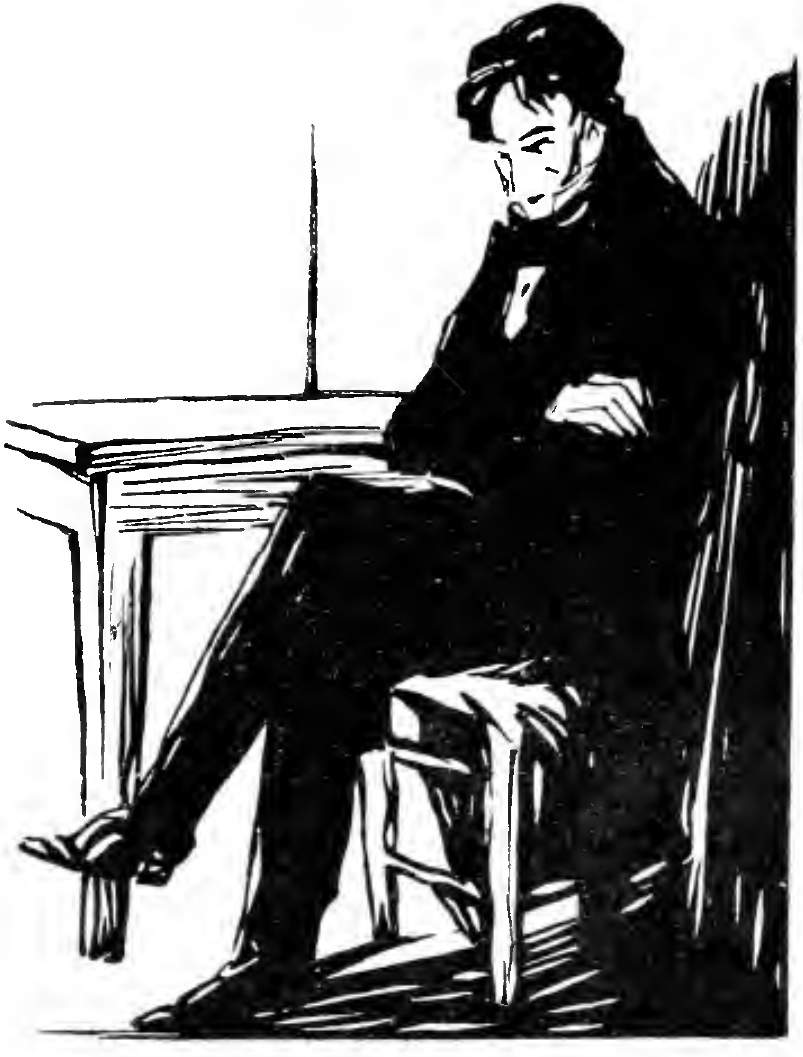
Why should I have any? I have been offended in an atrocious manner; I have killed, I deserve death, that is all. I die after having settled my account with humanity. I leave no obligation unfulfilled, I owe nothing to anyone: my death has nothing shameful about it except the instrument; that alone, it is true, is richly enough for my shame in the eyes of the bourgeois of Verrières; but from the intellectual point of view, what is more contemptible! There remains one means for me to be considerable in their eyes: to throw gold coins to the people on my way to execution. My memory, linked to the idea of gold, will be resplendent for them.
After this reasoning, which within a minute seemed evident to him: I have nothing more to do on earth, said Julien, and he fell soundly asleep.
Around nine o’clock in the evening, the jailer woke him by bringing him his supper.
“What are they saying in Verrières?”
“Monsieur Julien, the oath I swore before the crucifix, in the royal court, on the day I was installed in my post, obliges me to silence.”
He kept silent, but remained. The sight of this vulgar hypocrisy amused Julien. I must, he thought, make him wait a long time for the five francs he wants in order to sell me his conscience.
When the jailer saw the meal end without any attempt at seduction:
“The friendship I have for you, Monsieur Julien,” he said in a false and gentle tone, “obliges me to speak; although they say it is against the interest of justice, because it may help you arrange your defense... Monsieur Julien, who is a good fellow, will be very glad if I tell him that Madame de Rênal is better.”
“What! she is not dead?” cried Julien beside himself.
“What! you knew nothing?” said the jailer in a stupid tone that soon became happy cupidity. “It will be only fair for Monsieur to give something to the surgeon who, according to law and justice, should not have spoken. But to please Monsieur, I went to his house, and he told me everything...”
“In short, the wound is not mortal,” Julien said impatiently, “do you answer for it on your life?”
The jailer, a giant six feet tall, was afraid and withdrew toward the door. Julien saw that he was taking the wrong road to arrive at the truth; he sat down again and threw a napoleon to M. Noiroud.
As this man’s account proved to Julien that Madame de Rênal’s wound was not mortal, he felt himself overcome by tears. “Get out!” he said abruptly.
The jailer obeyed. Hardly was the door closed: “Great God! she is not dead!” cried Julien; and he fell to his knees, weeping hot tears.
In this supreme moment he was a believer. What do the hypocrisies of priests matter? can they take anything away from the truth and sublimity of the idea of God?
Only then did Julien begin to repent of the crime committed. By a coincidence that spared him despair, at that instant only had ceased the state of physical irritation and half-madness into which he had been plunged since his departure from Paris for Verrières.
His tears had a generous source; he had no doubt about the condemnation awaiting him.
So she will live! he said to himself... She will live to forgive me and to love me...
The next morning, very late, when the jailer woke him:
“You must have a famous heart, Monsieur Julien,” the man said to him. “Twice I came and did not want to wake you. Here are two bottles of excellent wine that M. Maslon, our curé, sends you.”
“What! that scoundrel is still here?” said Julien.
“Yes, Monsieur,” replied the jailer, lowering his voice, “but do not speak so loud, it could harm you.”
Julien laughed heartily.
“At the point where I am, my friend, you alone could harm me if you stopped being gentle and humane... You will be well paid,” said Julien, interrupting himself and resuming an imperious air. That air was justified at once by the gift of a coin.
M. Noiroud recounted again and in the greatest detail everything he had learned about Madame de Rênal, but he did not speak of Mademoiselle Élisa’s visit.
This man was as base and submissive as possible. An idea crossed Julien’s mind: This sort of deformed giant may earn three or four hundred francs, for his prison is hardly frequented; I can assure him ten thousand francs if he agrees to escape to Switzerland with me... The difficulty will be to persuade him of my good faith. The idea of the long colloquy to be had with so vile a being inspired disgust in Julien; he thought of something else.
In the evening, it was no longer time. A post chaise came to take him at
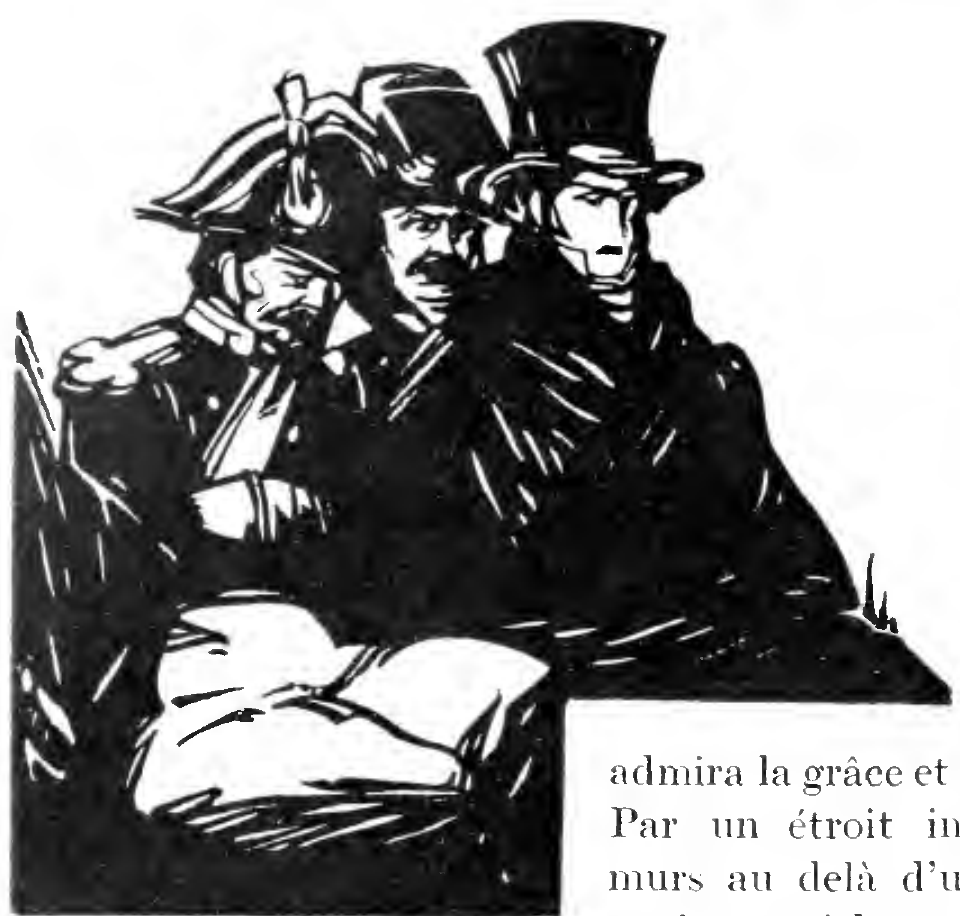
midnight. He was very pleased with the gendarmes, his traveling companions. In the morning, when he arrived at the prison of Besançon, they had the kindness to lodge him on the upper floor of a Gothic keep. He judged the architecture to be of the beginning of the 14th century; he had a superb glimpse of a view from it.
The next day there was an interrogation, after which, for several days, he was left in peace. His soul was calm. He found nothing but simplicity in his affair: I wanted to kill, I must be killed.
His thought did not dwell any further on this reasoning. The judgment, the boredom of appearing in public, the defense, he considered all that as slight embarrassments, tiresome ceremonies to which it would be time to attend on the very day. The moment of death did not stop him much more: I shall think of it after the judgment. Life was not boring to him; he considered all things under a new aspect; he no longer had ambition. He rarely thought of Mademoiselle de La Mole. His remorse occupied him greatly and often presented him with the image of Madame de Rênal, especially during the silence of the nights, disturbed only, in that lofty keep, by the cry of the osprey.
He thanked heaven for not having wounded her fatally. Strange! he said to himself, I believed that by her letter to M. de La Mole she had destroyed for ever my future happiness, and less than a fortnight after the date of that letter I am no longer thinking of all that was occupying me then... Two or three thousand livres a year to live quietly in a mountainous country like Vergy... I was happy then... I did not know my happiness!
At other moments he would leap up from his chair. If I had wounded Madame de Rênal fatally, I should have killed myself... I need that certainty to keep myself from feeling horror at myself.
To kill myself! There is the great question, he said to himself. These judges so formalistic, so relentless against the poor accused, who would hang the best of citizens to win a cross... I should escape from their power, from their insults in bad French, which the newspaper of the department will call eloquence...
I can live another five or six weeks, more or less... Kill myself! Faith, no, he said to himself after a few days, Napoleon lived...
Besides, life is pleasant to me; this place is quiet; I have no bores here, he added with a laugh, and he began to make a list of the books that he wished to have sent from Paris.