About this book
Julien Sorel climbs from sawmill to salon, torn between the red of the army and the black of the church. Stendhal's 1830 novel, free to read online.
WOULD IT BE DANTON?
The need of anxiety, such was the character of the beautiful Marguerite de Valois, my aunt, who soon married the King of Navarre, whom we see at present reigning in France under the name of Henri IV. The need to play formed the whole secret of the character of this amiable princess; hence her quarrels and reconciliations with her brothers from the age of sixteen. Now, what can a young girl play with? What she has most precious: her reputation, the consideration of her whole life.
Memoirs of the Duke of Angoulême, natural son of Charles IX.
BETWEEN Julien and me there is no signature of a contract, no notary; all is heroic, all will be the child of chance. Apart from nobility, which he lacks, it is the love of Marguerite de Valois for young La Mole, the most distinguished man of her time. Is it my fault if the young men of the court are such great partisans of propriety, and turn pale at the mere idea of the slightest adventure a little out of the ordinary? A little journey to Greece or Africa is for them the height of audacity, and even then they know how to walk only in a troop. As soon as they find themselves alone, they are afraid—not of the Bedouin's lance, but of ridicule, and this fear makes them mad.
My little Julien, on the contrary, loves to act only alone. Never, in this privileged being, the slightest idea of seeking support and help in others! he despises others, that is why I do not despise him.
If, with his poverty, Julien were noble, my love would be nothing but a vulgar folly, a flat misalliance; I would not want it; it would not have what characterizes great passions: the immensity of the difficulty to be overcome and the black uncertainty of the outcome.
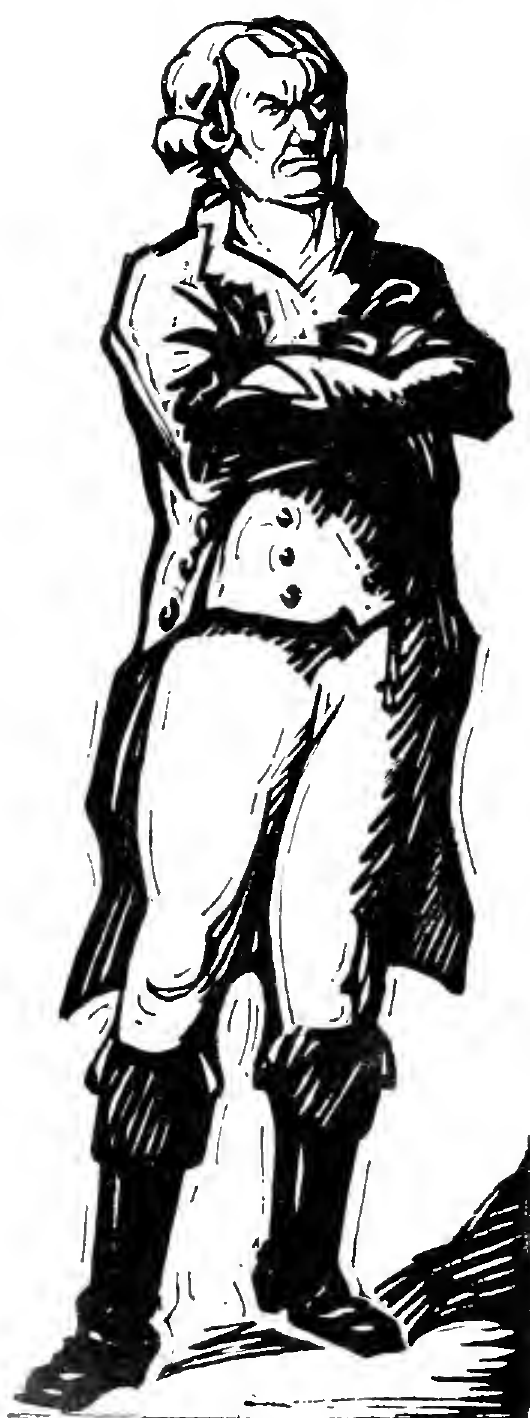
Mademoiselle de La Mole was so preoccupied with these fine reasonings that the next day, without suspecting it, she praised Julien to the Marquis de Croisenois and to her brother. Her eloquence went so far that she stung them.
—Take good care of this young man, who has so much energy, exclaimed her brother; if the revolution begins again, he will have us all guillotined.
She refrained from answering, and hastened to tease her brother and the Marquis de Croisenois about the fear that energy caused them. It is at bottom only the fear of encountering the unforeseen, the fear of being at a loss in the presence of the unforeseen...
—Always, always, gentlemen, the fear of ridicule, a monster who, unfortunately, died in 1816.
—There is no more ridicule, said M. de La Mole, in a country where there are two parties.
His daughter had understood this idea.
—Thus, gentlemen, she said to Julien's enemies, you will have been very much afraid all your life, and afterward people will say to you:
It was not a wolf, it was only its shadow.
Mathilde soon left them. The word of her brother made her shudder; it worried her greatly; but, the very next day, she saw in it the finest of praises.
In this century, when all energy is dead, his energy makes them afraid. I will say my brother's word to him. I want to see what reply he will make to it. But I will choose one of the moments when his eyes shine. Then he cannot lie to me.
—He would be a Danton! she added after a long and indistinct reverie. Well then! the revolution would have begun again. What roles would Croisenois and her brother play then? It is written in advance: sublime resignation. They would be heroic sheep, letting themselves be slaughtered without a word. Their only fear in dying would still be to be in bad taste. My little Julien would blow out the brains of the Jacobin who came to arrest him, if only he had the hope of escaping. He is not afraid of being in bad taste, he.
That last word made her pensive; it awoke painful memories and took away all her boldness. That word reminded her of the jokes of MM. de Caylus, de Croisenois, de Luz, and of her brother. These gentlemen unanimously reproached Julien with a priestly air: humble and hypocritical.
— But, she resumed suddenly, her eye shining with joy, the bitterness and frequency of their jokes prove, in spite of themselves, that he is the most distinguished man we have seen this winter. What do his faults, his absurdities matter? He has greatness, and they are shocked by it, they who are otherwise so good and so indulgent. It is certain that he is poor, and that he studied to be a priest; they are squadron commanders, and had no need of study; that is more convenient.
Despite all the disadvantages of his eternal black coat and of that priestly physiognomy, which he must necessarily have, the poor boy, on pain of starving to death, his merit makes them afraid, nothing is clearer. And that priestly physiognomy, he no longer has it as soon as we are alone together for a few moments. And when these gentlemen say a word that they believe to be witty and unexpected, is not their first glance for Julien? I have noticed it very well. And yet they know very well that he never speaks to them, unless he is questioned. It is only to me that he addresses speech. He believes my soul to be lofty. He answers their objections only just as much as is needed to be polite. He turns to respect at once. With me, he argues for whole hours; he is not sure of his ideas as long as I find the slightest objection in them. In short, all this winter we have not had any shots fired; it has been a matter only of attracting attention through words. Well then, my father, a superior man, and one who will carry the fortune of our house far, respects Julien.All the rest hate him, no one despises him, except the devout friends of my mother.
The Comte de Caylus had, or affected, a great passion for horses; he spent his life in his stables and often breakfasted there. This great passion, together with the habit of never laughing, gave him considerable standing among his friends: he was the eagle of that little circle.
As soon as they were gathered the next day behind Madame de La Mole's bergère, Julien not being present, M. de Caylus, supported by Croisenois and by Norbert, attacked with vigour the good opinion Mathilde had of Julien, and that without any relevance, and almost at the very first moment he saw Mademoiselle de La Mole. She understood this piece of finesse a league off, and was charmed by it.
Here they all are, leagued together, she said to herself, against a man of genius who has not ten louis of income, and who can answer them only when he is questioned. They are afraid of him in his black coat. What would it be with epaulettes?
Never had she been more brilliant. From the first attacks, she covered Caylus and his allies with pleasant sarcasms. When the fire of these brilliant officers' pleasantries had died down:
"Let some country squire from the mountains of Franche-Comté discover tomorrow," she said to M. de Caylus, "that Julien is his natural son, and give him a name and a few thousand francs, and in six weeks he will have moustaches like you, gentlemen; in six months he will be an officer of hussars like you, gentlemen. And then the greatness of his character will no longer be ridiculous. I see you reduced, Monsieur the future duke, to that old bad argument: the superiority of court nobility over provincial nobility. But what will be left to you, if I choose to drive you to extremities, if I have the malice to give Julien a Spanish duke for a father, a prisoner of war at Besançon in Napoleon's time, who, from a scruple of conscience, acknowledges him on his deathbed?" All these suppositions of illegitimate birth were found in rather bad taste by MM. de Caylus and de Croisenois. That was all they saw in Mathilde's reasoning.
However dominated Norbert might be, his sister's words were so clear that he assumed a grave air which sat, it must be confessed, rather ill on his smiling and kindly physiognomy. He ventured to say a few words.
"Are you ill, my friend?" Mathilde replied to him with a small serious air. "You must be very ill indeed to answer pleasantries with moralising.
Moralising, you! Are you soliciting a prefect's post?"
Mathilde very quickly forgot the Count de Caylus's offended air, Norbert's ill humour and M. de Croisenois's silent despair. She had a decision to make upon a fatal idea that had just seized her soul.
Julien is sincere enough with me, she said to herself; at his age, with an inferior fortune, unhappy as he is through an astonishing ambition, one needs a friend. I am perhaps that friend; but I see no love in him. With the boldness of his character, he would have spoken to me of that love.
This uncertainty, this debate with herself, which from that moment occupied every instant of Mathilde's time, and for which, each time Julien spoke to her, she found new arguments, altogether banished those moments of boredom to which she was so subject.
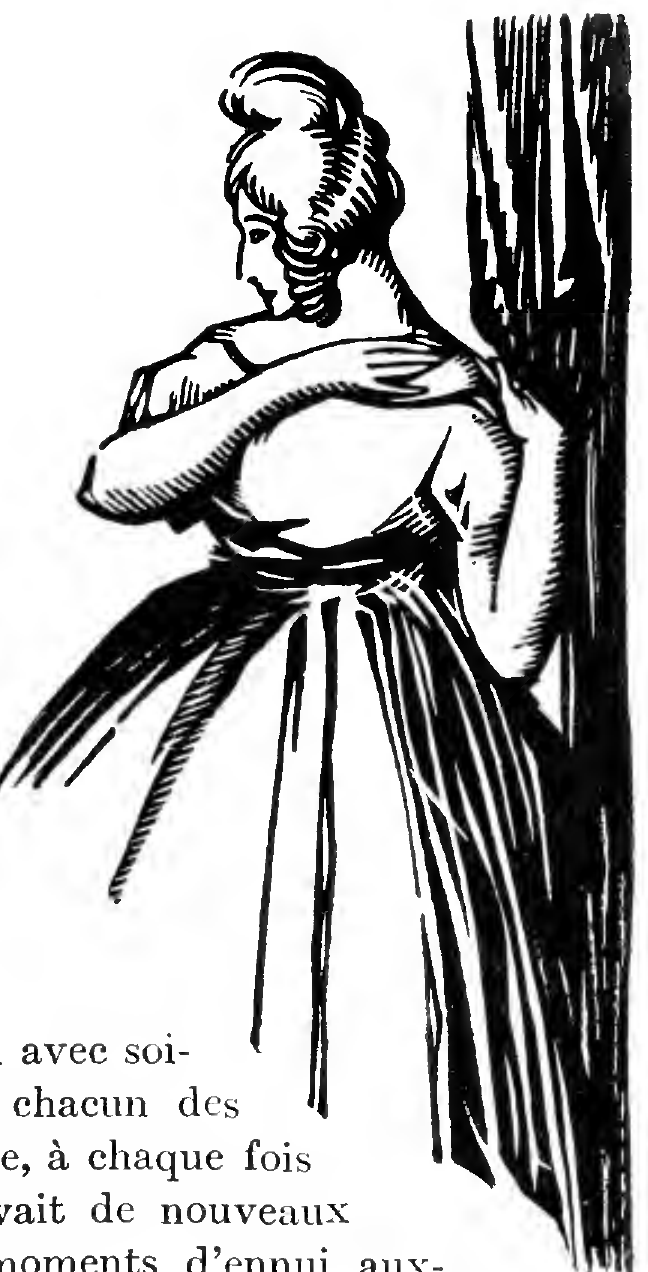
Daughter of a man of wit who might become a minister, and restore his woods to the clergy, Mademoiselle de La Mole had been, at the convent of the Sacré-Cœur, the object of the most excessive flattery. That misfortune is never compensated for. She had been persuaded that, because of all her advantages of birth, fortune, etc., she ought to be happier than another. This is the source of the boredom of princes and of all their follies.
Mathilde had not escaped the fatal influence of this idea. However much wit one has, one is not on one's guard at ten years of age against the flatteries of a whole convent, and so well founded in appearance.
From the moment she had decided that she loved Julien, she was no longer bored. Every day she congratulated herself on the course she had taken of giving herself a great passion. This amusement has many dangers, she thought. So much the better! a thousand times so much the better!
Without a great passion, I was languishing with boredom at the finest moment of life, from sixteen to twenty. I have already lost my finest years; obliged for all pleasure to listen to the nonsense of my mother's friends, who, at Coblentz in 1792, were not, it is said, quite as severe as their words of today.
It was while these great uncertainties agitated Mathilde that Julien did not understand her long gazes that rested upon him. He did indeed find a redoubling of coldness in Count Norbert's manners, and a fresh access of haughtiness in those of MM. de Caylus, de Luz and de Croisenois. He was accustomed to it. This misfortune sometimes came upon him after an evening in which he had shone more than was fitting to his position. Without the particular welcome Mathilde gave him, and the curiosity that this whole set inspired in him, he would have avoided following into the garden these brilliant young men with moustaches, when, in the afternoons, they accompanied Mademoiselle de La Mole there.
Yes, it is impossible for me to hide it from myself, Julien said to himself, Mademoiselle de La Mole looks at me in a singular fashion. But even when her beautiful blue eyes, fixed on me, are open with the greatest abandon, I always read in them a fund of examination, of coldness and of malice. Is it possible that this is love? What a difference from Madame de Rênal's glances!
One afternoon, Julien, who had followed M. de La Mole into his study, was returning rapidly to the garden. As he approached Mathilde's group without precaution, he caught a few words spoken very loud. She was tormenting her brother. Julien heard his name pronounced distinctly twice. He appeared; a profound silence at once established itself, and vain efforts were made to put an end to it. Mademoiselle de La Mole and her brother were too animated to find another subject of conversation. MM. de Caylus, de Croisenois, de Luz and one of their friends appeared to Julien to be cold as ice. He went away.
-