About this book
Julien Sorel climbs from sawmill to salon, torn between the red of the army and the black of the church. Stendhal's 1830 novel, free to read online.
THOUGHTS OF A YOUNG GIRL
What perplexity! What nights passed without sleep! Great God! am I going to make myself contemptible! He will despise me himself. But he is leaving, he is going far away.
ALFRED DE MUSSET.
I T was not without struggles that Mathilde had written. Whatever the beginning of her interest in Julien might have been, it soon mastered the pride which, ever since she had known herself, had reigned alone in her heart. That lofty and cold soul was for the first time carried away by a passionate feeling. But if it mastered pride, itwas still faithful to the habits of pride. Two months of struggles and of new sensations renewed, so to speak, her whole moral being.
Mathilde believed she saw happiness. This sight, all-powerful over courageous souls linked to a superior mind, had to struggle long against dignity and all feelings of vulgar duty. One day she went to her mother as early as seven in the morning, begging her to allow her to take refuge at Villequier. The marquise did not even deign to answer her, and advised her to go back to bed. This was the last effort of vulgar wisdom and of deference to received ideas.
The fear of doing wrong and of offending the ideas held sacred by the Caylus, the de Luz, the Croisenois, had rather little empire over her soul; such beings did not seem to her made to understand her; she would have consulted them if it had been a question of buying a caleche or an estate. Her true terror was that Julien might be displeased with her.
Perhaps too he has only the appearances of a superior man?
She abhorred the lack of character; that was her only objection to the handsome young men who surrounded her. The more gracefully they jested about everything that departs from fashion, or follows it badly while believing they follow it, the more they lost themselves in her eyes.
They were brave, and that was all. And again, how brave? she said to herself, in a duel, but the duel is no longer anything but a ceremony. Everything about it is known in advance, even what one must say when falling. Stretched on the grass, with one's hand on one's heart, one needs a generous pardon for one's adversary and a word for a beauty, often imaginary, or else who is going to the ball on the day of your death, for fear of arousing suspicions.
One braves danger at the head of a squadron all brilliant with steel, but danger solitary, singular, unforeseen, truly ugly!
Alas! said Mathilde, it was at the court of Henri III that men were found great in character as in birth! Ah! if Julien had served at Jarnac or at Moncontour, I would have no more doubt. In those times of vigor and strength, the French were not dolls. The day of battle was almost that of the least perplexities.
Their life was not imprisoned like an Egyptian mummy, under a wrapping always common to all, always the same. Yes, she added, there was more true courage in withdrawing alone at eleven o'clock at night, on leaving the Hôtel de Soissons, inhabited by Catherine de' Medici, than today in running about Algiers. A man's life was a succession of hazards. Now civilization has driven out hazard,
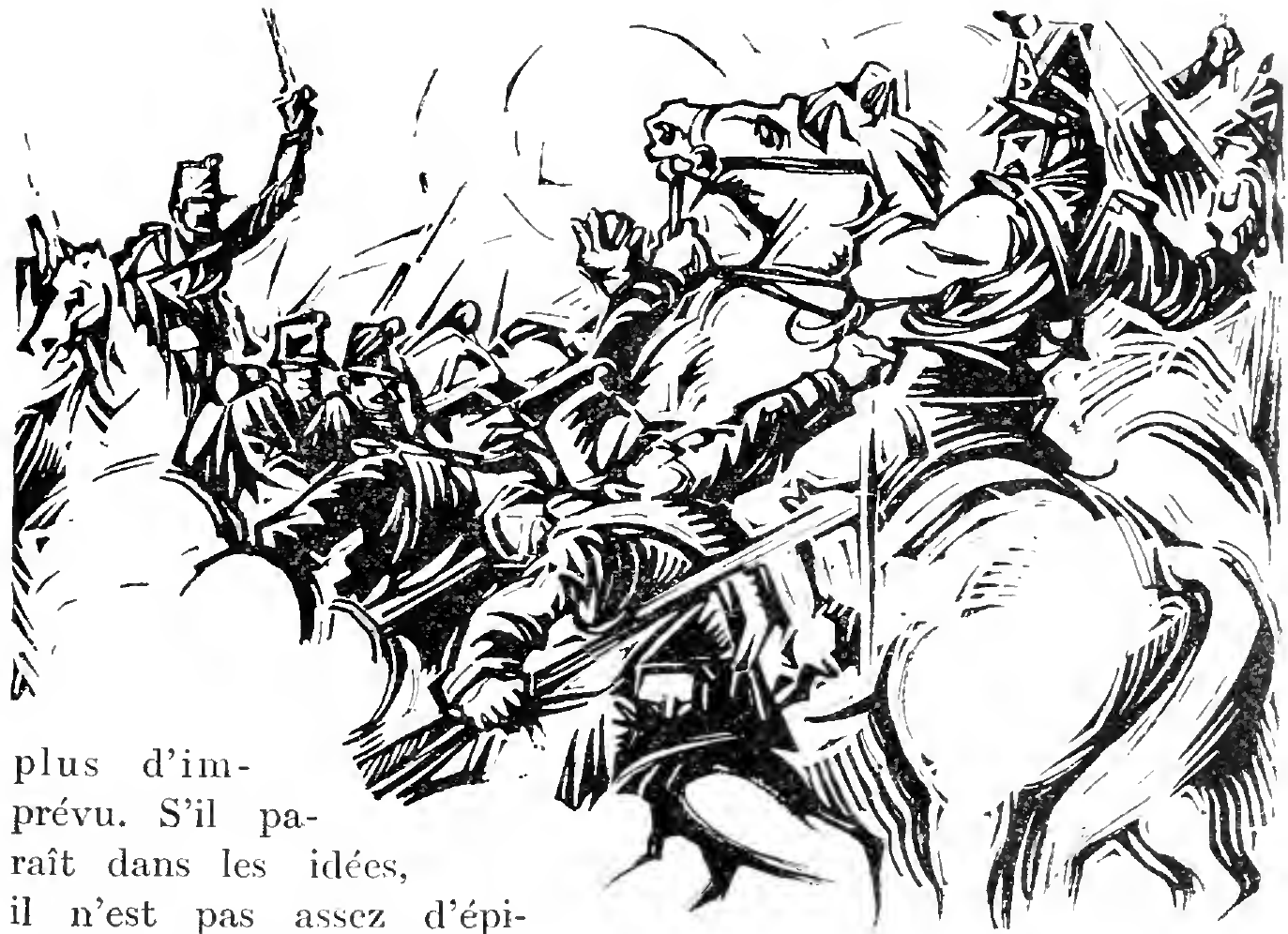
grams for it; if it appears in events, no cowardice is beneath our fear. Whatever folly fear makes us commit, it is excused. Degenerate and boring century! What would Boniface de La Mole have said if, lifting his severed head from the tomb, he had seen, in 1793, seventeen of his descendants letting themselves be taken like sheep, to be guillotined two days later? Death was certain, but it would have been in bad taste to defend oneself and kill at least one Jacobin or two. Ah! in the heroic times of France, in the century of Boniface de La Mole, Julien would have been the squadron leader, and my brother, the young priest of proper morals, with wisdom in his eyes and reason on his lips.
A few months earlier, Mathilde despaired of meeting a being a little different from the common pattern. She had found some happiness in permitting herself to write to a few young men of society. This boldness, so improper, so imprudent in a young girl, could dishonor her in the eyes of M. de Croisenois, of the Duc de Chaulnes her father, and of the whole Hôtel de Chaulnes, who, seeing the projected marriage broken off, would have wanted to know why. In those days, on the days when she had written one of her letters, Mathilde could not sleep. But these letters were only replies. terrible word!) to a man placed in the lowest ranks of society.
This circumstance assured, in case of discovery, eternal dishonor. Which of the women coming to her mother's house would have dared to take her side? What phrase could they have been given to repeat to soften the blow of the dreadful contempt of the salons?
And yet to speak was dreadful, but to write! There are things one does not write, exclaimed Napoleon on learning of the capitulation of Baylen. And it was Julien who had told her this word! as if giving her a lesson in advance.
But all this was still nothing; Mathilde's anguish had other causes. Forgetting the terrible effect on society, the indelible stain and full of contempt, for it outraged her caste, Mathilde was going to write to a being of a very different nature from the Croisenois, the de Luz, the Caylus.
The depth, the unknown of Julien's character would have frightened even in forming an ordinary relation with him. And she was going to make him her lover, perhaps her master!
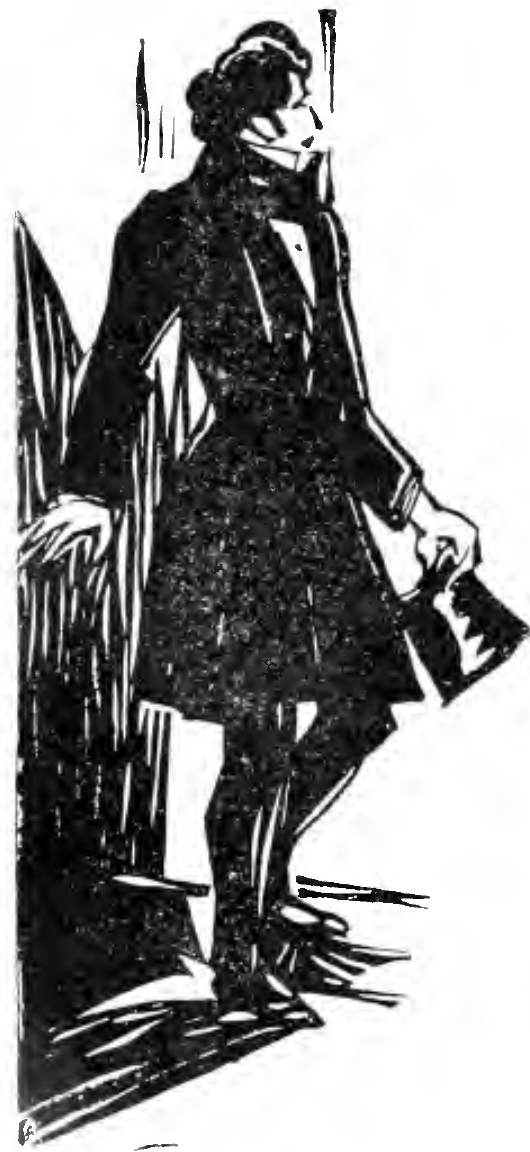
What will his demands not be, if he can ever have complete power over me? Well! I shall say to myself as Medea did: Amidst so many perils, there remains to me Myself.
Julien had no veneration for nobility of blood, she believed. Nay, perhaps, he had no love for it at all!
In these last moments of dreadful doubt, ideas of feminine pride presented themselves. Everything must be singular in the fate of a girl like me, cried Mathilde with impatience. Then the pride that had been instilled in her from the cradle struggled against virtue. It was at this instant that Julien's departure came to precipitate everything.
(Such characters are happily very rare.)
In the evening, very late, Julien had the mischief to have a very heavy trunk carried down to the porter's lodge; he called the footman who was courting Mademoiselle de La Mole's maid to transport it. This manoeuvre may have no result, he said to himself, but if it succeeds, she will believe me gone. He fell asleep quite gay over this pleasantry. Mathilde did not close an eye.
The next day, very early in the morning, Julien left the hotel without being seen, but he returned before eight o'clock.
He was scarcely in the library when Mademoiselle de La Mole appeared at the door. He handed her his reply. He thought it was his duty to speak to her; nothing could have been more convenient, at least, but Mademoiselle de La Mole did not wish to listen to him and disappeared. Julien was delighted; he did not know what to say to her.
If all this is not a game agreed upon with Count Norbert, it is clear that it is my cold glances that have kindled the baroque love that this girl of such high birth has taken it into her head to feel for me. I should be a little more stupid than is fitting, if I ever let myself be carried away into having a taste for this great blond doll. This reasoning left him colder and more calculating than he had ever been.
In the battle that is preparing, he added, the pride of birth will be like a raised hill, forming a military position between her and me. It is upon that that I must manoeuvre. I did very wrong to remain in Paris; this postponement of my departure debases me and exposes me, if all this is only a game. What danger was there in leaving? I was laughing at them, if they are laughing at me. If her interest in me has any reality, I shall count upon that interest.
Mademoiselle de La Mole's letter had given Julien such a lively enjoyment of vanity that, while laughing at what was happening to him, he had forgotten to think seriously about the propriety of departing.
It was a fatality of his character to be extremely sensitive to his faults. He was greatly vexed by this one, and scarcely thought any longer about the incredible victory that had preceded this little setback, when, toward nine o'clock, Mademoiselle de La Mole appeared on the threshold of the library door, threw a letter at him, and fled.
:
It seems this is going to be the novel in letters, he said, picking it up. The enemy makes a false move; I am going to bring coldness and virtue into action.
He was asked for a decisive reply with a grief that increased his inner gaiety. He gave himself the pleasure of mystifying, for two pages, the persons who would like to laugh at him, and it was still by a pleasantry that he announced toward the end of his reply his decided departure for the next morning.
This letter finished: The garden will serve me to deliver it, he thought, and he went there. He looked at the window of Mademoiselle de La Mole's room.
It was on the first floor, beside her mother's apartment, but there was a large entresol.
This first floor was so high that, walking under the avenue of lime trees with his letter in his hand, Julien could not be seen from Mademoiselle de La Mole's window. The vault formed by the well-trimmed lime trees intercepted the view. But what! said Julien with ill humour, another imprudence! If they have undertaken to laugh at me, making me show a letter in my hand is serving my enemies.
Norbert's room was precisely above his sister's, and if Julien came out from the vault formed by the trimmed branches of the lime trees, the count and his friends could follow all his movements.
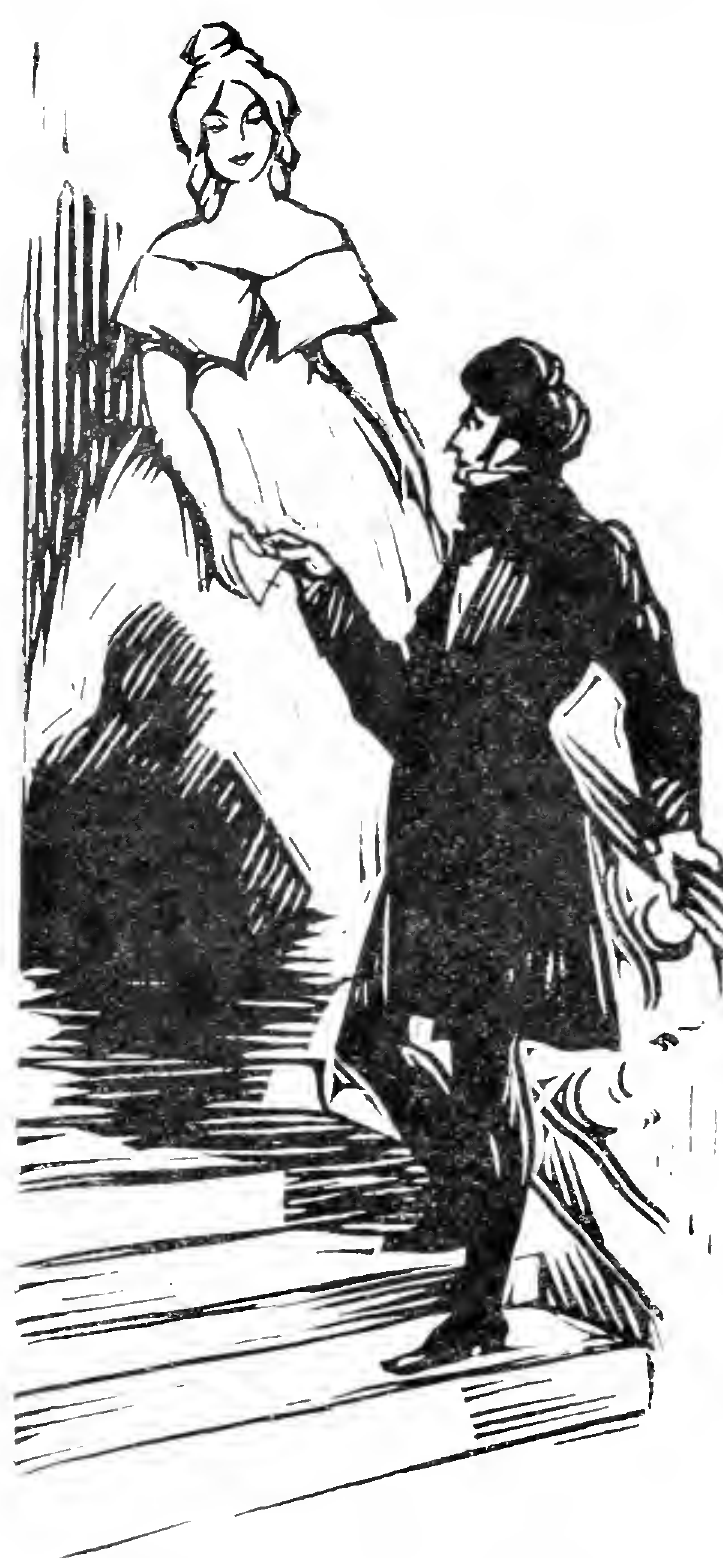
Mademoiselle de La Mole appeared behind her windowpane; he showed his letter half openly; she lowered her head. At once Julien went back up to his room at a run, and happened by chance, on the great staircase, to meet the beautiful Mathilde, who seized his letter with perfect ease and laughing eyes.
What passion there was in the eyes of that poor Madame de Rênal, said Julien to himself, when, even after six months of intimate relations, she dared to receive a letter from me! In her life, I believe, she never looked at me with laughing eyes.
He did not express the rest of his reply so clearly; was he ashamed of the futility of his motives? But also what a difference, added his thought, in the elegance of the morning dress, in the elegance of the figure! On catching sight of Mademoiselle de La Mole thirty paces away, a man of taste would guess the rank she occupies in society. That is what may be called explicit merit.
1
While joking, Julien did not yet admit to himself all his thought; Madame de Rênal had no Marquis de Croisenois to sacrifice to him. He had as rival only that ignoble sub-prefect M. Charcot, who had himself called de Maugiron, because there are no more Maugirons.
At five o'clock, Julien received a third letter: it was thrown to him from the library door. Mademoiselle de La Mole fled again. What a mania for writing! he said to himself, laughing, when one can talk so conveniently! The enemy wants to have letters from me, that is clear, and several! He did not hurry to open this one. More elegant phrases, he thought; but he turned pale as he read. There were only eight lines.
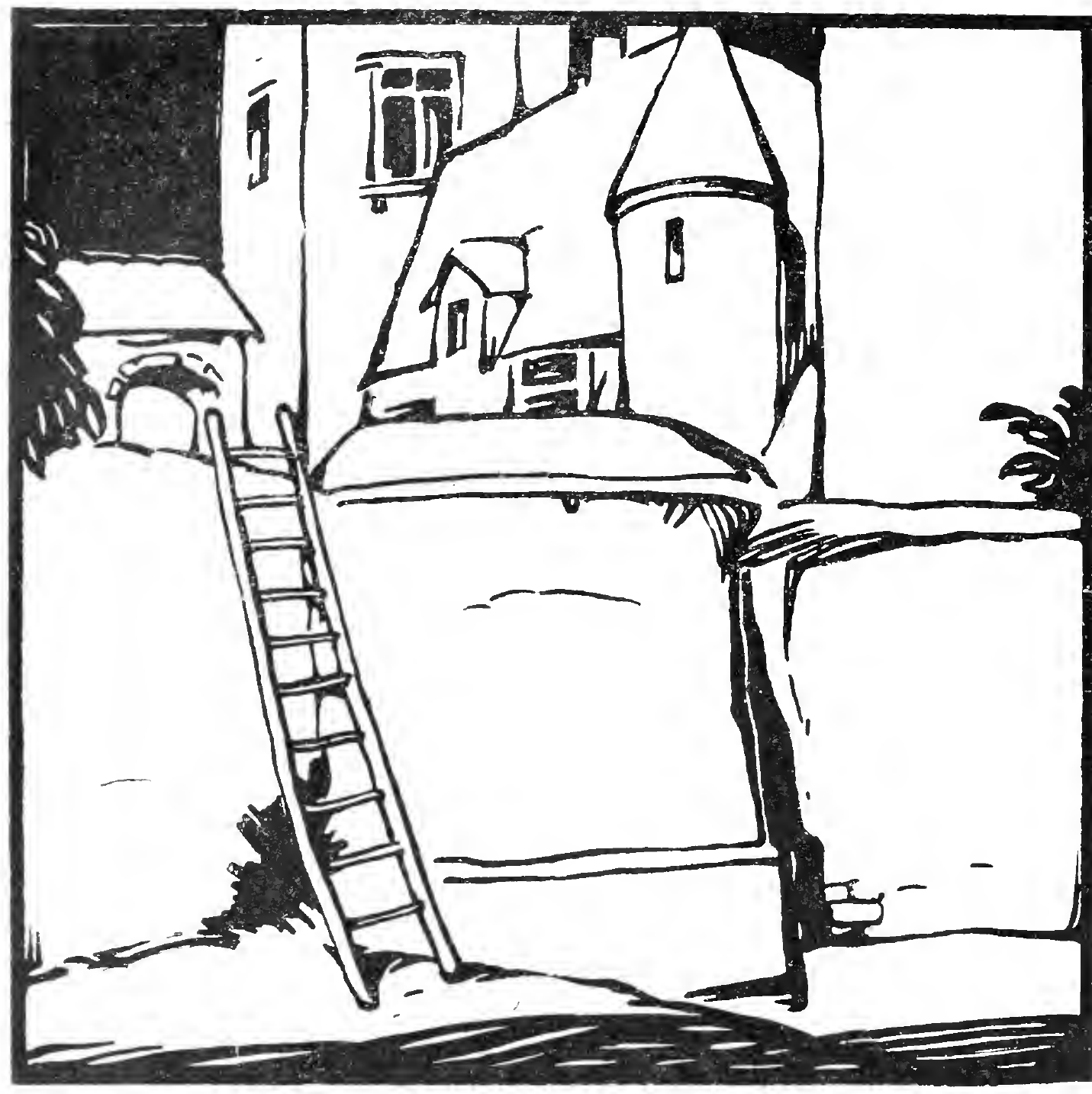
"I need to speak to you; I must speak to you, this evening: at the moment when one o'clock after midnight strikes, be in the garden. Take the gardener's large ladder near the well; place it against my window and climb up to my room. There is moonlight: no matter."