About this book
Julien Sorel climbs from sawmill to salon, torn between the red of the army and the black of the church. Stendhal's 1830 novel, free to read online.
STRASBOURG
Fascination! thou hast of love all its energy, all its power to feel misfortune. Its enchanting pleasures, its sweet enjoyments are alone beyond thy sphere. I could not say, seeing her sleep: she is all mine, with her angelic beauty and her sweet weaknesses! There she is, delivered over to my power, such as heaven made her in its mercy to enchant a man's heart.Ode of Schiller.
Forced to spend eight days in Strasbourg, Julien sought to distract himself with ideas of military glory and devotion to the fatherland. Was he then in love? He knew nothing of it; he found only in his soul that Mathilde was the absolute mistress of his happiness as of his imagination. He needed all the energy of his character to keep himself above despair. To think of anything that had not some connection with Mademoiselle de La Mole was beyond his power. Ambition, the mere successes of vanity, had formerly distracted him from the feelings that Madame de Rénal had inspired in him. Mathilde had absorbed everything; he found her everywhere in the future.
On every side, in that future, Julien saw a lack of success. This being whom one had seen at Verrières so filled with presumption, so proud, had fallen into a ridiculous excess of modesty.
Three days earlier he would have killed the abbé Castanède with pleasure, and if at Strasbourg a child had picked a quarrel with him, he would have given the child the right. In thinking again of the adversaries, the enemies, whom he had encountered in his life, he always found that he, Julien, had been in the wrong.
It was that he now had for an implacable enemy that powerful imagination, formerly ceaselessly employed in depicting for him in the future such brilliant successes.
The absolute solitude of the traveler's life increased the empire of this dark imagination. What a treasure would not a friend have been! But, Julien said to himself, is there then a heart that beats for me? And even if I had a friend, would honor not command me to an eternal silence?
He rode sadly on horseback in the environs of Kehl; it is a village on the bank of the Rhine, immortalized by Desaix and Gouvion Saint-Cyr. A German peasant showed him the little streams, the roads, the islands of the Rhine to which the courage of those great generals has given a name. Julien, guiding his horse with his left hand, held unfolded in his right the superb map that adorns the Mémoires of Marshal Saint-Cyr. An exclamation of gaiety made him raise his head.
It was Prince Korasoff, that friend from London, who had revealed to him a few months earlier the first rules of high fatuity. Faithful to this great art, Korasoff, having arrived in Strasbourg, an hour since at Kehl, and who in his life had never read a line on the siege of 1796, set about explaining everything to Julien. The German peasant looked at him with an astonished air; for he knew enough French to distinguish the enormous blunders into which the prince was falling. Julien was a thousand leagues from the peasant's ideas; he looked with astonishment at this handsome young man, he admired his grace in riding on horseback.
The happy character, he said to himself. How well his trousers fit; with what elegance his hair is cut! Alas! if I had been like that, perhaps after having loved me for three days, she would not have taken an aversion to me.
When the prince had finished his siege of Kehl: "You look like a Trappist," he said to Julien. "You exaggerate the principle of gravity that I gave you in London. A sad air cannot be in good taste; it is a bored air that is required. If you are sad, it is therefore something that you lack, something that has not succeeded for you.
That is to show oneself inferior. Are you bored, on the contrary, it is what has vainly tried to please you that is inferior. Understand, then, my dear, how grave the mistake is."
Julien cast a glance at the peasant who was listening to them open-mouthed.
"Good," said the prince, "there is grace, a noble disdain! Very good!" And he set his horse to a gallop. Julien followed him, filled with a stupid admiration.
Ah! if I had been like that, she would not have preferred Croisenois to me! The more his reason was shocked by the prince's absurdities, the more he despised himself for admiring them, and considered himself unhappy for not having them. Self-disgust could go no further.
The prince, finding him decidedly sad: "Well now, my dear," he said to him as they returned to Strasbourg, "have you lost all your money, or would you be in love with some little actress?

The Russians copy French manners, but always at fifty years' distance. They are now at the age of Louis XV.
\[ \int_{0}^{1}
These pleasantries about love brought tears to Julien's eyes: Why should I not consult this man who is so amiable? he said to himself suddenly.
"Well yes, my dear," he said to the prince, "you see me at Strasbourg deeply in love and even forsaken. A charming woman, who lives in a neighboring town, has abandoned me after three days of passion, and this change is killing me."
He depicted to the prince, under assumed names, the actions and the character of Mathilde.
"Do not finish," said Korasoff: "to give you confidence in your doctor, I shall complete the confidence. The husband of this young woman enjoys an enormous fortune, or rather she herself belongs to the highest nobility of the country. She must be proud of something."
Julien nodded, he no longer had the courage to speak.
"Very well," said the prince, "here are three rather bitter drugs that you are going to take without delay:
10 To see Madame... every day, what do you call her?
"Madame de Dubois."
"What a name!" said the prince, bursting out laughing; "but forgive me, it is sublime for you. The point is to see Madame de Dubois every day; above all do not go appearing in her eyes cold and stung; remember the great principle of your century: be the opposite of what is expected. Show yourself precisely as you were eight days before being honored with her kindnesses.
"Ah! I was tranquil then," cried Julien in despair, "I believed I was taking pity on her..."
"The butterfly burns itself in the candle," continued the prince, "a comparison as old as the world.
10 You will see her every day;
20 You will pay court to a woman of her circle, but without giving yourself the appearance of passion, do you understand? I do not hide it from you, your role is difficult: you are playing a comedy, and if it is guessed that you are playing it, you are lost.
"She has so much wit, and I so little! I am lost," said Julien sadly.
"No, you are only more in love than I believed. Madame de Dubois is profoundly occupied with herself, like
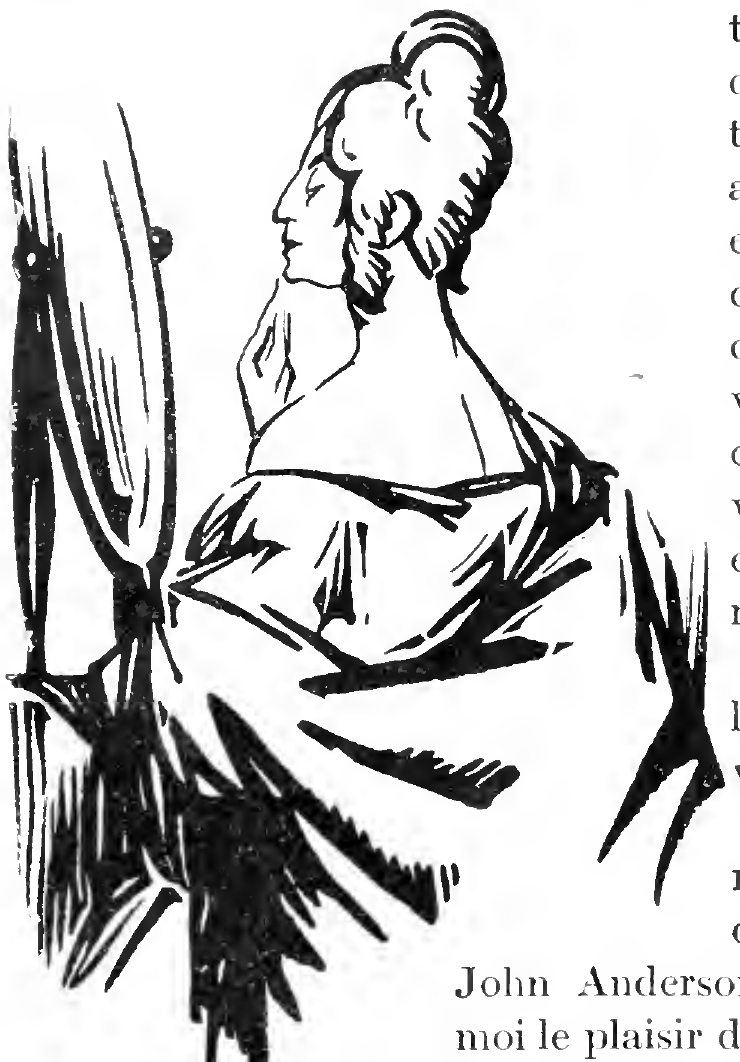
all women who have received from heaven either too much nobility or too much money. She looks at herself instead of looking at you, therefore she does not know you. During the two or three fits of love that she has granted herself in your favor, with great effort of imagination, she saw in you the hero she had dreamed of, and not what you really are...
But, hang it, these are the elements, my dear Sorel, are you altogether a schoolboy?...
By Jove! let us go into this shop; there is a charming black collar, one would say it was made by John Anderson, of Burlington Street; do me the pleasure of taking it, and of throwing far away that ignoble black cord you have around your neck.
"Well now," continued the prince as he came out of the shop of the leading lace merchant of Strasbourg, "what is the society of Madame de Dubois? Great God! what a name! Do not be angry, my dear Sorel, it is stronger than I am... To whom will you pay court?"
"To a prude par excellence, daughter of an immensely rich stocking merchant. She has the finest eyes in the world, and they please me infinitely; she undoubtedly holds the first rank in the country; but in the midst of all her grandeur, she blushes to the point of losing her composure if anyone happens to speak of commerce and shopkeeping. And unfortunately, her father was one of the best-known merchants of Strasbourg.
"Thus, if one speaks of industry," said the prince laughing, "you are sure that your fair one is thinking of herself and not of you. This ridiculousness is divine and very useful, it will prevent you from having the slightest moment of folly beside her fine eyes. Success is certain."
Julien was thinking of Madame la maréchale de Fervagues, who came often to the Hôtel de La Mole. She was a beautiful foreigner who had married the marshal a year before his death. Her whole life seemed to have no other object than to make people forget that she was the daughter of an industrialist, and in order to be something in Paris she had set herself at the head of virtue.
Julien sincerely admired the prince; what would he not have given to have his ridiculousnesses! The conversation between the two friends was endless; Korasoff was delighted: never had a Frenchman listened to him so long. Thus I have finally succeeded, said the charmed prince to himself, in making myself listened to by giving lessons to my masters!
"We are quite agreed," he repeated to Julien for the tenth time, "not the shadow of passion when you speak to the young beauty, the daughter of the Strasbourg stocking merchant, in the presence of Madame de Dubois. On the contrary, burning passion when writing. Reading a well-written love letter is the sovereign pleasure for a prude; it is a moment of relaxation. She is not playing a comedy, she dares to listen to her heart; therefore two letters a day.
"Never, never!" said Julien discouraged; "I would sooner be pounded in a mortar than compose three sentences; I am a corpse, my dear, hope for nothing more from me. Let me die by the roadside."
"And who is talking to you about composing sentences? I have in my necessary case six volumes of manuscript love letters. There are some for every character of woman, I have some for the highest virtue. Did not Kalisky pay court at Richmond Terrace, you know, three leagues from London, to the prettiest Quakeress in all England?"
Julien was less unhappy when he left his friend at two o'clock in the morning.
The next day the prince sent for a copyist, and two days later Julien had fifty-three love letters, well numbered, destined for the most sublime and most sad virtue.
"There are not fifty-four," said the prince, "because Kalisky got himself stitched up; but what does it matter to you to be ill-treated by the stocking merchant's daughter, since you wish to act only on the heart of Madame de Dubois?"
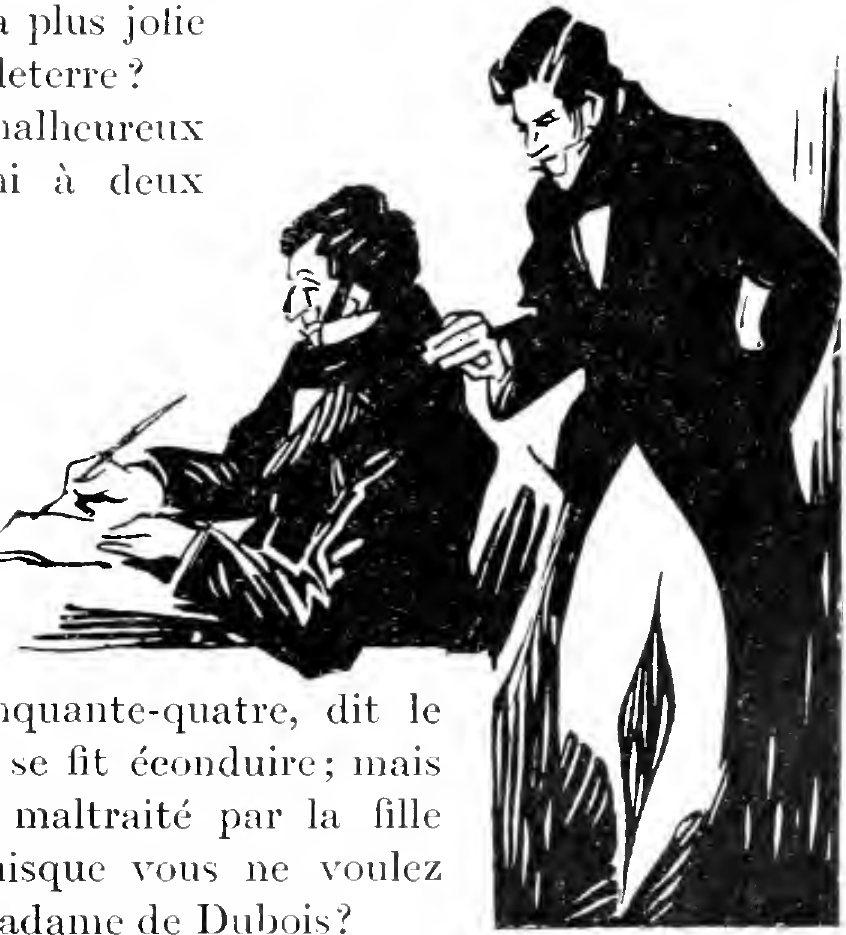
Every day they went riding: the prince was mad about Julien. Not knowing how to show him his sudden friendship, he ended by offering him the hand of one of his cousins, a rich heiress of Moscow. And once you are married, he added, my influence and the cross you have there will make you a colonel in two years.
"But that cross was not given by Napoleon, far from it."
"What does it matter, said the prince, did he not invent it? It is still by far the first in Europe."
Julien was on the point of accepting; but his duty called him back to the great personage; on leaving Korasoff he promised to write. He received the reply to the secret note he had brought, and hastened to Paris; but scarcely had he been alone two days in succession when leaving France and Mathilde seemed to him a torment worse than death. I shall not marry the millions that Korasoff offers me, he said to himself, but I shall follow his advice.
After all, the art of seduction is his profession; he has thought of nothing but that single business for more than fifteen years, for he is thirty. One cannot say that he lacks wit; he is shrewd and crafty; enthusiasm, poetry are an impossibility in that character: he is a procurator; all the more reason why he should not be mistaken.
I must do it, I shall pay court to Madame de Fervagues.
She will bore me perhaps a little, but I shall look at her eyes, so beautiful, and so much like those that have loved me most in the world.
She is a foreigner; she is a new character to observe.
I am mad, I am drowning, I must follow a friend's advice and not believe myself.
-