About this book
Julien Sorel climbs from sawmill to salon, torn between the red of the army and the black of the church. Stendhal's 1830 novel, free to read online.
BOREDOM
To sacrifice oneself to one's passions, very well; but to passions one does not have! O sad nineteenth century!
GIRODET.
AFTER having read Julien's long letters without pleasure at first, Madame de Fervaques began to be occupied with them; but one thing distressed her: What a pity that M. Sorel is not decidedly a priest! One could admit him to a sort of intimacy; with that cross and that almost bourgeois coat, one is exposed to cruel questions, and what is one to answer? She did not finish her thought: some malicious friend might suppose and even spread it abroad that he is a petty subordinate cousin, a relative of my father, some shopkeeper decorated by the national guard.
Until the moment she had seen Julien, the greatest pleasure of Madame de Fervagues had been to write the word maréchale beside her name. Then an upstart's vanity, sickly and offended by everything, combated a beginning of interest.
It would be so easy for me, said the Maréchale, to make him a grand vicar in some diocese near Paris! But M. Sorel plain and simple, and moreover little secretary to M. de La Mole! it is distressing.
For the first time, this soul that feared everything was moved by an interest foreign to her pretensions of rank and social superiority. Her old porter remarked that when he brought a letter from this handsome young man, who looked so sad, he was sure to see disappear the absent and discontented air that the Maréchale always took care to assume at the arrival of one of her servants.
The boredom of a way of life wholly ambitious for effect on the public, without there being at the bottom of the heart any real enjoyment of this kind of success, had become so intolerable since she had begun to think of Julien that, in order that the chambermaids should not be ill-treated for a whole day, it sufficed that during the previous evening she had spent an hour with this singular young man. His nascent credit resisted anonymous letters, very well made. In vain did the Tambeau furnish MM. de Luz, de Croisenois, de Caylus with two or three very adroit calumnies, which these gentlemen took pleasure in spreading without too much reckoning the truth of the accusations. The Maréchale, whose mind was not made to resist these vulgar means, told her doubts to Mathilde, and was always consoled.
One day, after having asked three times whether there were any letters, Madame de Fervagues suddenly decided to reply to Julien. It was a victory of boredom. At the second letter, the Maréchale was almost stopped by the impropriety of writing with her own hand so vulgar an address, To M. Sorel, at M. le marquis de La Mole's.
You must, she said to Julien that evening with a very dry air, bring me envelopes on which your address will be written.
Here I am constituted the lover-valet, thought Julien; and he bowed, taking pleasure in disguising himself like Arsène, the Marquis's old valet.
That very evening he brought envelopes, and the next day, very early, he had a third letter: he read five or six lines at the beginning, and two or three toward the end. It had four pages in a very cramped small hand.
Little by little they fell into the gentle habit of writing almost every day. Julien replied with faithful copies of the Russian letters; and such is the advantage of an emphatic style, that Madame de Fervagues was not at all surprised at the slight connection between the replies and her own letters.
What would not have been the irritation of her pride, if little Tambeau, who had made himself the voluntary spy upon Julien's movements, could have told her that all her letters, unopened, were thrown at random into Julien's drawer.
One morning, the porter brought him in the library a letter from the Marshal's wife; Mathilde met the man, saw the letter and the address in Julien's handwriting. She entered the library as the porter was leaving it; the letter was still on the edge of the table; Julien, greatly occupied with his writing, had not placed it in his drawer.
— There is what I cannot endure, cried Mathilde, seizing the letter; you forget me entirely, me who am your wife. Your conduct is frightful, Monsieur.
At these words, her pride, astounded at the frightful impropriety of her proceeding, stifled her; she burst into tears, and soon appeared to Julien to be unable to breathe.
Surprised, confounded, Julien did not clearly distinguish all that this scene had of admirable and
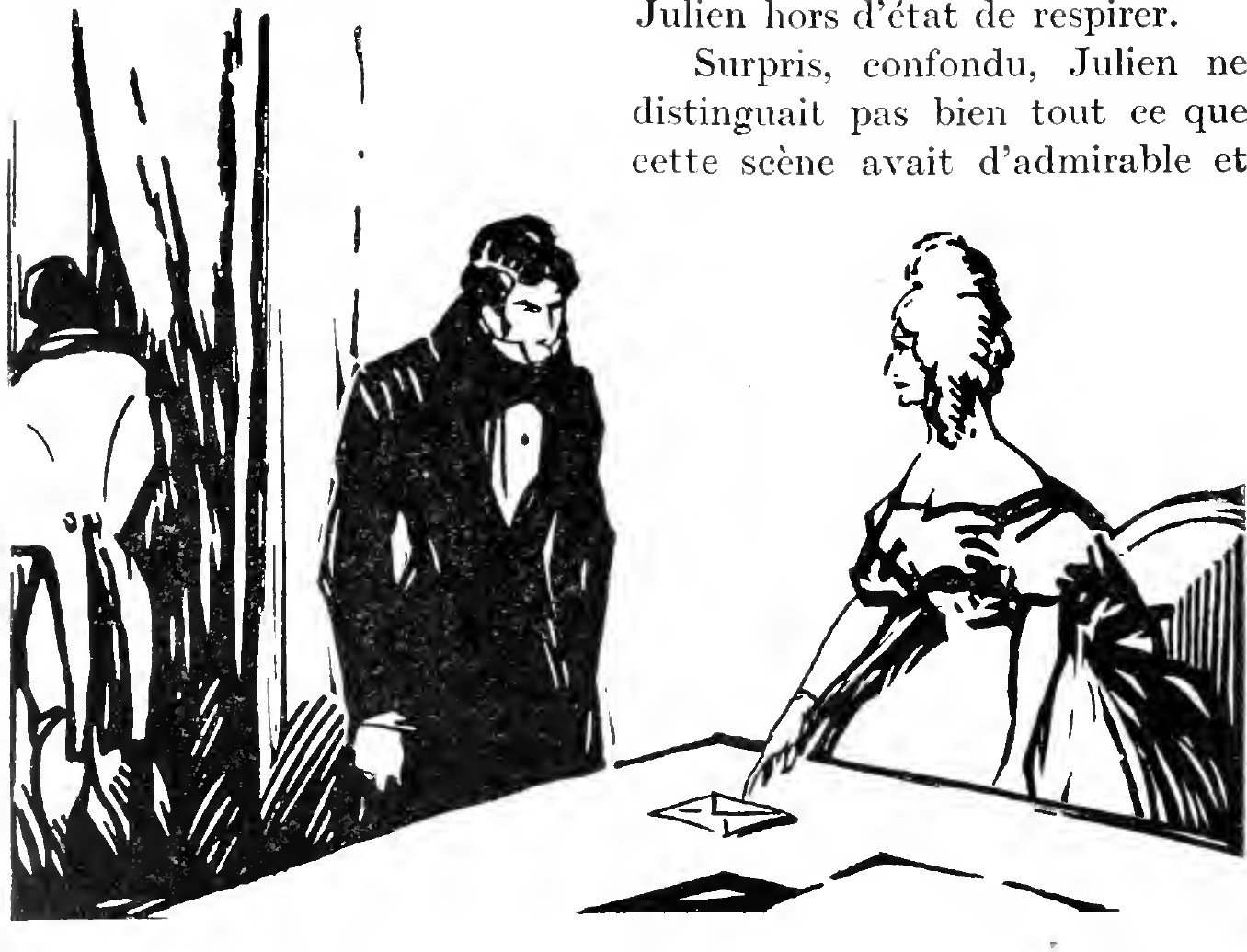
fortunate for him. He helped Mathilde to sit down; she was almost abandoning herself in his arms.
The first moment in which he perceived this movement was one of extreme joy. The second was a thought for Korasoff: I may lose everything by a single word.
His arms stiffened, so painful was the effort imposed by policy. I must not even permit myself to press against my heart this supple and charming body; or she will despise me, or she will maltreat me. What a frightful character!
And while cursing Mathilde's character, he loved her a hundred times more; she seemed to him like a queen in his arms.
Julien's impassive coldness redoubled the misery of wounded pride that was tearing at Mademoiselle de La Mole's soul. She was far from having the presence of mind needed to try to read in his eyes what he felt for her at that moment. She could not bring herself to look at him; she trembled at the thought of encountering an expression of contempt.
Seated on the library sofa, motionless and with her head turned away from Julien, she was prey to the keenest sufferings that pride and love can inflict upon a human soul. Into what atrocious course of action had she just fallen!
It was reserved for me, wretched that I am! to see the most indecent advances rejected! and rejected by whom? added her pride, mad with pain, rejected by a servant of my father's.
That is something I will not endure, she said aloud.
And, rising in fury, she opened the drawer of Julien's table, which stood a few steps in front of her. She remained as though frozen with horror upon seeing eight or ten unopened letters there, in every way similar to the one the porter had just brought up. On all the addresses she recognized Julien's handwriting, more or less disguised.
"So," she cried, beside herself, "not only are you on good terms with her, but you even despise her. You, a man of no account, despising Madame la Maréchale de Fervagues!
Ah! forgive me, my love," she added, throwing herself at his knees, "despise me if you will, but love me, I can no longer live deprived of your love. And she fell into a dead faint.
So there she is, that proud woman, at my feet! said Julien to himself.
IX
THE OPERA BOX
As the blackest sky Foretells the heaviest tempest.
DON JUAN, c. I, st. 76.
In the midst of all these great upheavals, Julien was more astonished than happy. Mathilde's insults showed him how wise Russian policy was. To speak little, to act little, that is my only means of salvation.
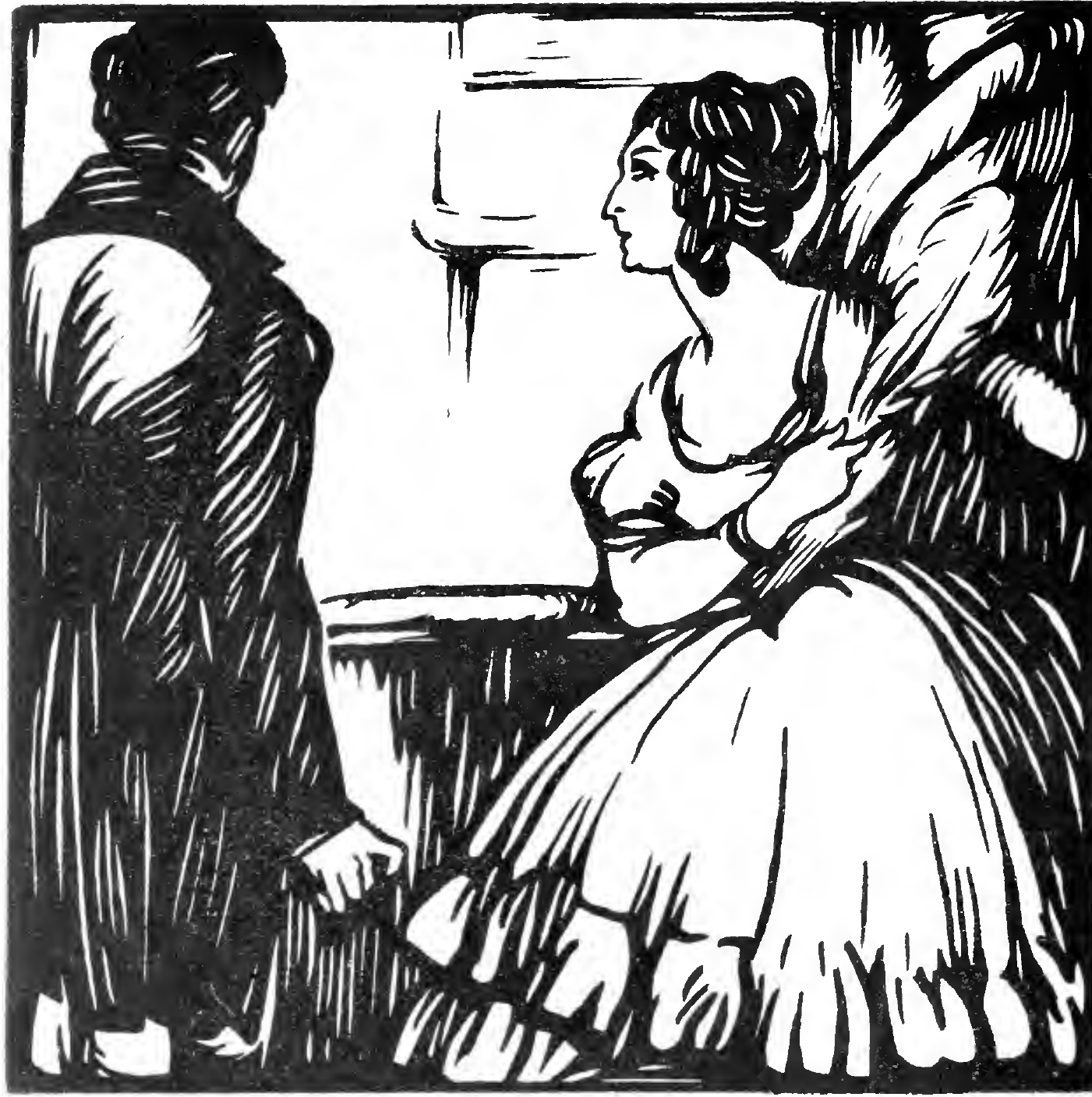
He raised Mathilde and, without a word, placed her back on the sofa. Little by little the tears overcame her.
To give herself some composure, she took Madame de Fervagues's letters in her hands; she slowly unsealed them. She gave a very marked nervous start when she recognized the marshal's handwriting. She turned the pages of these letters without reading them; most of them had six pages.
"Answer me, at least," Mathilde said at last, in the most pleading tone, but without daring to look at Julien. "You know very well that I have pride; it is the misfortune of my position and even of my character, I admit it; so Madame de Fervagues has stolen your heart from me... Has she made for you all the sacrifices to which this fatal love has dragged me?"
A dreary silence was Julien's only answer. By what right, he thought, does she ask me for a disclosure unworthy of an honorable man?
Mathilde tried to read the letters; her eyes, filled with tears, made it impossible.
For a month she had been miserable, but that haughty soul was far from admitting her feelings to herself. Chance alone had brought about this explosion. For a moment jealousy and love had prevailed over pride. She was seated on the sofa and very close to him. He saw her hair and her alabaster neck; for a moment he forgot everything he owed himself; he put his arm around her waist and pressed her almost against his breast.
She turned her head slowly toward him: he was astonished at the extreme pain in her eyes; it was impossible to recognize their usual expression.
Julien felt his strength abandoning him, so mortally painful was the act of courage he was imposing upon himself.
Those eyes will soon express nothing but the coldest disdain, said Julien to himself, if I let myself be carried away by the happiness of loving her. Yet, in a faint voice and with words she barely had the strength to finish, she was at that moment repeating to him the assurance of all her regrets for the advances that too much pride had been able to counsel.
"I have pride too," Julien told her in a voice barely formed, and his features depicted the extreme point of physical dejection.
Mathilde turned swiftly toward him. To hear his voice was a happiness whose hope she had almost renounced. At that moment she remembered her haughtiness only to curse it; she would have liked to find strange, incredible actions to prove to him to what degree she adored him and detested herself.
"It is probably because of that pride," Julien continued, "that you singled me out for a moment; it is certainly because of that courageous firmness, fitting for a man, that you esteem me at this moment. I may have love for the marshal.
Mathilde shuddered; her eyes took on a strange expression. She was about to hear her sentence pronounced. This movement did not escape
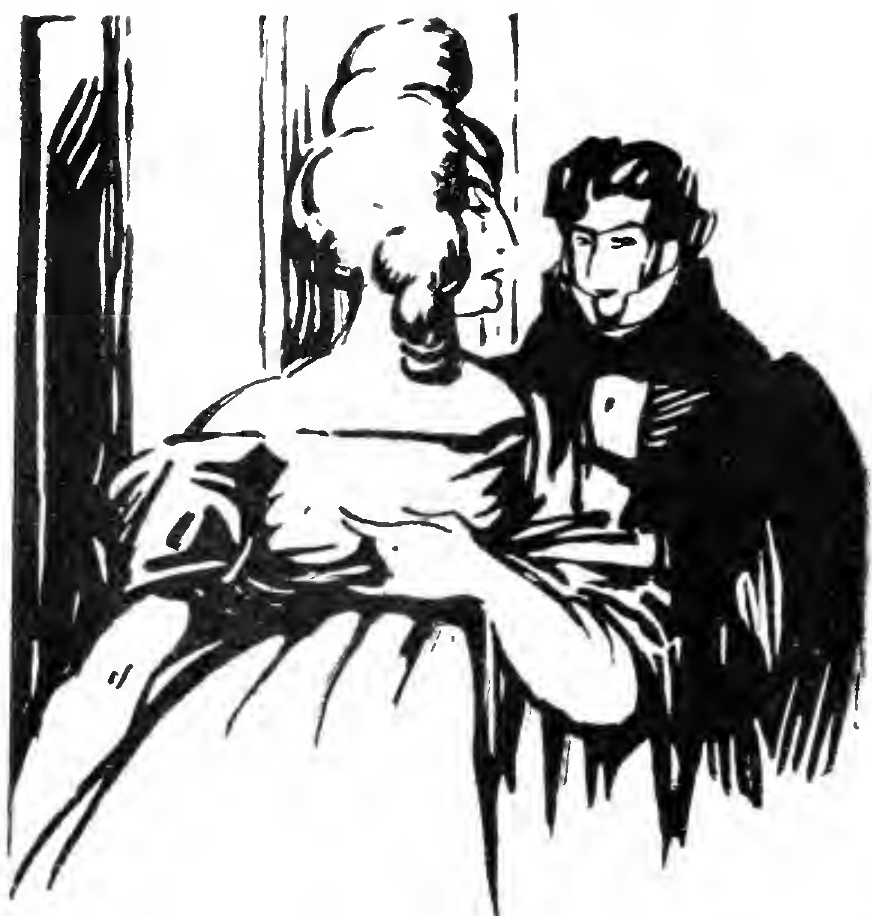
Julien; he felt his courage weakening.
Ah! he said to himself as he listened to the sound of the vain words his mouth was uttering, as he might have listened to a foreign noise; if only I could cover those pale cheeks with kisses, and you not feel it!
"I may have love for the marshal," he continued... and his voice kept growing fainter; "but certainly, I have from her, regarding her interest in me, no decisive proof..."
Mathilde looked at him: he withstood that gaze, at least he hoped his face had not betrayed him. He felt himself penetrated with love to the most intimate recesses of his heart. Never had he adored her to this degree; he was almost as mad as Mathilde. Had she had enough presence of mind and courage to maneuver, he would have fallen at her feet, abjuring all vain comedy. He had enough strength to be able to keep speaking. Ah! Korasoff, he cried inwardly, why are you not here! what need I would have of a word to guide my conduct! Meanwhile his voice was saying:
"Failing any other feeling, gratitude would suffice to attach me to the marshal; she has shown me indulgence, she consoled me when I was despised... I may not have unlimited faith in certain appearances that are undoubtedly extremely flattering, but perhaps also very short-lived."
"Ah! good God!" cried Mathilde.
"Well then! what guarantee will you give me?" replied Julien in a sharp, firm tone, which seemed for a moment to abandon the prudent forms of diplomacy. "What guarantee, what god will answer for me that the position you seem disposed to restore to me at this moment will last more than two days?"
"The excess of my love and of my misery if you no longer love me," she said, taking his hands and turning toward him...
The violent movement she had just made had slightly displaced her cape; Julien caught sight of her charming shoulders. Her hair, somewhat disarranged, recalled a delicious memory to him...
He was about to yield. One imprudent word, he said to himself, and I set this long succession of days spent in despair going again. Madame de Rénal found reasons for doing what her heart dictated to her: this young girl of the great world lets her heart be stirred only when she has proved to herself by good reasons that it ought to be stirred.
He saw this truth in the twinkling of an eye, and in the twinkling of an eye he also recovered his courage.
He withdrew his hands, which Mathilde was pressing in her own, and with marked respect moved a little away from her. A man's courage could go no further. He then set about gathering up all Madame de Fervagues' letters, which were scattered over the sofa, and with an appearance of extreme politeness, so cruel at that moment, he added:
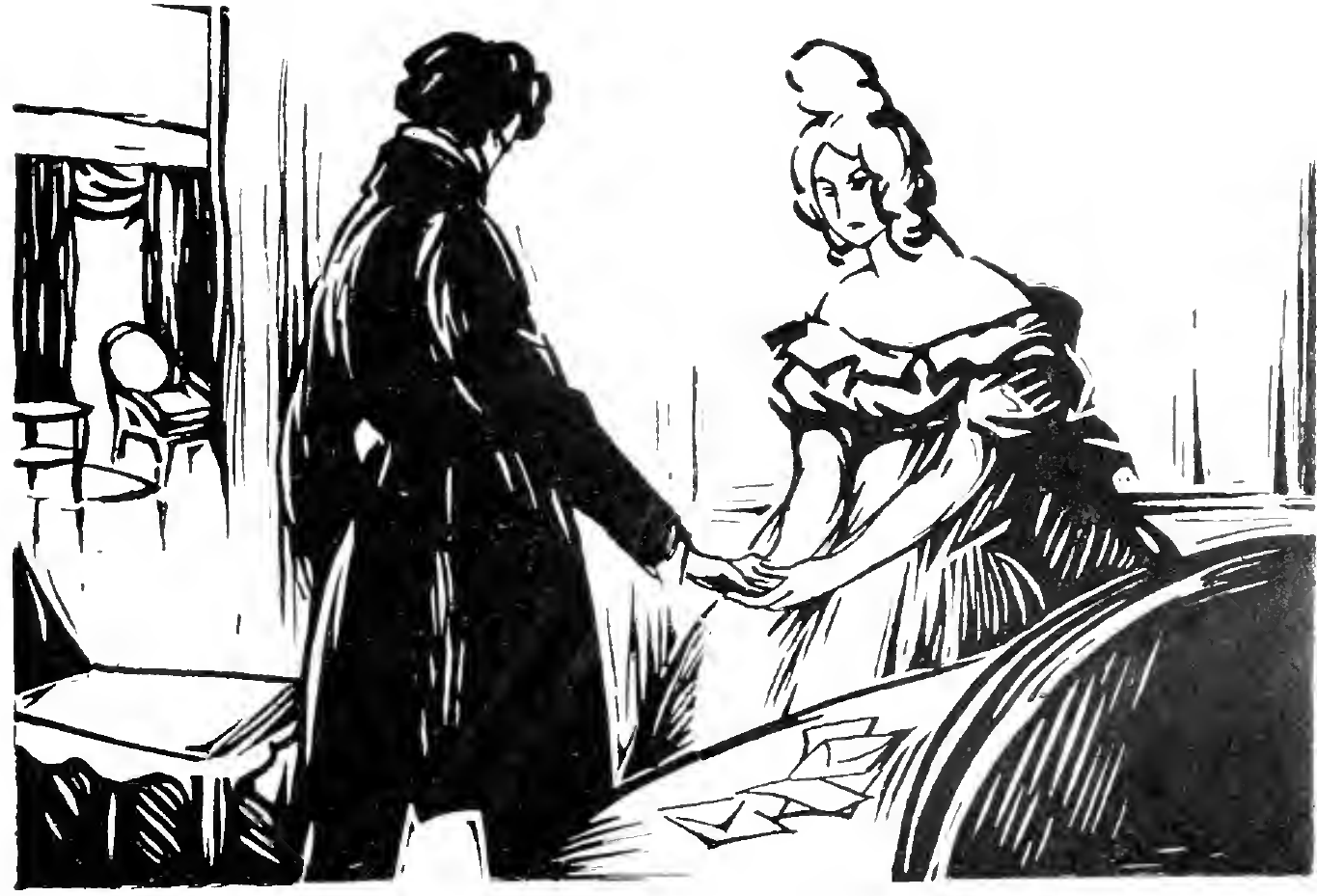
—
"Mademoiselle de La Mole will kindly allow me to reflect upon all this." He moved rapidly away and left the library; she heard him close all the doors one after another.
"The monster is not the least disturbed," she said to herself...
But what am I saying, monster? He is wise, prudent, good; it is I who am more in the wrong than could be imagined.
This way of seeing things lasted. Mathilde was almost happy that day, for she was wholly given over to love; one would have said that this soul had never been agitated by pride, and what pride!
She shuddered with horror when, that evening in the drawing room, a lackey announced Madame de Fervagues; the man's voice seemed sinister to her. She could not endure the sight of the marshal and stopped short. Julien, little elated by his painful victory, had feared his own glances, and had not dined at the Hôtel de La Mole...
His love and his happiness increased rapidly as he drew further from the moment of battle; he was already at the point of blaming himself. How could I have resisted her! he said to himself; what if she were to love me no more! A moment can change that haughty soul, and I must admit that I treated her in an appalling manner.
In the evening he felt clearly that he absolutely must appear at the Bouffes in Madame de Fervagues' box. She had expressly invited him; Mathilde would certainly not fail to know of his presence or his impolite absence. Despite the obviousness of this reasoning, at the beginning of the evening he did not have the strength to plunge into society. By speaking, he would lose half his happiness.
Ten o'clock struck: and he absolutely had to put in an appearance.
Fortunately he found the Maréchale's box filled with women, and was relegated to a place near the door, and entirely hidden by the hats. This position saved him from appearing ridiculous; the divine accents of Caroline's despair in the Matrimonio segreto made him dissolve in tears. Madame de Fervagues saw these tears; they formed such a contrast with the manly firmness of his habitual physiognomy that this great lady's soul, long since surfeited with all the most corrosive elements of the upstart's pride, was touched by them. The little that remained in her of a woman's heart moved her to speak. She wished to enjoy his voice at that moment.
"Have you seen the ladies de La Mole?" she said to him. "They are in the third tier." At once Julien leaned forward into the auditorium, supporting himself rather politely on the front of the box, and saw Mathilde; her eyes were shining with tears.
And yet this is not their opera day, thought Julien; what eagerness!
Mathilde had decided her mother to come to the Bouffes, despite the impropriety of the rank of the box which a complaisant acquaintance of the household had hastened to offer her. She wanted to see whether Julien would spend that evening with the Maréchale.