About this book
Julien Sorel climbs from sawmill to salon, torn between the red of the army and the black of the church. Stendhal's 1830 novel, free to read online.
DIALOGUE WITH A MASTER
Alas, our frailty is the cause, not we; For such as we are made of, such we be.
TWELFTH NIGHT.
It was with a child's pleasure that, for an hour, Julien assembled words. As he came out of his room, he met his pupils and their mother; she took the letter with a simplicity and a courage whose calm frightened him.
"Is the mouth glue dry?" she said to him.
Is this the woman whom remorse had driven so mad? he thought. What are her plans at this moment? He was too proud to ask her; but never, perhaps, had she pleased him more.
"If this turns out badly," she added with the same composure, "they will take everything from me. Bury this deposit somewhere in the mountains; it may one day be my only resource."
She handed him a glass case of red morocco, filled with gold and a few diamonds.
"Leave now," she said to him.
She kissed the children, and twice the youngest. Julien remained motionless. She left him with a rapid step and without looking at him.
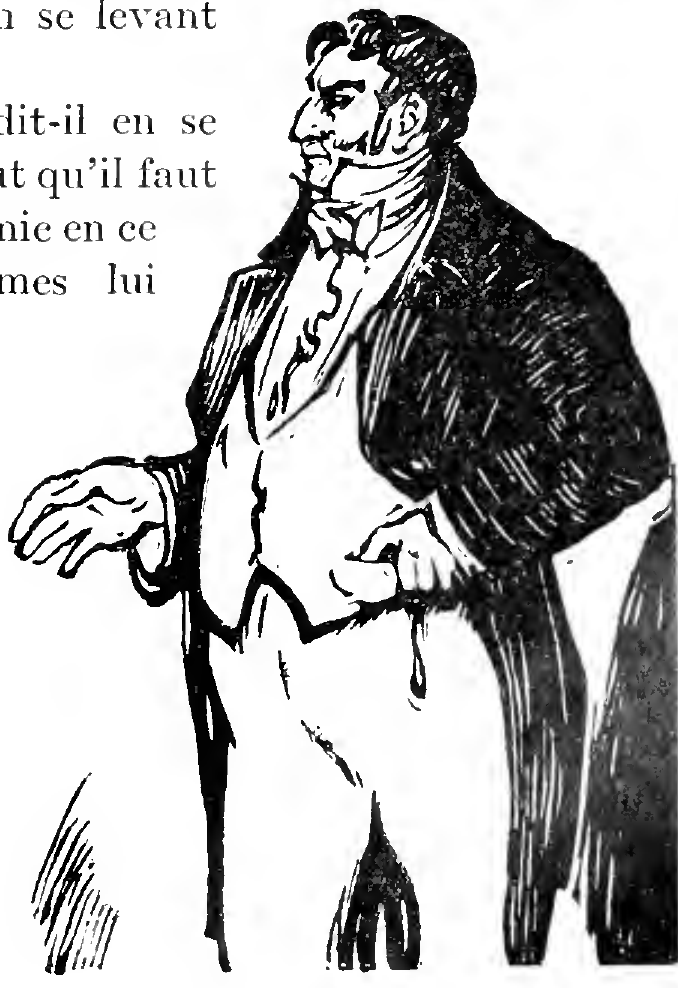
From the moment he had opened the anonymous letter, M. de Rênal's existence had been dreadful. He had not been so agitated since a duel he had nearly fought in 1816, and, to do him justice, at that time the prospect of receiving a bullet would have made him less unhappy. He examined the letter in every direction. Is this not a woman's handwriting? he said to himself; in that case, what woman wrote it? He ran over in his mind all those he knew at Verrières, without being able to fix his suspicions. Would a man have dictated this letter? who is this man? Here the same uncertainty; he was jealous and doubtless hated by most of those he knew. I must consult my wife, he said to himself, by habit, as he rose from the armchair in which he was sunk.
Hardly was he up: "Great God!" he said, striking his head, "it is of her above all that I must beware; she is my enemy at this moment." And, from anger, the tears came to his eyes.
By a just compensation for the dryness of heart which constitutes the whole wisdom of the provinces, the two men whom, at this moment, M. de Rênal feared the most were his two most intimate friends.
"After those two, I have perhaps ten friends," and he passed them in review, estimating as he went the degree of consolation he might draw from each. "To all! to all!" he cried
with rage, "my frightful adventure will give the most extreme pleasure." By good fortune, he believed himself envied, and not without reason. Besides his superb town house, which the king of \\\* had just honored forever by sleeping in it, he had very well arranged his château at Vergy. The façade was painted white, and the windows furnished with handsome green shutters. He was for a moment consoled by the idea of this magnificence. The fact is that this château was visible from three or four leagues away, to the great detriment of all the country houses or so-called châteaux in the neighborhood, which had been left the humble gray color given them by time.
M. de Rênal could count upon the tears and pity of one of his friends, the churchwarden of the parish; but he was an imbecile who wept at everything. This man was, however, his only resource.
"What misfortune is comparable to mine?" he cried with rage; "what isolation!"
"Is it possible!" said this man, truly to be pitied, to himself, "is it possible that in my misfortune I have not a friend to whom to turn for advice? for my reason is going astray, I feel it! Ah! Falcoz! ah! Dueros!" he cried bitterly. These were the names of two childhood friends whom he had estranged by his haughtiness in 1814. They were not noble, and he had wished to change the tone of equality on which they had lived since childhood.
One of them, Falcoz, a man of wit and heart, a paper merchant at Verrières, had bought a printing house in the chief town of the department and started a newspaper. The Congregation had resolved to ruin him: his newspaper had been condemned, his printer's license had been withdrawn. In these sad circumstances, he tried to write to M. de Rênal for the first time in ten years. The mayor of Verrières thought it his duty to reply as an old Roman: "If the king's minister did me the honor of consulting me, I should say to him: Ruin without pity all the printers of the provinces, and put printing under a monopoly like tobacco." That letter to an intimate friend, which all Verrières admired at the time, M. de Rênal recalled its terms with horror. "Who would have told me that with my rank, my fortune, my crosses, I should one day regret it?" It was in these transports of rage, now against himself, now against all that surrounded him, that he passed a frightful night; but, by good fortune, he did not have the idea of spying upon his wife.
"I am accustomed to Louise," he said to himself, "she knows all my affairs; I should be free to marry tomorrow and I should not find anyone to replace her." Then he took pleasure in the idea that his wife was innocent; this way of seeing things did not put him under the necessity of showing character and suited him far better; how many calumniated women has one not seen!
"But what!" he suddenly cried, pacing with convulsive steps, "shall I suffer as if I were a man of no account, a vagabond, that she should mock me with her lover? Shall all Verrières have to make merry over my good nature? What has not been said of Charmier (he was a husband notoriously deceived in the country)? When he is named, is not the smile on every lip? He is a good lawyer, who ever speaks of his talent for speaking? Ah! Charmier! one says, the Charmier of Bernard; that is how he is designated by the name of the man who is his disgrace.
"Thanks to heaven," said M. de Rênal at other moments, "I have no daughter, and the way I am going to punish the mother will not harm the establishment of my children; I can surprise this little peasant with my wife, and kill them both; in that case, the tragic of the adventure will perhaps take away the ridiculous. This idea smiled upon him; he followed it in all its details. The Penal Code is on my side, and, whatever happens, our Congregation and my friends on the jury will save me. He examined his hunting knife, which was very sharp; but the idea of blood frightened him.

"I can beat this insolent tutor black and blue and drive him away; but what a scandal in Verrières and even in the whole department! After the condemnation of Falcoz's newspaper, when its editor in chief came out of prison, I contributed to making him lose his place at six hundred francs. They say this scribbler dares to show himself again in Besançon; he can lampoon me cleverly, and in such a way that it will be impossible to bring him before the courts. To bring him before the courts!... The insolent fellow will insinuate in a thousand ways that he has told the truth. A man well born, who keeps his rank like me, is hated by all the plebeians. I shall see myself in those frightful Paris newspapers; O my God! what an abyss! to see the ancient name of Rênal plunged in the mire of ridicule... If I ever travel, I shall have to change my name; what! to leave this name which makes my glory and my strength. What a depth of misery!
"If I do not kill my wife, and I drive her out with ignominy, she has her aunt at Besançon, who will give her her whole fortune hand to hand. My wife will go and live in Paris with Julien; it will be known at Verrières, and I shall still be taken for a dupe." This unhappy man then perceived, by the pallor of his lamp, that day was beginning to appear. He went to seek a little fresh air in the garden. At this moment he was almost resolved not to make a scene, above all by this idea that a scene would fill his good friends of Verrières with joy.
The walk in the garden calmed him a little. "No," he cried, "I shall not deprive myself of my wife, she is too useful to me." He pictured with horror what his house would be without his wife: he had for all kin only the marquise de R..., old, imbecile, and wicked.
An idea of such great sense appeared to him, but the execution demanded a strength of character far superior to the little that the poor man had. "If I keep my wife," he said to himself, "I know myself: one day, in a moment when she impatiently provokes me, I shall reproach her with her fault. She is proud, we shall quarrel, and all that will happen before she has inherited from her aunt. Then, how they will mock me! My wife loves her children, everything will end by coming back to them. But I, I shall be the laughingstock of Verrières. What, they will say, he did not even know how to avenge himself on his wife! Would it not be better to stick to suspicions and verify nothing? Then I tie my hands, I cannot afterward reproach her with anything."
A moment later, M. de Rênal, seized again by wounded vanity, laboriously recalled all the means cited at the billiard room of the Casino or Noble Circle of Verrières, when some fine talker interrupts the pool to amuse himself at the expense of a deceived husband. How cruel, in that instant, these pleasantries appeared to him!
"God! why is not my wife dead! then I should be unassailable by ridicule. Why am I not a widower! I would go and spend six months in Paris in the best society." After this moment of happiness given by the idea of widowhood, his imagination returned to the means of assuring himself of the truth. Would he scatter at midnight, after everyone had gone to bed, a light layer of bran before Julien's door: the next morning, at daybreak, he would see the impression of the steps.
"But this means is worth nothing," he suddenly cried with rage, "that baggage Elisa would notice it, and it would soon be known in the house that I am jealous."
In another tale told at the Casino, a husband had assured himself of his misadventure by attaching with a little wax a hair which closed like a seal the door of his wife and that of the gallant.
After so many hours of uncertainty, this means of enlightening his fate seemed to him decidedly the best, and he was thinking of using it, when at the turn of an alley he met this woman whom he would have wished to see dead.
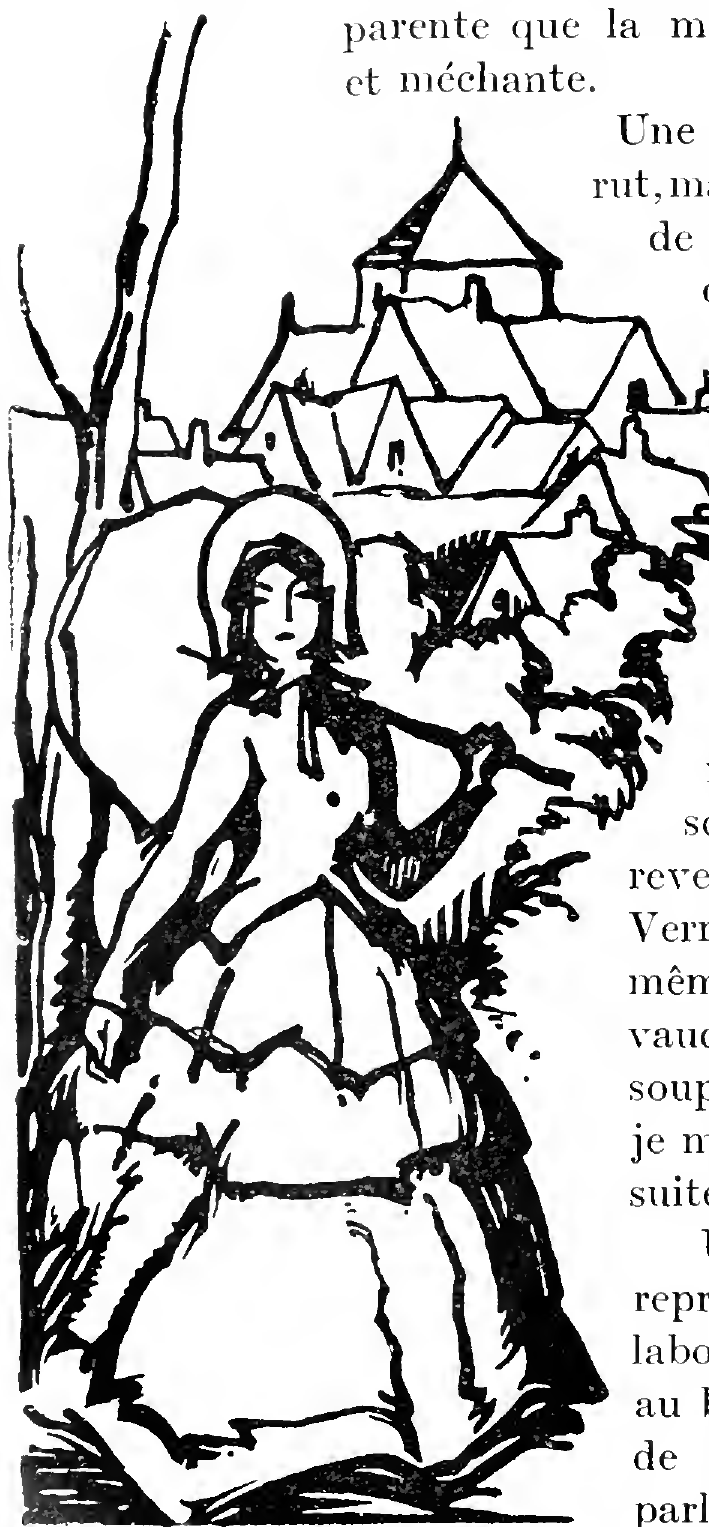
She was returning from the village. She had gone to hear mass in the church at Vergy. A tradition highly uncertain in the eyes of cold philosophy, but one in which she placed her faith, claims that the little church in use today was the chapel of the castle of the Sire de Vergy. This idea obsessed Madame de Rênal the whole time she intended to spend praying in that church. She kept picturing her husband killing Julien while hunting, as though by accident, and then that evening making her eat his heart.
My fate, she said to herself, depends on what he will think as he listens to me. After this fateful quarter of an hour, perhaps I shall find no further opportunity to speak to him. He is not a wise being guided by reason. I could then, with the help of my feeble reason, foresee what he will do or say. He will decide our common fate; he has the power. But that fate lies in my skill, in the art of directing the ideas of this fantastical man, whom his anger makes blind and prevents from seeing half of things. Great God! I need talent, composure—where am I to find them?
She recovered her calm, as though by a chain of association, upon entering the garden and seeing her husband from afar. His hair and clothes in disarray announced that he had not slept.
She handed him a letter unsealed but folded. He, without opening it, looked at his wife with frantic eyes.
Here is an abomination, she said to him, which a man of sorry appearance, who claims to know you and to owe you a debt of gratitude, handed to me as I was passing behind the notary's garden. I demand one thing of you: that you send this Monsieur Julien back to his parents, and without delay. Madame de Rênal hastened to say these words, perhaps a little before the moment, to rid herself of the dreadful prospect of having to say them.
She was seized with joy upon seeing the one she was causing her husband. From the fixedness of the gaze he fastened upon her, she understood that Julien had guessed rightly. Instead of grieving over this very real misfortune: What a genius, she thought, what perfect tact! and in a young man still without experience? To what will he not attain in the future? Alas! then his successes will cause him not to forget.
This little act of admiration for the man she adored quite cured her of her agitation.
She applauded herself for her course of action. I have not been unworthy of Julien, she said to herself, with a sweet and intimate voluptuousness.
Without saying a word, for fear of committing himself, M. de Rênal was examining the second anonymous letter composed, if the reader remembers, of printed words glued onto a paper tending toward blue. They are still mocking me in every possible way, said M. de Rênal, overwhelmed with fatigue.
Still new insults to examine, and always because of my wife! He was on the point of overwhelming her with the coarsest insults; the prospect of the Besançon inheritance barely stopped him. Devoured by the need to take it out on something, he crumpled the paper of this second anonymous letter, and began to pace with great strides; he needed to get away from his wife. A few moments later, he returned to her side, and more calmly.
— It is a question of taking a decision and sending Julien away, she said to him at once; he is, after all, only the son of a workman. You will compensate him with a few écus, and besides, he is learned and will easily find a position, for example with M. Valenod or with the sub-prefect of Maugiron, who have children. Thus you will do him no harm...
— You speak there like the fool you are, cried M. de Rênal in a terrible voice; what good sense can one hope for from a woman? Never do you pay attention to what is reasonable; how would you know anything? your nonchalance, your laziness, give you activity only for chasing butterflies, weak beings whom we are unfortunate to have in our families!...
Madame de Rênal let him talk, and he talked for a long time; he was working off his anger, that is the phrase of the country.
— Monsieur, she answered him at last, I speak as a woman outraged in her honor, that is to say, in what she holds most precious.
Madame de Rênal maintained an unalterable composure throughout this painful conversation, upon which depended the possibility of still living under the same roof with Julien. She sought the ideas she believed most suited to guiding her husband's blind anger. She had been insensible to all the insulting remarks he had addressed to her; she was not listening to them, she was thinking then of Julien. Will he be pleased with me?
— This little peasant whom we have showered with attentions and even with gifts may be innocent, she said to him at last, but he is none the less the occasion of the first affront I receive... Monsieur! when I read this abominable paper, I promised myself that either he or I would leave your house.
— Do you wish to make a scene to dishonor me and yourself too? You set many people's milk boiling in Verrières.
— It is true, the state of prosperity in which the wisdom of your administration has known how to place you, your family and the town, is generally envied... Well then! I shall urge Julien to ask you for a leave of absence to go and spend a month with that wood merchant of the mountain, the worthy friend of this little workman.
— Beware of acting, resumed M. de Rênal calmly. What I demand before everything is that you do not speak to him. You would put anger into it, and you
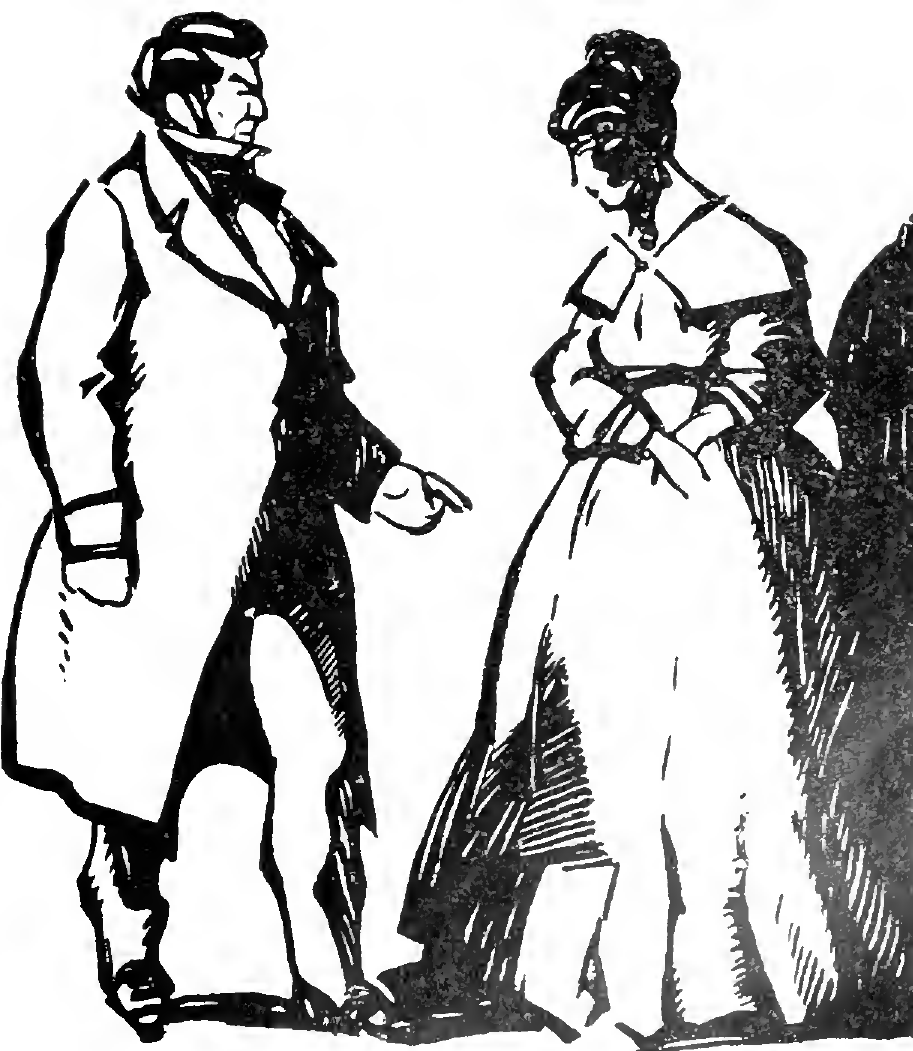
would set me at odds with him; you know how closely this little gentleman is watched.
.
— This young man has no tact, resumed Madame de Rênal, he may be learned, you know about such things, but at bottom he is nothing but a true peasant. For my part, I have never had a good opinion of him since he refused to marry Élisa, which was an assured fortune; and that under the pretext that sometimes, in secret, she pays visits to M. Valenod.
— Ah! said M. de Rênal, raising his eyebrow in an exorbitant fashion, what, Julien told you that?
— No, not precisely; he has always spoken to me of the vocation that calls him to the holy ministry; but believe me, the first vocation for these little people is to have bread. He made me understand clearly enough that he was not ignorant of these secret visits.
— And I, I, I was ignorant of them! cried M. de Rênal, recovering all his fury, and weighing his words. Things happen in my house that I do not know about... How! there was something between Élisa and Valenod?
— Hé! that is ancient history, my dear friend, said Madame de Rênal laughing, and perhaps no harm came of it. It was in the time when your good friend Valenod would not have been sorry for people in Verrières to think that a little entirely platonic love was establishing itself between him and me.
— I had that idea once, cried M. de Rênal striking his head furiously and walking from discovery to discovery, and you told me nothing of it?
— Was it necessary to set two friends at odds for a little puff of vanity on the part of our dear director? Where is the woman in society to whom he has not addressed some extremely witty and even somewhat gallant letters?
— He would have written to you?
— He writes a great deal.
— Show me those letters this instant, I order it; and M. de Rênal grew six feet taller.
— I shall take good care not to, he was answered with a gentleness that came close to nonchalance, I shall show them to you one day, when you are wiser.
— This very instant, by God! cried M. de Rênal, drunk with anger, and yet happier than he had been for twelve hours.
— Do you swear to me, said Madame de Rênal very gravely, never to quarrel with the director of the depot on the subject of these letters?
— Quarrel or no, I can take the foundling children away from him; but, he continued furiously, I want those letters this instant; where are they?
— In a drawer of my secretary; but certainly, I shall not give you the key to it.
— I shall know how to break it open, he cried, running toward his wife's room.
He broke open, in fact, with an iron crowbar, a precious secretary of gnarled mahogany brought from Paris, which he often rubbed with the tail of his coat when he thought he saw a spot on it.
Madame de Rênal had run up the hundred and twenty steps of the dovecote; she was fastening the corner of a white handkerchief to one of the iron bars of the little window. She was the happiest of women. With tears in her eyes she gazed toward the great woods of
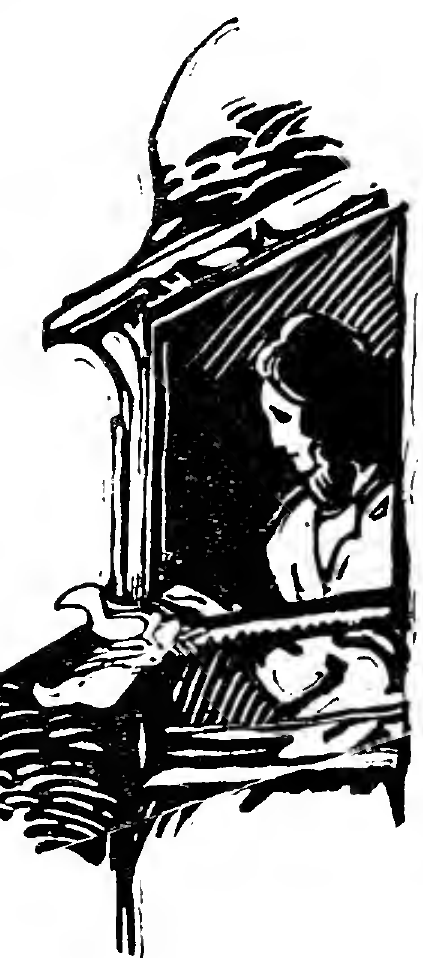
the mountain. No doubt, she said to herself, from beneath one of those leafy beeches Julien is watching this happy signal. For a long time she listened; then she cursed the monotonous noise of the cicadas and the singing of the birds. Without that troublesome noise, a cry of joy, rising from the great rocks, might have reached her here. Her eager eye devoured that immense slope of dark, even verdure, like a meadow, formed by the tops of the trees. How is it that he has not the wit, she said to herself, quite melting, to invent some signal to tell me that his happiness equals my own? She did not come down from the dovecote until she feared that her husband might come to look for her there.
She found him furious. He was running through the anodyne sentences of M. Valenod, little accustomed to being read with so much emotion.
Seizing a moment when her husband's exclamations left her the possibility of making herself heard:
— I keep coming back to my idea, said Madame de Rênal, it is fitting that Julien make a journey. Whatever talent he may have for Latin, he is, after all, only a peasant, often coarse and lacking in tact; every day, believing himself to be polite, he addresses to me exaggerated and tasteless compliments, which he learns by heart in some novel...
— He never reads any, cried M. de Rênal; I have made sure of it. Do you think I am a blind master of the house, ignorant of what goes on in his own home?
— Well then! if he reads these ridiculous compliments nowhere, he invents them, and so much the worse for him. He will have spoken of me in that tone at Verrières;... and, without going so far, said Madame de Rênal, with the air of making a discovery, he will have spoken thus before Élisa, it is about the same as if he had spoken before M. Valenod.
— Ah! cried M. de Rênal, shaking the table and the whole room with one of the greatest blows of the fist that have ever been given, the anonymous printed letter and the letters from Valenod are written on the same paper.
At last!... thought Madame de Rênal; she appeared overwhelmed by this discovery, and without having the courage to add a single word went to sit far away on the sofa, at the back of the drawing room.
The battle was now won; she had a great deal to do to prevent M. de Rênal from going to speak to the supposed author of the anonymous letter.
— How do you not feel that to make a scene without sufficient proof against M. Valenod is the most signal blunder? You are envied, Monsieur; whose fault is that? Your talents: your wise administration, your buildings full of taste, the dowry I brought you, and above all the considerable inheritance we may hope for from my good aunt, an inheritance whose importance is infinitely exaggerated, have made you the leading personage of Verrières.
— You forget birth, said M. de Rênal, smiling a little.
— You are one of the most distinguished gentlemen of the province, resumed Madame de Rênal with eagerness; if the king were free and could do justice to birth, you would doubtless figure in the Chamber of Peers, etc. And it is in this magnificent position that you wish to give envy a fact to comment upon.
To speak to M. Valenod of his anonymous letter is to proclaim throughout Verrières, nay, throughout Besançon, that this petty bourgeois, admitted perhaps imprudently to the intimacy of a Rênal, has found the means to offend him. When these letters that you have just intercepted should prove that I have responded to the love of M. Valenod, you ought to kill me, I should have deserved it a hundred times, but not to show him anger. Remember that all your neighbours are waiting only for a pretext to avenge themselves for your superiority; remember that in 1816 you contributed to certain arrests. This man sheltered on his roof...
— I remember that you have neither regard nor friendship for me, exclaimed M. de Rênal with all the bitterness that such a memory awakened, and I have not been made a peer!...
— I think, my friend, resumed Madame de Rênal smiling, that I shall be richer than you, that I have been your companion for twelve years, and that by all these titles I ought to have a voice in the chapter, and especially in today's affair. If you prefer a Monsieur Julien to me, added she with ill-disguised vexation, I am ready to go and spend a winter with my aunt.
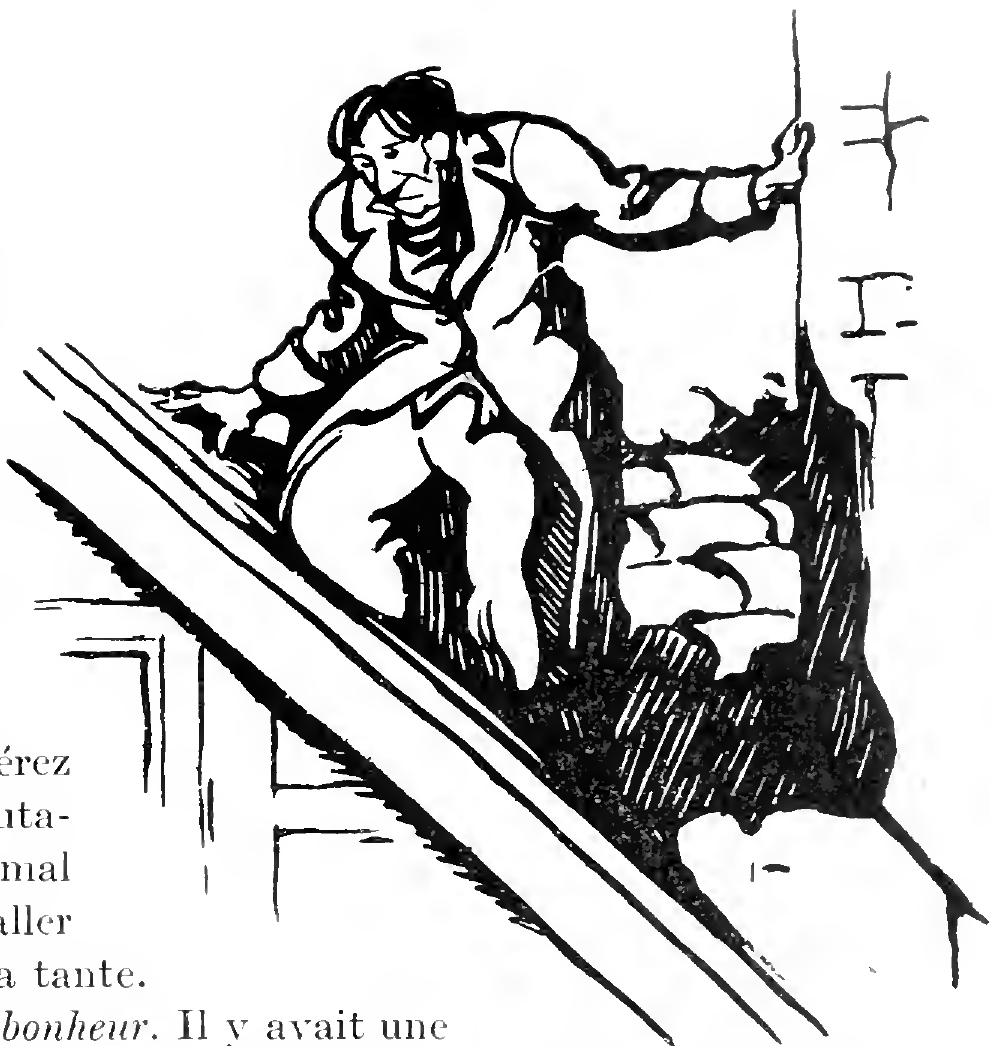
This word was spoken happily. There was a firmness that seeks to surround itself with politeness; it decided M. de Rênal. But, following the habit of the province, he spoke still for a long time, reverted to all the arguments; his wife let him talk, there was still anger in his accent. At last, two hours of useless chatter exhausted the strength of a man who had undergone a fit of anger all night long. He fixed the line of conduct he was going to follow toward M. Valenod, Julien and even Élisa.
Once or twice, during this great scene, Madame de Rênal was on the point of feeling some sympathy for the very real misfortune of this man, who for twelve years had been her friend. But true passions are selfish. Besides, she awaited at every moment the confession of the anonymous letter he had received the night before, and this confession did not come. It was wanting to Madame de Rênal's security to know the ideas that might have been suggested to the man on whom her fate depended. For, in the province, husbands are masters of opinion. A husband who complains covers himself with ridicule, a thing every day less dangerous in France; but his wife, if he does not give her money, falls to the state of a working woman at fifteen sous a day, and even then good souls make a scruple of employing her.
An odalisque of the seraglio may at a pinch love the sultan; he is all-powerful, she has no hope of stealing his authority from him by a series of little stratagems. The master's vengeance is terrible, bloody, but military, generous: a dagger thrust ends everything. It is by blows of public contempt that a husband kills his wife in the nineteenth century; it is by closing all the drawing-rooms to her.
The feeling of danger was keenly reawakened in Madame de Rênal on her return home; she was shocked by the disorder in which she found her room. The locks of all her pretty little coffers had been broken; several boards of the floor had been raised. He would have been pitiless toward me, she said to herself! To spoil thus this coloured wood floor, which he loves so much; when one of his children enters with wet shoes, he turns red with anger. Here it is spoiled forever? The sight of this violence instantly drove away the last reproaches she made herself for her too rapid victory.
A little before the dinner bell, Julien came in with the children. At dessert, when the servants had withdrawn, Madame de Rênal said to him very dryly:
— You have shown me the desire to go and spend a fortnight at Verrières, M. de Rênal is willing to grant you a leave. You may go whenever it seems good to you. But, so that the children do not lose their time, each day their themes will be sent to you, which you will correct.
— Certainly, added M. de Rênal in a very sour tone, I shall not grant you more than a week.
Julien found on his countenance the anxiety of a man deeply tormented.
— He has not yet come to a decision, he said to his friend, during a moment of solitude they had in the drawing-room.
Madame de Rênal quickly told him all she had done since the morning.
— Details tonight, she added laughing.
Wickedness of woman! thought Julien. What pleasure, what instinct drives them to deceive us!
— I find you at once enlightened and blinded by your love, he said to her with some coldness; your conduct today is admirable; but is there any prudence in trying to see us this evening? This house is paved with enemies; remember the passionate hatred Élisa has for me.
— That hatred resembles very much the passionate indifference you would have for me.
— Even indifferent, I must save you from a peril into which I have plunged you. If chance wills that M. de Rênal speaks to Élisa, with a word she can tell him everything. Why should he not hide near my room, well armed...
— What! not even courage! said Madame de Rênal, with all the haughtiness of a noble girl.
— I shall never stoop to speak of my courage, said Julien coldly, it is a baseness. Let the world judge by facts. But, added he taking her hand, you do not conceive how attached I am to you, and what is my joy at being able to take leave of you before this cruel absence.