About this book
Julien Sorel climbs from sawmill to salon, torn between the red of the army and the black of the church. Stendhal's 1830 novel, free to read online.
IS IT A PLOT?
Ah! how cruel is the interval between a great project conceived and its execution! What vain terrors! what irresolution! It is life that is at stake. — It is much more: it is honour!
SCHILLER.
T HIS is becoming serious, thought Julien... and a little too clear, he added after thinking. What! this young lady can speak to me in the library with a freedom which, thank God, is complete; the Marquis, in his fear that I may show him accounts, never comes there. What! M. de La Mole and Count Norbert, the only persons who enter here, are absent almost all day; one can easily observe the moment of their return to the hotel, and the sublime Mathilde, for whose hand a sovereign prince would not be too noble, wants me to commit an abominable imprudence!
It is clear, they want to ruin me or laugh at me, at the very least. First, they wanted to ruin me with my letters; they turn out to be prudent; well! they need an action clearer than day. These pretty little gentlemen think me too stupid or too much of a fool! Devil! by the most beautiful moonlight in the world, to climb thus by a ladder to a first floor twenty-five feet high! They will have time to see me, even from the neighbouring hotels. I shall be a fine sight on my ladder! Julien went up to his room and began to pack his trunk while whistling. He was resolved to leave and not even to reply.
But this wise resolution did not give him peace of heart. If by chance, he suddenly said to himself, her trunk closed, Mathilde was in good faith! then I am playing, in her eyes, the role of a perfect coward. I have no birth, I need great qualities, ready money, without accommodating suppositions, well proven by speaking actions.
He spent a quarter of an hour reflecting. What is the good of denying it? he said at last; I shall be a coward in her eyes. I lose not only the most brilliant person in high society, as they all said at M. the Duc de Rctz's ball, but also the divine pleasure of seeing myself sacrifice the Marquis de Croisenois, the son of a duke, and who will be a duke himself. A charming young man who has all the qualities I lack: wit of the moment, birth, fortune...
This remorse will pursue me all my life, not for her, there are so many mistresses! said old Don Diègue, and here clearly and plainly. I recoil before the first peril offered to me; for this duel with M. de Beauvoisis presented itself as a joke. This is quite different. I may be shot at with blank by a servant, but that is the least danger; I may be dishonoured.
This is becoming serious, my boy, he added with a gaiety and a Gascon accent. Honour is at stake. Never will a poor devil, cast as low as I am by chance, find such an occasion again; I shall have good fortune, but subordinate ones...
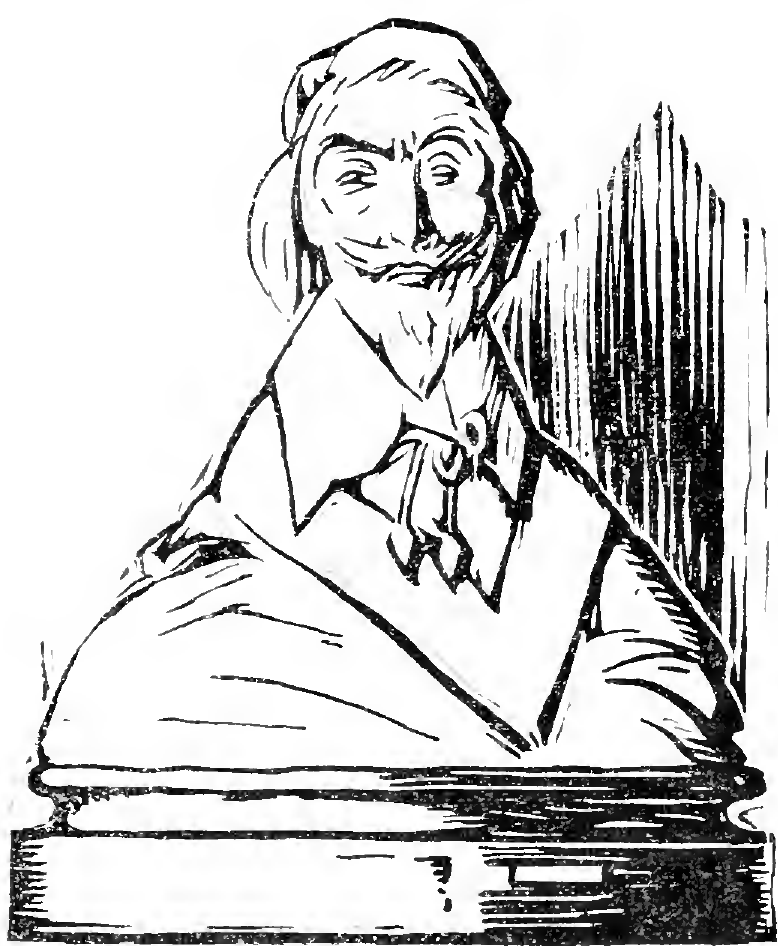
He reflected for a long time, he walked with hurried steps, stopping short from time to time. A magnificent marble bust of Cardinal de Riehelieu had been placed in his room, which in spite of himself drew his gaze. This bust seemed to look at him severely, and as if reproaching him for the lack of that audacity which must be so natural to the French character. In your time, great man, would I have hesitated?
At the worst, Julien finally said to himself, suppose all this is a trap; it is dark enough and compromising enough for a young girl. They know I am not a man to keep quiet. So they will have to kill me. That was all very well in 1574, in the days of Boniface de La Mole, but no one today would dare. These people are no longer the same. Mademoiselle de La Mole is so envied! Four hundred drawing rooms would ring tomorrow with her shame, and with what pleasure!
The servants gossip among themselves about the marked preference of which I am the object, I know it, I have heard them...
On the other hand, her letters!... they may believe I have them on me. Surprised in her room, they will take them from me. I shall have to deal with two, three, four men, who knows? But these men, where will they find them? where find discreet subordinates in Paris? Justice frightens them... By Jove! the Caylus, the Croisenois, the de Luz themselves. This moment, and the foolish figure I shall cut in their midst, will be what has seduced them. Beware the fate of Abélard, Mr. Secretary!
Well, by Jove! you shall carry my marks, I shall strike at the face, like Caesar's soldiers at Pharsalia... As for the letters, I can put them in a safe place.
Julien made copies of the last two, hid them in a volume of the handsome Voltaire in the library, and himself carried the originals to the post.
When he had returned: Into what folly am I about to throw myself! he said to himself with surprise and terror. He had spent a quarter of an hour without looking squarely at his action of the coming night.
But if I refuse, I shall despise myself afterward. All my life this action will be a great subject of doubt, and, for me, such doubt is the most bitter of misfortunes. Have I not experienced it for Amanda's lover! I believe I should more easily forgive a perfectly clear crime; once confessed, I should cease to think of it.
What, I shall have been in rivalry with a man bearing one of the finest names in France, and I shall myself, of my own free will, have declared myself his inferior! At bottom, there is cowardice in not going. That word decides everything, cried Julien, rising... besides, she is very pretty!
If this is not a betrayal, what madness she is committing for me!... If it is a hoax, by Jove! Gentlemen, it rests only with me to make the joke serious, and so I shall.
But if they pinion my arms at the moment of entering the room; they may have placed some ingenious machine there!
It is like a duke, he said to himself laughing, there is parade in everything, says my fencing master, but the good Lord, who wants things to end, makes one of the two forget to parry. Besides, here is what to answer them: he drew his pocket pistols; and
There were still many hours to wait before doing anything. Julien wrote to Fouqué: "My friend, open the enclosed letter only in case of accident, if you hear that something strange has happened to me. Then erase the proper names from the manuscript I send you, and make eight copies of it which you will send to the newspapers of Marseille, Bordeaux, Lyon, Brussels, etc.; ten days later, have this manuscript printed, send the first copy to M. the Marquis de La Mole; and fifteen days after, throw the other copies at night into the streets of Verrières."
This little justifying memoir arranged in the form of a tale, which Fouqué was to open only in case of accident, Julien made as little compromising as possible for Mademoiselle de La Mole, but at last it painted his position very exactly.
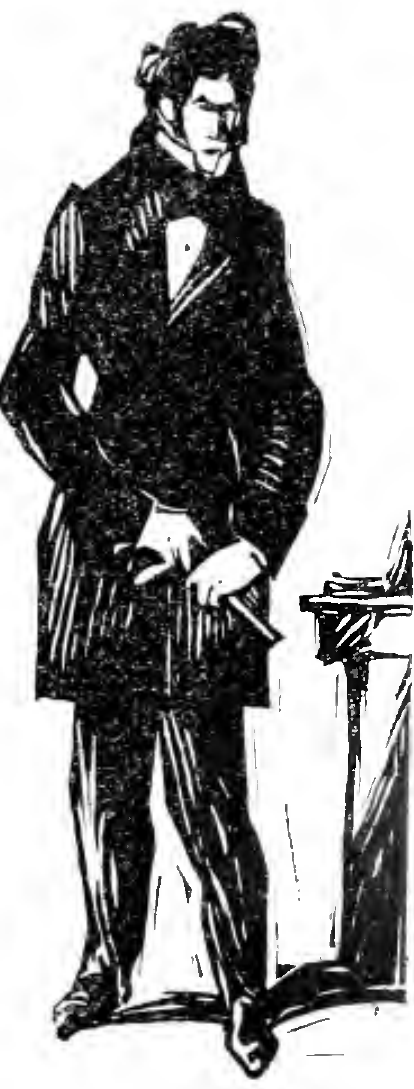
Julien was finishing sealing his packet when the dinner bell rang; it made his heart beat. His imagination, preoccupied with the account he had just composed, was wholly given over to tragic forebodings. He had seen himself seized by servants, bound, led into a cellar with a gag in his mouth. There, a servant guarding him, and if the honor of the noble family required that the adventure have a tragic ending, it was easy to end everything with those poisons that leave no trace; then they would say he had died of illness, and he would be carried dead to his room.
Moved by his own tale like a dramatic author, Julien was really afraid when he entered the dining room. He looked at all those servants in full livery. He studied their physiognomy. Which are the ones chosen for tonight's expedition? he said to himself. In this family, memories of the court of Henry III are so present, so often recalled, that, believing themselves insulted, they will have more decision than the other persons of their rank. He looked at Mademoiselle de La Mole to read in her eyes her family's plans: she was pale, and had altogether a medieval physiognomy. Never had he found her air so grand, she was truly beautiful and imposing. He almost fell in love with her. Pallida morte futurâ, he said to himself (Her pallor announces her grand designs).
In vain, after dinner, he affected to stroll for a long time in the garden. Mademoiselle de La Mole did not appear there. To speak to her at that moment would have relieved his heart of a great weight.
Why not admit it? he was afraid. As he was resolved to act, he abandoned himself to this feeling without shame. Provided that at the moment of action I find the courage I need, he said to himself, what does it matter what I may feel at this moment? He went to reconnoiter the situation and the weight of the ladder.
It is an instrument, he said to himself laughing, which it is my destiny to use! here as at Verrières. What a difference! Then, he added with a sigh, I was not obliged to distrust the person for whom I exposed myself. What a difference too in the danger!
Had I been killed in M. de Rênal's gardens, there would have been no dishonor for me. Easily my death would have been made inexplicable. Here, what abominable tales will they not tell in the drawing rooms of the Hôtel de Chaulnes, of the Hôtel de Caylus, of Retz, etc., everywhere at last. I shall be a monster in posterity.
For two or three years, he resumed laughing, and mocking himself. But this idea annihilated him. And I, where will anyone be able to justify me? Supposing Fouqué prints my posthumous pamphlet, it will be only one more infamy. What! I am received in a house, and as the price of the hospitality I receive there, of the kindnesses with which I am overwhelmed there, I print a pamphlet about what goes on there! I attack the honor of women! Ah! a thousand times rather, let us be duped!
That evening was frightful.