About this book
Julien Sorel climbs from sawmill to salon, torn between the red of the army and the black of the church. Stendhal's 1830 novel, free to read online.
THE JUDGMENT
A[FINALLY] that day appeared, so dreaded by Madame de Rénal and by Mathilde.
The country will long remember this celebrated trial. The interest in the accused had risen to the point of agitation; for his crime was astonishing and yet not atrocious. Had it been so, this young man was so handsome! His high fortune, so soon ended, increased the sympathy. "Will they condemn him?" women asked the men of their acquaintance, and they were seen growing pale as they awaited the answer. The province had flocked to Besançon to see this romantic case tried.
For several days there had been no room left in the inns. The president of the assizes was besieged with requests for tickets; all the ladies of the town wished to attend the trial; Julien's portrait was being cried in the streets, etc., etc.
Mathilde was keeping in reserve for this supreme moment a letter written entirely in the hand of Monseigneur the Bishop of ***. This prelate, who directed the Church of France and made bishops, deigned to request Julien's acquittal. On the eve of the trial, Mathilde carried this letter to the all-powerful grand vicar.
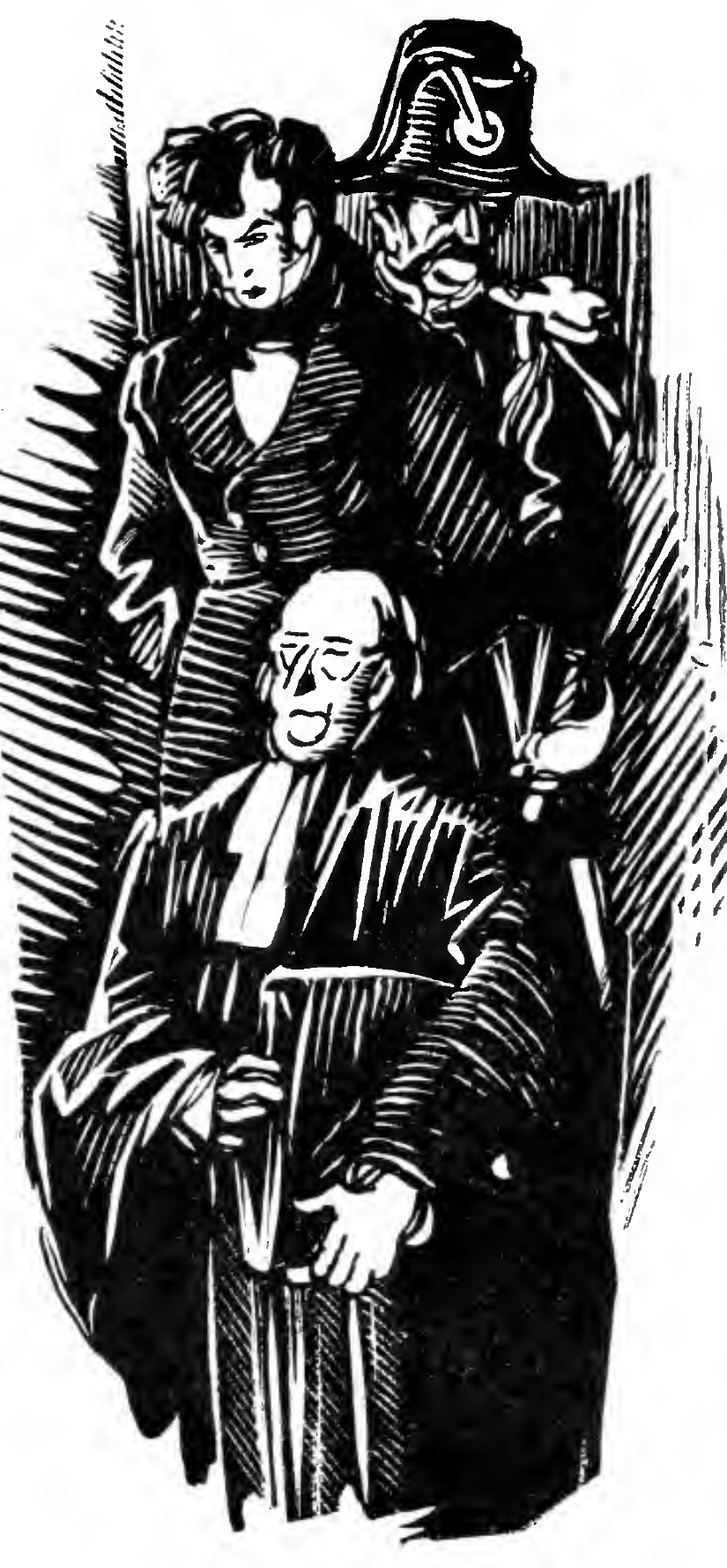
At the end of the interview, as she was departing bathed in tears: "I answer for the jury's verdict," M. de Friair said at last, emerging from his diplomatic reserve, and almost moved himself. "Among the twelve persons charged with examining whether your protégé's crime is established, and above all whether there was premeditation, I count six friends devoted to my fortunes, and I have given them to understand that it depended on them to raise me to the episcopate. Baron Valenod, whom I have made mayor of Verrières, has complete control over two of his constituents, MM. de Moirod and de Cholin. To be sure, chance has given us two jurors of very illiberal way of thinking for this affair; but, although ultra-liberals, they are faithful to my orders on great occasions, and I have had them begged to vote as M. Valenod does. I have learned that a sixth juror, a manufacturer, immensely rich and a babbling liberal, secretly aspires to a contract with the Ministry of War, and doubtless he would not wish to displease me. I have had word sent to him that M. de Valenod has my last word."
"And who is this M. Valenod?" said Mathilde anxiously.
"If you knew him, you could not doubt of success. He is a bold, impudent, coarse talker, made to lead fools. 1814 took him from misery, and I am going to make him a prefect.
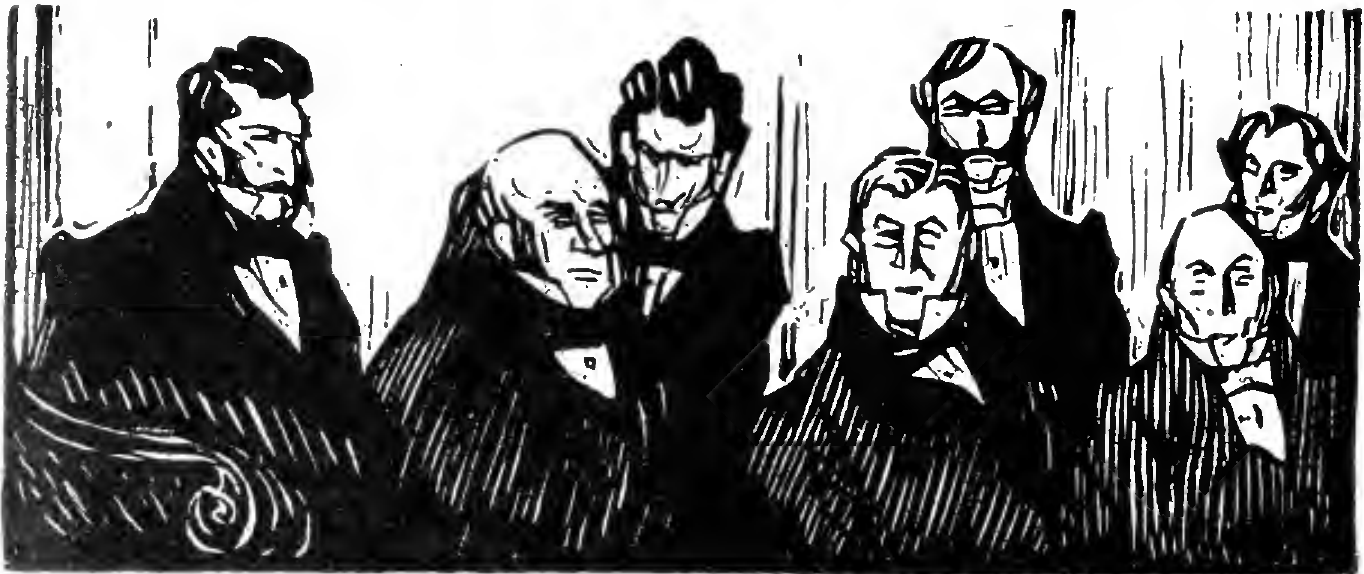
He is capable of beating the other jurors if they do not wish to vote as he pleases.
Mathilde was somewhat reassured.
Another discussion awaited her in the evening. To avoid prolonging an unpleasant scene whose outcome was in her eyes certain, Julien was resolved not to speak.
"My advocate will speak," he said to Mathilde. "I shall be only too long exposed as a spectacle to all my enemies. These provincials have been shocked by the rapid fortune that I owe to you, and, believe me, there is not one of them who does not desire my condemnation, except to weep like a fool when I am led to death."
"They desire to see you humiliated, it is only too true," replied Mathilde, "but I do not believe them cruel. My presence at Besançon and the spectacle of my grief have interested all the women; your handsome face will do the rest. If you say a word before your judges, the whole audience is for you, etc., etc.
The next day at nine o'clock, when Julien came down from his prison to go into the great hall of the Palais de Justice, it was with great difficulty that the gendarmes succeeded in clearing a way through the immense crowd packed into the courtyard. Julien had slept well, he was very calm, and felt no other sentiment than a philosophical pity for this crowd of envious people who, without cruelty, were going to applaud his death sentence. He was much surprised when, held back for more than a quarter of an hour in the midst of the crowd, he was obliged to recognize that his presence inspired the public with a tender pity. He did not hear a single unpleasant remark. These provincials are less wicked than I thought, he said to himself.
On entering the courtroom, he was struck by the elegance of the architecture. It was a clean Gothic, and a host of pretty little columns carved in the stone with the greatest care. He thought himself in England.
But soon all his attention was absorbed by twelve or fifteen pretty women who, placed opposite the accused's dock, filled the three balconies above the judges and the jurors. Turning toward the public, he saw that the circular gallery running above the amphitheatre was filled with women: most were young and seemed to him very pretty; their eyes were bright and full of interest. In the rest of the hall, the crowd was enormous; people were fighting at the doors, and the sentinels could not obtain silence.
When all the eyes that were seeking Julien perceived him in the dock,
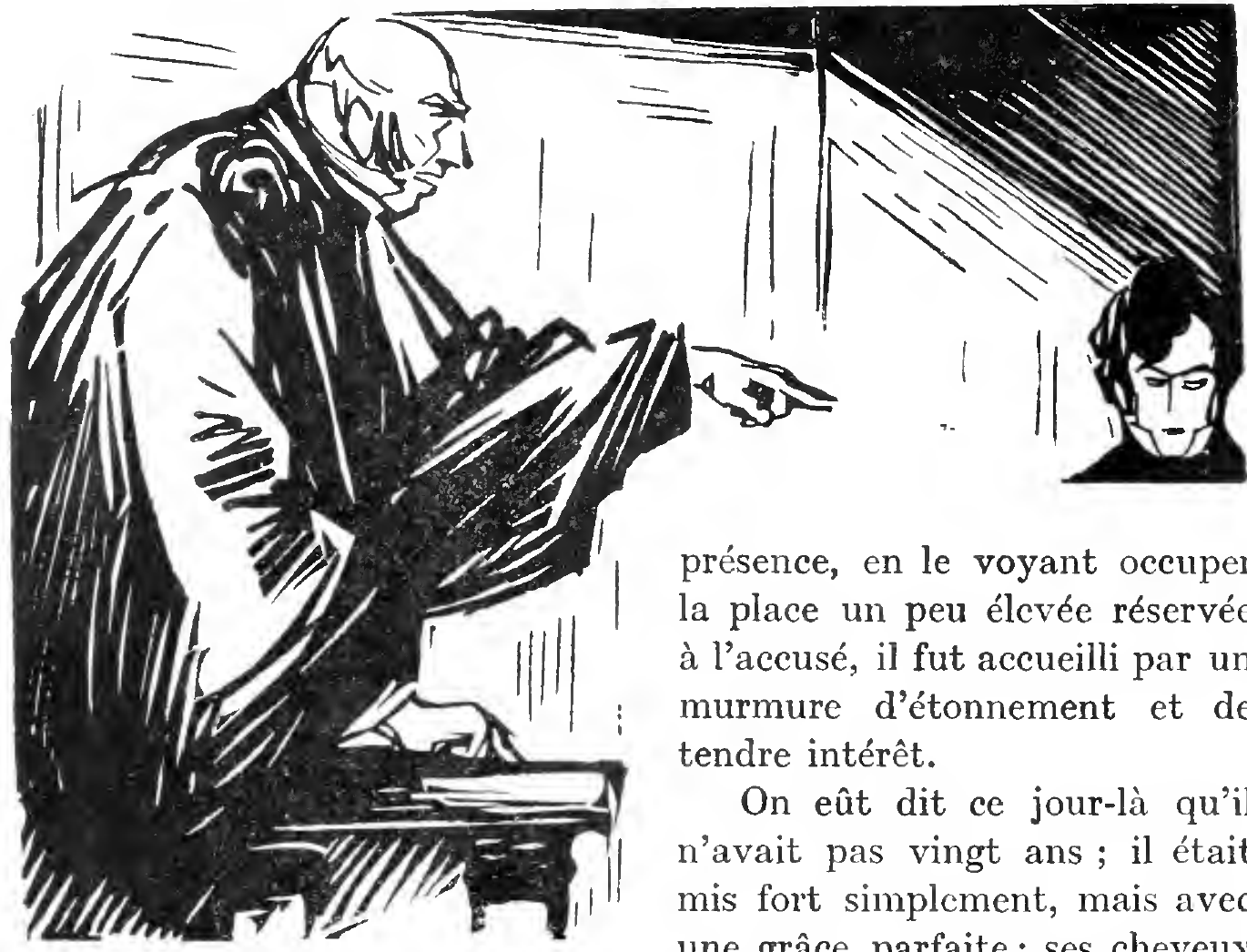
and saw how charming his brow was; Mathilde had wished to preside herself over his toilet. Julien's pallor was extreme. Hardly seated in the dock, he heard people saying on all sides: "Good God! how young he is!... But he is a child... He is much better looking than his portrait."
"My accused," the gendarme seated on his right said to him, "do you see those six ladies occupying that balcony?" The gendarme pointed out to him a small gallery projecting above the amphitheatre where the jurors are placed. "That is Madame the prefect's wife," continued the gendarme, "next to her Madame the Marquise de M..., that one likes you well; I have heard her speak to the examining magistrate. After her is Madame Derville."
"Madame Derville!" cried Julien, and a vivid blush covered his brow. On leaving here, he thought, she is going to write to Madame de Rênal. He did not know of Madame de Rênal's arrival at Besançon.
The witnesses were quickly heard. From the first words of the accusation upheld by the advocate-general, two of those ladies placed in the little balcony, directly facing Julien, burst into tears. Madame Derville did not grow tender thus, thought Julien. However, he noticed that she was very red.
The advocate-general was declaiming pathos in bad French on the barbarity of the crime committed; Julien observed that Madame Derville's neighbors seemed to disapprove of him keenly. Several jurors, apparently acquainted with these ladies, were speaking to them and seemed to reassure them. That is not without being a good omen, thought Julien.
Until then he had felt himself penetrated with an unmixed contempt for all the men attending the trial. The flat eloquence of the advocate-general increased this feeling of disgust. But little by little Julien's dryness of soul disappeared before the marks of interest of which he was evidently the object.
He was pleased with his advocate's firm countenance. "No phrases," he said to him in a low voice as he was about to speak.
"All the emphasis pillaged from Bossuet, which has been displayed against you, has served you," said the advocate. Indeed, he had hardly spoken for five minutes when almost all the women had their handkerchiefs in their hands. The advocate, encouraged, addressed extremely forceful things to the jurors. Julien trembled, he felt himself on the point of shedding tears. Great God! what will my enemies say?
He was about to yield to the emotion that was gaining on him, when, fortunately for him, he caught an insolent glance from M. the Baron de Valenod.
That pedant's eyes are blazing, he said to himself; what a triumph for that base soul! If my crime had brought about only this single circumstance, I ought to curse it. God knows what he will say of me to Madame de Rênal!
This thought effaced all the others. Soon afterward, Julien was recalled to himself by the marks of assent from the public. The advocate had just finished his plea. Julien remembered that it was proper to shake his hand. The time had passed quickly.
Refreshments were brought to the advocate and the accused. It was then only that Julien was struck by a circumstance: no woman had left the audience to go to dinner.
"Faith, I am dying of hunger," said the advocate, "and you?"
"So am I," replied Julien.
"See, there is Madame the prefect's wife receiving her dinner too," the advocate said to him, pointing out the little balcony. "Courage, all is going well." The session began again.
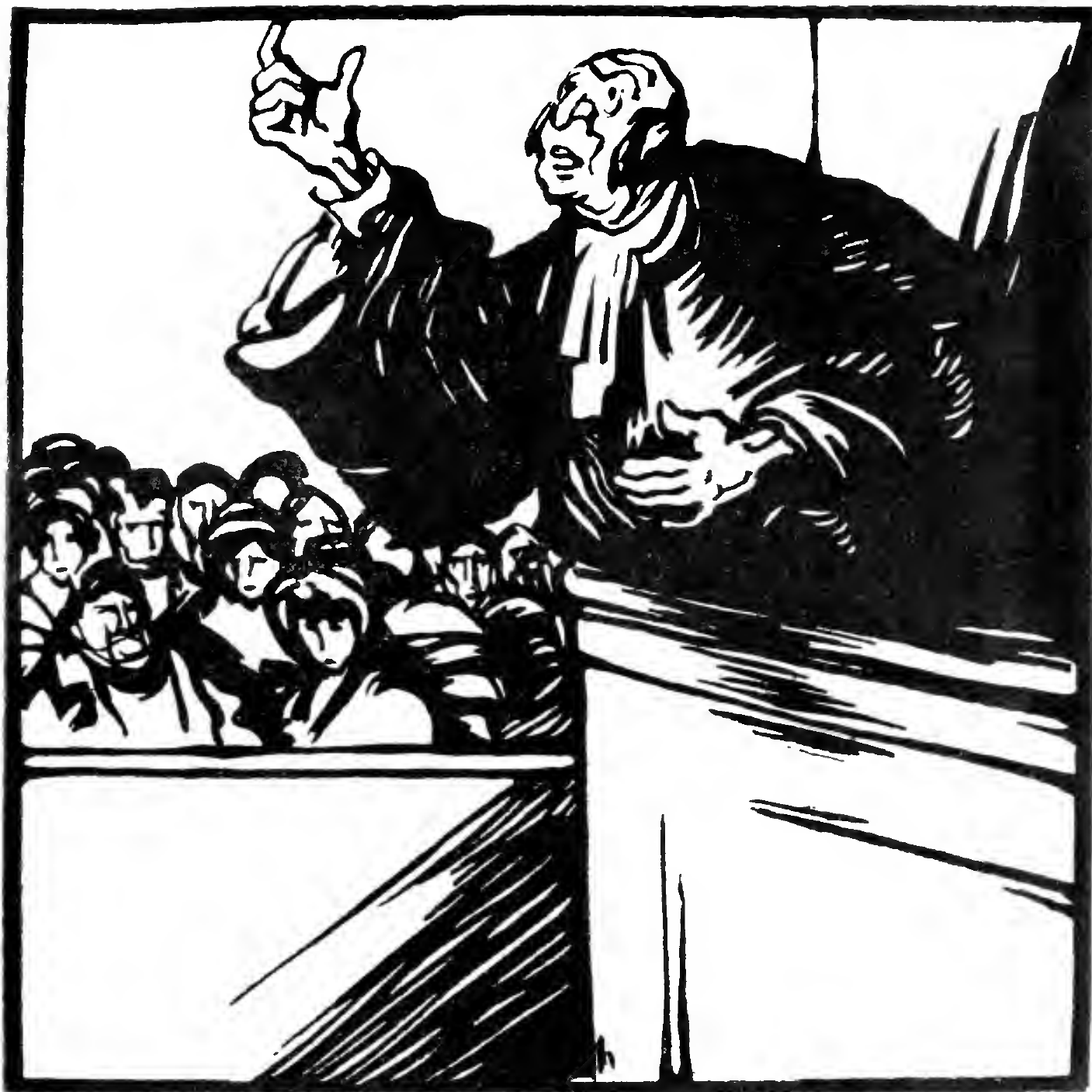
As the president was making his summary, midnight struck. The president was obliged to interrupt himself; in the midst of the silence and universal anxiety, the tolling of the clock bell filled the hall.So the last of my days is beginning, thought Julien. Soonhe felt himself inflamed by the idea of duty. Until then he had dominated his emotion and kept his resolution not to speak; but when the president of the assizes asked him if he had anything to add, he rose. He saw before him the eyes of Madame Derville, which, in the lamplight, seemed to him very bright. Can she be crying, by any chance? he thought.
"Gentlemen of the Jury,
"The horror of contempt, which I believed I could brave at the moment of death, makes me take the floor. Gentlemen, I have not the honor of belonging to your class; you see in me a peasant who has revolted against the baseness of his fortune.
"I ask you for no mercy," continued Julien, steadying his voice. "I have no illusions; death awaits me: it will be just. I have been able to attempt the life of the woman most worthy of all respect, of all homage. Madame de Rênal had been like a mother to me. My crime is atrocious, and it was premeditated. I have therefore deserved death, Gentlemen of the Jury. But even were I less guilty, I see men who, without stopping to consider what my youth may deserve in the way of pity, will wish to punish in me and to discourage forever that class of young people who, born into an inferior class and in some sort oppressed by poverty, have the good fortune to procure a good education, and the audacity to mingle in what the pride of the rich calls society.
"That is my crime, Gentlemen, and it will be punished with all the more severity in that, in fact, I am not judged by my peers. I see no enriched peasant on the jurors' benches, but solely indignant bourgeois..."
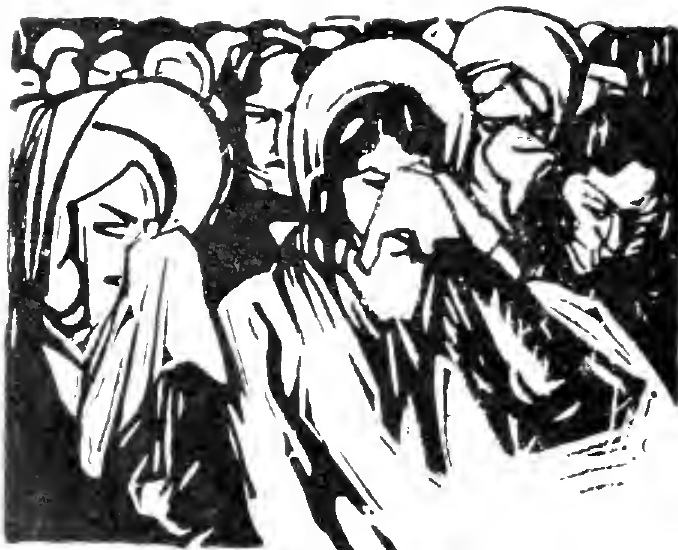
For twenty minutes, Julien spoke in this tone; he said everything that was on his heart; the attorney general, who aspired to the favors of the aristocracy, was fidgeting on his seat; but despite the somewhat abstract turn that Julien had given to the discussion, all the women were melting into tears. Madame Derville herself had her handkerchief over her eyes. Before finishing, Julien returned to premeditation, to his repentance, to the respect, to the filial and boundless adoration that, in happier times, he had had for Madame de Rênal... Madame Derville uttered a cry and fainted.
One o'clock was striking as the jurors withdrew to their chamber. No woman had left her place; several men had tears in their eyes. The conversations were at first very lively; but little by little, as the jury's decision was slow in coming, general fatigue began to bring calm to the assembly. This moment was solemn; the lights cast less brightness. Julien, very tired, heard those near him discussing whether this delay was a good or bad omen. He was pleased to see that all wishes were for him; the jury did not return, and yet no woman left the hall.
As two o'clock had just struck, a great commotion was heard. The little door of the jurors' chamber opened. Monsieur the Baron de Valenod advanced with a grave and theatrical step; he was followed by all the jurors. He coughed, then declared that in his soul and conscience the unanimous declaration of the jury was that Julien Sorel was guilty of murder, and of murder with premeditation: this declaration entailed the death penalty; it was pronounced a moment later. Julien looked at his watch, and remembered Monsieur de Lavalette; it was a quarter past two. It is today Friday, he thought.
Yes, but this day is happy for Valenod, who condemns me... I am too closely watched for Mathilde to be able to save me as Madame de Lavalette did... So, in three days, at this same hour, I will know what to think about the great perhaps.
At that moment he heard a cry and was recalled to the things of this world. The women around him were sobbing; he saw that all faces were turned toward a small tribune set into the crown of a Gothic pilaster. He learned later that Mathilde had hidden herself there. As the cry was not repeated, everyone went back to looking at Julien, whom the gendarmes were trying to get through the crowd.
Let us try not to give that rascal Valenod something to laugh at, thought Julien. With what a contrite and unctuous air he pronounced the declaration that entails the death penalty! while that poor president of the assizes, judge though he has been for many years, had a tear in his eye as he condemned me. What joy for Valenod to avenge our old rivalry in the eyes of Madame de Rênal!... So I shall never see her again! It is done... A last farewell is impossible between us, I feel it... How happy I would have been to tell her all the horror I have for my crime!
,
Only these words: I find myself justly condemned.