About this book
Julien Sorel climbs from sawmill to salon, torn between the red of the army and the black of the church. Stendhal's 1830 novel, free to read online.
TRANQUILLITY
It is because I was mad then that I am wise to-day. O philosopher who see nothing but the immediate, how short is your vision! Your eye was not made to follow the subterranean working of the passions.
GETTE.
THIS conversation was cut short by an examination, followed by a conference with the counsel entrusted with the defence. These moments were the only absolutely unpleasant ones in a life full of carelessness and tender reveries.
"There is murder, and murder with premeditation," Julien said to the judge as to the counsel. "I am sorry for it, gentlemen," he added, smiling; "but this reduces your task to very little."
After all, Julien said to himself, when he had succeeded in ridding himself of these two beings, I must be brave, and apparently braver than these two men. They regard as the height of misfortune, as the king of terrors, this duel with an unfortunate issue, which I shall not seriously consider until the very day.
The fact is that I have known a greater misfortune, continued Julien, philosophising with himself. I suffered very differently during my first journey to Strasbourg, when I believed myself abandoned by Mathilde... And to be able to say that I desired with such passion that perfect intimacy which to-day leaves me so cold... In fact, I am happier alone than when that girl, so beautiful, shares my solitude...
The counsel, a man of rule and formality, believed him mad, and thought with the public that it was jealousy that had placed the pistol in his hand. One day he ventured to hint to Julien that this allegation, true or false, would be an excellent means of pleading. But the accused became in a twinkling a passionate and incisive being.
"On your life, sir," cried Julien beside himself, "remember never to utter that abominable lie again." The prudent counsel was afraid for a moment of being murdered.
He was preparing his plea, for the decisive moment was approaching. Besançon and the whole department talked of nothing but this celebrated case. Julien was ignorant of this detail; he had begged that he might never be spoken to of such things.
That day, Fouqué and Mathilde having wished to tell him certain public rumours, very proper, according to them, to give him hope, Julien had stopped them at the first word.
"Leave me my ideal life. Your little worries, your details of real life, more or less jarring to me, would drag me down from heaven. One dies as one can; for my part I wish to think of death only in my own way. What do other people matter to me? My relations with other people are about to be cut short abruptly. For mercy's sake, do not speak to me any more of those people: it is quite enough to see the judge and the counsel."
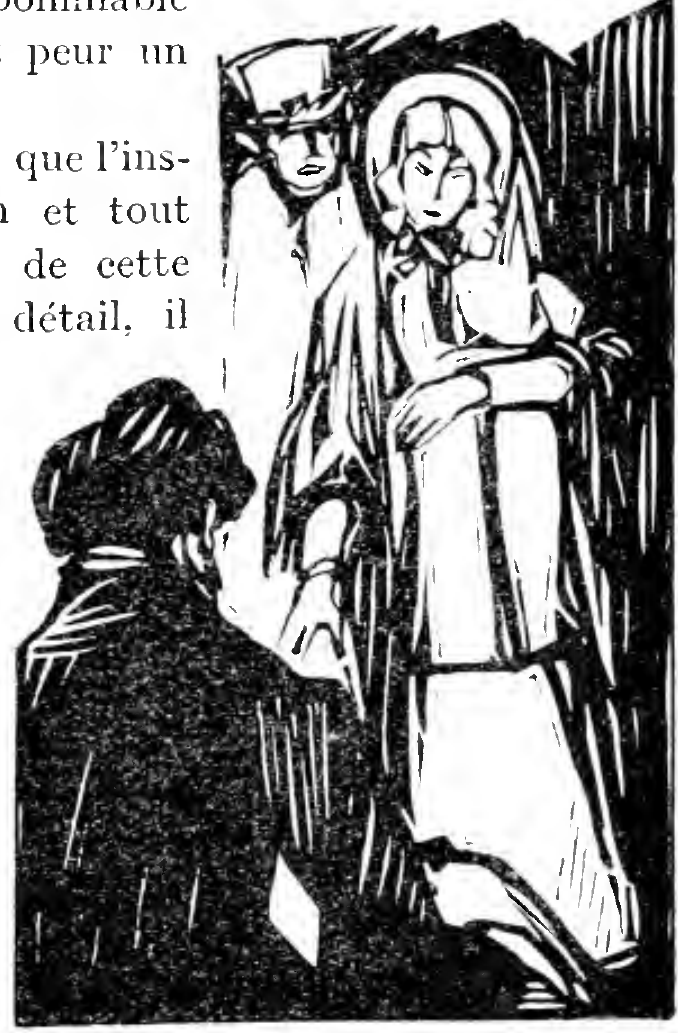
In fact, he said to himself, it appears that my destiny is to die dreaming. An obscure being, such as I am, sure of being forgotten before a fortnight is out, would be a great dupe, I must admit, to play the comedy.
It is strange, however, that I have known the art of enjoying life only since I have seen its end so near me.
He spent these last days in walking on the narrow terrace at the top of the keep, smoking excellent cigars which Mathilde had sent for to Holland by a courier, and without suspecting that his appearance was awaited every day by all the telescopes of the town. His thoughts were at Vergy. He never spoke of Madame de Rênal to Fouqué, but two or three times this friend told him that she was recovering rapidly, and this word echoed in his heart.
While Julien's soul was almost always entirely in the land of ideas, Mathilde, occupied with real things, as becomes an aristocratic heart, had known how to advance to such a point the intimacy of the direct correspondence between Madame de Fervaques and M. de Frilair, that already the great word bishopric had been pronounced.
The venerable prelate, entrusted with the list of benefices, added as a postscript to a letter from his niece: That poor Sorel is nothing but a scatterbrain, I hope they will give him back to us.
At the sight of these lines, M. de Frilair was as though beside himself. He did not doubt that he would save Julien.
"Without this Jacobin law which has prescribed the formation of an innumerable list of jurymen, and which has no other real object than to take away all influence from well-born people," he said to Mathilde on the eve of the drawing by lot of the thirty-six jurymen of the session, "I should have answered for the verdict. I did quite right to get the curé N... acquitted."
It was with pleasure that the next day, among the names drawn from the urn, M. de Frilair found five members of the congregation of Besançon, and among those not belonging to the town, the names of MM. Valenod, de Moirod, de Cholin. "I answer first of all for these eight jurymen," he said to Mathilde. "The first five are machines. Valenod is my agent, Moirod owes me everything, de Cholin is an imbecile who is afraid of everything."
The newspaper spread through the department the names of the jurymen, and Madame de Rênal, to the inexpressible terror of her husband, wished to come to Besançon. All that M. de Rênal could obtain was that she should not leave her bed, so as not to have the annoyance of being called as a witness. "You do not understand my position," said the former mayor of Verrières, "I am now a liberal of the defection, as they say; there is no doubt that that rascal Valenod and M. de Frilair will obtain from the attorney-general and the judges everything that can be disagreeable to me."
Madame de Rênal yielded without difficulty to her husband's orders. If I appeared at the court of assizes, she said to herself, I should look as though I were asking for vengeance.
In spite of all the promises of prudence made to the director of her conscience and to her husband, scarcely had she arrived at Besançon when she wrote with her own hand to each of the thirty-six jurymen:
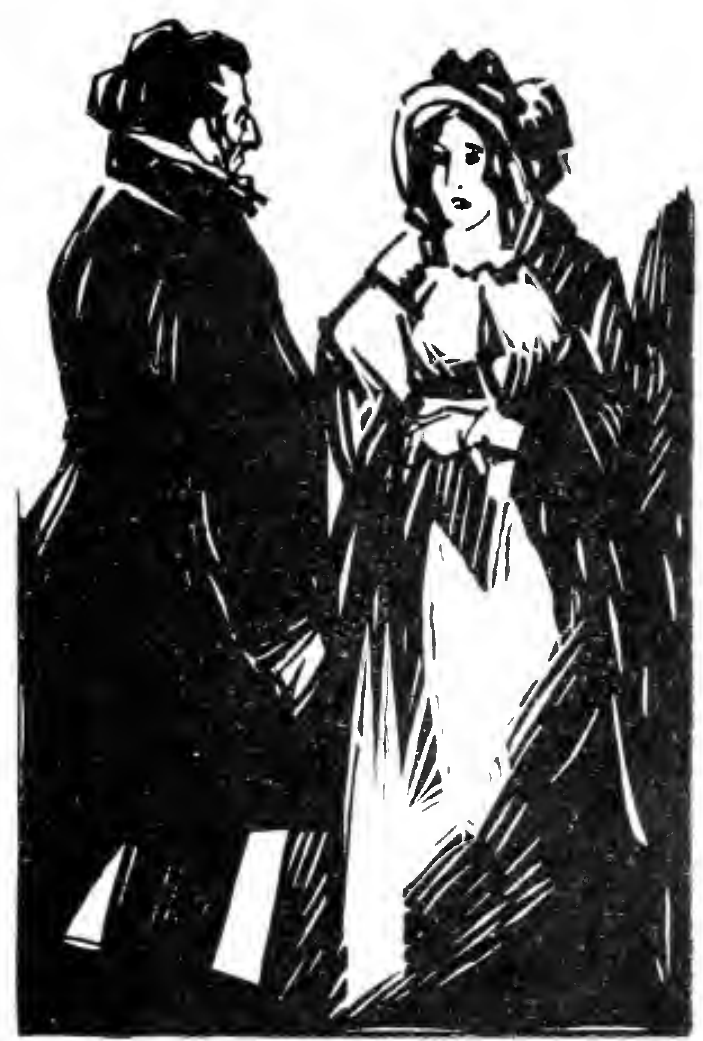
"I shall not appear on the day of judgment, Monsieur, because my presence might cast disfavor on M. Sorel's cause. I desire only one thing in the world, and passionately: that he be saved. Doubt it not, the dreadful idea that because of me an innocent man has been led to death would poison the rest of my life and doubtless shorten it. How could you condemn him to death while I live? No, surely, society has not the right to tear away life, and above all from a being such as Julien Sorel. Everyone at Verrières has known in him moments of aberration. This poor young man has powerful enemies; but even among his enemies (and how many he has!), who is there that calls into doubt his admirable talents and his profound learning? It is no ordinary subject whom you are about to judge, Monsieur. For nearly eighteen months we have all known him pious, wise, diligent; but two or three times a year he was seized by fits of melancholy that went as far as aberration. The whole town of Verrières, all our neighbors of Vergy where we spend the fine season, my entire family, the sub-prefect himself, will do him justice—[the text repeats here]—will bear witness to his exemplary piety; he knows the whole Holy Bible by heart. Would an impious man have applied himself for years to learning the sacred book? My sons will have the honor of presenting this letter to you: they are children. Deign to question them, Monsieur; they will give you all the details concerning this poor young man that would still be necessary to convince you of the barbarity of condemning him. Far from avenging me, you would be putting me to death."What will your enemies be able to oppose to this fact? The wound, which was the result of one of those moments of madness that my children themselves noticed in their tutor, is so little dangerous that in less than two months it has allowed me to come by post from Verrières to Besançon. If I learn, Monsieur, that you hesitate in the slightest to snatch from the barbarity of the laws a being so little guilty, I shall leave my bed, where I am kept only by my husband's orders, and come throw myself at your feet.
"Declare, Monsieur, that premeditation is not established, and you will have no cause to reproach yourself with the blood of an innocent man, etc."
The strange aspect of the town redoubled their terror, and left even the firm soul of Fouqué not unmoved. The whole