About this book
Julien Sorel climbs from sawmill to salon, torn between the red of the army and the black of the church. Stendhal's 1830 novel, free to read online.
AN EVENING
Yet Julia's very coldness still was kind, And tremulously gentle her small hand Withdrew itself from his, but left behind A little pressure, thrilling, and so bland And slight, so very slight that to the mind, Twas but a doubt.
Don Juan, c. 1, st. 71.
;
He had, however, to make an appearance at Verrières. On leaving the presbytery, a lucky chance made Julien meet M. Valenod, to whom he hastened to announce the increase in his salary.
Back at Vergy, Julien did not go down to the garden until night had fully fallen. His soul was weary from the great number of powerful emotions that had agitated it during that day. What shall I say to them? he thought anxiously, as he thought of the ladies. He was far from seeing that his soul was precisely on the level of the little circumstances that ordinarily occupy all the interest of women. Often Julien was unintelligible to Madame Derville and even to her friend, and in turn he only half understood all that they said to him. Such was the effect of the strength, and, if I may so speak, of the grandeur of the movements of passion that upheaved the soul of this young ambitious man. In this singular being, it was almost every day a tempest.
On entering the garden that evening, Julien was disposed to occupy himself with the ideas of the pretty cousins. They were awaiting him impatiently. He took his usual place beside Madame de Rênal. The darkness soon became deep. He wished to take a white hand that he had long seen near him, resting on the back of a chair. There was a little hesitation, but at last it was withdrawn from him in a manner that marked ill humour. Julien was disposed to take the hint and continue the conversation gaily, when he heard M. de Rênal approaching.
Julien still had in his ear the coarse words of the morning. Would it not be, he said to himself, a way of mocking this being, so loaded with all the advantages of fortune, to take possession of his wife's hand, precisely in his presence? Yes, I will do it, I, for whom he has shown so much contempt.
From that moment the tranquillity, so little natural to Julien's character, departed swiftly; he desired with anxiety, and without being able to think of anything else, that Madame de Rênal would kindly let him have her hand.
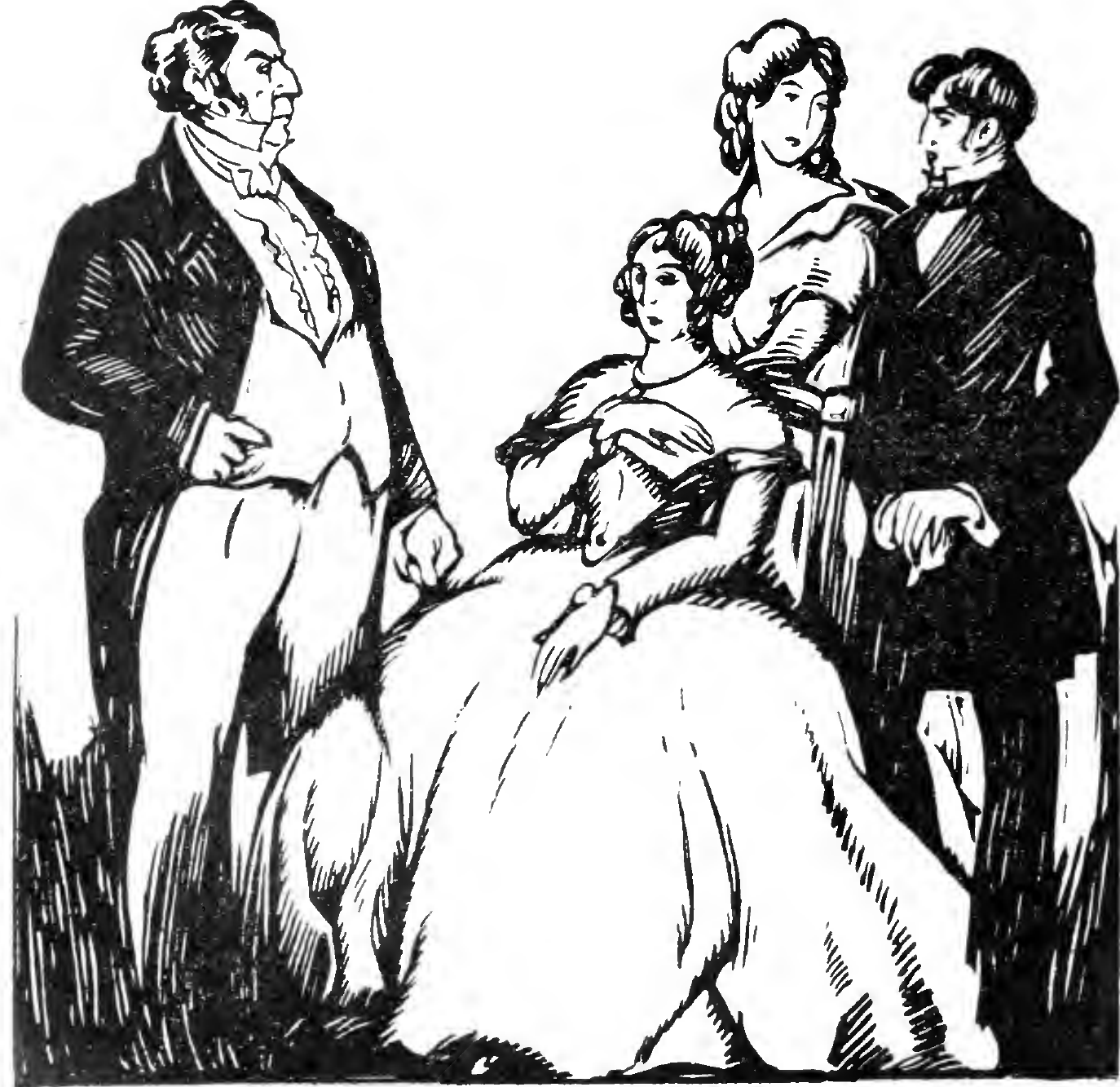
M. de Rênal was talking politics with anger: two or three manufacturers of Verrières were definitely becoming richer than he, and wished to thwart him in the elections. Madame Derville was listening to him. Julien, irritated by this talk, drew his chair closer to Madame de Rênal's. The darkness hid all movements. He dared to place his hand very near the pretty arm that her dress left bare. He was troubled, his thoughts were no longer his own; he brought his cheek close to that pretty arm, he dared to press his lips to it.
Madame de Rênal shuddered. Her husband was four paces away; she hastened to give her hand to Julien, and at the same time to push him back a little. As M. de Rênal continued his invectives against the nobodies and the Jacobins who enrich themselves, Julien covered the hand that had been left to him with passionate kisses, or at least with kisses that seemed such to Madame de Rênal. Meanwhile the poor woman had had proof, during that fatal day, that the man whom she adored without admitting it to herself loved elsewhere! During all of Julien's absence, she had been prey to an extreme unhappiness that had made her reflect.
What! I should love, she said to herself, I should be in love? I, a married woman, I should be in love? But, she said to herself, I have never felt for my husband this dark madness that makes it impossible for me to detach my thoughts from Julien. At bottom he is only a child full of respect for me! This madness will be passing. What does it matter to my husband what feelings I may have for this young man? M. de Rênal would be bored by the conversations I have with Julien about things of the imagination. He thinks of his business. I am not taking anything from him to give to Julien.
No hypocrisy came to alter the purity of that naive soul, led astray by a passion she had never felt. She was deceived, but without knowing it, and yet an instinct of virtue was frightened. Such were the combats that agitated her when Julien appeared in the garden. She heard him speak; almost at the same instant she saw him sit down beside her. Her soul was as it were carried away by that charming happiness which for fifteen days had astonished her even more than it had seduced her. Everything was unforeseen for her. However, after a few moments: It is enough, then, she said to herself, for Julien's presence to efface all his faults? She was frightened; it was then that she took her hand from him.
The kisses filled with passion, and such as she had never received the like of, suddenly made her forget that perhaps he loved another woman. Soon he was no longer guilty in her eyes. The cessation of the piercing pain, daughter of suspicion, the presence of a happiness of which she had never even dreamed, gave her transports of love and mad gaiety. That evening was charming for everyone except for the mayor of Verrières, who could not forget his enriched manufacturers. Julien no longer thought of his dark ambition, nor of his projects so difficult to execute. For the first time in his life, he was carried away by the power of beauty. Lost in a vague and sweet reverie, so foreign to his character, gently pressing that hand which pleased him as perfectly pretty, he half listened to the movement of the lime-tree leaves stirred by that light night wind, and to the dogs of the Doubs mill barking in the distance.
But this emotion was a pleasure and not a passion. On returning to his room, he thought only of one happiness, that of taking up his favourite book again; at twenty, the idea of the world and of the effect to be produced in it prevails over everything.
Soon, however, he laid the book down. By dint of thinking of Napoleon's victories, he had seen something new in his own. Yes, I have won a battle, he said to himself; I must profit by it; I must crush the pride of this haughty gentleman while he is in retreat. That is Napoleon pure and simple. I must ask for three days' leave to go and see my friend Fouqué. If he refuses me, I will again put the bargain before him, but he will give in.
Madame de Rênal could not close her eyes. It seemed to her that she had not lived until that moment. She could not distract her thoughts from the happiness of feeling Julien cover her hand with burning kisses.
Suddenly the dreadful word: adultery appeared to her. All that the vilest debauchery can imprint of disgust on the idea of sensual love presented itself to her imagination. These ideas sought to try to tarnish the tender and divine image she formed of Julien and of the happiness of loving him. The future painted itself in terrible colours. She saw herself contemptible.
i-
The moment was dreadful; her soul was arriving in unknown lands. The day before she had tasted an unforeseen happiness; now she found herself suddenly plunged into an atrocious unhappiness. She had no idea of such sufferings; they disturbed her reason. For an instant she had the thought of confessing to her husband that she feared she loved Julien. That would have been to speak of him. Fortunately she encountered in her memory a precept once given by her aunt, the eve of her
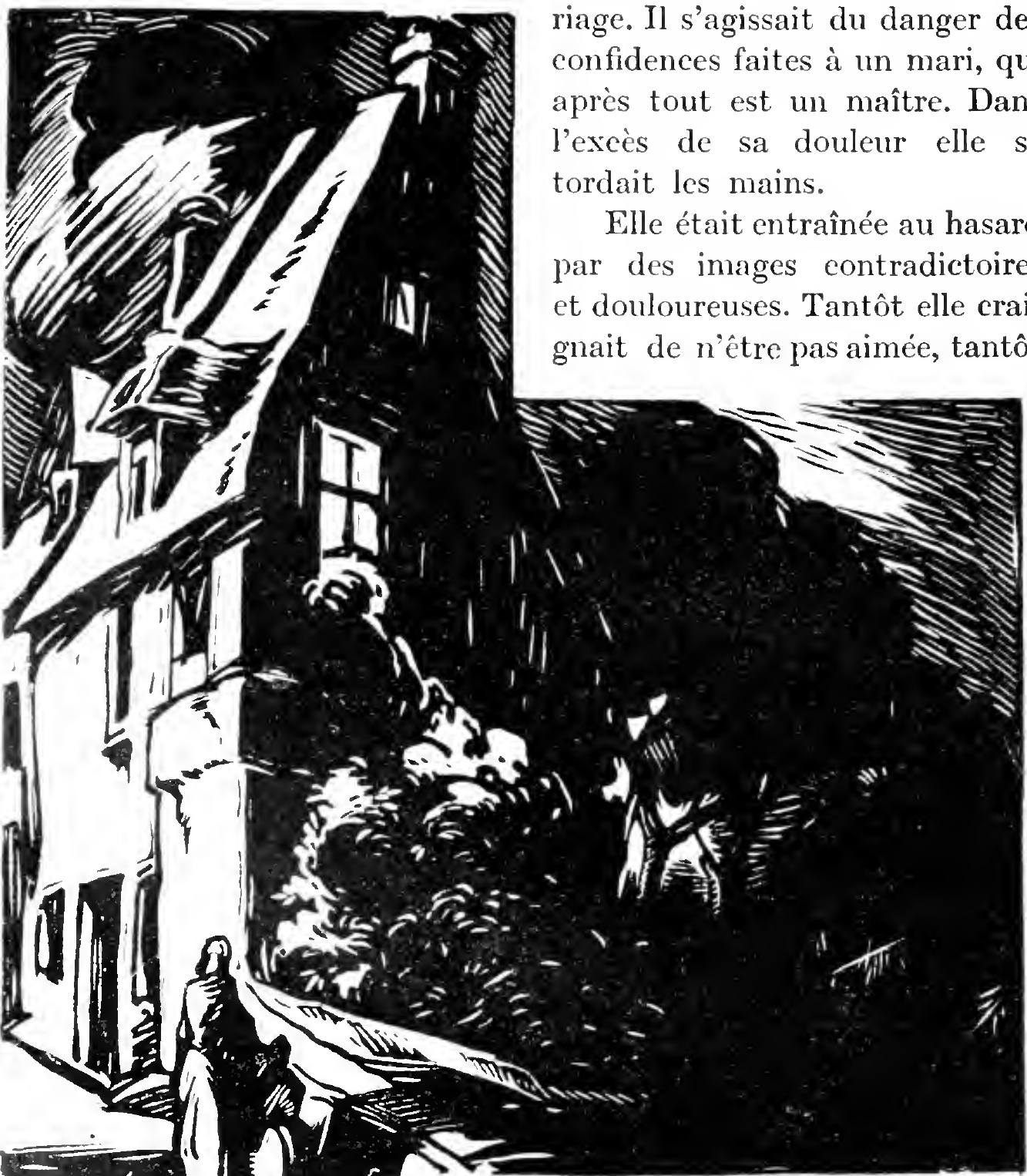
dreadful idea of crime tortured her as if the next day she were to be exposed at the pillory, on the public square of Verrières, with a placard explaining her adultery to the populace.
Madame de Rênal had no experience of life; even fully awake and in the exercise of all her reason, she would have perceived no interval between being guilty in the eyes of God and finding herself overwhelmed in public by the most noisy marks of general contempt.
When the frightful idea of adultery and of all the ignominy that, in her opinion, this crime brings in its train, left her some respite, and she came to think of the sweetness of living with Julien innocently, and as in the past, she found herself cast into the horrible thought that Julien loved another woman. She saw again his pallor when he had feared to lose her portrait, or to compromise her by letting it be seen. For the first time, she had surprised fear on that countenance so calm and so noble. Never had he shown himself thus moved for her or for her children. This excess of sorrow attained the full intensity of misfortune that it is given to the human soul to be able to bear. Without suspecting it, Madame de Rênal uttered cries that awakened her maid. Suddenly she saw appear beside her bed the brightness of a light, and recognized Élisa.
"Is it you whom he loves?" she cried in her madness.
The maid, astonished at the frightful agitation in which she surprised her mistress, fortunately paid no attention to this singular word. Madame de Rênal felt her imprudence: "I have a fever," she said to her, "and, I believe, a little delirium; stay beside me." Fully awakened by the necessity of restraining herself, she found herself less unhappy; reason regained the empire that the state of half-sleep had taken from it. To deliver herself from the fixed gaze of her maid, she ordered her to read the newspaper, and it was to the monotonous sound of this girl's voice, reading a long article from the Quotidienne, that Madame de Rênal formed the virtuous resolution to treat Julien with a perfect coldness when she should see him again.