About this book
Julien Sorel climbs from sawmill to salon, torn between the red of the army and the black of the church. Stendhal's 1830 novel, free to read online.
THE BALL
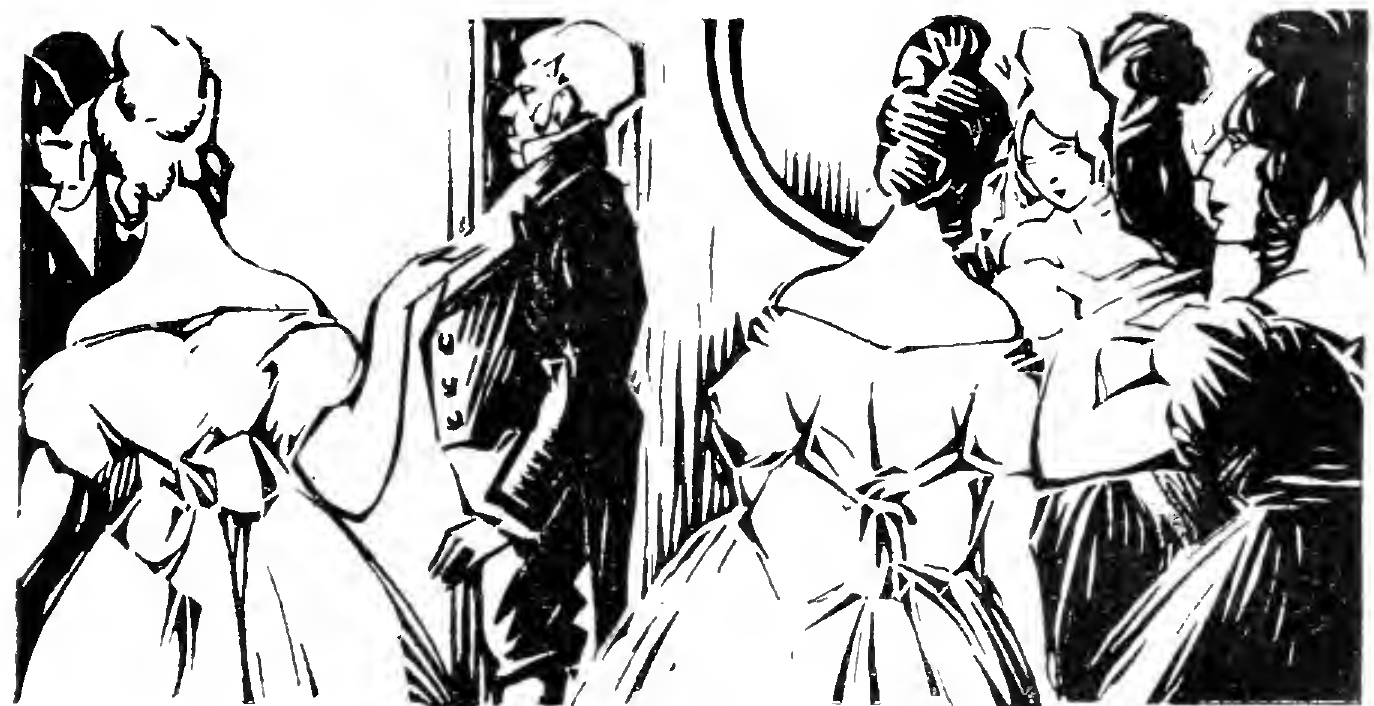
The luxury of the dresses, the brilliance of the candles, the perfumes; so many pretty arms, beautiful shoulders; bouquets, Rossini airs that carry one away, paintings by Cicéri! I am beside myself!
Voyages of Uzeri.
"You are in a bad mood," the Marquise de La Mole said to him; "I warn you, it ill becomes you at a ball." — "I have nothing but a headache," replied Mathilde with a disdainful air, "it is too hot here." At that moment, as if to justify Mademoiselle de La Mole, the old Baron de Tolly felt faint and fell; they were obliged to carry him out. Apoplexy was mentioned; it was an unpleasant incident.
Mathilde paid no attention to it. It was a settled policy with her never to look at old men and all beings recognized as saying sad things.
She danced to escape the conversation about the apoplexy, which it was not, for two days later the baron reappeared.
But M. Sorel does not come, she said to herself again after she had danced. She almost searched for him with her eyes, when she caught sight of him in another drawing room. Astonishing thing, he seemed to have lost that tone of impassive coldness that was so natural to him; he no longer had the English air.
He is talking with Count Altamira, my condemned man! said Mathilde to herself. His eye is full of a somber fire; he looks like a prince in disguise; his gaze has redoubled in pride.
Julien was drawing nearer to the place where she was, still talking with Altamira; she looked at him fixedly, studying his features to seek in them those lofty qualities that can earn a man the honor of being condemned to death.
As he passed near her: "Yes," he was saying to Count Altamira, "Danton was a man!"
O heaven! can he be a Danton? said Mathilde to herself; but he has such a noble face, and that Danton was so horribly ugly, a butcher, I believe. Julien was still near enough to her; she did not hesitate to call out to him; she had the awareness and the pride of asking an extraordinary question for a young girl.
"Was Danton not a butcher?" she said to him.
"Yes, in the eyes of certain people," Julien replied with the expression of the most poorly disguised contempt and his eye still inflamed by his conversation with Altamira, "but unfortunately for people of good birth, he was a lawyer at Méry-sur-Seine; that is to say, Mademoiselle," he added with a malicious air, "that he began like several peers whom I see here. It is true that Danton had an enormous disadvantage in the eyes of beauty, he was very ugly."
These last words were spoken rapidly, with an extraordinary air and assuredly very impolite.
Julien waited a moment, the upper part of his body slightly bent and with a proudly humble air. He seemed to say: I am paid to answer you, and I live on my pay. He did not deign to raise his eye to Mathilde. She, with her beautiful eyes opened extraordinarily wide and fixed on him, had the air of his slave. Finally, as the silence continued, he looked at her as a valet looks at his master, in order to take orders. Although his eyes met full those of Mathilde, still fixed on him with a strange gaze, he moved away with marked eagerness.
He, who is really handsome, said Mathilde at last, emerging from her reverie, to give such praise to ugliness! Never a return upon himself! He is not like Caylus or Croisenois. This Sorel has something of the air my father takes on when he does Napoleon so well at the ball. She had entirely forgotten Danton.
Decidedly, this evening, I am bored. She seized her brother's arm and, to his great vexation, forced him to take a turn about the ballroom. The idea came to her to follow the conversation of the condemned man with Julien.
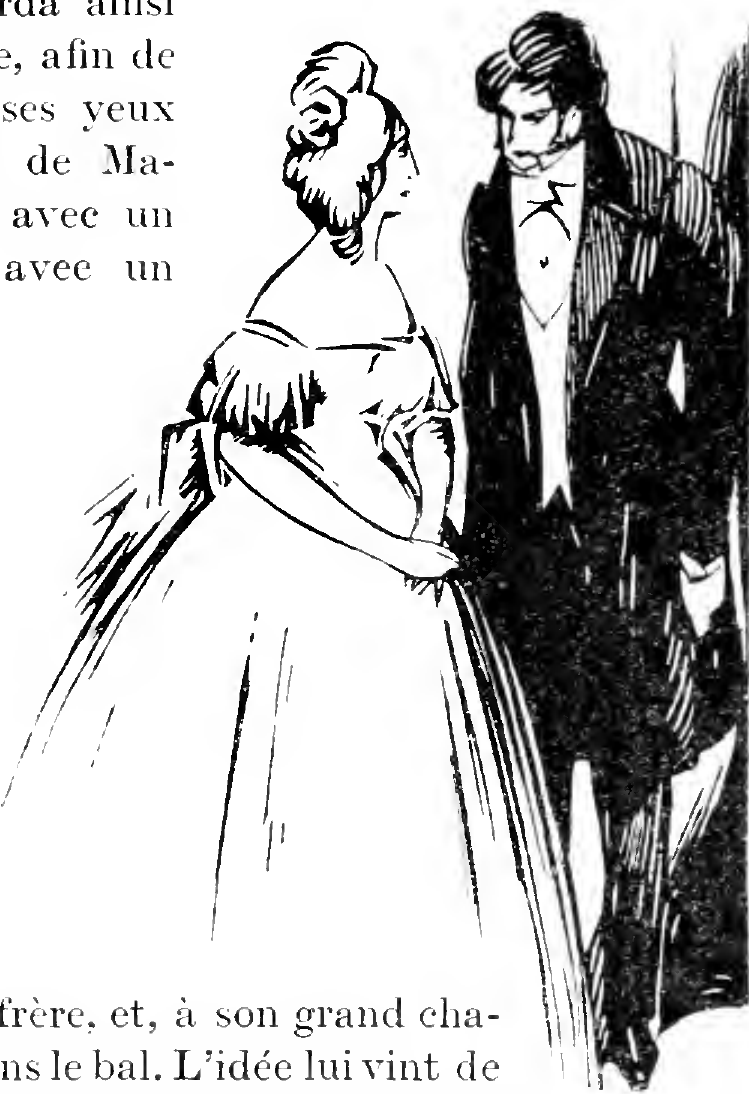
The crowd was enormous. She managed, however, to join them at the moment when, two steps in front of her, Altamira approached a tray to take an ice. He was speaking to Julien, his body half turned. He saw an arm in an embroidered coat taking an ice beside his own. The embroidery seemed to excite his attention; he turned around completely to see the person to whom that arm belonged. Instantly, those eyes so noble and so naive took on a slight expression of disdain.
"You see that man," he said rather low to Julien; "he is the Prince d'Araceli, ambassador of... This morning he asked your French minister of foreign affairs for my extradition. M. de Nerval. Look, there he is over there, playing whist. M. de Nerval is quite inclined to hand me over, for we gave you two or three conspirators in 1816. If I am returned to my king, I shall be hanged within twenty-four hours. And it will be one of those pretty gentlemen with mustaches who will grab me."
"The infamous wretches!" cried Julien half aloud.
Mathilde did not lose a syllable of their conversation. Boredom had disappeared.
"Not so infamous," resumed Count Altamira. "I spoke to you of myself to strike you with a vivid image. Look at the Prince d'Araceli: every five minutes he casts his eyes on his Golden Fleece; he cannot get over the pleasure of seeing that trinket on his breast. This poor man is at bottom nothing but an anachronism. A hundred years ago the Fleece was a signal honor, but then it would have passed far above his head. Nowadays, among people of good birth, one must be an Araceli to be enchanted by it. He would have had an entire city hanged to obtain it."
"Is that the price at which he got it?" said Julien with anxiety.
"Not precisely," replied Altamira coldly; "he perhaps had some thirty rich landowners of his country, who passed for liberals, thrown into the river.
"What a monster!" said Julien again.
Mademoiselle de La Mole, leaning her head forward with the liveliest interest, was so near him that her beautiful hair almost touched his shoulder.
"You are very young!" replied Altamira. "I was telling you that I have a sister married in Provence; she is still pretty, good, gentle; she is an excellent mother of a family, faithful to all her duties, pious and not devout.
Where is he going with this? thought Mademoiselle de La Mole.
"She is happy," continued Count Altamira; "she was so in 1815. At that time I was hidden at her house, on her estate near Antibes; well, at the moment when she learned of the execution of Marshal Ney, she began to dance!"
"Is it possible?" said Julien, appalled.
"It is the spirit of party," resumed Altamira. "There are no longer any true passions in the nineteenth century: that is why people are so bored in France. The greatest cruelties are committed, but without cruelty."
"So much the worse!" said Julien; "at least, when one commits crimes, one ought to commit them with pleasure: they have only that good in them, and one can scarcely justify them a little except by that reason."
Mademoiselle de La Mole, entirely forgetting what she owed to herself, had placed herself almost completely between Altamira and Julien. Her brother, who was giving her his arm, accustomed to obeying her, was looking elsewhere in the room, and, to give himself a countenance, had the air of being stopped by the crowd.
"You are right," Altamira was saying; "everything is done without pleasure and without memory of it, even crimes. I can point out to you at this ball perhaps ten men who will be damned as assassins. They have forgotten it, and the world too.1
Many are moved to tears if their dog breaks its leg. At Père-Lachaise, when flowers are thrown on their grave, as you so amusingly say in Paris, we are told that they united all the virtues of the knights of old, and people speak of the great deeds of their ancestor who lived under Henri IV. If, despite the good offices of the Prince d'Araceli, I am not hanged, and if I ever enjoy my fortune in Paris, I want to have you dine with eight or ten honored assassins and without remorse.
You and I, at that dinner, will be the only ones pure of blood; but I will be despised and almost hated, as a bloodthirsty and Jacobin monster, and you despised simply as a man of the people intruding into good company.
— Nothing more true, said Mademoiselle de La Mole.
Altamira looked at her, astonished; Julien did not deign to look at her.
— Note that the revolution at whose head I found myself, continued Count Altamira, did not succeed, solely because I did not wish to make three heads fall and distribute to our partisans seven or eight million that were in a strongbox of which I had the key. My king, who today burns to have me hanged, and who, before the revolt, addressed me with the familiar tu, would have given me the grand cordon of his order if I had made those three heads fall and distributed the money from those strongboxes: for I would have obtained at least a half-success, and my country would have had a charter of some sort... So goes the world; it is a game of chess.
— Then, resumed Julien with eyes ablaze, you did not know the game; now...
— I would make heads fall, you mean to say. and I would not be a Girondin as you made me out the other day?... I will answer you, said Altamira with a sad air, when you have killed a man in a duel, which is still far less ugly than having him executed by an executioner.
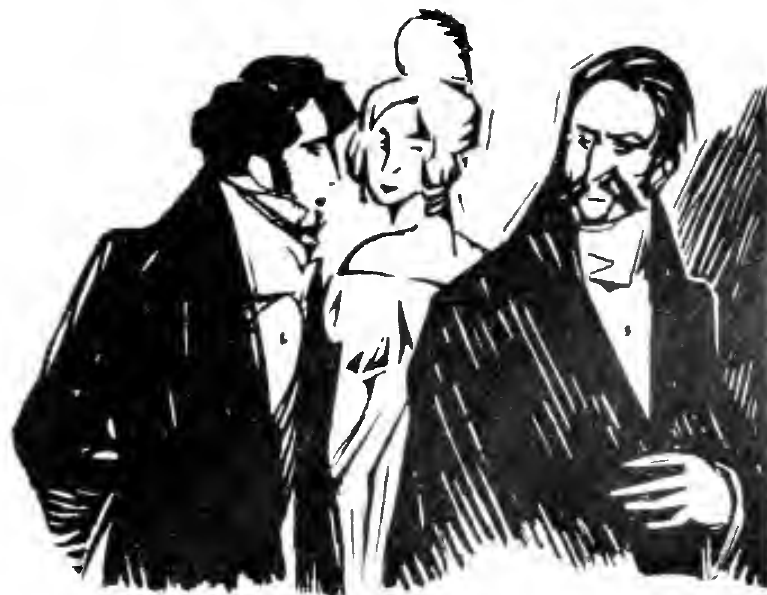
— Upon my word! said Julien, who wills the end wills the means; if, instead of being an atom, I had some power, I would have three men hanged to save the lives of four.
His eyes expressed the fire of conscience and contempt for the vain judgments of men; they met those of Mademoiselle de La Mole close beside him, and this contempt, far from changing into a gracious and civil air, seemed to redouble.
She was deeply shocked by it; but it was no longer in her power to forget Julien; she moved away in vexation, leading her brother along.
I must have some punch, and dance a great deal, she said to herself; I mean to choose the best partners, and make an effect at any price. Very well, here comes that famous impertinent fellow, the Comte de Fervagues. She accepted his invitation; they danced. It remains to be seen, she thought, which of us two will be the more impertinent; but, to mock him thoroughly, I must make him talk. Soon the rest of the quadrille danced only for form's sake. No one wished to miss one of Mathilde's biting retorts. M. de Fervagues became confused, and, finding only elegant words instead of ideas, made grimaces; Mathilde, who was in a bad humour, was cruel to him, and made an enemy of him. She danced until daybreak, and at last withdrew horribly tired. But in the carriage, the little strength that remained to her was still employed in making her sad and unhappy. She had been despised by Julien, and could not despise him.
Julien was at the height of happiness. Ravished unknown to himself by the music, the flowers, the beautiful women, the general elegance, and, more than all, by his imagination, which dreamed of distinctions for himself and liberty for all: What a fine ball! he said to the count, nothing is lacking.
— Thought is lacking, replied Altamira.
And his countenance betrayed that contempt which is all the more piquant because one sees that politeness imposes on itself the duty of concealing it.
— You are right, Monsieur le comte. Is it not thought, and conspiring thought at that?
— I am here because of my name. But thought is hated in your drawing-rooms. It must not raise itself above the point of a couplet of a vaudeville: then it is rewarded. But the man who thinks, if he has energy and novelty in his sallies, you call him a cynic. Is not that the name one of your judges gave to Courier? You put him in prison, as well as Béranger. Everything that is worth anything among you through wit, the congregation throws to the police court; and good company applauds.
It is because your aged society prizes propriety above all things... You will never raise yourselves above military bravery; you will have Murats, and never Washingtons. I see in France nothing but vanity. A man who invents as he speaks easily arrives at an imprudent sally, and the master of the house believes himself dishonoured.
At these words, the count's carriage, which was bringing Julien home, stopped before the Hôtel de La Mole. Julien was in love with his conspirator. Altamira had paid him this fine compliment, evidently escaped from a deep conviction: You have not French frivolity, and you understand the principle of utility. It happened that, precisely the day before yesterday, Julien had seen Marino Faliero, a tragedy by M. Casimir Delavigne.
Has not Israel Bertuccio more character than all these Venetian nobles? said our rebellious plebeian to himself; and yet these are people whose proven nobility goes back to the year 700, a century before Charlemagne, whereas all that was noblest this evening at M. de Retz's ball goes back, and that haltingly, only to the thirteenth century. Well! amid these nobles of Venice, so great by birth, it is Israel Bertuccio whom one remembers.
A conspiracy annihilates all the titles given by social caprices. There a man takes at once the rank assigned to him by his manner of envisaging death. Wit itself loses its empire...
What would Danton be today, in this century of the Valenods and the Rênals? not even a deputy of the king's procureur...
What am I saying? he would have sold himself to the congregation; he would be a minister, for after all that great Danton did steal. Mirabeau too sold himself. Napoleon had stolen millions in Italy, without which he would have been stopped short by poverty, like Pichegru. La Fayette alone never stole. Must one steal, must one sell oneself? thought Julien. This question stopped him short. He spent the rest of the night reading the history of the Revolution.
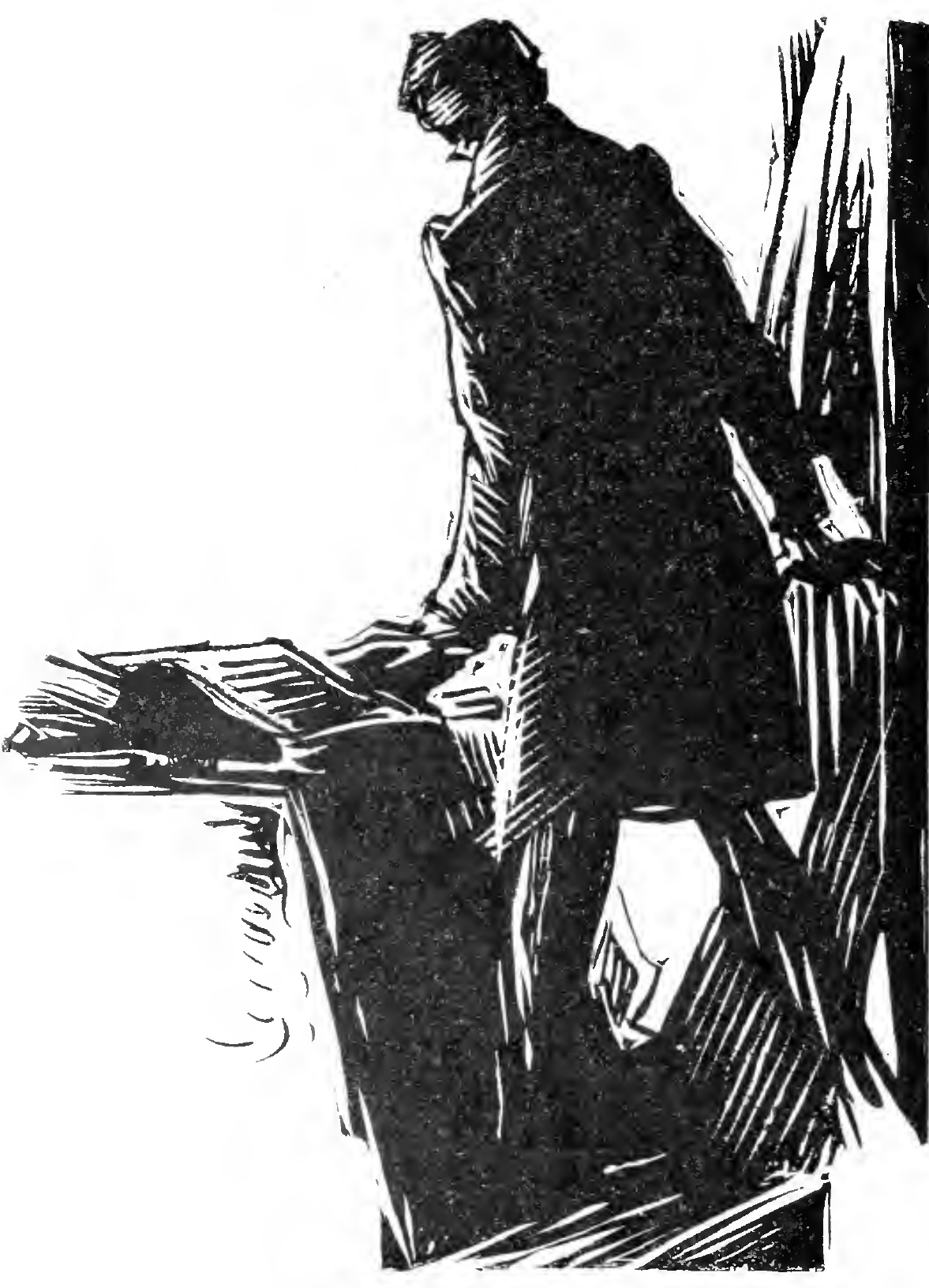
The next day, while making his letters in the library, he was still thinking only of the Comte Altamira's conversation.
In fact, he said to himself after a long reverie, if these liberal Spaniards had compromised the people by crimes, they would not have been swept away with such ease. They were proud and talkative children... like me! cried Julien suddenly, as if waking with a start.
What difficult thing have I done that gives me the right to judge poor devils, who, after all, once in their lives, have dared, have begun to act? I am like a man who, on leaving the table, cries out: Tomorrow I shall not dine; which will not prevent me from being as strong and alert as I am today. Who knows what one feels halfway through a great action?... These lofty thoughts were disturbed by the unexpected arrival of Mademoiselle de La Mole, who was entering the library. He was so animated by his admiration for the great qualities of Danton, of Mirabeau, of Carnot, who knew how not to be vanquished, that his eyes rested on Mademoiselle de La Mole, but without thinking of her, without bowing to her, without almost seeing her. When at last his great open eyes perceived her presence, his gaze died out. Mademoiselle de La Mole noticed it with bitterness.
In vain she asked him for a volume of Vély's Histoire de France, placed on the highest shelf, which obliged Julien to go and fetch the larger of the two ladders. Julien had brought the ladder near; he had looked for the volume, he had handed it to her, still unable to think of her. In carrying the ladder away, in his haste, he struck one of the mirrors of the library with his elbow; the fragments, falling on the floor, woke him at last. He hastened to make his excuses to Mademoiselle de La Mole; he wished to be polite, but he was only polite. Mathilde saw clearly that she had disturbed him, and that he would have preferred to think of what occupied him before her arrival rather than to speak to her. After looking at him a great deal, she went away slowly. Julien watched her walk. He enjoyed the contrast between the simplicity of her present dress and the magnificent elegance of that of the day before. The difference between the two countenances was almost as striking. This young girl, so haughty at the Duc de Retz's ball, had almost at this moment a suppliant look. Really, said Julien to himself, this black dress makes the beauty of her figure shine out still better. She has a queen's bearing; but why is she in mourning?
:
If I ask someone the cause of this mourning, it will turn out that I am again committing a blunder. Julien had quite emerged from the depths of his enthusiasm. I must re-read all the letters I have written this morning; God knows what omitted words and blunders I shall find in them. As he was reading the first of these letters with forced attention, he heard near him the rustling of a silk dress; he turned round suddenly; Mademoiselle de La Mole was two steps from his table, she was laughing. This second interruption put Julien in a bad humour.
As for Mathilde, she had just felt keenly that she was nothing to this young man; this laugh was meant to hide her embarrassment; she succeeded in it.
— Obviously, you are thinking of something very interesting, Monsieur Sorel. Is it not some curious anecdote about the conspiracy which has sent M. le comte Altamira to Paris? Tell me what it is about; I am burning to know; I will be discreet, I swear to you! She was astonished at this word as she heard herself pronounce it. What! she was entreating a subordinate! Her embarrassment increasing, she added with a little light air:
— What can have made you, ordinarily so cold, an inspired being, a kind of Michelangelo prophet?
This lively and indiscreet interrogation, wounding Julien deeply, restored him to all his madness.
“Was Danton right to steal?” he asked her abruptly, in a manner that was becoming more and more fierce. “Should the revolutionaries of Piedmont and Spain compromise the people by crimes? Give to people without even merit all the posts in the army, all the crosses? Would the people who had worn thosecrosses not have dreaded the return of the king? Should the treasure of Turin have been given over to pillage? In a word, Mademoiselle,” he said, approaching her with a terrible air, “must the man who wishes to drive ignorance and crime from the earth pass like the tempest and do evil as if at random?”
Mathilde was afraid, could not endure his gaze, and drew back two steps. She looked at him for a moment; then, ashamed of her fear, with a light step she left the library.