About this book
Julien Sorel climbs from sawmill to salon, torn between the red of the army and the black of the church. Stendhal's 1830 novel, free to read online.
THE EMPIRE OF A YOUNG GIRL
I admire her beauty, but I fear her mind.
MÉRIMÉE.
If Julien had spent in examining what was happening in the drawing room the time he spent exaggerating Mathilde's beauty, or becoming impassioned against the haughtiness natural to her family, which she forgot for him, he would have understood in what consisted her empire over all that surrounded her. As soon as one displeased Mademoiselle de La Mole,she knew how to punish by a pleasantry so measured, so well chosen, so proper in appearance, launched so aptly, that the wound grew at every instant, the more one reflected on it. Little by little she became atrocious toward offended self-esteem. As she attached no price to many things that were objects of serious desires for the rest of the family, she always appeared cool in their eyes. The salons of the aristocracy are pleasant to cite when one leaves them, but that is all; politeness alone is something in itself only for the first days. Julien experienced it; after the first enchantment, the first astonishment. Politeness, he said to himself, is only the absence of the anger that bad manners would give. Mathilde was often bored, perhaps she would have been bored everywhere. Then to sharpen an epigram was for her a distraction and a true pleasure.
It was perhaps in order to have slightly more amusing victims than her grandparents, the academician and the five or six other subordinates who courted her, that she had given hopes to the Marquis de Croisenois, to Count de Caylus and to two or three other young men of the first distinction. They were for her only new objects of epigram.
We shall admit with regret, for we love Mathilde, that she had received letters from several of them, and had sometimes answered them. We hasten to add that this person is an exception to the morals of the century. It is not in general the lack of prudence that one can reproach the pupils of the noble convent of the Sacré-Cœur.
One day the Marquis de Croisenois returned to Mathilde a rather compromising letter that she had written to him the day before. He believed that by this mark of high prudence he was greatly advancing his affairs. But it was imprudence that Mathilde loved in her correspondence. Her pleasure was to gamble with her fate. She did not address a word to him for six weeks.
She was amused by the letters of these young men; but, according to her, they were all alike. It was always the most profound, the most melancholy passion.
"They are all the same perfect man, ready to set out for Palestine," she said to her cousin. "Do you know anything more insipid? So these are the letters I am to receive all my life! These letters can change only every twenty years, according to the kind of occupation that is in fashion. They must have been less faded in the time of the Empire. Then all these young men of the great monde had seen or done actions that really had greatness in them. The Duc de N..., my uncle, was at Wagram.
"What wit is needed to give a sabre stroke? And when that has happened to them, they talk of it so often!" said Mademoiselle de Sainte-Hérité, Mathilde's cousin.
"Well! these tales give me pleasure. To be in a real battle, a battle of Napoleon, where ten thousand soldiers were killed, that proves courage. To expose oneself to danger elevates the soul and saves it from the boredom in which my poor admirers seem plunged; and this boredom is contagious. Which of them has the idea of doing something extraordinary? They seek to obtain my hand—a fine business! I am rich, and my father will advance his son-in-law. Ah! if only he could find one who was a little amusing!
Mathilde's vivid, clear, picturesque way of seeing things spoiled her language, as one sees. Often a word of hers made a blot in the eyes of her friends, polite as they were. They would almost have admitted, had she been less fashionable, that her speech had something a little highly coloured for feminine delicacy.
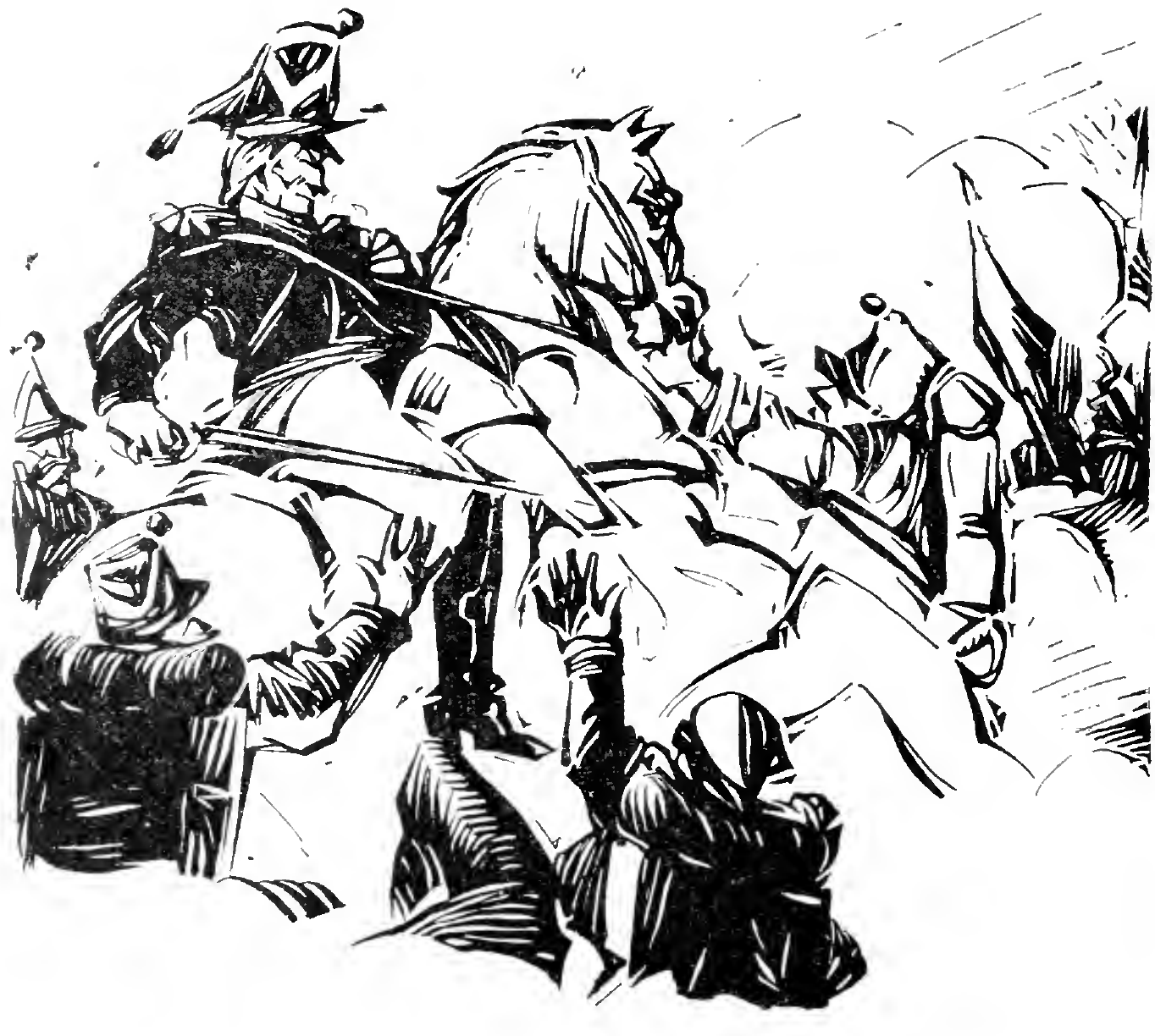
On her side, she was quite unfair to the handsome horsemen who populate the Bois de Boulogne. She saw the future not with terror—that would have been a vivid feeling—but with a disgust rare at her age.
What could she desire? Wealth, high birth, wit, beauty—according to what people said, and according to what she believed—all had been heaped upon her by the hands of chance.
Such were the thoughts of the most envied heiress of the Faubourg Saint-Germain when she began to find pleasure in walking with Julien. She was astonished at
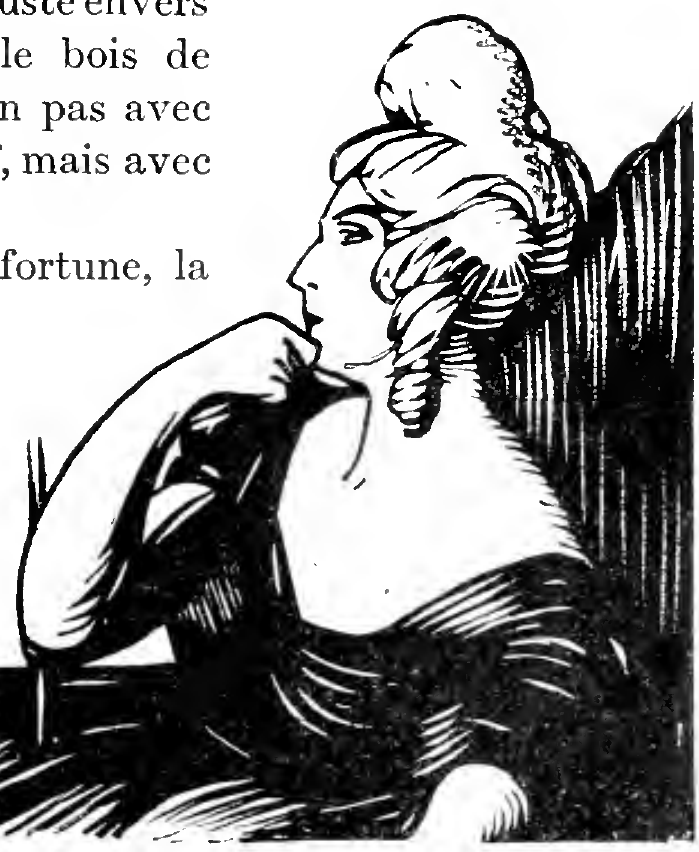
his pride; she admired the cleverness of this little bourgeois. He will know how to make himself a bishop like the Abbé Maury, she said to herself.
Soon this sincere and unfeigned resistance with which our hero received several of her ideas occupied her; she thought about it; she recounted to her friend the slightest details of their conversations, and found that she never managed to convey fully all their physiognomy.
An idea suddenly enlightened her: I have the happiness of loving, she said to herself one day, with an incredible transport of joy. I love, I love, it is clear! At my age, a young girl, beautiful, witty, where can she find sensations if not in love? However much I try, I shall never have love for Croisenois, Caylus, and tutti quanti. They are perfect, too perfect perhaps; in short, they bore me.
She went over in her mind all the descriptions of passion she had read in Manon Lescaut, the Nouvelle Héloïse, the Letters of a Portuguese Nun, etc. It was a question, of course, only of the great passion; light love was unworthy of a girl of her age and birth. She gave the name of love only to that heroic sentiment which was encountered in France in the time of Henri III and of Bassompierre. That love did not yield basely to obstacles, but, far from it, made one do great things. What a misfortune for me that there is no true court like that of Catherine de' Medici or of Louis XIII! I feel myself on a level with all that is boldest and greatest. What would I not do with a king who was a man of heart, like Louis XIII, sighing at my feet! I would lead him to the Vendée, as Baron de Tolly so often says, and from there he would reconquer his kingdom; then no more charter... and Julien would second me. What does he lack? A name and a fortune. He would make himself a name, he would acquire a fortune.
Croisenois lacks nothing, and he will be all his life nothing but a duke half ultra, half liberal, an indecisive being always far from extremes, and consequently finding himself second everywhere.
What great action is not an extreme at the moment one undertakes it? It is when it is accomplished that it seems possible to common beings. Yes, it is love with all its miracles that is going to reign in my heart; I feel it by the fire that animates me. Heaven owed me this favor. It will not have in vain accumulated on a single being all advantages. My happiness will be worthy of me. Each of my days will not coldly resemble that of the day before. There is already greatness and audacity in daring to love a man placed so far from me by his social position. Let us see: will he continue to deserve me? At the first weakness I see in him, I abandon him. A girl of my birth, and with the chivalrous character that people are kind enough to grant me (it was a word of her father's), must not conduct herself like a fool.
Is that not the role I would play if I loved the Marquis de Croisenois? I would have a new edition of the happiness of my cousins, whom I despise so completely. I know in advance everything the poor marquis would say to me, everything I would have to reply to him. What is a love that makes one yawn? one might as well be devout. I would have a marriage contract signed like that of the youngest of my cousins, at which the grandparents would grow tender, if only they were not in a bad humor because of a last condition introduced the day before into the contract by the notary of the opposing party.
-