About this book
Julien Sorel climbs from sawmill to salon, torn between the red of the army and the black of the church. Stendhal's 1830 novel, free to read online.
THE DISCUSSION
The republic! For one today who would sacrifice everything for the public good, there are thousands and millions who know only their pleasures, their vanity. One is esteemed, in Paris, because of one's carriage and not because of one's virtue.
Napoleon, Memorial.
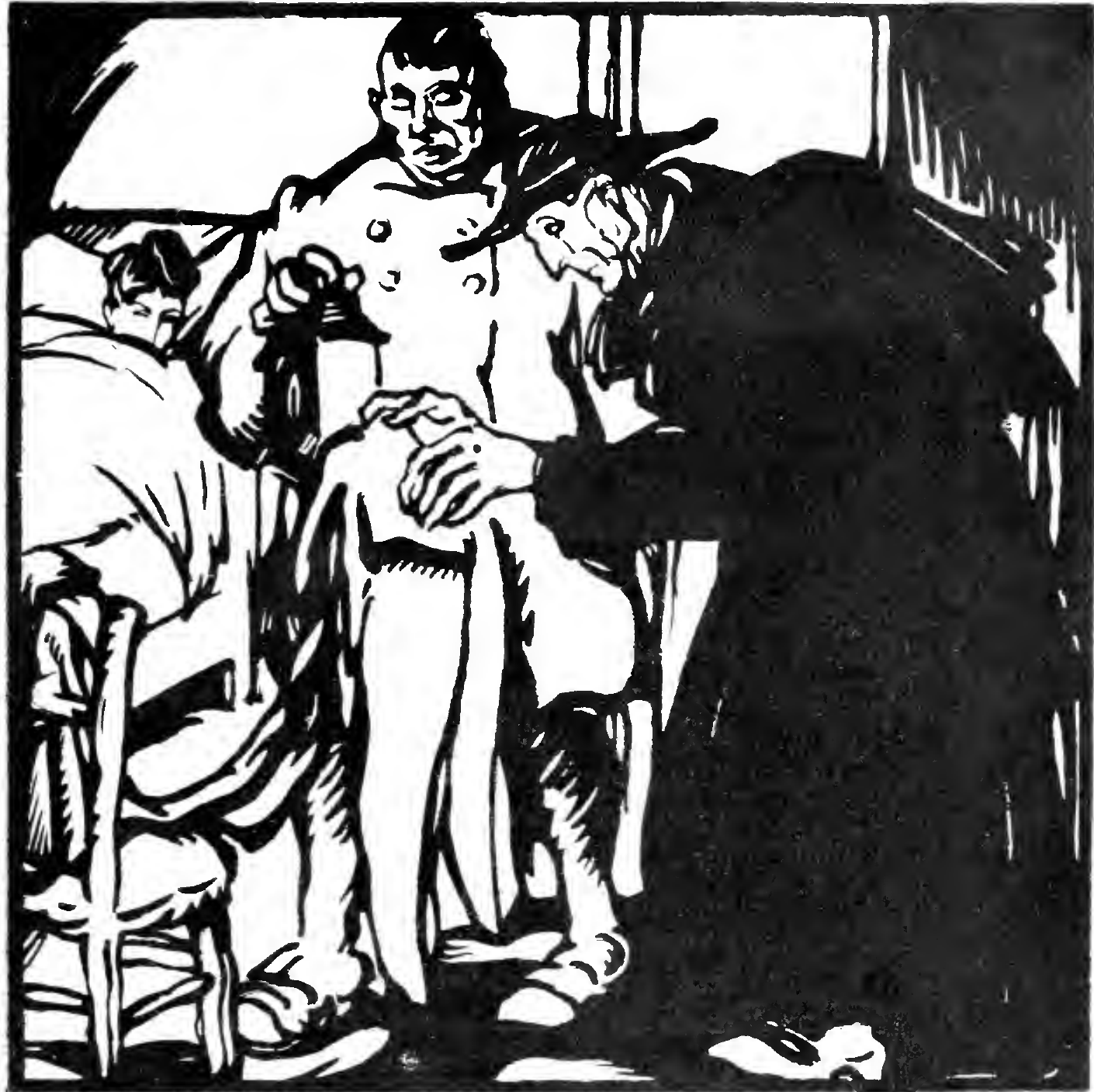
THE lackey entered precipitately, saying: M. the duke of ***. — Be silent, you are nothing but a fool, said the duke as he entered. He said this word so well, and with so much majesty, that, in spite of himself, Julien thought that knowing how to be angry with a lackey was the whole science of this great personage. Julien raised his eyes and lowered them at
once. He had so well divined the importance of the newcomer that he trembled lest his glance be an indiscretion.
This duke was a man of fifty, dressed like a dandy, and walking by springs. He had a narrow head, with a large nose, and a face curving and all thrust forward; it would have been difficult to have a more noble and more insignificant air. His arrival determined the opening of the session.
Julien was sharply interrupted in his physiognomic observations by the voice of M. de La Mole. — I present to you M. the abbé Sorel, the marquis was saying; he is endowed with an astonishing memory; it is only an hour since I spoke to him of the mission with which he might be honored, and, in order to give a proof of his memory, he has learned by heart the first page of the Quotidienne.
— Ah! the foreign news of that poor N..., said the master of the house. He took the newspaper eagerly, and looking at Julien with a pleasant air, by dint of trying to be important: Speak, Monsieur, he said to him.
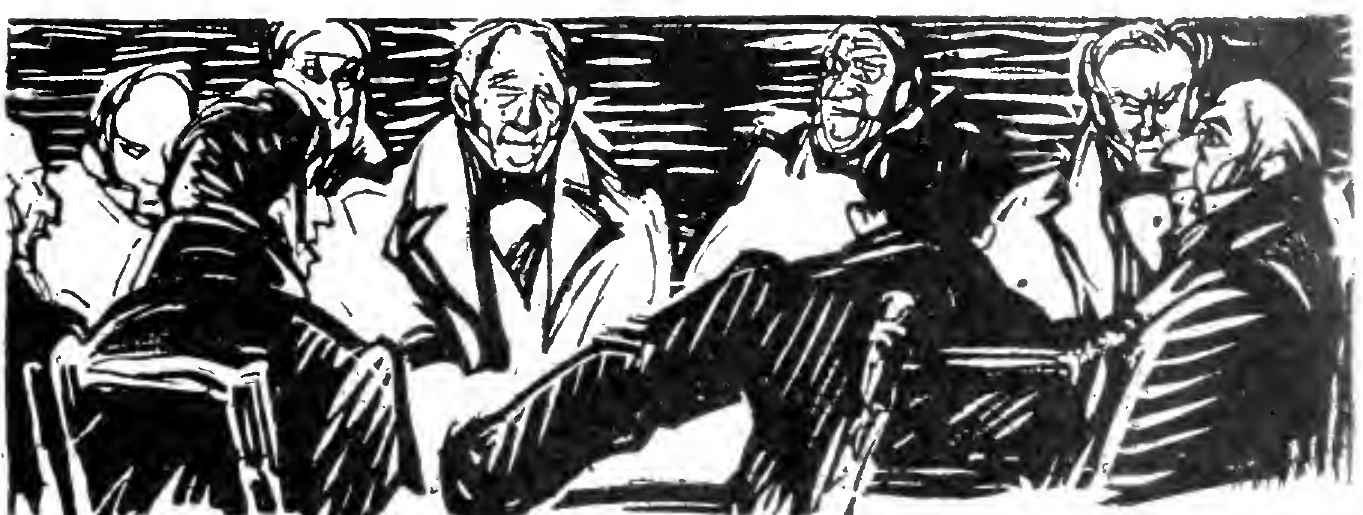
The silence was profound, all eyes fixed on Julien; he recited so well that at the end of twenty lines: That is enough, said the duke. The little man with the wild-boar glance sat down. He was the president, for scarcely in place, he showed Julien a card table, and motioned to him to bring it near him. Julien established himself there with what was needed for writing. He counted twelve persons seated around the green baize.
— Monsieur Sorel, said the duke, withdraw into the adjoining room, you will be called.
The master of the house assumed a very anxious air: The shutters are not closed, he said half low to his neighbor. — It is useless to look out the window, he cried foolishly to Julien. — Here I am caught in a conspiracy at the very least, thought the latter. Fortunately, itis not one of those that lead to the Place de Grève. If there should be danger, I owe that and more to the marquis. Happy if it were granted me to repair all the grief that my follies may one day cause him!
While thinking of his follies and his misfortune, he observed the place in such a way as never to forget it. He then remembered only that he had not heard the lackey say the name of the street, and the marquis had had a cab fetched, which never happened to him.
For a long time Julien was left to his reflections. He was in a drawing room hung with red velvet with broad gold stripes. On the console there was a large ivory crucifix, and on the fireplace the book of the Pope, by M. de Maistre, gilt-edged, and magnificently bound. Julien opened it so as not to appear to be listening. From moment to moment they spoke very loudly in the adjoining room. At last the door opened, he was called.
— Bear in mind, Gentlemen, the president was saying, that from this moment we are speaking before the duke of ***. Monsieur, he said, pointing to Julien, is a young levite, devoted to our holy cause, and who will easily repeat, with the help of his astonishing memory, even our slightest words.
Monsieur has the floor, he said, indicating the personage with the fatherly air, who wore three or four waistcoats. Julien found that it would have been more natural to name the gentleman with the waistcoats. He took paper and wrote a great deal.
(Here the author would have liked to place a page of dots. That would have an awkward grace, said the publisher, and for a writing so frivolous, to lack grace is to die.
— Politics, the author resumes, is a stone tied around the neck of literature, and which, in less than six months, drags it under. Politics in the midst of the interests of imagination is a pistol shot in the middle of a concert. That noise is heart-rending without being energetic. It does not harmonize with the sound of any instrument. This politics will mortally offend one half of the readers, and bore the other, who has found it quite otherwise special and energetic in the morning paper...
— If your characters do not talk politics, the publisher resumes, they are no longer Frenchmen of 1830, and your book is no longer a mirror, as you claim it to be...)
Julien's trial record had twenty-six pages; here is a very pale extract; for it has been necessary, as always, to suppress the absurdities whose excess would have seemed odious or improbable (see the Gazette des Tribunaux).
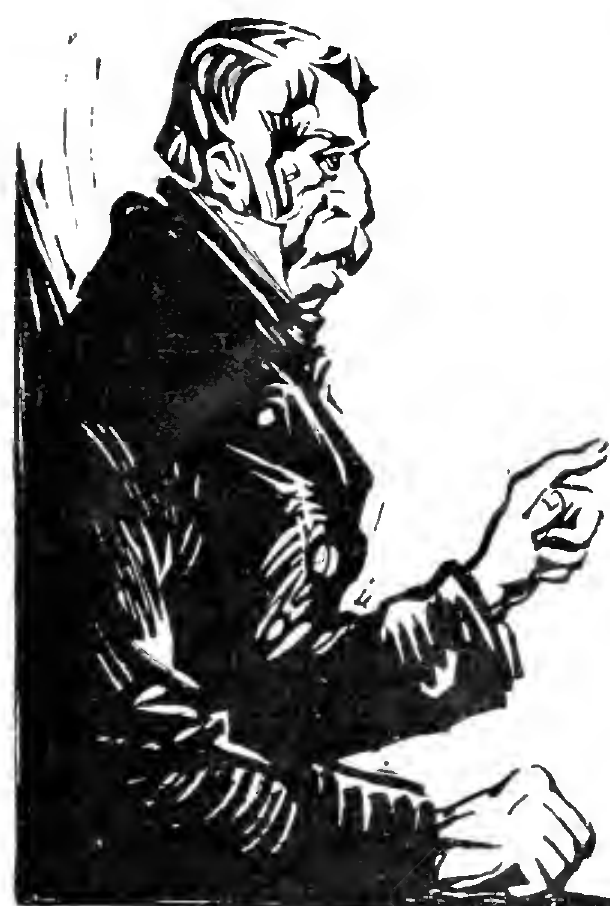
The man in waistcoats with the paternal air (he was perhaps a bishop) smiled often, and then his eyes, surrounded by floating eyelids, took on a singular brilliance and an expression less vague than usual. This personage, whom they had speak first before the duke (but which duke? Julien asked himself), apparently to set forth opinions and perform the functions of advocate-general, appeared to Julien to fall into the uncertainty and absence of decided conclusions that is often reproached in those magistrates. In the course of the discussion, the duke even went so far as to reproach him for it.
After several sentences of morality and indulgent philosophy, the man in waistcoats said:
— Noble England, guided by a great man, the immortal Pitt, spent forty billion francs to thwart the revolution. If this assembly permits me to approach with some frankness a sad idea, England did not sufficiently understand that with a man such as Bonaparte, especially when one had only a collection of good intentions to oppose to him, nothing was decisive but personal means...
— Ah! still the praise of assassination! said the master of the house in an anxious tone.
"Spare us your sentimental homilies," the president exclaimed irritably; his boar's eye gleamed with a fierce light. "Continue," he said to the man in the waistcoats. The president's cheeks and forehead turned purple.
"Noble England," the rapporteur resumed, "is crushed today; for every Englishman, before paying for his bread, is obliged to pay the interest on the forty billion francs that were spent against the Jacobins. She has no Pitt anymore."
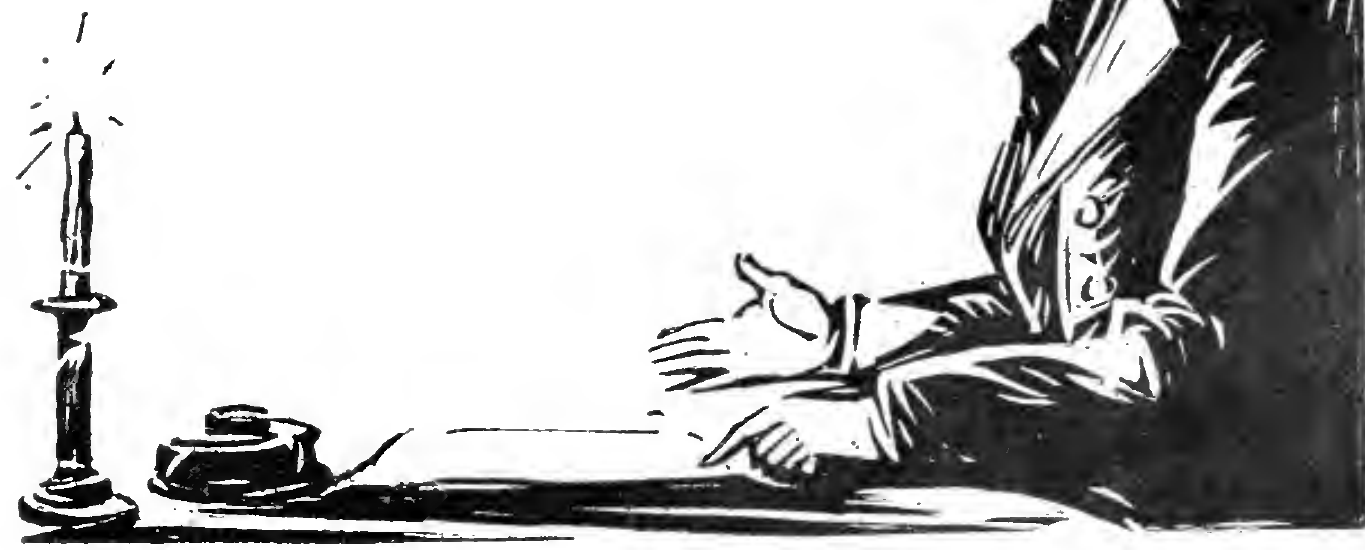
"She has the Duke of Wellington," said a military personage who assumed a highly important air.
"For pity's sake, silence, gentlemen," cried the president; "if we go on arguing, it will have been useless to bring M. Sorel in."
"Everyone knows that Monsieur has a great many ideas," said the duke in a piqued tone, looking at the interrupter, a former general of Napoleon. Julien saw that this remark alluded to something personal and highly offensive. Everyone smiled; the renegade general appeared beside himself with rage.
"There is no Pitt anymore, gentlemen," the rapporteur resumed, with the discouraged air of a man who despairs of making those who listen to him see reason. "Even if there were a new Pitt in England, one does not mystify a nation twice by the same means . . ."
"That is why a victorious general, a Bonaparte, is henceforth impossible in France," cried the military interrupter.
This time neither the president nor the duke dared to grow angry, although Julien thought he could read in their eyes that they had a great mind to. They lowered their eyes, and the duke contented himself with sighing in such a way as to be heard by all.
But the rapporteur had taken offense.
"They are in a hurry to see me finish," he said with fire, entirely setting aside that smiling politeness and that measured language which Julien had believed to be the expression of his character; "they are in a hurry to see me finish; no account is taken of the efforts I make to offend nobody's ears, however long they may be. Well then, gentlemen, I shall be brief.
"And I shall tell you in very vulgar words: England has not a penny left in the service of the good cause. Pitt himself would come back, and with all his genius he would not succeed in mystifying the small English landowners, for they know that the brief Waterloo campaign alone cost them a billion francs. Since clear statements are wanted," added the rapporteur, growing more and more animated, "I shall tell you: Help yourselves, for England has not a guinea at your service, and when England does not pay, Austria, Russia, Prussia, which have only courage and no money, cannot wage more than one or two campaigns against France.
"We may hope that the young soldiers gathered together by Jacobinism will be beaten in the first campaign, in the second perhaps; but in the third—even if I must pass for a revolutionary in your prejudiced eyes—in the third you will have the soldiers of 1794, who were no longer the regimented soldiers of 1792."
Here the interruption came from three or four quarters at once.
"Monsieur," the president said to Julien, "go and make a fair copy in the next room of the beginning of the minutes you have written." Julien left to his great regret. The rapporteur had just touched upon probabilities that were the subject of his habitual meditations.
They are afraid I shall make fun of them, he thought. When he was called back, M. de La Mole was saying, with a seriousness which, to Julien who knew him, seemed highly amusing:
". . . Yes, gentlemen, it is above all of this unfortunate people that one may say: 'Shall he be god, table, or basin?'"'He shall be god!' cries the fabulist. It is to you, gentlemen, that this word, so noble and so profound, seems to belong. Act for yourselves, and noble France will reappear, very nearly as our ancestors made her and as our eyes have still seen her before the death of Louis XVI.
"England, her noble lords at least, loathes as much as we do the ignoble Jacobinism; without English gold, Austria and Prussia can fight only two or three battles. Will that suffice to bring about a happy occupation, like the one M. de Richelieu squandered so stupidly in 1817? I do not believe so."
Here there was an interruption, but it was stifled by everyone's hushing. It came once again from the former imperial general, who desired the blue cordon and wished to be counted among the draftsmen of the secret note.
"I do not believe so," M. de La Mole resumed after the tumult; he insisted on the "I," with an insolence that charmed Julien. That is well played, he said to himself while making his pen fly almost as fast as the marquis's speech. With one well-chosen word, M. de La Mole annihilated the twenty campaigns of that renegade.
"It is not to the foreigner alone," the marquis continued in the most measured tone, "that we can owe a new military occupation. All that youth which writes incendiary articles in the Globe will give you three or four thousand young captains, among whom there may be a Kléber, a Hoche, a Jourdan, a Pichegru, but with less good intentions.""We have not known how to make glory for him," said the president; "he should have been kept immortal."
"There must finally be two parties in France," M. de La Mole resumed, "but two parties, not merely in name, two very clear, very sharply divided parties. Let us know whom we must crush. On one side the journalists, the electors, public opinion, in a word; youth and all that admires it. While it dazes itself with the noise of its vain words, we have the certain advantage of consuming the budget."
Here again an interruption.
"You, Monsieur," M. de La Mole said to the interrupter with admirable haughtiness and ease, "you do not consume—if the word shocks you—you devour forty thousand francs entered in the state budget and eighty thousand that you receive from the civil list.
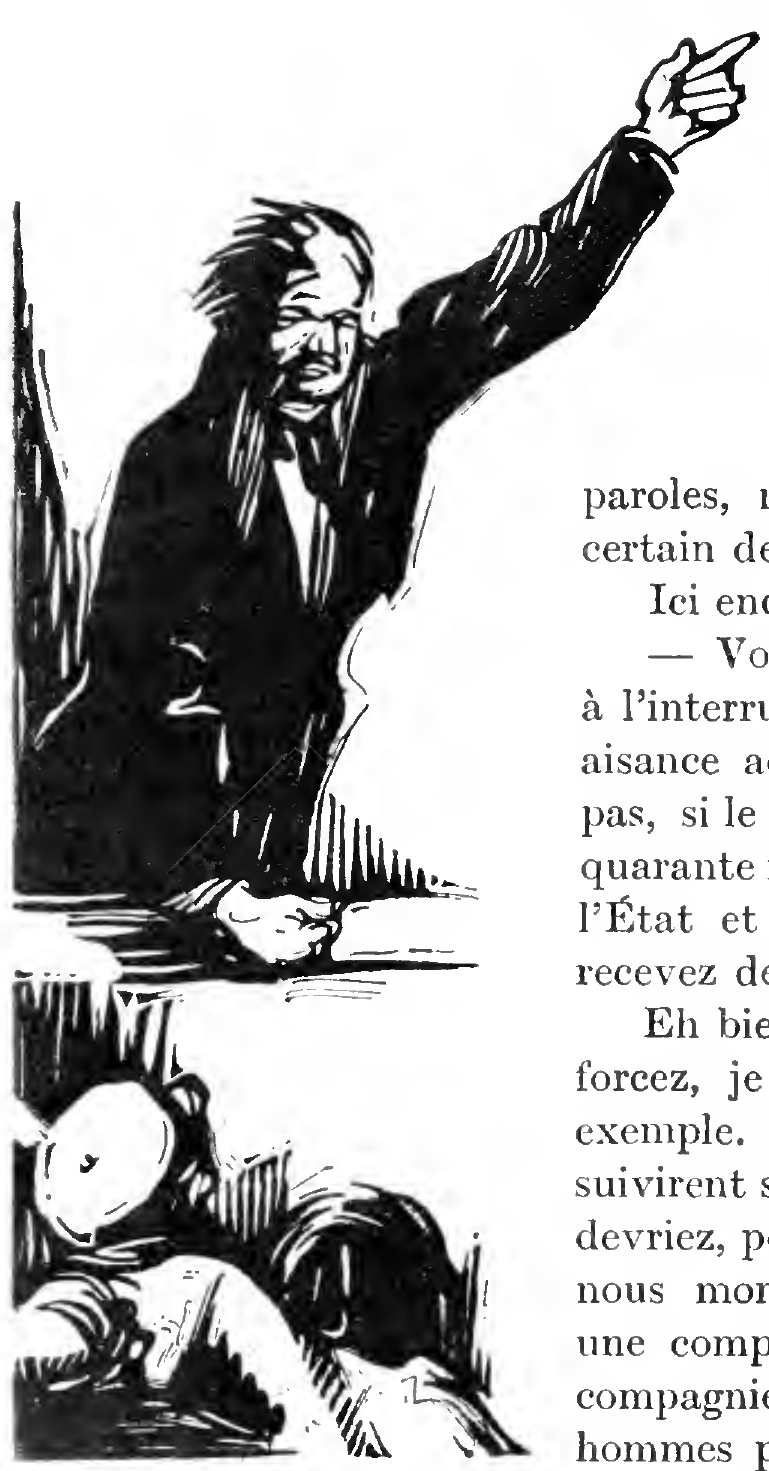
"Well then, Monsieur, since you force me to it, I boldly take you as an example. Like your noble ancestors who followed Saint Louis on the crusade, you ought, for those hundred and twenty thousand francs, to show us at least a regiment, a company—what do I say, a half-company—even if it were only fifty men ready to fight, and devoted to the good cause, in life and in death. You have only lackeys who, in case of revolt, would frighten you yourselves.
"The throne, the altar, the nobility may perish tomorrow, gentlemen, so long as you have not created in each department a force of five hundred devoted men; but I say devoted, not only with all French bravery, but also with all Spanish constancy.
"Half of this troop must be composed of our children, our nephews, true gentlemen in short. Each of them will have at his side, not a chattering little bourgeois, ready to display the tricolor cockade if 1815 comes again, but a good peasant, simple and frank as Cathelineau; our gentleman will have indoctrinated him, he will be his foster brother if possible. Let each of us sacrifice a fifth of his income to form this little devoted troop of five hundred men per department. Then you may count on a foreign occupation. Never will the foreign soldier penetrate as far as Dijon even, unless he is sure of finding five hundred friendly soldiers in each department."
Foreign kings will listen to you only when you announce to them twenty thousand gentlemen ready to take up arms to open the gates of France to them. This service is arduous, you will say; Gentlemen, our head is the price of it. Between the freedom of the press and our existence as gentlemen, there is a war to the death. Become manufacturers, peasants, or take up your musket. Be timid if you wish, but do not be stupid; open your eyes.
Form your battalions, I would say to you with the song of the Jacobins: then there will be found some noble Gustavus Adolphus, who, touched by the imminent peril of the monarchical principle, will rush three hundred leagues from his country, and will do for you what Gustavus did for the Protestant princes. Do you wish to continue talking without acting? In fifty years there will be nothing left in Europe but presidents of republics, and not a single king. And with those three letters K, I, N, G, away go the priests and the gentlemen. I see nothing anymore but candidates courting majorities covered in mud.
It is in vain that you say that France does not at this moment have a general accredited, known and loved by all, that the army is organized only in the interest of the throne and the altar, that all the old campaigners have been taken from it, while each of the Prussian and Austrian regiments counts fifty non-commissioned officers who have seen fire.
Two hundred thousand young men belonging to the petty bourgeoisie are in love with war...
— Enough of disagreeable truths, said in a self-important tone a grave personage, apparently very far advanced in ecclesiastical dignities, for M. de La Mole smiled pleasantly instead of becoming angry, which was a great sign for Julien.
Enough of disagreeable truths, let us sum up, Gentlemen: the man who needs to have a gangrenous leg cut off would be ill received if he said to his surgeon: This diseased leg is quite healthy. Pardon me the expression, Gentlemen, the noble Duke of *** is our surgeon.
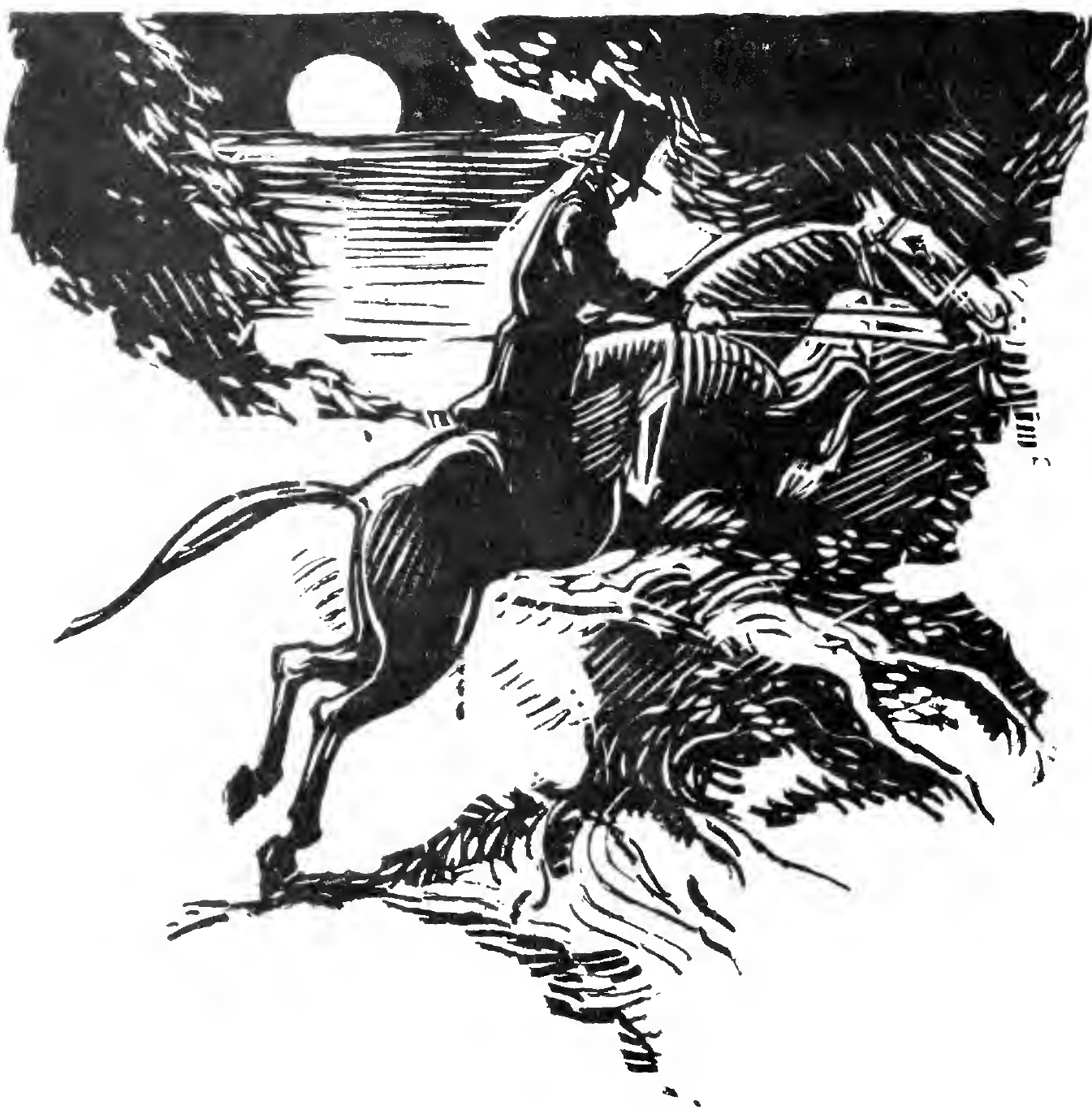
There at last is the great word spoken, thought Julien; it is toward the ... that I shall gallop tonight.
.