Translate Scanned & Layout-Heavy PDFs Online

Translate books, academic papers, and scanned PDFs with OCR while keeping tables, formulas, and reading structure. Export as a translated PDF, a bilingual EPUB, or editable Markdown.

Drop a PDF or EPUB here

Convert or translate your document.

One file at a time

A book on paper. Ready for any screen.

Select, search and resize the text in your scans, with illustrations and equations kept in place. Leave constant zooming and sideways scrolling behind, and read comfortably on your phone or e-reader.

Scanned page / English
On floating bodies / p. 274
Reflowed text / European Spanish

Las obras de Arquímedes

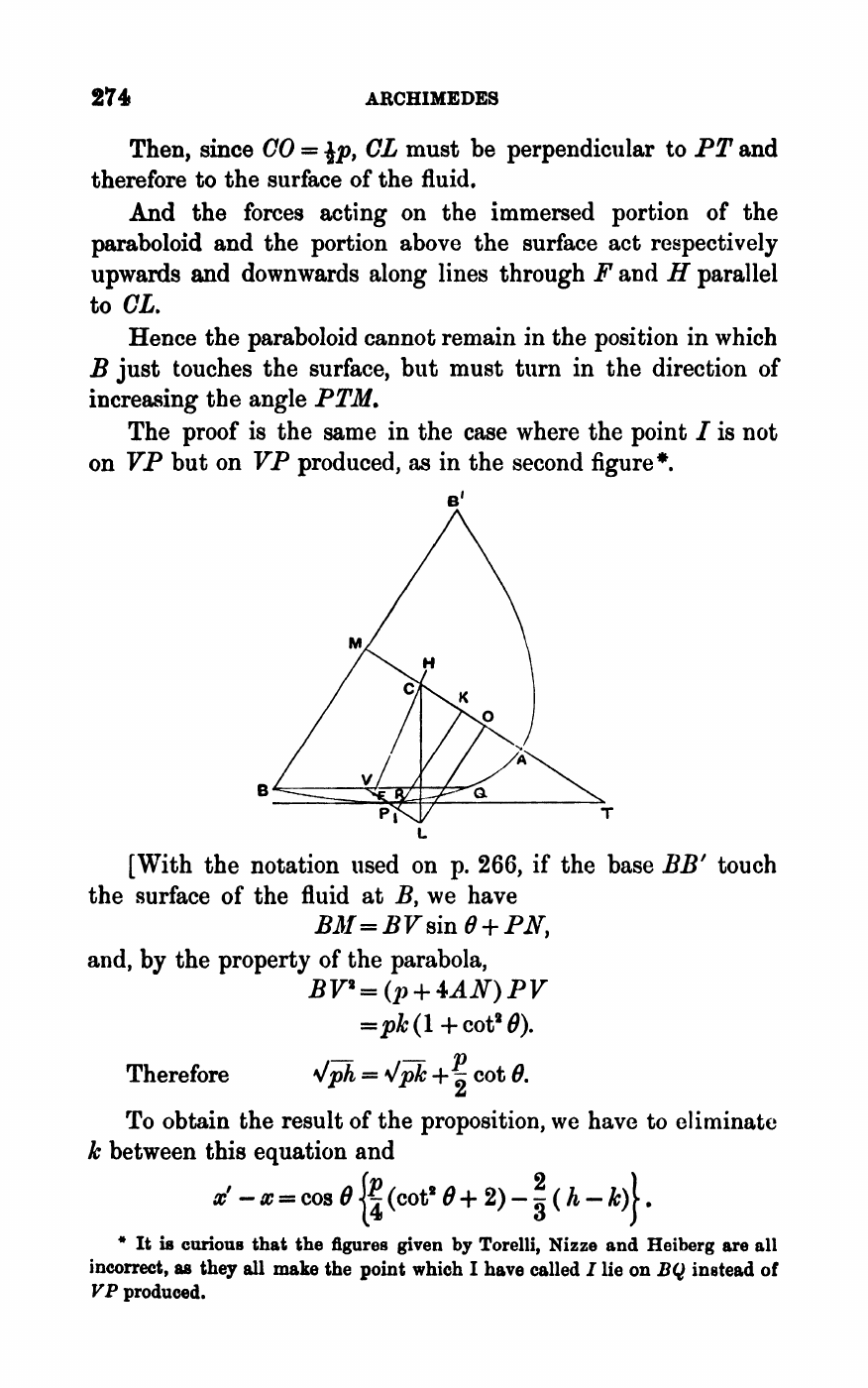
Entonces, puesto que CO = ½p, CL debe ser perpendicular a PT y, por tanto, a la superficie del fluido.

Y las fuerzas que actúan sobre la parte sumergida del paraboloide y sobre la parte situada por encima de la superficie actúan, respectivamente, hacia arriba y hacia abajo, a lo largo de rectas que pasan por F y H y son paralelas a CL.

Por tanto, el paraboloide no puede permanecer en la posición en que B apenas toca la superficie, sino que debe girar en el sentido de aumentar el ángulo PTM.

La demostración es la misma cuando el punto I no está en VP, sino en su prolongación, como en la segunda figura*.
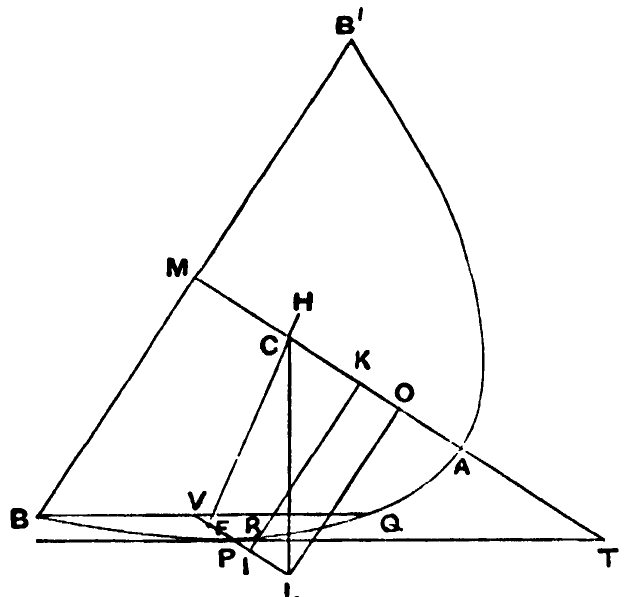
Diagrama geométrico del original

[Con la notación de la p. 266, si la base BB′ toca la superficie del fluido en B, tenemos

BM=BVsinθ+PN

y, por la propiedad de la parábola,

BV2=(p+4AN)PV=pk(1+cot2θ)

Por tanto

ph=pk+p2cotθ

Para obtener el resultado de la proposición, debemos eliminar k entre esta ecuación y

x′−x=cosθ{p4(cot2θ+2)−23(h−k)}.

* Es curioso que las figuras de Torelli, Nizze y Heiberg sean todas incorrectas, pues sitúan el punto que he llamado I en BQ en vez de en la prolongación de VP.

274
  • Text recognition
  • Illustrations & equations
  • Adjustable text
  • Reflowable pages
Desktop + iOS client

Read your translated books comfortably on desktop and iOS

Download translated PDFs or bilingual EPUBs straight from your browser. When you want a dedicated library for your source PDFs and translated editions, open them in PDF Craft for desktop or iOS.

EPUB PDF ZIP M4B

Built for scanned books, papers, and long documents

Unlike copy-paste translators that break on scans or multi-column pages, PDF Craft recognizes page structure first and then translates with context and custom terminology.

  1. Translate scanned and image-only PDFs

    Upload scanned books, journal articles, textbooks, or manuals. OCR extracts text, formulas, tables, and reading order before translating so image-only pages work reliably.

  2. Choose translated PDF, bilingual EPUB, or Markdown

    Pick Translated PDF to keep original page layout for sharing, bilingual EPUB to read original and translated paragraphs together on any screen, or Markdown for study notes.

  3. Guide names and domain terminology

    Add translation instructions before starting to specify character names, technical terms, or preferred tone across an entire multi-hundred-page book.

  4. Keep tables, formulas, and footnotes intact

    Layout analysis separates headings, figures, equations, tables, and footnotes while skipping repetitive headers and footers so translations stay clean and readable.

New user gift

Translate PDFs and EPUB ebooks online

Translate scanned PDFs with OCR and save the result as PDF, EPUB, or Markdown. For EPUB books, choose an edition with just the translation or both languages.

  • About 330 PDF pages
  • About 160 translated PDF pages
  • About 90K EPUB words

$1

Free starter credit

No card required, credited right after sign-up

Translate a document

How to translate a PDF online

  1. Upload your PDF

    Select a scanned book, academic paper, or digital PDF. OCR runs automatically on image-based pages.

  2. Choose language and output format

    Pick your target language and choose Translated PDF, bilingual EPUB, translated EPUB, or Markdown. Add terminology notes if needed.

  3. Download and read

    When processing finishes, download the translated file in your browser and inspect formulas, tables, and headings.

Frequently asked questions

Can PDF Craft translate scanned or image-only PDFs?

Yes. PDF Craft runs layout analysis and OCR before translating, so scanned books, multi-column papers, and image-only pages are converted into clean, accurate translations.

Should I export Translated PDF or bilingual EPUB?

Choose Translated PDF when you want to keep the original page layout for sharing or reference. Choose bilingual EPUB to read the original and translation paragraph by paragraph with adjustable font sizes on phones and e-readers.

Are formulas, tables, and footnotes preserved during translation?

Yes. Layout recognition identifies equations, tables, figures, and footnotes separately from body paragraphs while filtering out repeated headers and footers. You can inspect real translated books side by side with the original PDF in Conversion Examples.

Can I control how names and technical terms are translated?

Yes. Before starting a task, add translation instructions for character names, technical terminology, or preferred style so long documents stay consistent across chapters.

How much does PDF translation cost?

PDF Craft uses pay-as-you-go credits with no subscription, and purchased credits never expire. New accounts include starter credits to test real documents. Check Pricing for current per-100-page OCR and translation rates.