About this book
Julien Sorel climbs from sawmill to salon, torn between the red of the army and the black of the church. Stendhal's 1830 novel, free to read online.
THE SECRET NOTE
For all that I relate, I have seen; and if I may have been mistaken in seeing it, most certainly I do not deceive you in telling it to you.
Letter to the Author.
:
:
The Marquis sent for him; M. de La Mole seemed rejuvenated, his eye was bright.
— Let us speak a little of your memory, he said to Julien, they say it is prodigious! Could you learn by heart four pages and go and recite them in London? but without changing a word?...
::
The Marquis was crossly crumpling the Quotidienne of the day, and seeking in vain to dissemble a very serious air which Julien had never seen in him, even when the Friair lawsuit was in question.
Julien had already enough experience to feel that he ought to appear entirely the dupe of the light tone that was shown him.
— This number of the Quotidienne is perhaps not very amusing; but, if Monsieur the Marquis permits, tomorrow morning I shall have the honor to recite it to him entire.
— What! even the advertisements?
— Most exactly, and without a word missing.
— Do you give me your word? resumed the Marquis with a sudden gravity.
— Yes, Monsieur, the fear of failing in it could alone trouble my memory.
— It is that I forgot to put this question to you yesterday: I do not ask you your oath never to repeat what you are going to hear; I know you too well to do you that injury. I have answered for you, I am going to take you into a drawing room where twelve persons will assemble; you will take note of what each one says.
Do not be uneasy, it will not be a confused conversation, each will speak in his turn, I do not mean to say in order, added the Marquis, resuming the keen and light air that was so natural to him. While we are speaking, you will write some twenty pages; you will come back here with me, we will reduce those twenty pages to four. It is these four pages that you will recite to me tomorrow morning instead of the whole number of the Quotidienne. You will set out immediately after; it will be necessary to travel post haste like a young man who travels for his pleasures. Your aim will be to be noticed by no one. You will arrive at the house of a great personage. There you will need more skill. It is a matter of deceiving all who surround him; for, among his secretaries, among his servants, there are people sold to our enemies, and who watch our agents in passing to intercept them.
You will have an insignificant letter of recommendation.
At the moment when His Excellency looks at you, you will draw out my watch, here it is, which I lend you for the journey. Take it on you, it is always so much done, give me yours.
The Duke himself will deign to write at your dictation the four pages you will have learned by heart.
That done, but not sooner, mark well, you may, if His
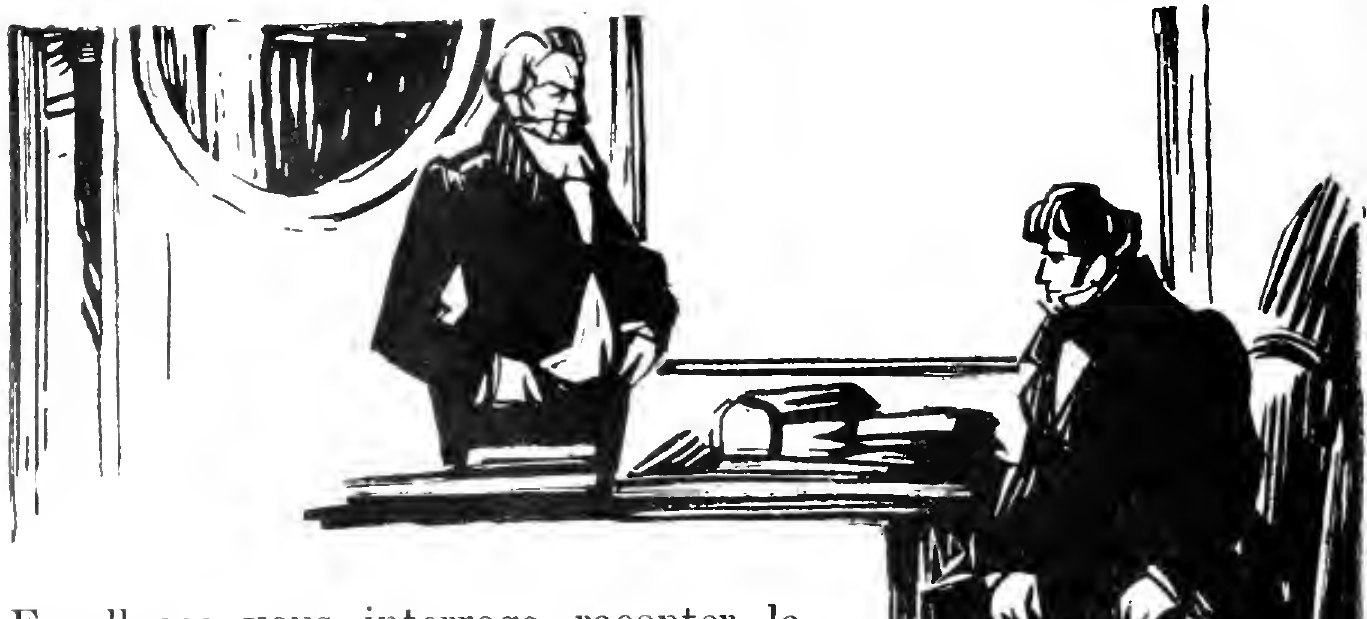
Excellency questions you, relate the session at which you are going to be present.
What will prevent you from being bored along the journey is that between Paris and the residence of the minister there are people who would ask nothing better than to fire a shot at M. l'abbé
Sorel. Then his mission is ended and I see a great delay; for, my dear, how shall we know your death? your zeal cannot go so far as to inform us of it.
Run at once and buy a complete outfit, resumed the Marquis with a serious air. Dress in the fashion of two years ago. It is necessary this evening that you should look unkempt. On the journey, on the contrary, you will be as usual. Does that surprise you, your mistrust guesses? Yes, my friend, one of the venerable personages whom you are going to hear opine is quite capable of sending information by means of which they may well give you at least some opium, in the evening, in some good inn where you have asked for supper.
— It is better, said Julien, to make thirty leagues more and not take the direct road. It is a question of Rome, I suppose...
The Marquis assumed an air of haughtiness and discontent that Julien had not seen in him to that degree since Bray-le-Haut.
— That is what you will know, Monsieur, when I judge it appropriate to tell you. I do not like questions.
— That was not one, Julien resumed with effusion; I swear it to you, Monsieur, I was thinking aloud, I was searching in my mind for the safest route.
— Yes, it seems your mind was very far away. Never forget that an ambassador, and of your age still, must not appear to be forcing confidence.
Julien was very mortified; he was wrong. His self-esteem sought an excuse and did not find one.
— Understand, then, added M. de La Mole, that one always appeals to one's heart when one has done something foolish.
An hour later, Julien was in the marquis's antechamber with a subordinate air, old-fashioned clothes, a cravat of doubtful whiteness, and something pedantic in his whole appearance.
Seeing him, the marquis burst out laughing, and only then was Julien's justification complete.
If this young man betrays me, M. de La Mole was saying to himself, whom can one trust? and yet when one acts, one must trust someone. My son and his brilliant friends of the same stripe have heart, fidelity for a hundred thousand; if it came to fighting, they would perish on the steps of the throne, they know everything… except what one needs at the moment. The devil if I see one of them who could learn four large pages by heart and travel a hundred leagues without being detected. Norbert would know how to get himself killed like his ancestors, that is also the merit of a conscript…
The marquis fell into a deep reverie: And still, to get oneself killed, he said with a sigh, perhaps this Sorel would know how to do it as well as he…
— Let us get into the carriage, said the marquis, as if to chase away an importunate idea.
— Monsieur, said Julien, while they were arranging this coat for me, I learned by heart the first page of today's Quotidienne.
The marquis took the newspaper; Julien recited without making a single mistake. Good, said the marquis, very diplomatic that evening; meanwhile this young man does not notice the streets through which we are passing.
They arrived in a large drawing room of rather dismal appearance, partly hungwith green velvet. In the middle of the room, a surly lackey was finishing setting up a large dining table, which he later changed into a work table by means of an immense green baize cloth all stained with ink, the cast-off from some ministry.
The master of the house was an enormous man, whose name was not pronounced; Julien found in him the physiognomy and eloquence of a man who is digesting.
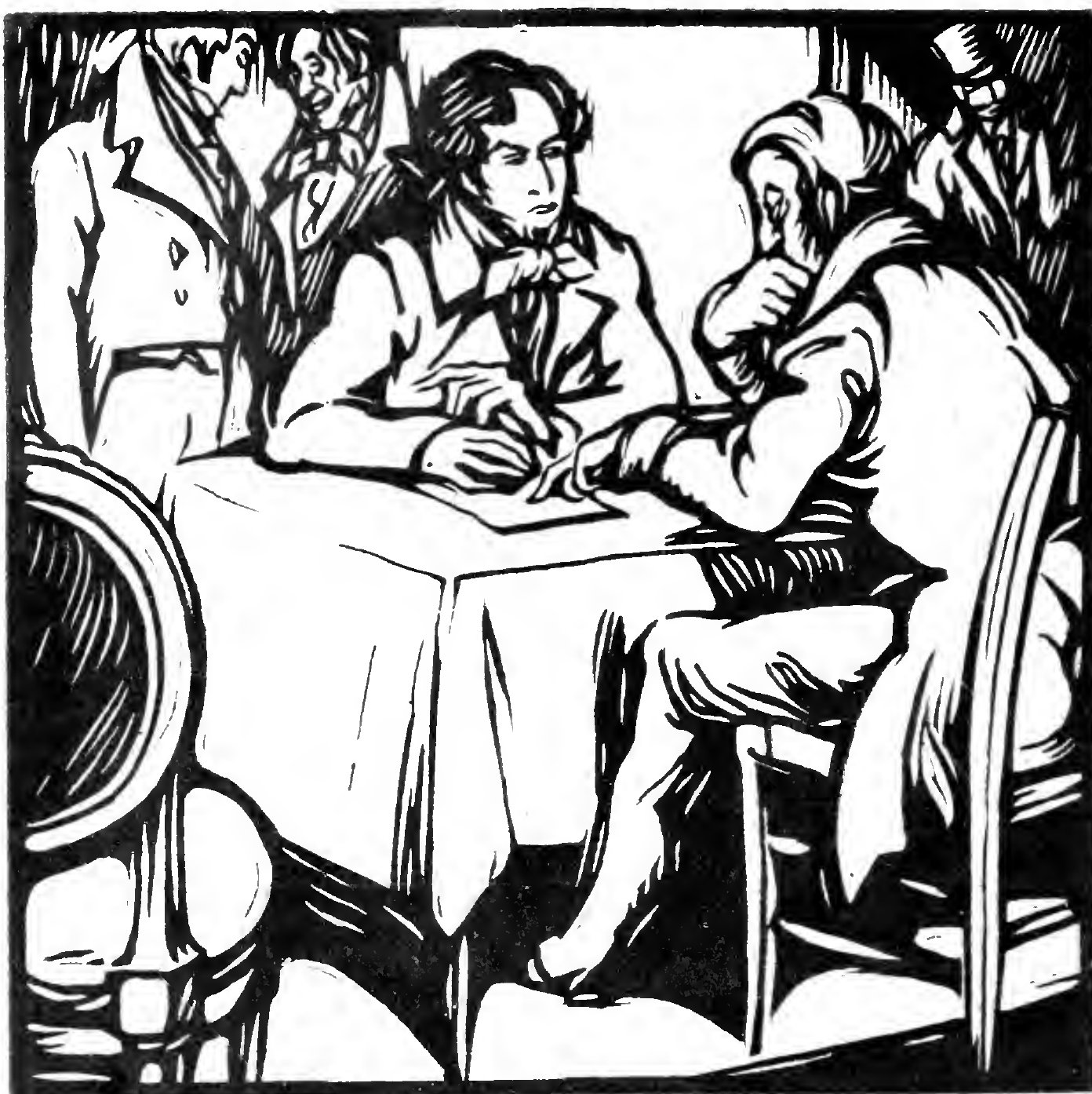
At a sign from the marquis, Julien had remained at the lower end of the table. To give himself a countenance, he began to cut pens. Out of the corner of his eye he counted seven interlocutors, but Julien perceived them only from the back. Two of them seemed to be addressing M. de La Mole in a tone of equality; the others seemed more or less respectful.
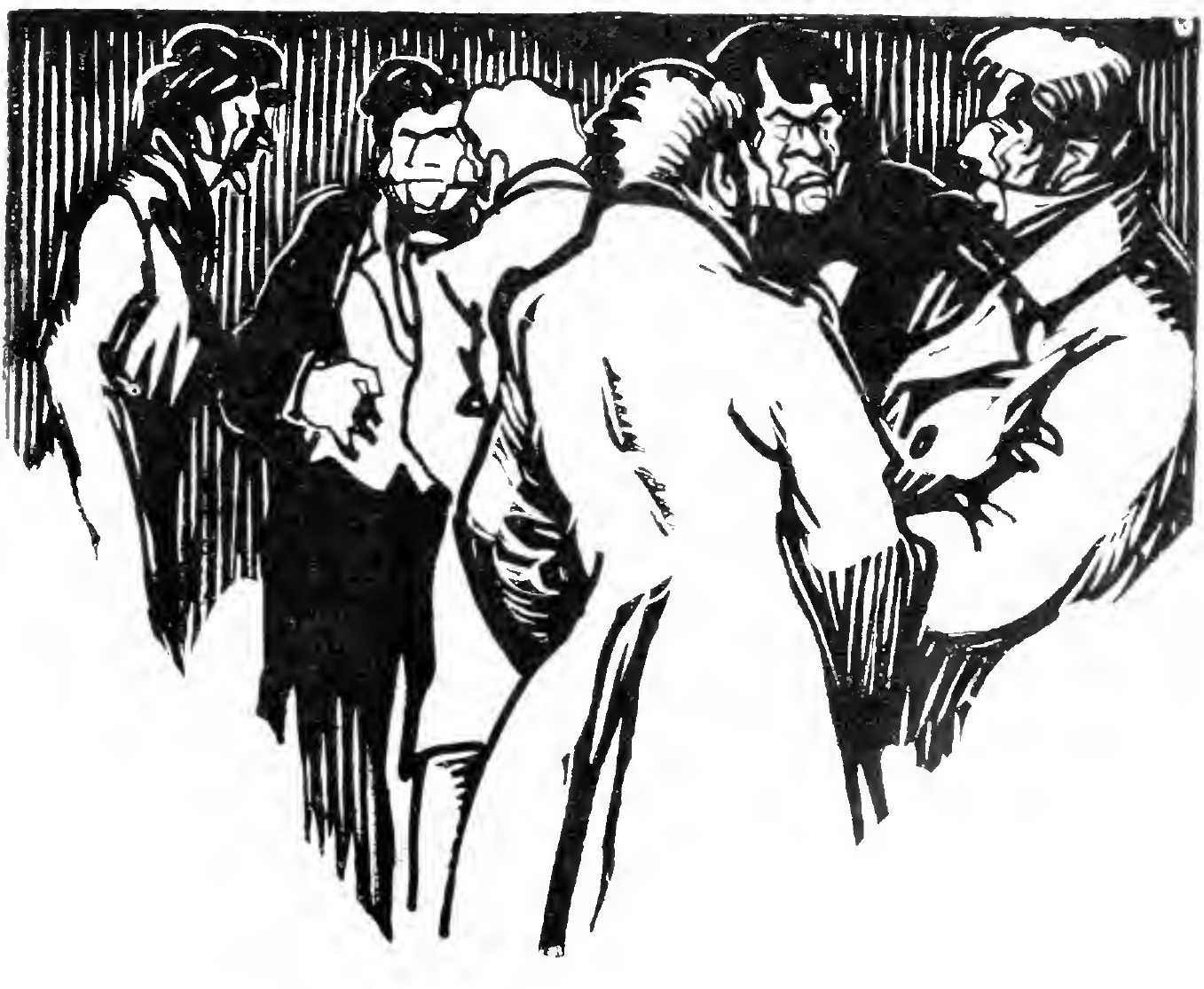
A new personage entered without being announced. This is singular, thought Julien, they announce no one in this drawing room. Can this precaution be taken in my honor? Everyone rose to receive the newcomer. He wore the same extremely distinguished decoration as three others among the persons already in the drawing room. They were speaking rather low. To judge the newcomer, Julien was reduced to what his features and his bearing could teach him. He was short and thick-set, high in color, with a brilliant eye and no expression other than the malice of a wild boar.
Julien's attention was sharply distracted by the almost immediate arrival of an entirely different being. It was a tall man, very thin, who wore three or four waistcoats. His eye was caressing, his gesture polite.
That is the whole physiognomy of the old bishop of Besançon, thought Julien. This man evidently belonged to the Church; he did not look more than fifty to fifty-five; one could not have had a more fatherly air.
The young bishop of Agde appeared; he looked extremely astonished when, surveying those present, his eyes reached Julien. He had not addressed a word to him since the ceremony of Bray-le-Haut. His surprised glance embarrassed and irritated Julien. What then! said the latter to himself, will knowing a man always turn to my misfortune? All these great lords whom I have never seen do not intimidate me at all, and the glance of this young bishop freezes me. I must admit that I am a very singular and very unfortunate being.
A little man, extremely dark, soon entered noisily, and began to speak from the doorway; he had a yellow complexion and a slightlymad air. From the arrival of this pitiless talker, groups formed, apparently to avoid the boredom of listening to him.
In moving away from the fireplace, they drew nearer to the lower end of the table, occupied by Julien. His countenance was becoming more and more embarrassed; for in the end, whatever effort he made, he could not help hearing, and however little experience he had, he understood all the importance of the things being spoken of without any disguise; and how much the high personages whom he apparently had before his eyes must insist that they remain secret!
Already, as slowly as possible, Julien had cut some twenty pens; this resource was about to fail him. He sought in vain an order in M. de La Mole's eyes; the marquis had forgotten him.
What I am doing is ridiculous, said Julien to himself as he cut his pens; but people with such mediocre physiognomy, and charged by others or by themselves with such great interests, must be very susceptible. My unfortunate glance has something interrogative and scarcely respectful about it, which would doubtless sting them. If I decidedly lower my eyes, I shall look as if I were making a collection of their words.