About this book
Julien Sorel climbs from sawmill to salon, torn between the red of the army and the black of the church. Stendhal's 1830 novel, free to read online.
QUEEN MARGUERITE
Love! into what folly can you not make us find pleasure? Letters of a Portuguese Nun.
JULIEN reread his letters. When the dinner bell was heard: “How ridiculous I must have appeared in the eyes of that Parisian doll!” he said to himself; “what folly to tell her really what I was thinking! but perhaps not such great folly. The truth on this occasion was worthy of me. Why, too, come and question me about intimate things! That question is indiscreet on her part. She has lacked tact. My thoughts on Danton are not part of the sacrifice for which her father pays me.”
On arriving in the dining room, Julien was distracted from his mood by Mademoiselle de La Mole’s deep mourning, which struck him all the more because no other person in the family was in black.
After dinner he found himself completely freed from the fit of enthusiasm which had obsessed him all day. Fortunately, the academician who knew Latin was at that dinner. Here is the man who will make the least fun of me, said Julien to himself, if, as I presume, my question about Mademoiselle de La Mole's mourning is a blunder.
Mathilde was watching him with a singular expression. There indeed is the coquetry of the women of this country such as Madame de Rênal had depicted it to me, said Julien to himself. I was not amiable to her this morning, I did not yield to the whim she had to talk. I increase in value in her eyes. No doubt the devil loses nothing by it. Later, her disdainful haughtiness will know how to take its revenge. I am making her worse. What a difference from what I have lost! what a charming naturalness! what naivety! I knew her thoughts before she did; I saw them being born; I had as my only antagonist, in her heart, the fear of the death of her children; it was a reasonable and natural affection, amiable even to me who suffered from it. I have been a fool. The ideas I had formed of Paris prevented me from appreciating that sublime woman.
What a difference, great God! and what do I find here? dry and haughty vanity, every shade of self-esteem and nothing more.
People were rising from the table. Let me not let my academician be engaged, said Julien to himself. He approached him as they passed into the garden, assumed a gentle and submissive air, and shared his fury against the success of Hernani.
"If we were still in the time of lettres de cachet!..." he said.
"Then he would not have dared," exclaimed the academician with a gesture à la Talmà.
À propos of a flower, Julien quoted a few words from Virgil's Georgics, and found that nothing was equal to the verses of the abbé Delille. In a word, he flattered the academician in every way. After which, with the most indifferent air: I suppose, he said to him, that Mademoiselle de La Mole has inherited from some uncle whose mourning she wears.
"What! you are of the household," said the academician, stopping short, "and you do not know her folly? In fact, it is strange that her mother allows her such things; but, between ourselves, it is not precisely by strength of character that one shines in this house. Mademoiselle Mathilde has enough for them all, and leads them. It is today the 30th of April!" and the academician stopped, looking at Julien with a sly air. Julien smiled with the most witty air he could.
What connection can there be between leading a whole household, wearing a black dress, and the 30th of April? he was saying to himself. I must be even more awkward than I thought.
"I will confess to you...," he said to the academician, and his eye continued to question. "Let us take a turn in the garden," said the academician, joyfully glimpsing the opportunity to make a long elegant narration.
"What! is it really possible that you do not know what happened on the 30th of April 1574?"
"And where?" said Julien, astonished.
"In the place de Grève. Julien was so astonished that this word did not enlighten him. Curiosity, the expectation of a tragic interest, so in keeping with his character, gave him those brilliant eyes that a narrator loves so much to see in the person who is listening. The academician, delighted to find a virgin ear, related at length to Julien how, on the 30th of April 1574, the handsomest young man of his century, Boniface de La Mole, and Annibal de Coconasso, a Piedmontese gentleman, his friend, had had their heads cut off in the place de Grève. La Mole was the adored lover of Queen Marguerite de Navarre;
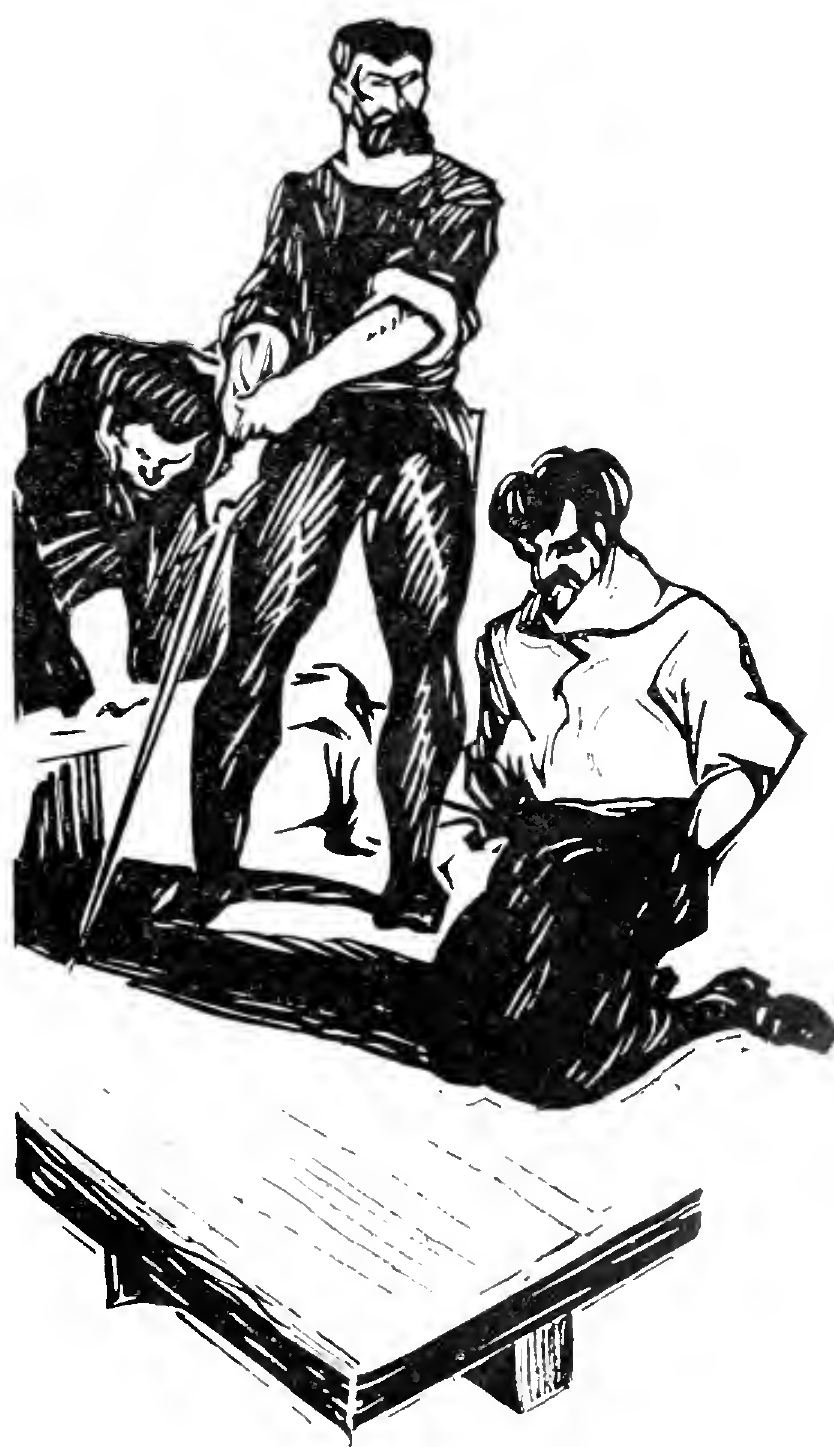
and observe, added the academician, that Mademoiselle de La Mole is called Mathilde-Marguerite. La Mole was at the same time the favorite of the duc d'Alençon and the intimate friend of the king of Navarre, afterward Henri IV, the husband of his mistress. On the day of Mardi Gras of that year 1574, the court was at Saint-Germain with the poor King Charles IX, who was going there dying. La Mole wished to carry off the princes his friends, whom Queen Catherine de Médicis was holding as prisoners at the court. He brought two hundred horses forward under the walls of Saint-Germain; the duc d'Alençon took fright, and La Mole was thrown to the executioner.
:
"But what touches Mademoiselle Mathilde, what she herself confessed to me seven or eight years ago, when she was twelve, for she is a mind, a mind!..." and the academician raised his eyes to heaven. What struck her in that political catastrophe is that Queen Marguerite de Navarre, hidden in a house on the place de Grève, dared to ask the executioner for her lover's head. And the following night, at midnight, she took that head in her carriage, and went to bury it herself in a chapel situated at the foot of the hill of Montmartre.
"Is it possible?" exclaimed Julien, touched.
"Mademoiselle Mathilde despises her brother because, as you see, he does not think in the least of all that ancient history, and does not go into mourning on the 30th of April. It is since that famous torture, and to recall the intimate friendship of La Mole for Coconasso, which Coconasso, like the Italian he was, was called Annibal, that all the men of this family bear that name. And," added the academician, lowering his voice, "that Coconasso was, according to Charles IX himself, one of the most cruel assassins of the 24th of August 1572. But how is it possible, my dear Sorel, that you are ignorant of these things, you, a commensal of this house?"
"So that is why, twice at dinner, Mademoiselle de La Mole called her brother Annibal. I thought I had heard wrongly."
"It was a reproach. It is strange that the marquise tolerates such follies... The husband of that tall girl will see some fine things!"
This word was followed by five or six satirical phrases. The joy and the intimacy that shone in the academician's eyes shocked Julien. Here we are, two servants occupied in slandering their masters, he thought. But nothing should astonish me on the part of this man of the academy.
One day, Julien had caught him at the knees of the marquise de La Mole; he was asking her for a recipe for tobacco for a nephew in the provinces. In the evening, a little chambermaid of Mademoiselle
de La Mole, who was courting Julien, as Élisa had done in the past, gave him this idea, that her mistress's mourning was not worn to attract attention. This oddity was rooted in the depths of her character. She really loved that La Mole, the beloved lover of the wittiest queen of her century, and who died for having wished to restore liberty to his friends. And what friends! the first prince of the blood and Henri IV.
Accustomed to the perfect naturalness that shone in all of Madame de Rênal's conduct, Julien saw nothing but affectation in all the women of Paris, and, if he was at all disposed to sadness, found nothing to say to them. Mademoiselle de La Mole was an exception.
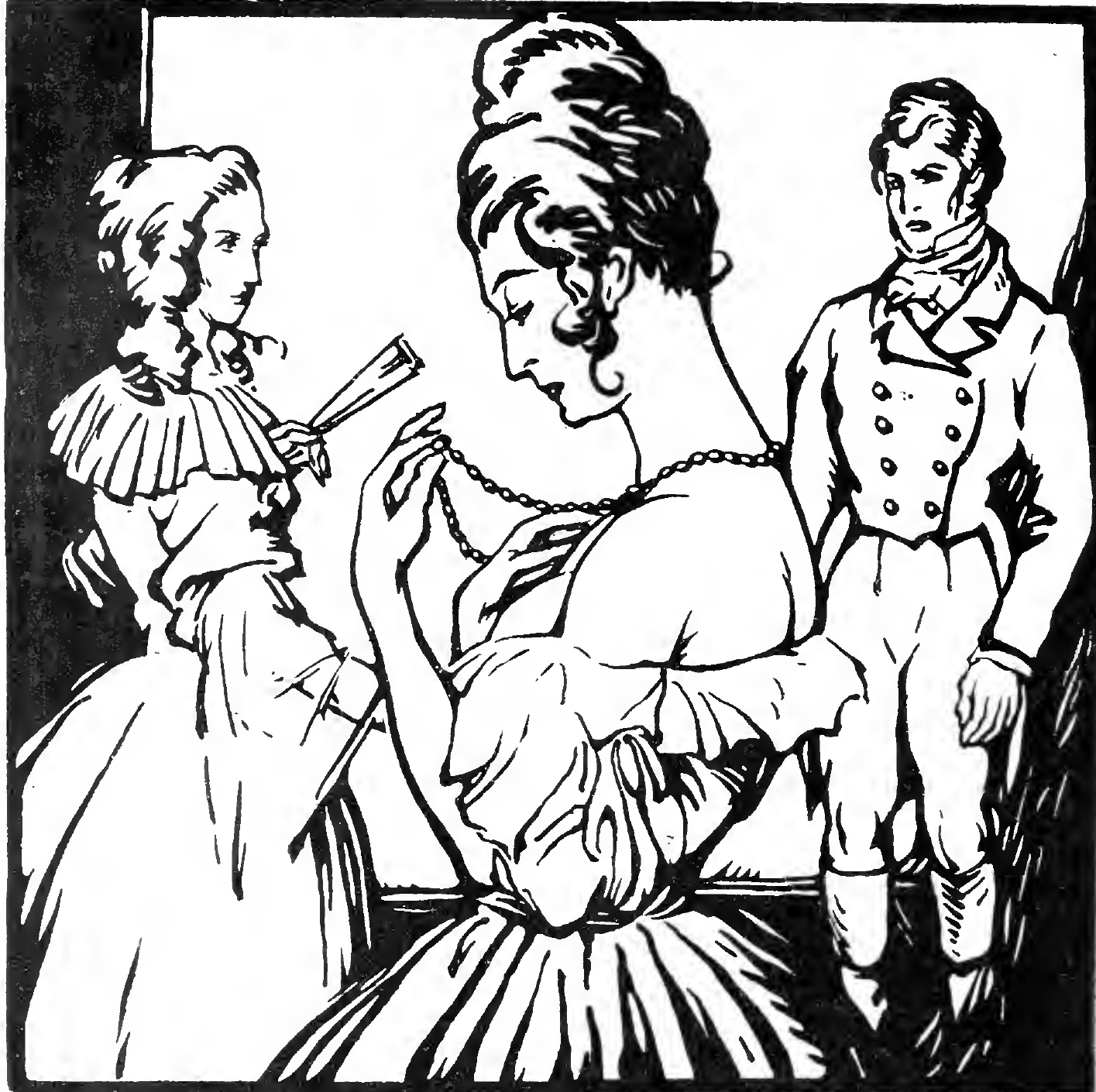
He was beginning to no longer take for dryness of heart the kind of beauty that depends on nobility of bearing. He had long conversations with Mademoiselle de La Mole, who, sometimes after dinner, walked with him in the garden, along the open windows of the drawing room. She told him one day that she was reading the history of d'Aubigné, and Brantôme. Singular reading, thought Julien; and the marquise does not allow her to read Walter Scott's novels!
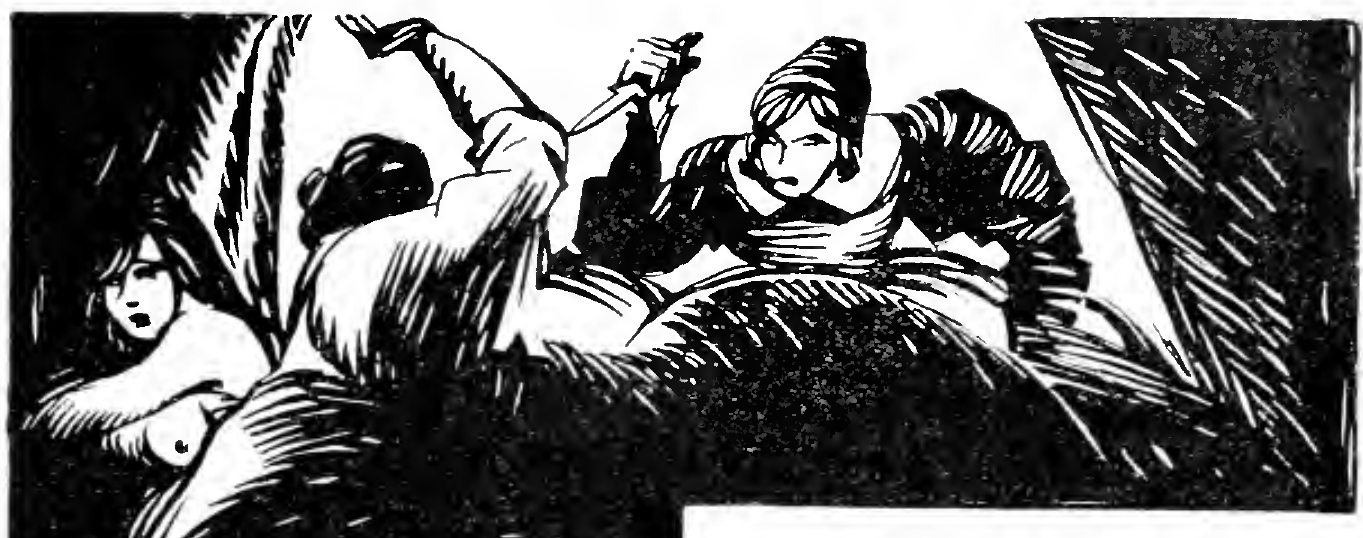
One day she related to him, with those eyes brilliant with pleasure that prove the sincerity of admiration, this trait of a young woman of the reign of Henri III, which she had just read in the Mémoires de l'Étoile: Finding her husband unfaithful, she stabbed him.
Julien's self-esteem was flattered. A person surrounded by so much respect, and who, according to the academician, led the whole household, deigned to speak to him with an air that might resemble friendship.
I had been mistaken, Julien soon thought; this is not familiarity, I am merely a confidant in a tragedy, it is the need to talk. I pass for a scholar in this family. I am going to read Brantôme, d'Aubigné, L'Étoile. I shall be able to dispute some of the anecdotes of which Mademoiselle de La Mole speaks to me. I wish to emerge from this role of passive confidant.
Little by little his conversations with this young girl, of a bearing so imposing and at the same time so easy, became more interesting. He forgot his sad role of rebellious plebeian. He found her learned, and even reasonable. Her opinions in the garden were quite different from those she avowed in the drawing room. Sometimes she displayed with him an enthusiasm and a frankness that formed a perfect contrast with her ordinary manner, so haughty and so cold.
"The wars of the League are the heroic times of France," she said to him one day, with eyes sparkling with genius and enthusiasm. "Then everyone fought to obtain a certain thing that he desired in order to make his party triumph, and not to win a cross basely as in the time of your emperor. Admit that there was less egoism and pettiness. I love that century."
"And Boniface de La Mole was its hero," he said to her.
"At least he was loved as perhaps it is sweet to be. What woman alive today would not recoil in horror from touching the head of her decapitated lover?"
Madame de La Mole called her daughter. Hypocrisy, to be useful, must conceal itself; and Julien, as we see, had made a half-confidence to Mademoiselle de La Mole about his admiration for Napoleon.
Here is the immense advantage they have over us, said Julien to himself, left alone in the garden. The history of their ancestors raises them above vulgar sentiments, and they do not always have to think about their subsistence! What misery! he added bitterly. I am unworthy of reasoning about these great interests. My life is nothing but a series of hypocrisies, because I do not have a thousand francs of income to buy bread.
"What are you dreaming about there, Monsieur?" Mathilde said to him, returning at a run.
Julien was weary of despising himself. Out of pride, he frankly spoke his mind. He blushed deeply as he spoke of his poverty to a person so rich. He tried to express clearly by his proud tone that he was asking for nothing. Never had he seemed so handsome to Mathilde; she found in him an expression of sensitivity and frankness that was often lacking in him.
Within a month of that. Julien was walking pensively in the garden of the Hôtel de La Mole; but his face no longer had the hardness and philosophical surliness that the continual feeling of his inferiority had imprinted on it.He had just escorted to the drawing-room door Mademoiselle de La Mole, who claimed to have hurt her foot while running with her brother.
She leaned on my arm in a very singular way! Julien was saying to himself. Am I a fool, or could it be true that she has a taste for me? She listens to me with such a gentle air, even when I confess to her all the sufferings of my pride! She who is so haughty with everyone! People in the drawing room would be quite astonished if they saw her with that face. Very certainly that gentle and kind air, she has it with no one.
Julien tried not to exaggerate this singular friendship. He himself compared it to an armed commerce. Each day, on meeting again, before resuming the almost intimate tone of the day before, they almost asked themselves: Shall we be friends or enemies today? Julien had understood that to let himself be offended with impunity even once by this girl so haughty was to lose everything. If I am to fall out, is it not better that it be from the outset, in defending the just rights of my pride, than in repelling the marks of contempt that would soon follow the slightest abandonment of what I owe to my personal dignity?
Several times, on days of bad humor, Mathilde tried to take on with him the tone of a great lady; she brought a rare finesse to these attempts, but Julien rudely repelled them.
One day he interrupted her abruptly. "Does Mademoiselle de La Mole
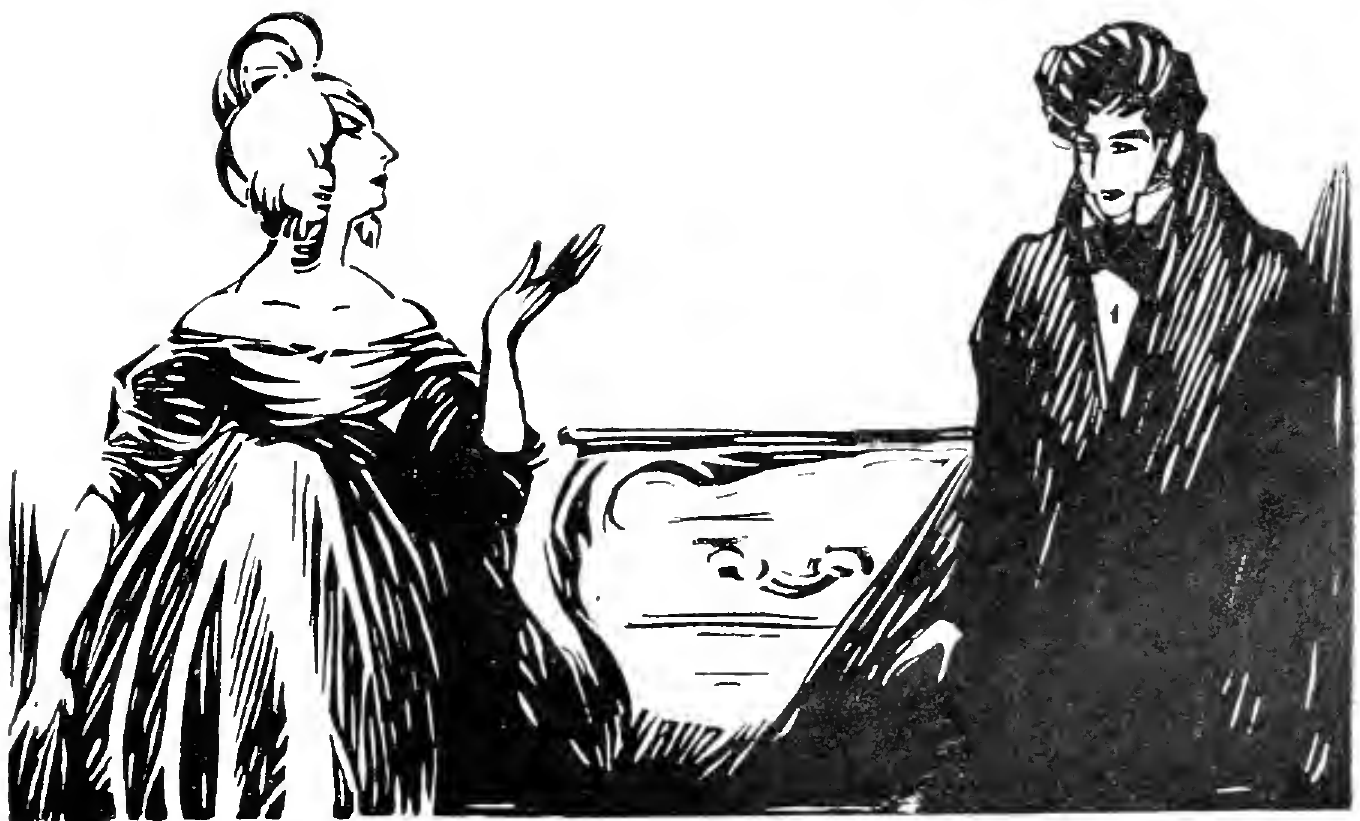
have any orders to give her father's secretary?" he said to her. He must listen to her orders and execute them with respect; but otherwise, he has not a word to address to her. He is not paid to communicate his thoughts to her.
This manner of being and the singular doubts Julien had made disappear the boredom he regularly found in this drawing room so magnificent, but where one was afraid of everything, and where it was not proper to joke about anything.
It would be amusing if she loved me! Whether she loves me or not, continued Julien, I have as my intimate confidante a girl of spirit, before whom I see the whole household tremble, and more than all the others, the Marquis de Croisenois. This young man so polite, so gentle, so brave, and who combines all the advantages of birth and fortune, any one of which would set my heart so much at ease! He is madly in love with her, he must marry her. How many letters M. de La Mole has had me write to the two notaries to arrange the contract! And I, who see myself so subordinate with pen in hand, two hours later, here in the garden, I triumph over this young man so amiable: for after all, the preferences are striking, direct. Perhaps too she hates in him a future husband. She has enough haughtiness for that. And the kindnesses she has for me, I obtain them in the capacity of subordinate confidant!
But no, either I am mad, or she is courting me; the more I show myself cold and respectful with her, the more she seeks me out. This could be a deliberate plan, an affectation; but I see her eyes come alive when I appear unexpectedly. Do the women of Paris know how to feign to that degree? What does it matter to me! I have appearances on my side, let us enjoy appearances. My God, how beautiful she is! How her large blue eyes please me, seen close, and looking at me as they often do! What a difference between this spring and that of last year, when I lived unhappily and sustained myself by force of character, amid those three hundred hypocrites, wicked and dirty! I was almost as wicked as they.
On days of mistrust: This young girl is mocking me, thought Julien. She is in league with her brother to mystify me. But she seems to despise so much the lack of energy of this brother! He is brave, and that is all, she says to me. He does not have a thought that dares depart from fashion. It is always I who am obliged to take his defense. A young girl of nineteen! At that age can one be faithful at every instant of the day to the hypocrisy one has prescribed for oneself?
On the other hand, when Mademoiselle de La Mole fixes her large blue eyes on me with a certain singular expression, always Count Norbert moves away. This is suspicious to me; should he not be indignant that his sister singles out a servant of their house? for I have heard the Duke de Chaulnes speak thus of me. At that memory anger replaced every other sentiment. Is it love of the old language in this manic duke?
Well, she is pretty! continued Julien with the glances of a tiger. I shall have her, I shall leave afterward, and woe to whoever disturbs me in my flight!
This idea became Julien's sole affair; he could no longer think of anything else. His days passed like hours.
At every instant, seeking to occupy himself with some serious matter, his thought abandoned everything, and he awoke a quarter of an hour later, his heart pounding, his head troubled, and dreaming of this idea: Does she love me?