
About this book
Julien Sorel climbs from sawmill to salon, torn between the red of the army and the black of the church. Stendhal's 1830 novel, free to read online.
AN EVENING IN THE COUNTRY
The Dido of M. Guérin, charming sketch!
Strombeck.
His glances the next day, when he saw Madame de Rênal again, were singular; he observed her as an enemy with whom he was going to have to fight. These glances, so different from those of the day before, made Madame de Rênal lose her head; she had been kind to him, and he appeared vexed. She could not detach her gaze from his.
--
The presence of Madame Derville allowed Julien to talk less and to occupy himself more with what was in his head. His sole concern throughout that whole day was to fortify himself by reading the inspired book that reinvigorated his soul.
He greatly shortened the children's lessons, and then, when Madame de Rênal's presence recalled him entirely to the care of his glory, he decided that she absolutely must permit that evening that his hand remain in hers.
The sun, setting and bringing the decisive moment nearer, made Julien's heart beat in a singular fashion. Night came. He observed, with a joy that lifted an immense weight from his chest, that it would be very dark. The sky, laden with great clouds driven by a very warm wind, seemed to announce a storm. The two friends walked for a very long time. Everything they did that evening seemed singular to Julien. They took pleasure in this weather which, for certain delicate souls, seems to increase the pleasure of loving.
They sat down at last, Madame de Rênal beside Julien, and Madame Derville near her friend. Preoccupied with what he was about to attempt, Julien could find nothing to say. The conversation languished.
"Shall I be as trembling and wretched at the first duel that comes to me?" Julien asked himself; for he had too much mistrust of himself and of others not to see the state of his soul.
In his mortal anguish, all dangers would have seemed preferable to him. How many times did he not wish that some matter would arise for Madame de Rênal that would oblige her to return to the house and leave the garden! The violence Julien was obliged to do himself was too strong for his voice not to be profoundly altered; soon Madame de Rênal's voice became tremulous also, but Julien did not notice it. The dreadful combat that duty waged against timidity was too painful for him to be in a state to observe anything outside himself. Three quarters past nine had just struck on the château clock, without his having yet dared anything. Julien, indignant at his cowardice, said to himself: At the precise moment when ten o'clock strikes, I shall carry out what, throughout the whole day, I promised myself to do this evening, or I shall go up to my room and blow my brains out.
After a final moment of waiting and anxiety, during which the excess of emotion had put Julien, as it were, beside himself, ten o'clock struck from the clock above his head. Each stroke of that fatal bell resounded in his breast and produced there something like a physical movement.At last, as the final stroke of ten was still ringing,
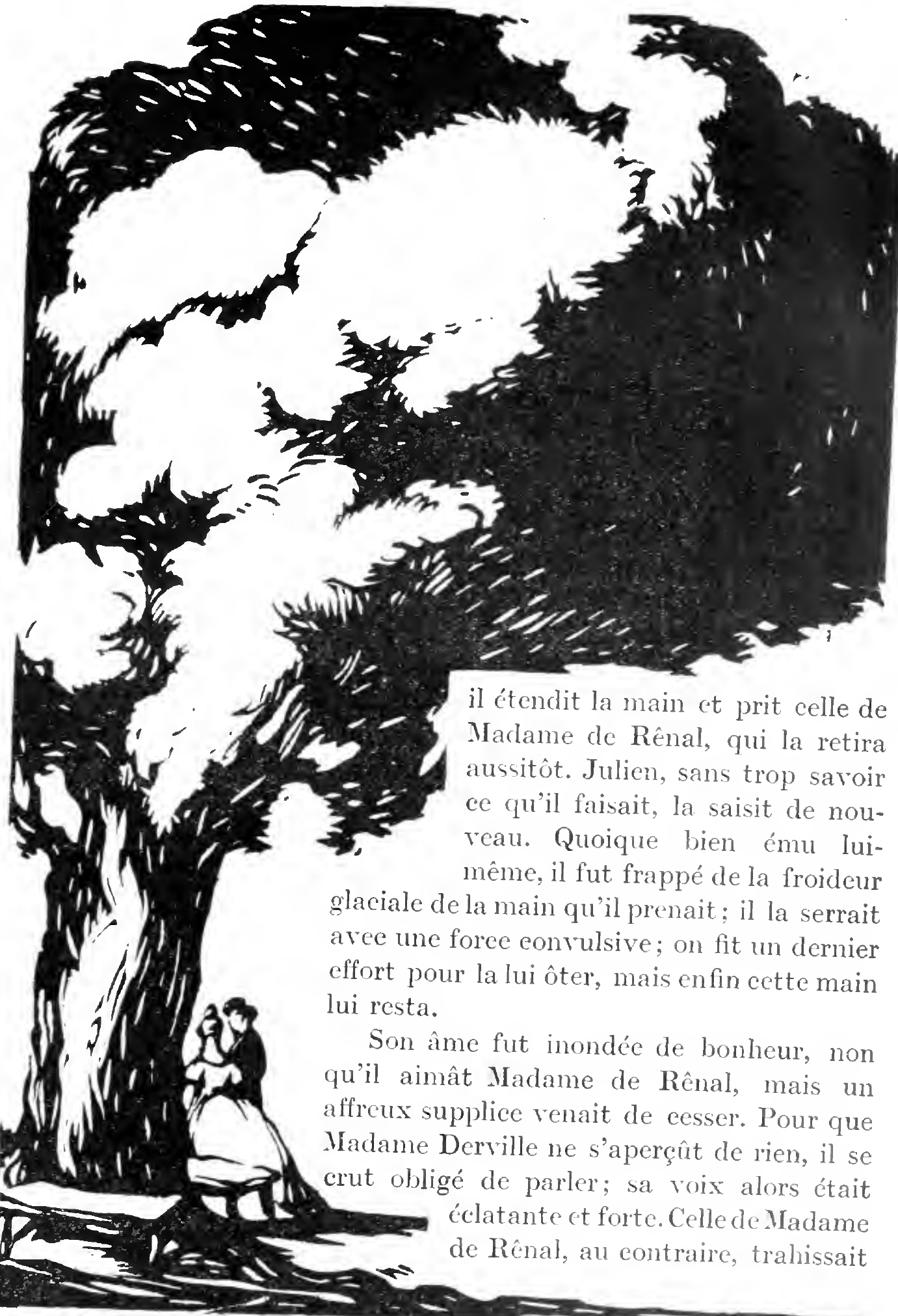
he felt so much emotion thathis friend thought him ill, and suggested that they go back inside. Julien sensed the danger: If Madame de Rênal goes back into the drawing room, I shall fall back into the dreadful position in which I have spent the day. I have held this hand too short a time for it to count as an advantage I have won.
At the moment when Madame Derville renewed her suggestion that they return to the drawing room, Julien pressed hard the hand that was abandoned to him.
Madame de Rênal, who was already rising, sat down again, saying, in a dying voice:
"I do feel, in truth, a little unwell, but the fresh air does me good."
These words confirmed Julien's happiness, which at that moment was extreme: he spoke, he forgot to dissemble, he appeared the most amiable of men to the two friends who were listening to him. Yet there was still a little lack of courage in this eloquence that came to him all at once. He was mortally afraid that Madame Derville, wearied by the wind that was beginning to rise and that preceded the storm, would want to return alone to the drawing room. Then he would have been left tête-à-tête with Madame de Rênal. He had had almost by chance the blind courage that suffices for action; but he felt it was beyond his power to say the simplest word to Madame de Rênal. However light her reproaches might be, he would be defeated, and the advantage he had just obtained annihilated.
Fortunately for him, that evening his touching and emphatic speeches found favor in the eyes of Madame Derville, who very often found him awkward as a child, and not very amusing. As for Madame de Rênal, with her hand in Julien's, she was thinking of nothing; she was letting herself live. The hours spent under that great lime tree, which local tradition says was planted by Charles the Bold, were for her an epoch of happiness. She listened with delight to the moaning of the wind in the thick foliage of the lime, and to the sound of a few rare drops that were beginning to fall on its lowest leaves. Julien did not notice a circumstance that would have greatly reassured him: Madame de Rênal, who had been obliged to take her hand from him because she rose to help her cousin lift a vase of flowers that the wind had just overturned at their feet, had scarcely sat down again when she gave him back her hand almost without difficulty, and as if it had already been an agreed thing between them.
Midnight had struck long since; at last they had to leave the garden: they parted. Madame de Rênal, transported with the happiness ofloving, was so ignorant that she made almost no reproach to herself. Happiness robbed her of sleep. A leaden sleep took possession of Julien, mortally weary from the combats that all day long timidity and pride had waged in his heart.
The next day he was awakened at five o'clock; and, what would have been cruel to Madame de Rênal had she known it, he scarcely gave her a thought. He had done his duty, and a heroic duty. Filled with happiness by this feeling, he locked himself in his room and gave himself up with an entirely new pleasure to reading of the exploits of his hero.
When the bell for breakfast was heard, he had forgotten, in reading the bulletins of the Grand Army, all his advantages of the day before. He said to himself, in a light tone, as he went down to the drawing room: I must tell that woman that I love her.
Instead of the glances charged with voluptuousness that he expected to meet, he found the severe face of M. de Rênal, who, having arrived two hours earlier from Verrières, did not conceal his displeasure that Julien should spend the whole morning without attending to the children. Nothing was so ugly as this important man, out of temper and believing he had the right to show it.
Each sour word of her husband pierced Madame de Rênal's heart. As for Julien, he was so plunged in ecstasy, still so occupied with the great things that for several hourshad been passing before his eyes, that at first he could scarcely lower his attention enough to listen to the harsh remarks M. de Rênal addressed to him. He said to him at last, rather abruptly:
"I was ill."
The tone of this answer would have stung a man far less susceptible than the mayor of Verrières; he had some idea of answering Julien by dismissing him on the spot. He was restrained only by the maxim he had made for himself never to be too hasty in business.
This young fool, he soon said to himself, has made himself a sort of reputation in my house; Valenod may take him into his own, or he may marry Élisa, and in either case, in the depths of his heart, he may laugh at me.
Despite the wisdom of his reflections, M. de Rênal's discontent nonetheless burst forth in a series of coarse words that gradually irritated Julien. Madame de Rênal was on the point of dissolving in tears. Scarcely was breakfast over when she asked Julien to give her his arm for the walk; she leaned on him affectionately. To all that Madame de Rênal said to him, Julien could only reply in a half-voice:
"These are rich people for you!"
M. de Rênal was walking very near them; his presence increased Julien's anger. He suddenly noticed that Madame de Rênal was leaning on his arm in a marked manner; this movement filled him with horror, he pushed her away violently and freed his arm.
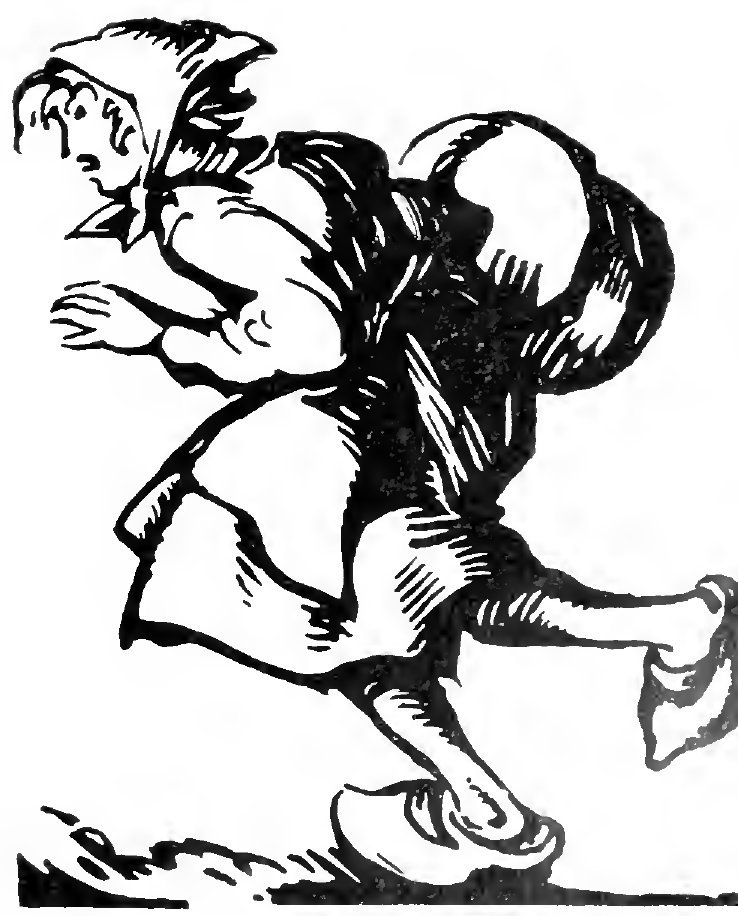
Fortunately M. de Rênal did not see this new impertinence; it was noticed only by Madame Derville; her friend was dissolving in tears. At that moment M. de Rênal began to pursue with stones a little peasant girl who had taken an unlawful path and was crossing a corner of the orchard. "Monsieur Julien, for pity's sake, control yourself; remember that we all have our moments of honor," Madame Derville said quickly.
Julien looked at her coldly with eyes in which the most sovereign contempt was depicted.
This look astonished Madame Derville, and would have surprised her far more if she had guessed its true expression; she would have read in it something like a vague hope of the most atrocious vengeance. It is doubtless such moments of humiliation that have made the Robespierres.
"Your Julien is very violent, he frightens me," Madame Derville said in a low voice to her friend.
"He is right to be angry," the latter replied.
"After the astonishing progress he has made the children make, what does it matter if he spends a morning without speaking to them; we must admit that men are very hard."
For the first time in her life, Madame de Rênal felt a sort of desire for vengeance against her husband. The extreme hatred that animated Julien against the rich was about to burst forth. Fortunately M. de Rênal called his gardener, and remained occupied with him in blocking, with bundles of thorns, the unlawful path across the orchard. Julien did not answera single word to the attentions of which he was the object during the rest of the walk. Scarcely had M. de Rênal moved away when the two friends, claiming to be tired, each asked him for an arm.
Between these two women, whose cheeks an extreme agitation covered with redness and embarrassment, Julien's haughty pallor and somber, decided air formed a strange contrast. He despised these women, and all tender feelings.
What! he said to himself, not even five hundred francs a year to finish my studies! Ah! how I would send them packing!
Absorbed in these severe ideas, the little he deigned to understand of the obliging words of the two friends displeased him as empty of meaning, silly, weak, in a word, feminine.
By dint of talking for talking's sake, and of trying to keep the conversation alive, Madame de Rênal happened to say that her husband had come from Verrières because he had made a deal, for corn straw, with one of his tenants. (In that country, it is with corn straw that the ticks of the beds are stuffed.)
"My husband will not be joining us," added Madame de Rênal; "with the gardener and his valet de chambre, he is going to see about finishing the renewing of the house's ticks. This morning he put corn straw into all the beds on the first floor; now he is on the second."
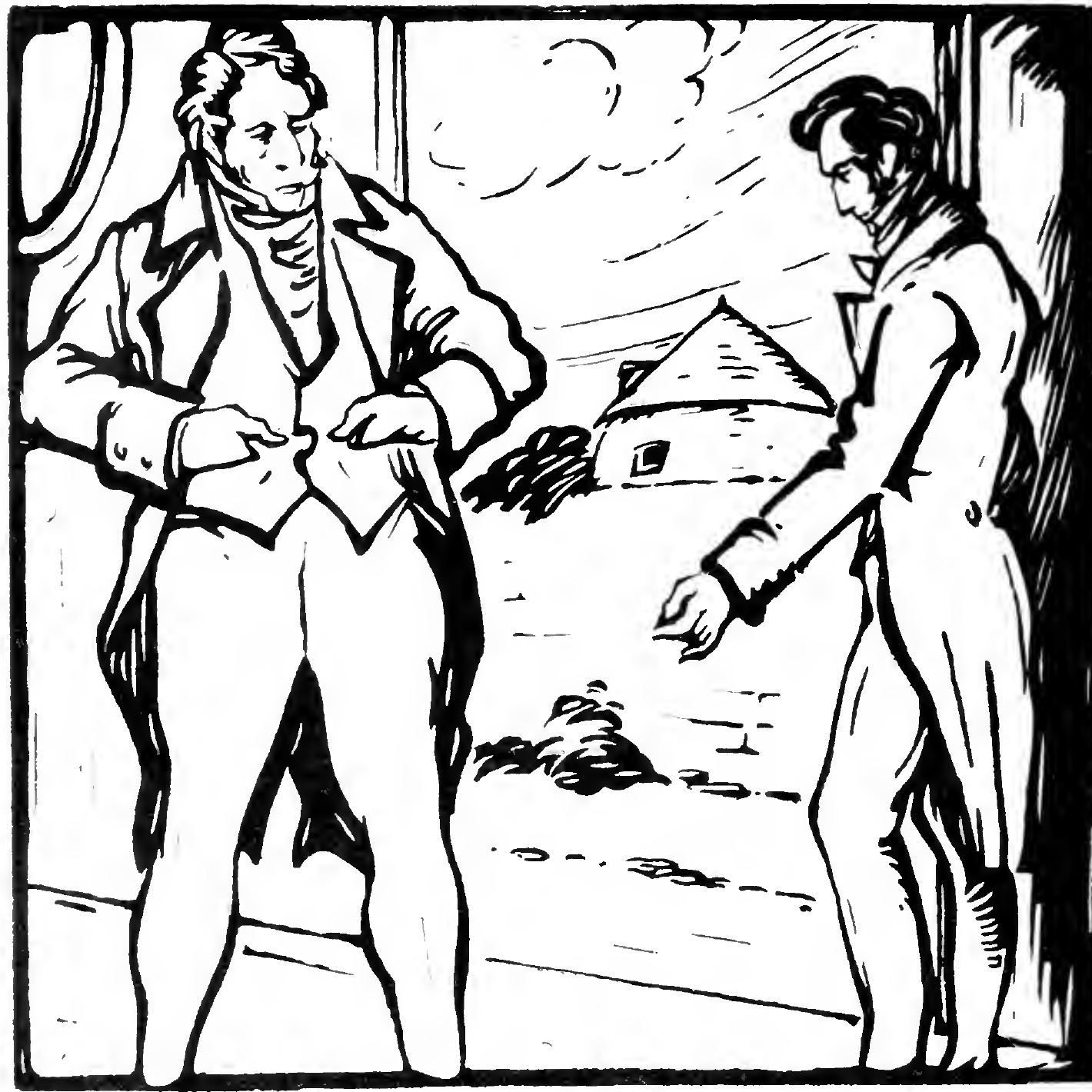
Julien changed color; he looked at Madame de Rênal in a singular manner, and soon took her aside, as it were, by quickening his pace. Madame Derville let them move away.
"Save my life," said Julien to Madame de Rênal, "you alone can do it; for you know that the valet de chambre hates me to death. I must confess to you, Madame, that I have a portrait; I have hidden it in the tick of my bed."
At that word, Madame de Rênal turned pale in her turn.
"You alone, Madame, can at this moment enter my room; feel about, without its showing, in the corner of the tick that is nearest the window, you will find there a little box of smooth black cardboard.
"It contains a portrait?" said Madame de Rênal, scarcely able to stand upright.
Her air of discouragement was perceived by Julien, who at once took advantage of it.
"I have a second favor to ask of you, Madame: I beseech you not to look at that portrait, it is my secret."
"It is a secret!" repeated Madame de Rênal, in a faint voice.
But, although raised among people proud of their fortune, and sensitive only to the interest of money, love had already put generosity into this soul. Cruelly wounded, it was with the air of the simplest devotion that Madame de Rênal asked Julien the questions necessary to be able to acquit herself well of her commission.
Thus, she said to him as she moved away, a small round box, of black cardboard, very smooth.
"Yes, Madame," replied Julien, with that hard air that danger gives to men.
She went up to the second floor of the château, pale as if she had gone to her death. To crown her misery she felt that she was on the point of fainting; but the necessity of rendering a service to Julien gave her back her strength.
"I must have that box," she said to herself, quickening her step.
She heard her husband talking to the valet, in Julien's own room. Fortunately they passed into the children's room. She lifted the mattress and plunged her hand into the straw with such violence that she scratched her fingers. But although keenly sensitive to little pains of this kind, she did not notice this one, for almost at the same moment she felt the smooth surface of the cardboard box. She seized it and disappeared.
Hardly was she delivered from the fear of being surprised by her husband, than the horror that this box caused her was on the point of making her decidedly faint.
"So Julien is in love, and I hold here the portrait of the woman he loves!"
Seated on a chair in the anteroom of that apartment, Madame de Rênal was a prey to all the horrors of jealousy. Her extreme ignorance was still of use to her at this moment; astonishment tempered the pain. Julien appeared, seized the box, without thanking her, without saying anything, and ran to his room, where he made a fire and burned it instantly. He was pale, annihilated; he exaggerated to himself the extent of the danger he had just run.
"The portrait of Napoleon," he said to himself, shaking his head, "found hidden in the house of a man who professes such hatred for the usurper! found by M. de Rênal, so ultra and so irritated! and to crown my imprudence, on the white cardboard, behind the portrait, lines written in my own hand! and which can leave no doubt as to the excess of my admiration! and each of these transports of love is dated! there are some from the day before yesterday.
"All my reputation fallen, annihilated in a moment!" said Julien to himself, as he watched the box burn, "and my reputation is all my wealth; I live only by it... and yet, what a life, great God!"
An hour later, the fatigue and the pity he felt for himself disposed him to tenderness. He met Madame de Rênal and took her hand, which he kissed with more sincerity than he had ever done. She blushed with happiness, and almost at the same instant repulsed Julien with the anger of jealousy. Julien's pride, so recently wounded, made a fool of him at that moment. He saw in Madame de Rênal only a rich woman; he let her hand fall with disdain and moved away. He went to walk, pensive, in the garden; soon a bitter smile appeared on his lips.
"I walk here, tranquil as a man master of his time! I do not occupy myself with the children! I expose myself to M. de Rênal's humiliating words, and he will be right." He ran to the children's room.
The caresses of the youngest, whom he loved very much, calmed a little his smarting pain.
"That one does not despise me yet," thought Julien. But soon he reproached himself for this diminution of pain as a new weakness. "These children caress me as they would caress the young hunting dog that was bought yesterday."
X