About this book
Julien Sorel climbs from sawmill to salon, torn between the red of the army and the black of the church. Stendhal's 1830 novel, free to read online.
THE SEMINARY
Three hundred and thirty-six dinners at 85 centimes, three hundred and thirty-six suppers at 58 centimes, chocolate to whom it is due; how much is there to be gained on the contract?
LE VALENOD of Besançon.
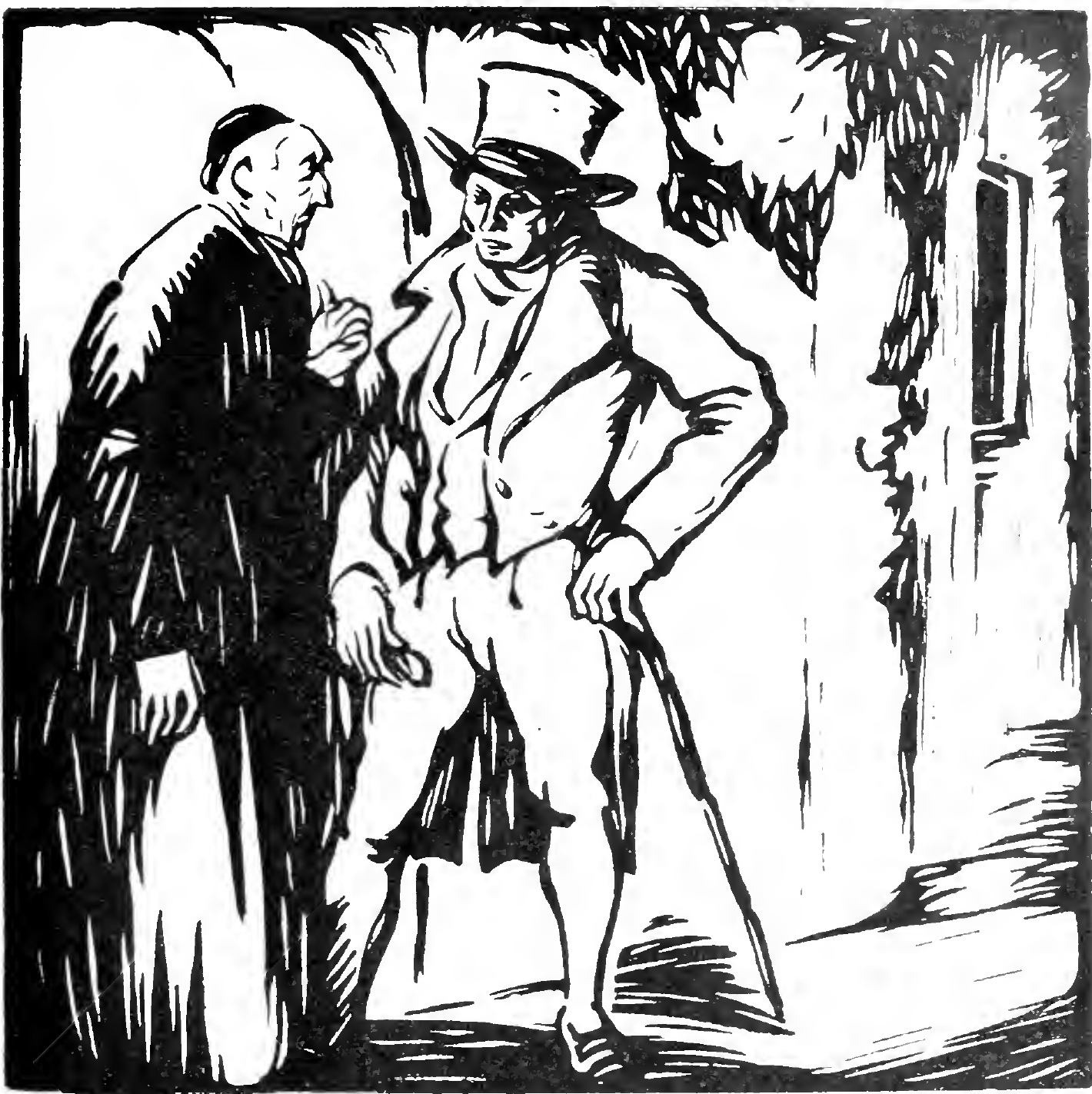
He saw from afar the gilt iron cross on the door; he approached slowly; his legs seemed to give way beneath him. So this is that hell on earth, from which I shall not be able to escape! At last he made up his mind to ring. The sound of the bell echoed as in a solitary place. After ten minutes, a pale man, dressed in black, came to open the door for him.Julien looked at him and at once lowered his eyes. This porter had a singular physiognomy. The protruding green pupil of his eyes was rounded like that of a cat; the motionless contours of his eyelids announced the impossibility of all sympathy; his thin lips opened in a semicircle over teeth that protruded. Yet this physiognomy showed not crime, but rather that perfect insensibility which inspires far more terror in the young. The only sentiment that Julien's swift glance could divine on that long devotee's face was a profound contempt for everything one might wish to say to him which should not be the interest of heaven.
Julien raised his eyes with effort, and in a voice made tremulous by the beating of his heart, he explained that he wished to speak to M. Pirard, the director of the seminary. Without saying a word, the black man signed to him to follow. They went up two flights by a broad staircase with a wooden railing, whose warped steps sloped entirely toward the side opposite the wall, and seemed ready to fall. A little door, surmounted by a large cemetery cross of white wood painted black, was opened with difficulty, and the porter made him enter a dark, low room, whose whitewashed walls were furnished with two large pictures blackened by time. There Julien was left alone; he was overwhelmed, his heart beat violently; he would have been happy to dare to weep. A deathlike silence reigned throughout the house.
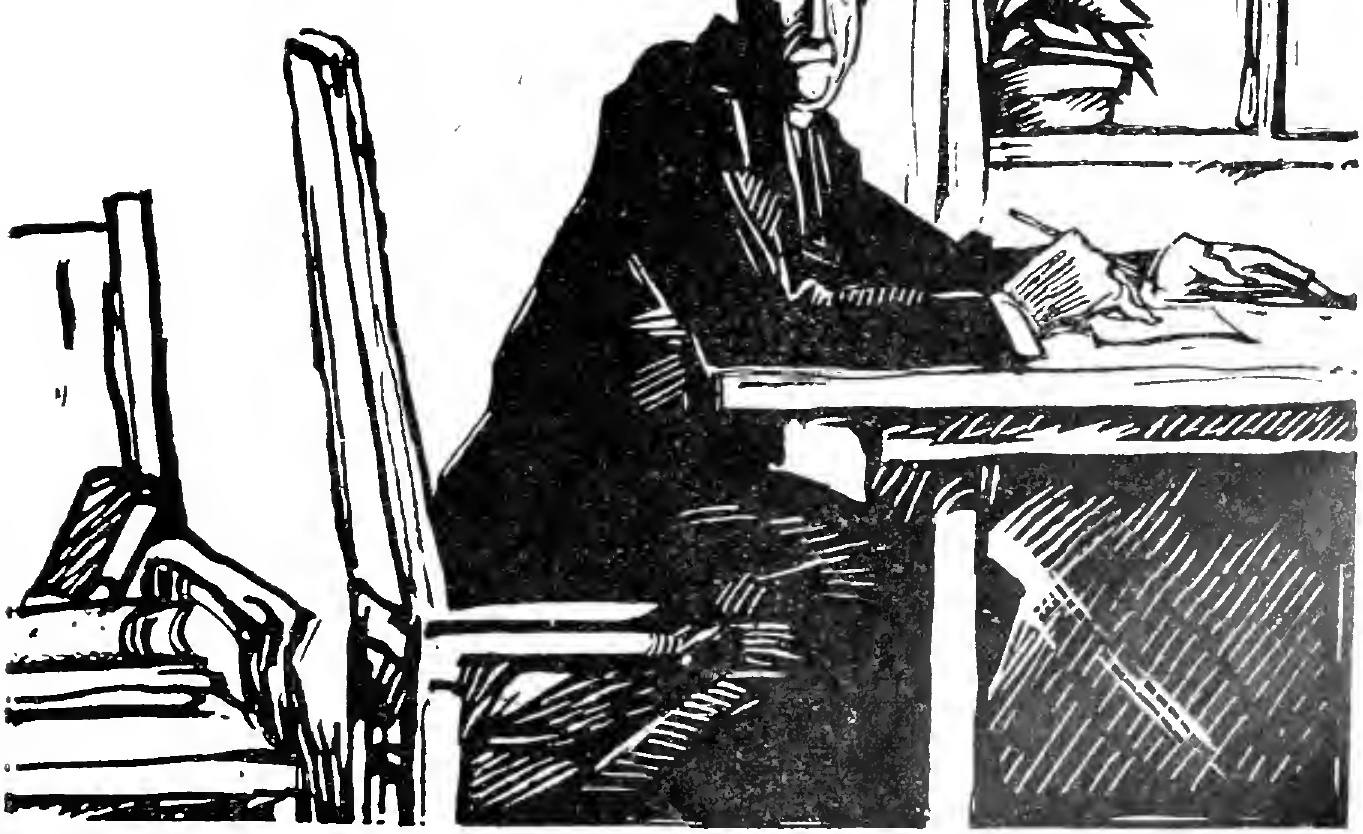
At the end of a quarter of an hour, which seemed to him a day, the porter with the sinister face reappeared on the threshold of a door at the other end of the room, and, without deigning to speak, signed to him to come forward. He entered a room still larger than the first and very badly lighted. The walls were also whitewashed: but there was no furniture. Only in a corner near the door, Julien saw in passing a bed of white wood, two straw chairs, and a small armchair of pine planks without a cushion. At the other end of the room, near a little window with yellowed panes, furnished with flower vases kept dirtily, he perceived a man seated before a table and covered with a dilapidated soutane; he looked angry, and was taking one after another a crowd of little squares of paper which he arranged on his table after having written a few words on them. He did not notice Julien's presence. The latter stood motionless, upright toward the middle of the room, where the porter had left him, and who had gone out again closing the door.
Ten minutes passed thus: the ill-clad man was still writing. Julien's emotion and terror were such that it seemed to him he wason the point of falling. A philosopher would perhaps have said, and perhaps mistakenly: It is the violent impression of the ugly on a soul made to love what is beautiful.
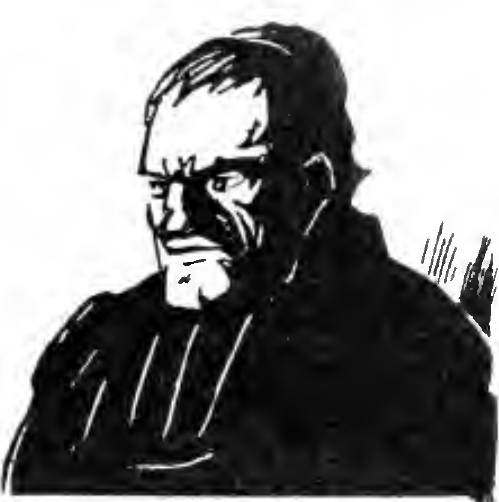
The man who was writing raised his head; Julien noticed it only after a moment, and even after having seen him, he still remained motionless as if struck dead by the terrible gaze of which he was the object. Julien's troubled eyes barely distinguished a long face entirely covered with red blotches, except on the forehead, which showed a mortal pallor. Between those red cheeks and that white forehead shone two little black eyes made to frighten the bravest. The vast contours of that forehead were marked by thick, flat hair of jet black.
"Do you wish to come nearer, yes or no?" this man said at last with impatience.
Julien advanced with an unsteady step, and at last, near falling and pale as he had never been in his life, he stopped three paces from the little white wooden table covered with squares of paper.
"Closer," said the man.
Julien stepped forward again, extending his hand, as though seeking something to lean on.
"Your name?"
"Julien Sorel."
"You have taken your time," he said, fixing his terrible eye upon him once more.
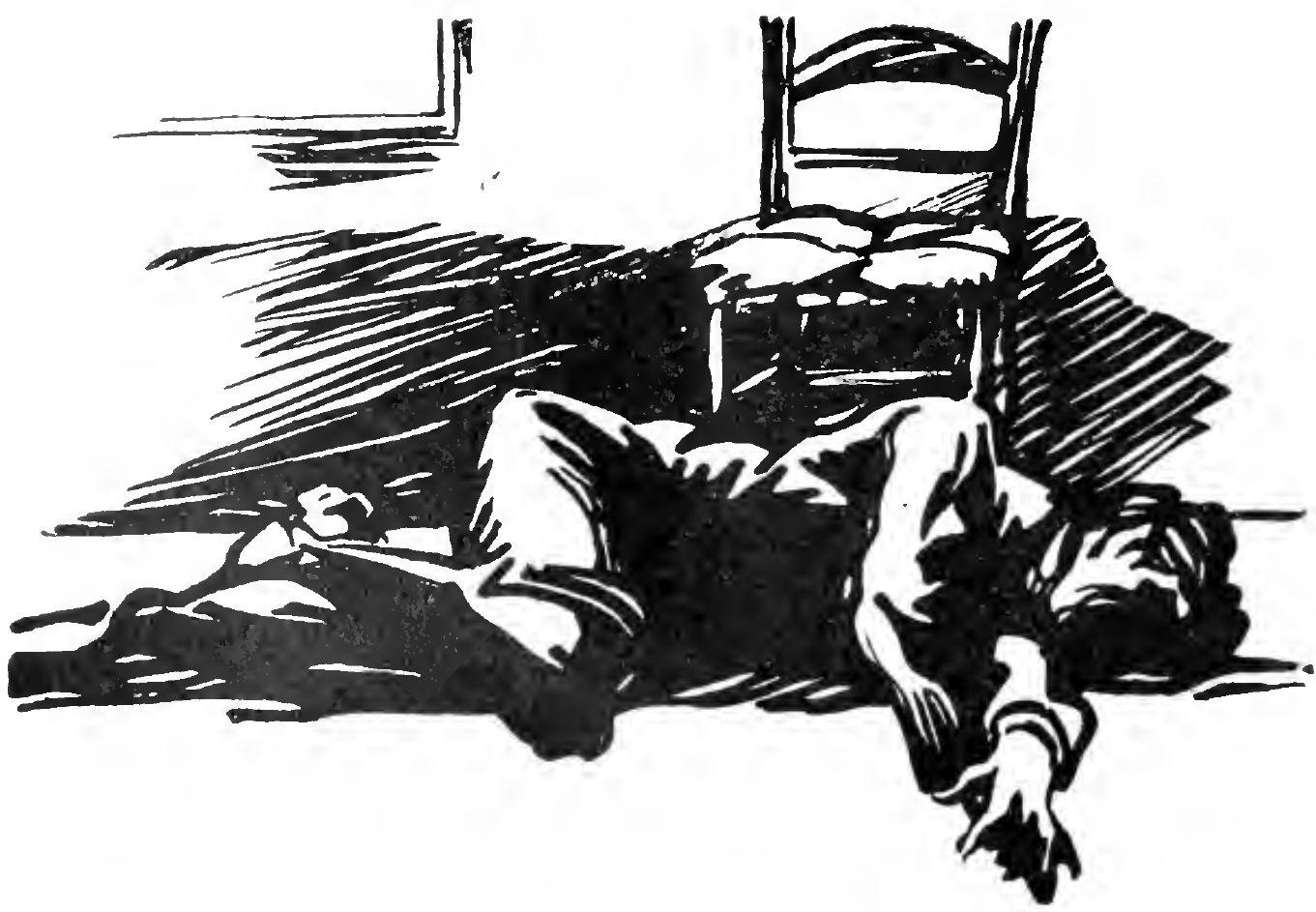
Julien could not bear that gaze; extending his hand as if to steady himself, he fell at full length upon the floor.
The man rang. Julien had lost only the use of his eyes and the power of movement; he heard footsteps approaching.
He was lifted up and placed on the small white wooden chair. He heard the terrible man saying to the porter:
"He is falling down in a fit, apparently; that was all we needed."
When Julien was able to open his eyes, the man with the red face was still writing; the porter had disappeared. One must have courage, said our hero to himself, and above all hide what I feel: he was suffering from a violent nausea; if something happens to me, God knows what they will think of me. At last the man stopped writing, and looking at Julien sideways:
"Are you in a fit state to answer me?"
"Yes, Monsieur," said Julien in a weakened voice.
"Ah! that is fortunate."
The black-clad man had half risen and was impatiently searching for a letter in the drawer of his pine table, which opened with a creak. He found it, sat down slowly, and looking at Julien again, with an air that would have wrung from him the little life that remained to him:
— You have been recommended to me by M. Chélan; he was the best curate in the diocese, a virtuous man if ever there was one, and my friend these thirty years.
— Ah! it is to Monsieur Pirard that I have the honour of speaking, said Julien in a dying voice.
— Apparently, replied the director of the seminary, looking at him ill-humouredly.
There was a redoubling of brightness in his little eyes, followed by an involuntary movement of the muscles at the corners of his mouth. It was the physiognomy of the tiger savouring in advance the pleasure of devouring his prey.
— Chélan's letter is short, he said, as though speaking to himself. Intelligenti pauca; in these days one cannot write too little. He read aloud:
"I send you Julien Sorel, of this parish, whom I baptized 'nearly twenty years ago; son of a rich carpenter, but who 'gives him nothing. Julien will be a remark- 'able worker in the vineyard of the Lord. Me- 'mory and intelligence are not lacking; there is 'reflection. Will his vocation be 'lasting? is it sincere?"
— Sincere! repeated the abbé Girard in an astonished tone, and looking at Julien; but already the abbé's gaze was less devoid of all humanity; sincere! he repeated, lowering his voice and resuming his reading:
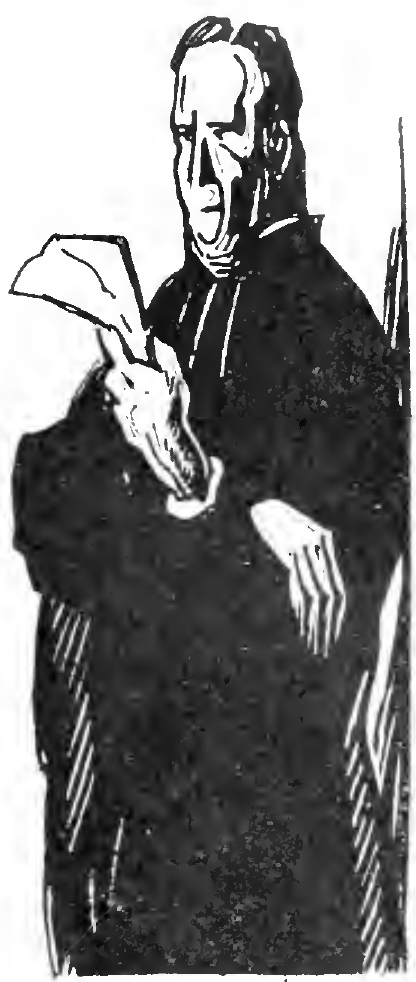
"I ask of you for Julien Sorel a 'scholarship; he will deserve it by undergoing the necessary exa- 'minations. I have shown him a little 'theology, of that old and good theology 'of the Bossuets, the Arnaulds, the Fleurys. If this 'subject does not suit you, send him back to me; 'the director of the almshouse, whom you 'know well, offers him eight hundred francs 'to be tutor to his children. — My 'household is at peace, thanks be to God. I am becoming accustomed to the 'terrible blow. Vale et me ama."
The abbé Girard, slowing his voice as he read the signature, pronounced the word Chélan with a sigh.
— He is at peace, he said; indeed, his virtue deserved this reward; may God grant it to me, should the case arise! He looked at the sky and made the sign of the cross. At the sight of this sacred sign, Julien felt the deep horror which, since his entry into this house, had frozen him, diminish.
— I have here three hundred and twenty-one aspirants to the holiest state, said the abbé Girard at last, in a voice that was severe but not unkind; seven or eight only are recommended to me by men such as the abbé Chélan; thus among the three hundred and twenty-one, you are about to be the ninth. But my protection is neither favour nor weakness, it is a redoubling of care and severity against vice. Go and lock that door.
Julien made an effort to walk and succeeded in not falling. He noticed that a small window, near the entrance door, looked out on the countryside. He looked at the trees; the sight did him good, as though he had caught sight of old friends.
— Loquerisne linguam latinam (Do you speak Latin)? the abbé Girard asked him, as he returned.
— Ita, pater optime (yes, my excellent father), replied Julien, coming a little to himself. Certainly, never had a man in the world appeared to him less excellent than M. Pirard, for the past half-hour.
The conversation continued in Latin. The expression in the abbé's eyes was softening; Julien was recovering some composure. How weak I am, he thought, to let myself be imposed upon by these appearances of virtue! this man will be simply a rogue like M. Maslon; and Julien congratulated himself on having hidden almost all his money in his boots.
The abbé Pirard examined Julien on theology; he was surprised at the extent of his knowledge. His astonishment increased when he questioned him in particular on the Holy Scriptures. But when he came to questions on the doctrine of the Fathers, he perceived that Julien was almost ignorant even of the names of Saint Jerome, Saint Augustine, Saint Bonaventure, Saint Basil, etc., etc.
In fact, thought the abbé Pirard, here indeed is that fatal tendency toward Protestantism which I have always reproached Chélan with. A profound and too profound knowledge of the Holy Scriptures.
(Julien had just spoken to him, without being questioned on the subject, of the true period at which Genesis, the Pentateuch, etc., had been written.)
To what does this endless reasoning on the Holy Scriptures lead, thought the abbé Pirard, if not to private examination, that is to say, to the most frightful Protestantism? And alongside this imprudent science, nothing on the Fathers that can compensate for this tendency.
But the astonishment of the director of the seminary knew no bounds when, questioning Julien on the authority of the pope, and expecting the maxims of the old Gallican Church, the young man recited to him the whole book of M. de Maistre.
A singular man, this Chélan, thought the abbé Pirard; did he show him this book to teach him to mock it?
It was in vain that he questioned Julien to try to guess whether he seriously believed in the doctrine of M. de Maistre. The young man answered only with his memory. From this moment, Julien was truly very good; he felt that he was master of himself. After a very long examination, it seemed to him that M. Pirard's severity toward him was no longer anything but affected. Indeed, without the principles of austere gravity which, for fifteen years, he had imposed upon himself toward his theology students, the director of the seminary would have embraced Julien in the name of logic, so much clarity, precision and lucidity did he find in his answers.
:
There is a bold and healthy mind, he said to himself, but corpus debile (the body is weak).
— Do you often fall like that? he said to Julien in French, pointing with his finger to the floor.
— It is the first time in my life; the porter's face had frozen me, added Julien, blushing like a child.
The abbé Pirard almost smiled.
— Such is the effect of the vain pomp of the world; you are accustomed, apparently, to smiling faces, veritable theatres of
lies. Truth is austere, Monsieur. But is our task here below not austere also? You will have to see to it that your conscience stands on guard against this weakness: Too much sensibility to the vain graces of the exterior.
If you had not been recommended to me, said the abbé Pirard, resuming the Latin tongue with marked pleasure, if you had not been recommended to me by a man such as the abbé Chélan, I should speak to you the vain language of this world to which it appears you are too accustomed. The entire scholarship you solicit, I would tell you, is the most difficult thing in the world to obtain. But the abbé Chélan would have deserved very little, by fifty-six years of apostolic labours, if he could not dispose of a scholarship at the seminary.
After these words, the abbé Pirard recommended Julien to enter no society or secret congregation without his consent.
— I give you my word of honour, said Julien with the open-heartedness of an honest man.
The director of the seminary smiled for the first time.
— That word is not in place here, he told him, it recalls too much the vain honour of men of the world which leads them to so many faults, and often to crimes. You owe me obedience by virtue of paragraph seventeen of the bull Unam Ecclesiam of Saint Pius V. I am your ecclesiastical superior. In this house, to hear, my very dear son, is to obey. How much money do you have?
(Here we are, said Julien to himself, it was for this that he said very dear son.)
“Thirty-five francs, Father.”
“Write down carefully what you do with this money; you will have to give me an account of it.”
This painful session had lasted three hours. Julien called the porter.
“Go and install Julien Sorel in cell no. 103,” Abbé Pirard said to the man.
By a great distinction, he was granting Julien separate quarters.
“Take his trunk there,” he added.
Julien lowered his eyes and recognized his trunk precisely in front of him; he had been looking at it for three hours and had not recognized it.
On arriving at no. 103, which was a little room eight feet square, on the top floor of the house, Julien noticed that it looked out onto the ramparts, and beyond them could be seen the pretty plain that the Doubs separates from the town.
“What a charming view!” Julien exclaimed; as he spoke thus, he did not feel what those words expressed. The sensations so violent that he had experienced since his short time in Besançon had entirely exhausted his strength. He sat down near the window on the only wooden chair in his cell and immediately fell into a deep sleep. He did not hear the bell for supper, nor the bell for the Angelus; he had been forgotten.
When the first rays of the sun woke him the next morning, he found himself lying on the floor.