About this book
Julien Sorel climbs from sawmill to salon, torn between the red of the army and the black of the church. Stendhal's 1830 novel, free to read online.
THE FIRST PROMOTION
He has known his century, he has known his department, and he is rich.
THE PRECURSOR.
JULIEN had not yet recovered from the deep reverie into which the event at the cathedral had plunged him, when one morning the severe Abbé Pirard sent for him.
"Here is Abbé Chas-Bernard writing to me in your favor. I am fairly pleased with the whole of your conduct. You are extremely imprudent and thoughtless, without it showing; nevertheless, up to now, your heart is good and even generous; your mind is superior. On the whole, I see in you a spark that must not be neglected.
After fifteen years of labor, I am on the point of leaving this house: my crime is having left the seminarians to their free will, and having neither protected nor served that secret society of which you spoke to me in the tribunal of penitence. Before leaving, I wish to do something for you; I would have acted two months earlier, for you deserve it, without the denunciation based on the address of Amanda Binet, found among your belongings. I am making you tutor for the New and the Old Testament."
Julien, transported with gratitude, had the idea of throwing himself on his knees and thanking God; but he yielded to a truer impulse. He approached Abbé Pirard and took his hand, which he carried to his lips.
"What is this?" cried the director with an angry air; but Julien's eyes said even more than his action.
Abbé Pirard looked at him with astonishment, like a man who, for many long years, has lost the habit of encountering delicate emotions. This attention betrayed the director; his voice altered.
"Well then! yes, my child, I am attached to you. Heaven knows it is very much against my will. I ought to be just, and have neither hatred nor love for anyone. Your career will be painful. I see in you something that offends the vulgar. Jealousy and calumny will pursue you. In whatever place Providence puts you, your companions will never see you without hating you; and if they pretend to love you, it will be to betray you more surely. There is only one remedy for that: have recourse only to God, who has given you, to punish you for your presumptuousness, this necessity of being hated; let your conduct be pure; that is the only resource I see for you. If you hold to the truth with an invincible embrace, sooner or later your enemies will be confounded."
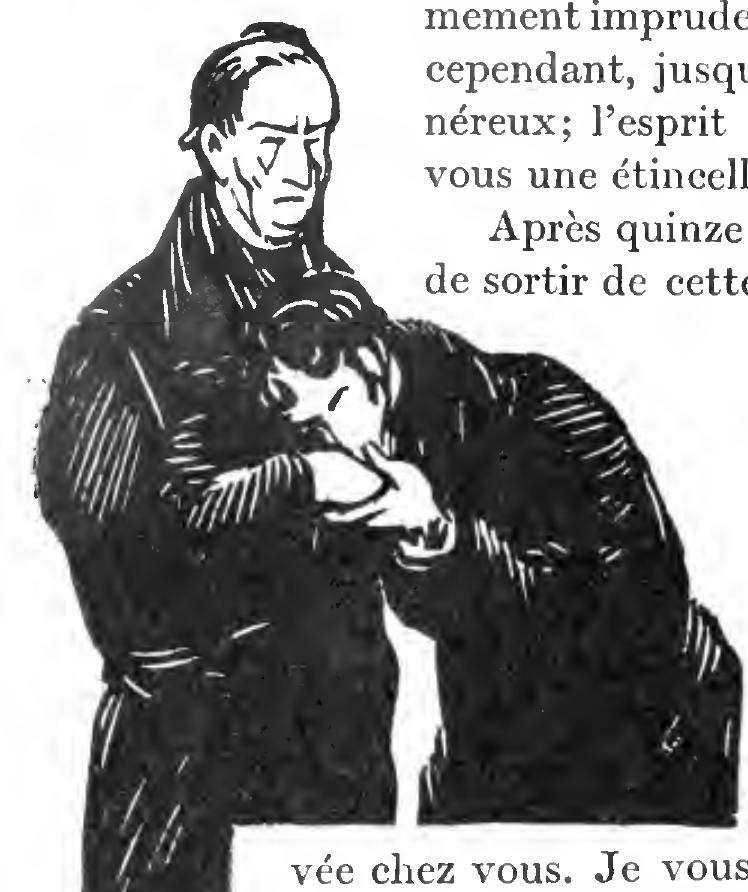
It had been so long since Julien had heard a friendly voice that one must forgive him a weakness: he dissolved in tears. Abbé Pirard opened his arms to him; this moment was very sweet for both of them.
Julien was mad with joy; this promotion was the first he had obtained; the advantages were immense. To conceive of them, one must have been condemned to spend entire months without a single moment of solitude, and in immediate contact with comrades at the very least troublesome, and most of them intolerable. Their cries alone would have sufficed to bring disorder into a delicate organization. The noisy joy of these well-fed and well-dressed peasants did not know how to enjoy itself; they did not believe it complete until they shouted with all the force of their lungs.
Now Julien dined alone, or nearly so, an hour later than the other seminarians. He had a key to the garden, and could walk there at the hours when it was deserted.
To his great astonishment, Julien noticed that he was hated less; he had expected, on the contrary, a redoubling of hatred. That secret desire that no one speak to him, which was too obvious and had earned him so many enemies, was no longer a mark of ridiculous haughtiness. In the eyes of the coarse beings who surrounded him, it was a just sense of his dignity. Hatred diminished noticeably, especially among the youngest of his comrades, who had become his pupils, and whom he treated with great politeness. Little by little he even had supporters; it became bad form to call him Martin Luther.
But what is the point of naming one's friends, one's enemies? All that is ugly, and all the more ugly the truer the intent. Yet these are the only moral teachers the people have, and without them what would become of them? Could the newspaper ever replace the curé?
Since Julien's new dignity, the director of the seminary affected never to speak to him without witnesses. There was prudence in this conduct for the master as well as for the disciple; but above all there was a test. The invariable principle of the severe Jansenist Pirard was: If a man has merit in your eyes, put obstacles in the way of everything he desires, everything he undertakes. If the merit is real, he will know well how to overturn or turn aside the obstacles.
It was the hunting season. Fouqué had the idea of sending to the seminary a stag and a wild boar on behalf of Julien's parents. The dead animals were placed in the passage between the kitchen and the refectory. It was there that all the seminarians saw them on their way to dinner. It was a great object of curiosity. The wild boar, dead as it was, frightened the youngest; they touched its tusks. For eight days nothing else was spoken of.
This gift, which placed Julien's family in the class of society that must be respected, dealt a mortal blow to envy. It was a superiority consecrated by fortune. Chazel and the most distinguished of the seminarians made advances to him, and would almost have complained to him that he had not warned them of his parents' fortune, and had thus exposed them to showing a lack of respect for money.
There was a conscription from which Julien was exempted in his capacity as a seminarian. This circumstance moved him deeply. So the moment was forever past when, twenty years earlier, a heroic life would have begun for me!
He was walking alone in the seminary garden when he heard some masons who were working on the boundary wall talking among themselves.
"— Well then! we've got to go, here's a new conscription.
— In the other one's time, those were the days! A mason became
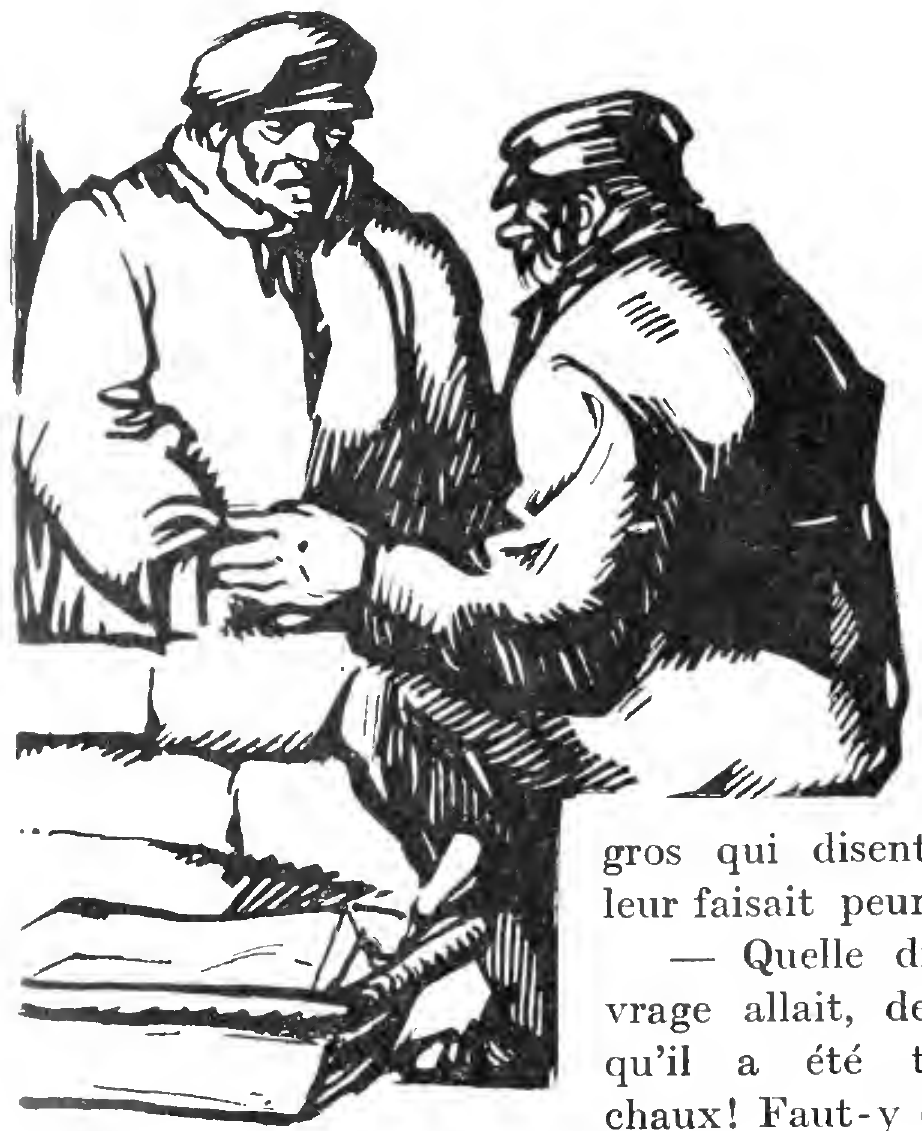
an officer, he became a general, we've seen that.
— Go and see that now! Only the beggars go. Anyone who has something stays in the country.
— Whoever's born half-wretched stays wretched, and there you have it.
— Come now, is it really true, what they say, that the other one is dead? put in a third mason.
— It's the big men who say that, you see! The other one frightened them.
— What a difference, the way the work went in his time! And to think he was betrayed by his marshals! You'd have to be a traitor!
This conversation consoled Julien a little. As he walked away he repeated with a sigh:
The only king whose memory the people have kept!
The time of the examinations arrived. Julien answered in a brilliant fashion; he saw that Chazel himself was trying to display all his learning.
On the first day, the examiners appointed by the famous grand vicar de Frilair were highly annoyed at having always to place first, or at most second, on their list this Julien Sorel, who had been pointed out to them as the Benjamin of the abbé Pirard. There were bets at the seminary that, in the list of the general examination, Julien would have the number one, which carried with it the honour of dining at Monseigneur the bishop's. But at the end of a session, in which the Fathers of the Church had been under discussion, a skilful examiner, after questioning Julien about Saint Jerome and his passion for Cicero, came to speak of Horace, Virgil and the other profane authors. Unknown to his comrades, Julien had learned by heart a great number of passages from these authors. Carried away by his success, he forgot the place where he was, and, at the examiner's repeated request, recited and paraphrased with fire several odes of Horace. After having let him entangle himself for twenty minutes, all at once the examiner changed countenance, and reproached him bitterly for the time he had wasted on these profane studies, and for the useless or criminal ideas he had put into his head.
"I am a fool, Monsieur, and you are right," said Julien with a modest air, recognizing the skilful stratagem of which he was the victim.
This trick of the examiner was found dirty, even at the seminary, which did not prevent M. l'abbé de Frilair, that skilful man who had so learnedly organized the network of the Besançon congregation, and whose dispatches to Paris made judges, prefect, and even the general officers of the garrison tremble, from placing, with his powerful hand, the number 198 beside Julien's name. He took joy in thus mortifying his enemy, the Jansenist Pirard.
For ten years, his great affair had been to take away from him the direction of the seminary. This abbé, himself following the plan of conduct that he had indicated to Julien, was sincere, pious, without intrigue, attached to his duties. But heaven, in its wrath, had given him this bilious temperament, made to feel deeply insults and hatred. None of the outrages addressed to him was lost upon this ardent soul. He would a hundred times have given his resignation, but he believed himself useful in the post where Providence had placed him. I prevent the progress of Jesuitism and idolatry, he said to himself.
At the time of the examinations, it was perhaps two months since he had spoken to Julien, and yet he was ill for eight days when, receiving the official letter of the result of the competition, he saw the number 198 placed beside the name of this pupil whom he regarded as the glory of his house. The only consolation for this severe character was to concentrate upon Julien all his means of surveillance. It was with delight that he discovered in him neither anger, nor project of vengeance, nor discouragement.
Some weeks later, Julien trembled as he received a letter; it bore the Paris postmark. At last, he thought, Madame de Rênal remembers her promises. A gentleman who signed Paul Sorel, and who said he was his relative, sent him a money order for five hundred francs. It was added that if Julien continued to study the good Latin authors with success, a similar sum would be sent to him each year.
It is she, it is her goodness! said Julien, touched; she wishes to console me; but why not a single word of friendship?
He was mistaken about this letter. Madame de Rênal, guided by her friend Madame Derville, was wholly given over to her deep remorse. In spite of herself, she often thought of the singular being whose meeting had overturned her existence; but she would have been very careful not to write to him.
If we spoke the language of the seminary, we might recognize a miracle in this sending of five hundred francs, and say that it was from M. de Frilair himself, of whom heaven made use to make this gift to Julien.
Twelve years before, M. l'abbé de Frilair had arrived at Besançon with a most scanty portmanteau, which, according to chronicle, contained all his fortune. He now found himself one of the richest landowners of the department. In the course of his prosperities he had bought half of an estate, the other half of which fell by inheritance to M. de La Mole. Hence a great lawsuit between these personages.
Despite his brilliant existence in Paris, and the employments he had at court, M. le marquis de La Mole felt that it was dangerous to struggle at Besançon against a grand vicar who was reputed to make and unmake prefects. Instead of soliciting a gratification of fifty thousand francs, disguised under some name or other admitted by the budget, and of abandoning to the abbé de Frilair this paltry lawsuit of fifty thousand francs, the marquis took offence. He believed he was right: fine reason!
:
Now, if it were permissible to say so: what judge has not a son or at least a cousin to push in the world?
To enlighten the blindest, eight days after the first judgment he obtained, M. l'abbé de Frilair took Monseigneur the bishop's carriage, and went himself to carry the cross of the Legion of honour to his lawyer. M. de La Mole, somewhat stunned by the countenance of his adversary, and feeling his lawyers weaken, asked advice of the abbé Chélan, who put him in relations with M. Pirard.
These relations had lasted several years at the period of our story. The abbé Pirard
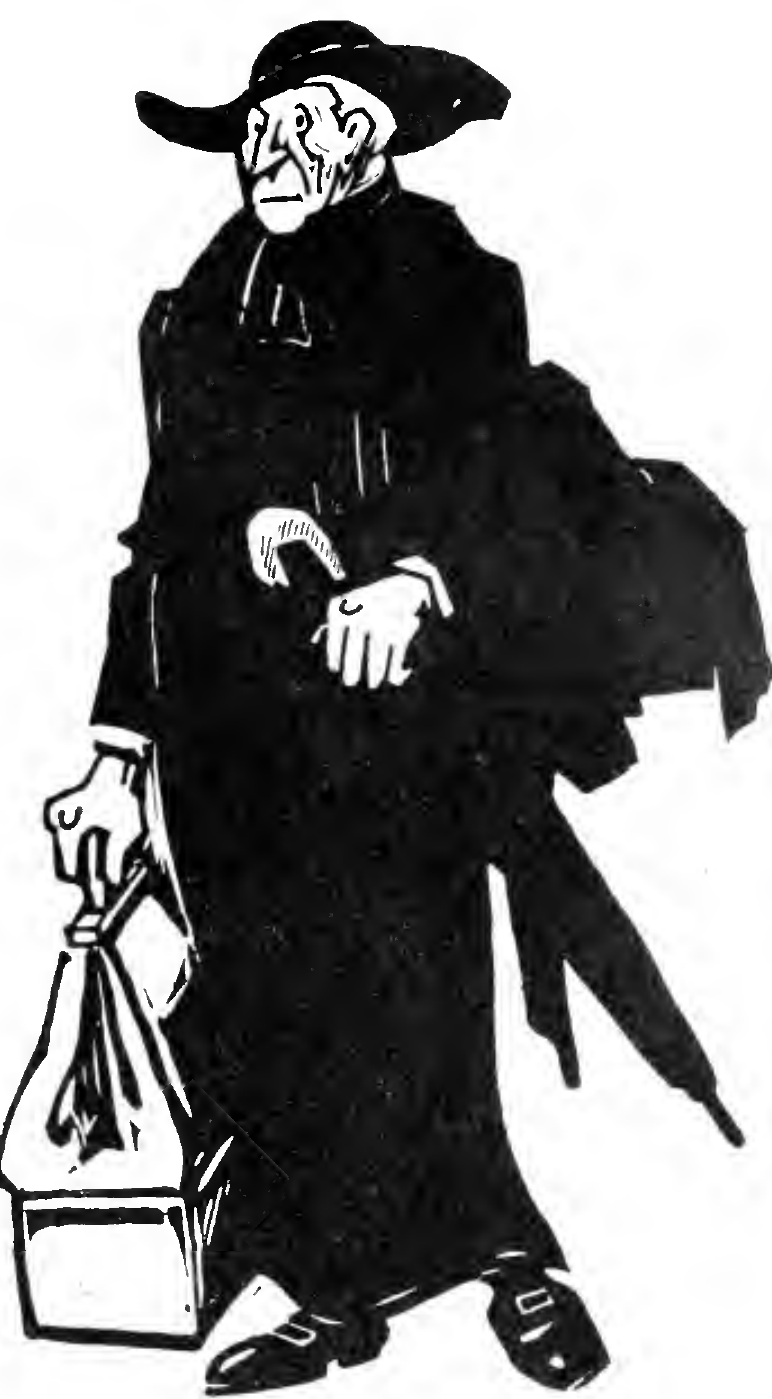
brought his passionate character into this affair. Seeing the marquis's lawyers continually, he studied his case, and, finding it just, he became openly the solicitor of the marquis de La Mole against the all-powerful grand vicar. The latter was outraged by the insolence, and from a little Jansenist at that!
See what this court nobility is, which claims to be so powerful! said the abbé de Frilair to his intimates. M. de La Mole has not even sent a miserable cross to his agent at Besançon, and is going to let him be flatly dismissed. However, they write to me, this noble peer does not let a week pass without going to display his blue ribbon in the salon of the keeper of the seals, whoever he may be.
Despite all the activity of the abbé Pirard, and although M. de La Mole was on the best of terms with the minister of justice and especially with his bureaux, all that he had been able to do, after six years of care, was not to lose his lawsuit absolutely.
Constantly in correspondence with the abbé Pirard, over an affair which they both pursued with passion, the marquis ended by relishing the abbé's kind of mind. Little by little, despite the immense distance of their social positions, their correspondence took the tone of friendship. The abbé Pirard told the marquis that they wished to oblige him, by dint of annoyances, to give his resignation. In the anger inspired in him by the infamous stratagem, as he considered it, employed against Julien, he recounted his story to the marquis.
Although very rich, this great lord was not avaricious. In his life, he had never been able to make the abbé Pirard accept even the reimbursement of the postage expenses occasioned by the lawsuit. He seized upon the idea of sending five hundred francs to his favourite pupil.
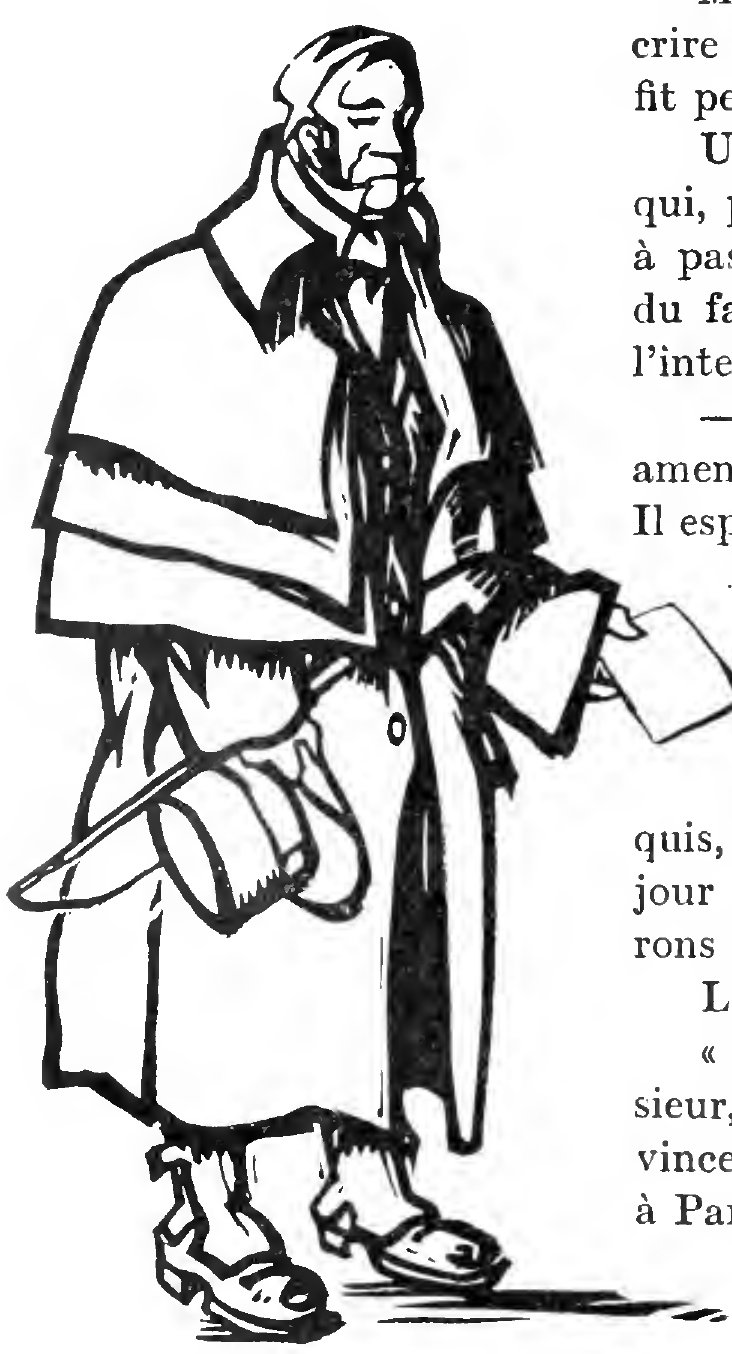
M. de La Mole took the trouble to write the letter of enclosure himself. This made him think of the abbé.
One day, the latter received a little note which, on account of pressing business, urged him to go without delay to an inn in the suburbs of Besançon. There he found M. de La Mole's steward.
— M. le marquis has charged me to bring you his calèche, this man told him. He hopes that after reading this letter, it will suit you to set out for Paris in four or five days. I shall employ the time that you will be so good as to indicate to me in going over M. le marquis's lands in Franche-Comté. After which, on whatever day suits you, we shall set out for Paris.
The letter was short.
"Rid yourself, my dear Monsieur, of all the vexations of the provinces, come and breathe the tranquil air of Paris. I am sending you my carriage, which has orders to wait four days for your decision.
I shall await you myself, in Paris, until Tuesday. A single yes from you, Monsieur, is all that is needed to accept, in your name, one of the best cures in the environs of Paris. The richest of your future parishioners has never seen you, but is more devoted to you than you can believe: he is the Marquis de La Mole."
Without suspecting it, the stern abbé Pirard loved this seminary, peopled with his enemies, to which, for fifteen years, he had devoted all his thoughts. M. de La Mole's letter was for him like the apparition of the surgeon charged with performing a cruel and necessary operation. His dismissal was certain. He made an appointment with the intendant, three days hence.
For forty-eight hours he was feverish with uncertainty. At last he wrote to M. de La Mole, and composed, for Monseigneur the bishop, a letter that was a masterpiece of ecclesiastical style, but a little long. It would have been difficult to find sentences more irreproachable or breathing a more sincere respect. And yet this letter, destined to give M. de Frilair a difficult hour in the eyes of his patron, articulated every ground for serious complaint, and descended to the petty, sordid vexations which, after having been endured with resignation for six years, forced the abbé Pirard to leave the diocese.
His wood was being stolen from his woodpile, his dog was being poisoned, and so on and so forth.
This letter finished, he had Julien awakened who, at eight in the evening, was already asleep, as were all the other seminarians.
"Do you know where the bishop's palace is?" he said to him in fine Latin style; "carry this letter to Monseigneur. I shall not conceal from you that I am sending you into the midst of wolves. Be all eyes and all ears. No lies in your answers; but remember that whoever questions you might perhaps feel a genuine joy at being able to harm you. I am very glad, my child, to give you this experience before leaving you, for I do not hide it from you, the letter you are carrying is my resignation."
Julien remained motionless; he loved the abbé Pirard. Prudence might well tell him:
After the departure of this honest man, the Sacré-Cœur party will degrade me and perhaps drive me out.
He could not think of himself. What embarrassed him was a sentence that he wanted to arrange in a polite manner, and truly he could not find the wit for it.
"Well then! my friend, are you not leaving?"
"It is that they say, Monsieur," said Julien timidly, "that during your long administration you have set nothing aside. I have six hundred francs."
Tears prevented him from continuing.
"That too will be noted," said coldly the former director of the seminary. "Go to the bishop's palace, it is getting late."
Chance willed that, that evening, M. l'abbé de Frilair was on duty in the bishop's salon; Monseigneur was dining at the prefecture. It was therefore to M. de Frilair himself that Julien handed the letter, but he did not know him.
Julien saw, with astonishment, this abbé boldly open the letter addressed to the bishop. The handsome face of the grand vicar soon expressed a surprise mingled with keen pleasure, and redoubled in gravity. While he was reading, Julien, struck by his good looks, had time to examine him. This face would have had more gravity, without the extreme fineness that appeared in certain features, and that would have gone so far as to denote falseness, if the possessor of this handsome visage had ceased for a moment to attend to it. The nose, very prominent, formed a single perfectly straight line, and gave, unfortunately, to a profile otherwise very distinguished, an irremediable resemblance to the physiognomy of a fox. Moreover, this abbé, who appeared so occupied with M. Pirard's resignation, was dressed with an elegance that pleased Julien greatly, and that he had never seen on any priest.
Julien did not learn until later what the abbé de Frilair's special talent was. He knew how to amuse his bishop, an amiable old man, made for a stay in Paris, and who regarded Besançon as an exile. This bishop had very bad eyesight, and passionately loved fish; the abbé de Frilair removed the bones from the fish served to Monseigneur.
Julien was silently watching the abbé rereading the resignation, when suddenly the door opened with a crash. A lackey, richly dressed, passed rapidly. Julien had only time to turn toward the door; he caught sight of a little old man wearing a pectoral cross. He prostrated himself; the bishop gave him a kindly smile, and passed. The handsome abbé followed him, and Julien remained alone in the salon, where he could, at leisure, admire its pious magnificence.
The bishop of Besançon, a man of tested wit, but not extinguished by the long miseries of emigration, was more than seventy-five years old, and cared infinitely little about what would happen in ten years.
"Who is that seminarian with such a sharp look, whom I believe I saw as I passed? said the bishop. Should they not, according to my rule, be in bed at this hour?"
"This one is very much awake, I assure you, Monseigneur, and he brings great news: it is the resignation of the only Jansenist remaining in your diocese. That terrible abbé Girard finally understands what speaking means."
"Well then!" said the bishop laughing, "I defy you to replace him with a man worth as much. And to show you the value of this man, I invite him to dinner for tomorrow."
The grand vicar wanted to slip in a few words about the choice of a successor. The prelate, little disposed to talk business, said to him:
"Before bringing in
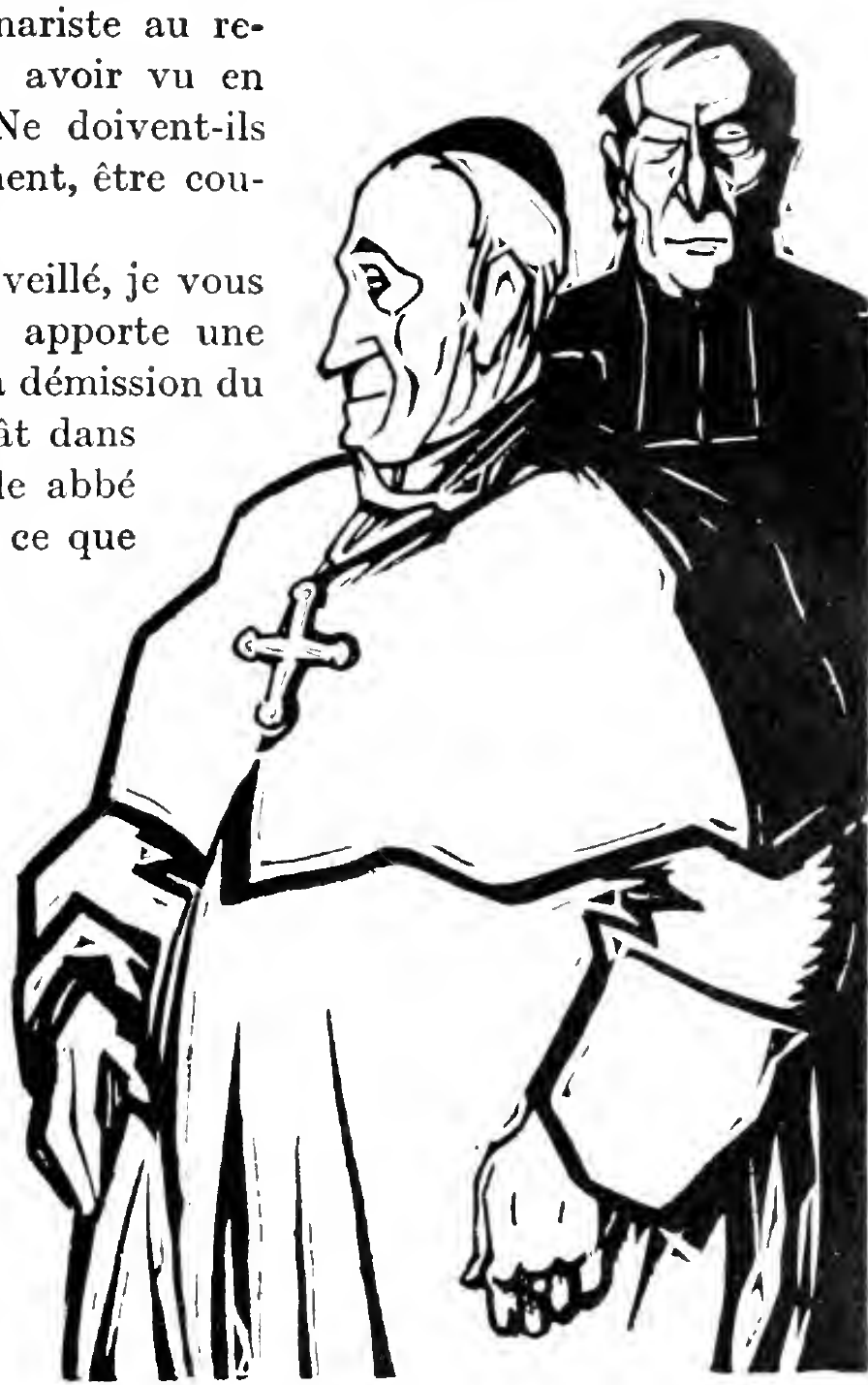
this other one, let us learn a little how this one is leaving. Have that seminarian come to me; truth is in the mouths of children."
Julien was called: I am going to find myself in the midst of two inquisitors, he thought. Never had he felt more courage.
At the moment he entered, two valets de chambre, better dressed than M. Valenod himself, were undressing Monseigneur. This prelate, before coming to M. Girard, thought it his duty to question Julien about his studies. He spoke a little of dogma, and was astonished. Soon he came to the humanities, to Virgil, to Horace, to Cicero. Those names, thought Julien, earned me my number 198. I have nothing to lose, let me try to shine. He succeeded; the prelate, himself an excellent humanist, was enchanted.
At the prefecture dinner, a young girl, justly celebrated, had recited the poem of the Madeleine. He was in the middle of talking literature,and quite quickly forgot the abbé Pirard and all business, to discuss with the seminarian whether Horace was rich or poor. The prelate quoted several odes, but sometimes his memory was lazy, and on the spot Julien recited the entire ode, with a modest air; what struck the bishop was that Julien never departed from the tone of conversation; he said his twenty or thirty Latin verses as he would have spoken of what was happening in his seminary. They talked for a long time of Virgil, of Cicero. Finally the prelate could not help complimenting the young seminarian.
"It is impossible to have done better studies."
"Monseigneur," said Julien, "your seminary can offer you one hundred and ninety-seven subjects far less unworthy of your high approval."
"How is that?" said the prelate, astonished at this figure.
"I can support with official proof what I have the honor to say before Monseigneur.
At the annual examination of the seminary, answering precisely on the subjects which at this moment earn me Monseigneur's approval, I obtained number 198."
"Ah! it is the Benjamin of the abbé Pirard," cried the bishop laughing and looking at M. de Frilair; "we should have expected it; but it is fair play: is it not so, my friend," he added, addressing Julien, "that you were awakened to be sent here?"
"Yes, Monseigneur. I have left the seminary alone only once in my life, to go help M. l'abbé Chas-Bernard adorn the cathedral on the day of the Fête-Dieu."
"Optimè," said the bishop; "what, it is you who showed such courage in placing the bouquets of feathers on the baldachin? They make me shudder every year; I always fear they will cost me the life of a man. My friend, you will go far; but I do not wish to stop your career, which will be brilliant, by making you die of hunger."
And on the bishop's order, biscuits and Malaga wine were brought, to which Julien did honor, and even more did the abbé de Frilair, who knew that his bishop loved to see people eat gaily and with a good appetite.
The prelate, increasingly pleased with the end of his evening, spoke for a moment about ecclesiastical history. He saw that Julien did not understand. The prelate moved on to the moral state of the Roman Empire under the emperors of Constantine's century. The end of paganism was accompaniedby that state of uneasiness and doubt which, in the nineteenth century, desolates sad and weary minds. Monseigneur remarked that Julien was almost ignorant even of the name of Tacitus.
Julien replied with candor, to the prelate's astonishment, that this author was not to be found in the seminary's library.
"I am truly very glad of it," said the bishop gaily. "You relieve me of an embarrassment; for ten minutes I have been seeking a way to thank you for the pleasant evening you have procured me, and certainly in a most unforeseen manner. I did not expect to find a scholar in a pupil of my seminary. Although the gift is not too canonical, I wish to give you a Tacitus."
The prelate had eight superbly bound volumes brought to him, and wished to write himself, on the title page of the first, a Latin compliment for Julien Sorel. The bishop prided himself on fine Latinity; he ended by saying to him, in a serious tone that contrasted entirely with that of the rest of the conversation:
"Young man, if you are wise, you will one day have the best parish in my diocese, and not a hundred leagues from my episcopal palace; but you must be wise."
Julien, laden with his volumes, left the bishop's residence, greatly astonished, as midnight struck.
Monseigneur had not said a word to him about the abbé Pirard. Julien was above all astonished by the bishop's extreme politeness. He had no idea of such urbanity of manners, combined with an air of dignity so natural. Julien was especially struck by the contrast when he saw again the somber abbé Pirard, who was waiting for him with growing impatience.
— What did they say to you? he shouted in a loud voice, as soon as he caught sight of him from afar.
Julien, growing a little confused as he translated the bishop's remarks into Latin:
— Speak French, and repeat Monseigneur's very words, adding nothing and omitting nothing, said the former director of the seminary, with his harsh tone and his deeply inelegant manners.
— What a strange gift from a bishop
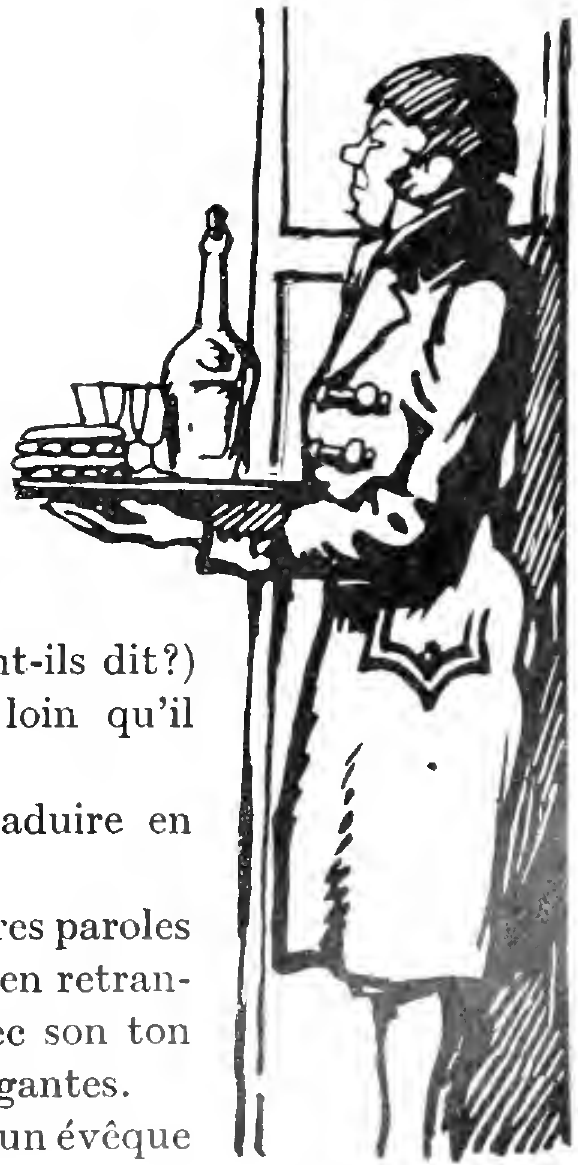
to a young seminarian! he was saying as he leafed through the superb Tacitus, whose gilt edges seemed to fill him with horror.
Two o'clock was striking when, after a very detailed account, he allowed his favorite pupil to return to his room.
— Leave me the first volume of your Tacitus, where Monseigneur the bishop's compliment is, he said to him. That Latin line will be your lightning rod in this house after my departure.
Erit tibi, fili mi, successor meus tanquam leo quærens quem devoret. (For unto thee, my son, my successor shall be as a raging lion, seeking whom he may devour.)
The next morning, Julien found something strange in the way his comrades spoke to him. He was all the more reserved for it. There, he thought, is the effect of M. Pirard's resignation. It is known throughout the house, and I am taken for his favorite. There must be insult in these manners; but he could not see it there. On the contrary, there was an absence of hatred in the eyes of all those he met along the dormitories: What does this mean? It is a trap, no doubt; let us play it close. At last the little seminarian from Verrières said to him, laughing: Cornelii Taciti opera omnia (The complete works of Tacitus).
At these words, which were heard, all, as if vying with one another, paid compliments to Julien, not only on the magnificent gift he had received from Monseigneur, but also on the two-hour conversation with which he had been honored. Even the smallest details were known. From that moment there was no more envy; they courted him basely: the abbé Castanède, who only the day before had been the most insolent toward him, came and took him by the arm and invited him to lunch.
By a fatality of Julien's character, the insolence of these coarse creatures had caused him much pain; their baseness disgusted him and gave him no pleasure.
Toward noon, the abbé Pirard left his pupils, not without addressing a stern allocution to them. "Do you want the honors of the world, he said to them, all the social advantages, the pleasure of commanding, that of mocking the laws and being insolent with impunity toward everyone? Or do you want your eternal salvation? The least advanced among you need only open their eyes to distinguish the two roads."
Scarcely had he gone out when the devotees of the Sacred Heart of Jesus went to intone a Te Deum in the chapel. No one at the seminary took the former director's allocution seriously. He is very much out of humor over his dismissal, people said on all sides. Not a single seminarianhad the simplicity to believe in the voluntary resignation of a position that gave so many connections with important suppliers.
The abbé Pirard went to establish himself in the finest inn in Besançon, and, under pretext of business that he did not have, wished to spend two days there.
The bishop had invited him to dinner, and, to make fun of his grand vicar de Friair, sought to make him shine. They were at dessert when there arrived from Paris the strange news that the abbé Pirard
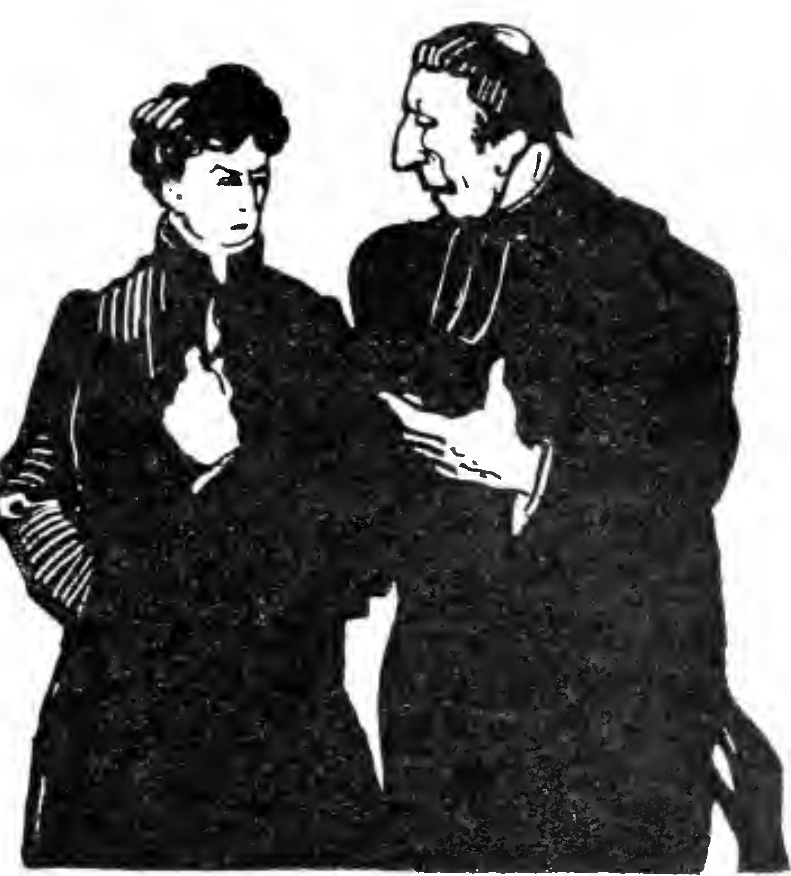
had been appointed to the magnificent living of N..., four leagues from the capital. The good prelate congratulated him sincerely. He saw in the whole affair a well-played trick that put him in good humor and gave him the highest opinion of the abbé's talents. He gave him a magnificent Latin certificate, and imposed silence on the abbé de Friair, who allowed himself remonstrances.
In the evening, Monseigneur carried his admiration to the marquise de Rubempré. It was great news for the high society of Besançon; people lost themselves in conjectures about this extraordinary favor. The abbé Pirard was already seen as a bishop. The most astute believed M. de La Mole a minister, and permitted themselves that day to smile at the imperious airs that M. l'abbé de Friair carried in society.
The next morning, the abbé Pirard was almost followed in the streets, and the shopkeepers came to the doors of their shops when he went to solicit the judges on behalf of the marquis; for the first time, he was received with politeness. The severe Jansenist, indignant at all he saw, did a long piece of work with the lawyers he had chosen for the marquis de La Mole, and left for Paris. He had the weakness to tell two or three college friends, who accompanied him as far as the carriage, whose coat of arms they admired, that after having administered the seminary for fifteen years, he was leaving Besançon with five hundred and twenty francs in savings. These friends embraced him in tears, andsaid among themselves: The good abbé could have spared himself that lie; it is also too ridiculous.
The vulgar, blinded by the love of money, were not made to understand that it was in his sincerity that the abbé Pirard had found the strength necessary to struggle for six years against Marie Alacoque, the Sacred Heart of Jesus, the Jesuits, and his bishop.