About this book
Julien Sorel climbs from sawmill to salon, torn between the red of the army and the black of the church. Stendhal's 1830 novel, free to read online.
A CAPITAL
What noise, what bustling people! what ideas for the future in a twenty-year-old head! what a distraction for love!
BARNAVE.
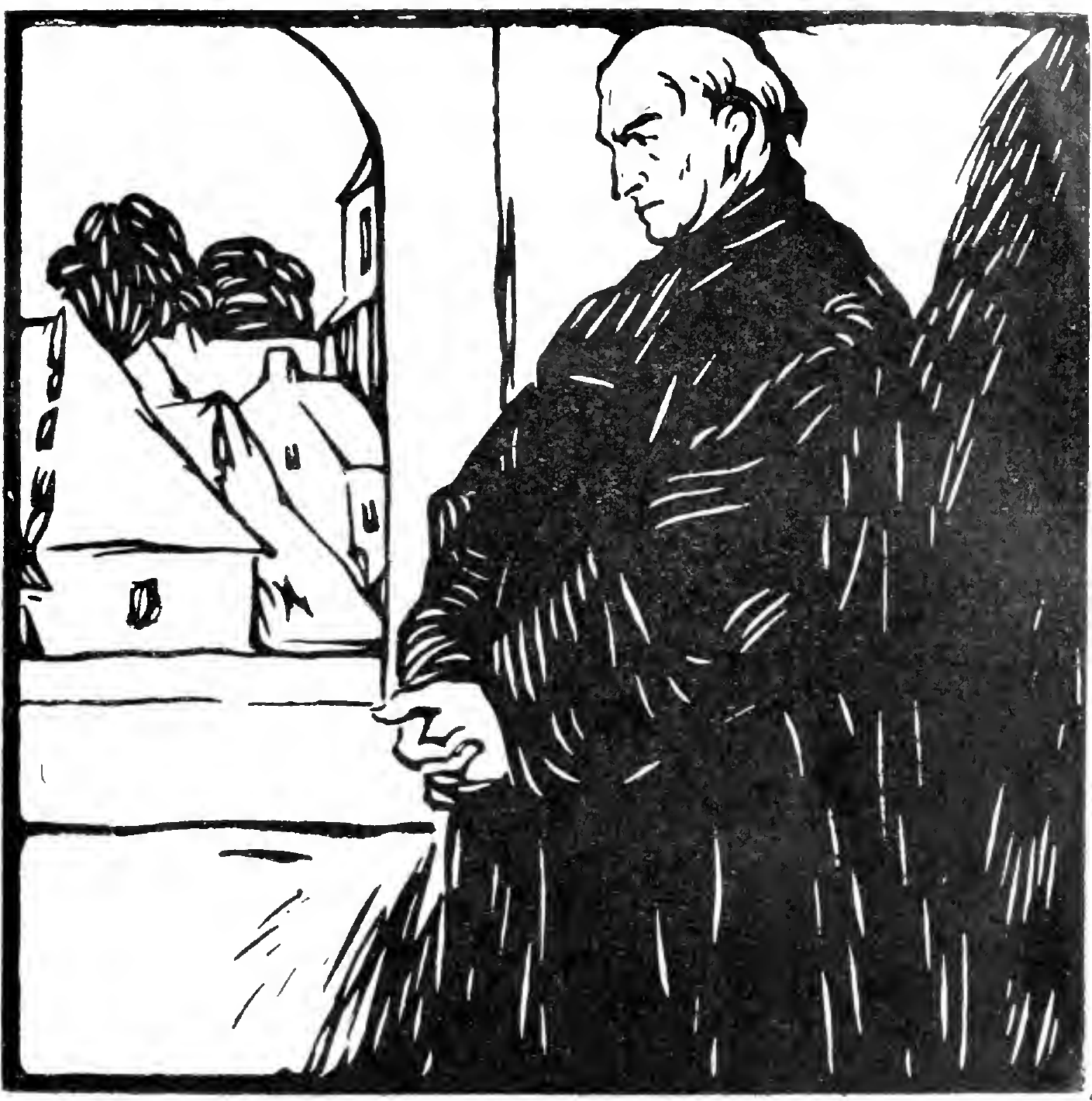
A T L A S T, he caught sight of some black walls on a distant mountain: it was the citadel of Besançon. What a difference for me, he said with a sigh, if I were arriving in this noble city of war to be a second lieutenant in one of the regiments charged with defending it!
Besançon is not only one of the prettiest towns in France, it abounds in people of heart and spirit. But Julien was only a little peasant and had no means of approaching distinguished men.
He had taken from Fouqué a bourgeois coat, and it was in this costume that he crossed the drawbridges. Full of the history of the siege of 1674, he wanted to see, before shutting himself up in the seminary, the ramparts of the citadel. Two or three times he was on the point of being arrested by the sentinels; he was penetrating into places that the military engineers forbid to the public in order to sell for twelve or fifteen francs of hay every year.
The height of the walls, the depth of the moats, the terrible air of the cannons had occupied him for several hours, when he passed before the great café, on the boulevard. He stood motionless with admiration; in vain did he read the word café, written in large characters above the two immense doors, he could not believe his eyes. He made an effort against his timidity; he dared to enter, and found himself in a room thirty or forty paces long, and whose ceiling was raised at least twenty feet. That day, everything was enchantment for him.
Two billiard games were in progress. The waiters were calling out the points; the players were running around the billiard tables crowded with spectators. Streams of tobacco smoke escaping from everyone's mouth enveloped them in a blue cloud. The tall stature of these men, their rounded shoulders, their heavy gait, their enormous side-whiskers, the long frock coats that covered them, everything drew Julien's attention. These noble children of ancient Bisontium spoke only by shouting; they gave themselves the airs of terrible warriors. Julien admired motionless; he was musing on the immensity and the magnificence of a great capital such as Besançon. He did not at all feel the courage to ask for a cup of coffee from one of these gentlemen, with haughty gaze, who were calling out the billiard points.
!
But the young lady at the counter had noticed the charming face of this young country bourgeois, who, stopped three paces from the stove, and his little parcel under his arm, was contemplating the bust of the king, in fine white plaster. This young lady, a tall Franche-Comtoise, very well made, and dressed as one must be to set off a café, had already said twice, in a little voice that sought to be heard only by Julien: Monsieur! Monsieur! Julien met large, very tender blue eyes, and saw that it was to him that someone was speaking.
He approached the counter and the pretty girl quickly, as he would have marched toward the enemy. In this great movement, his parcel fell.
What pity our provincial is not going to inspire in the young lycéens of Paris, who, at fifteen, already know how to enter a café with such a distinguished air! But these children, so well trained at fifteen, at eighteen are afraid of the common. The passionate timidity that one encounters in the provinces is sometimes overcome, and then it teaches one to will. Approaching this young girl so beautiful, who deigned to address him: I must tell her the truth, thought Julien, who was becoming courageous through dint of conquered timidity.
—Madame, I am coming for the first time in my life to Besançon; I would very much like to have, by paying, a roll and a cup of coffee.
The young lady smiled a little and then blushed; she feared, for this handsome young man, the ironic attention and the pleasantries of the billiard players. He would be frightened and would never reappear.
—Place yourself here, near me, she said, showing him a marble table, almost entirely hidden by the enormous mahogany counter that projected into the room.
The young lady leaned out beyond the counter, which gave her the opportunity to display a superb figure. Julien noticed it; all his ideas exchanged. The beautiful young lady had just placed before him a cup, sugar, and a small roll. She hesitated to call a waiter to get coffee, understanding well that at the arrival of this waiter, her tête-à-tête with Julien would end.
Julien, pensive, compared this blonde beauty to certain memories that often agitated him. The idea of the passion of which he had been the object almost took away all his timidity. The beautiful young lady had only an instant; she read in Julien's looks.
—This pipe smoke makes you cough, come and have lunch tomorrow before eight o'clock in the morning; then, I am almost alone.
—What is your name? said Julien, with the caressing smile of happy timidity.
—Amanda Binet.
—Will you allow me to send you, in an hour, a little parcel as big as this one?
The beautiful Amanda reflected a little.
—I am watched: what you ask of me may compromise me; however, I am going to write my address on a card, which you will place on your parcel. Send it to me boldly.
—My name is Julien Sorel, said the young man; I have neither parents nor acquaintances in Besançon.
—Ah! I understand, she said joyfully, you are coming for the School of Law?
—Alas! no, replied Julien; I am being sent to the seminary.
The most complete discouragement extinguished Amanda's features; she called a waiter: she had courage now. The waiter poured coffee for Julien without looking at him.
Amanda was receiving money at the counter; Julien was proud to have dared to speak: they were quarreling at one of the billiards. The shouts and denials of the players, resounding in this immense room, made a din that astonished Julien. Amanda was dreamy and lowered her eyes.
—If you wish, Mademoiselle, he said to her suddenly, with assurance, I will say that I am your cousin?
This little air of authority pleased Amanda. He is not a man of nothing, she thought. She said to him very quickly, without looking at him, for her eye was busy seeing whether anyone was approaching the counter:
—I am from Genlis, near Dijon; say that you are also from Genlis, and a cousin of my mother.
—I will not fail to.
—Every Thursday, at five o'clock, in summer, the gentlemen seminarians pass here in front of the café.
—If you think of me, when I pass, have a bouquet of violets in your hand.
Amanda looked at him with an astonished air; this look changed Julien's courage into temerity; however he blushed a great deal as he said to her:
—I feel that I love you with the most violent love.
—Speak lower, then, she said with a frightened air.
Julien was musing on recalling the sentences of a tattered volume of La Nouvelle Héloïse, which he had found at Vergy. His memory served him well; for ten minutes, he had been reciting La Nouvelle Héloïse to Mademoiselle Amanda, delighted; he was happy in his bravery, when suddenly the beautiful Franche-Comtoise assumed a glacial air.One of her lovers was appearing at the café door.
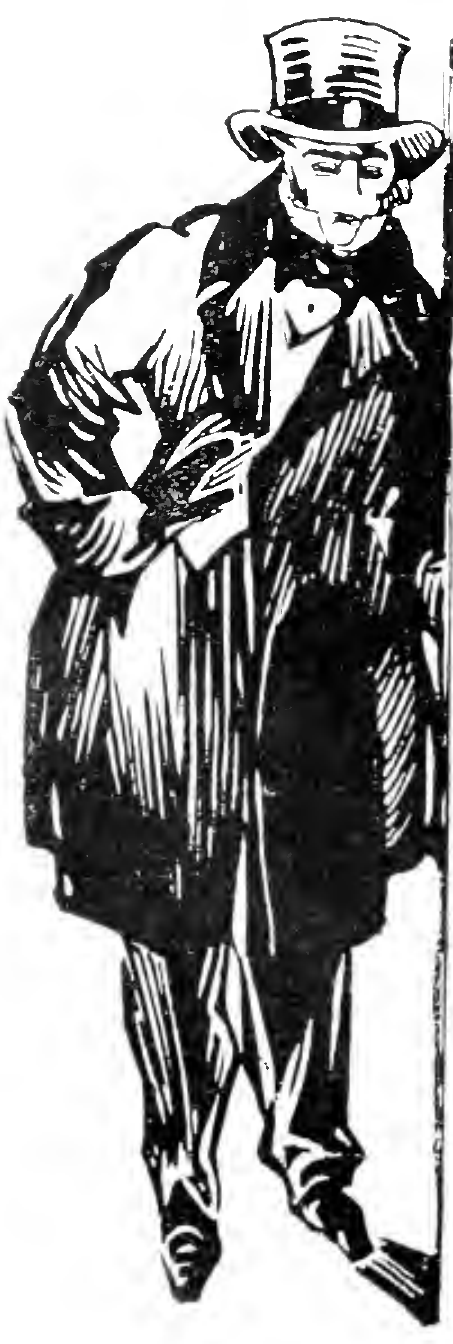
He approached the counter, whistling and walking with a swagger of the shoulders; he looked at Julien. Instantly, Julien's imagination, always given to extremes, was filled with nothing but ideas of a duel. He turned very pale, pushed his cup away, assumed a confident expression, and looked his rival very attentively. As this rival lowered his head while familiarly pouring himself a glass of brandy on the counter, with a glance Amanda ordered Julien to lower his eyes. He obeyed, and for two minutes remained motionless in his place, resolute and thinking only of what was about to happen; he was truly fine in that moment. The rival had been struck by Julien's eyes; having swallowed his glass of brandy at a single gulp, he said a word to Amanda, placed both hands in the pockets of his heavy frock coat, and approached a billiard table, whistling and looking at Julien. The latter rose, carried away with anger; but he did not know how to go about being insolent. He set down his little bundle and, with the most swaggering air he could manage, walked toward the billiard table.
In vain did prudence tell him: But with a duel upon arrival in Besançon, the ecclesiastical career is lost.
— What does it matter, it shall not be said that I let an insolent fellow go unchallenged.
Amanda saw his courage; it formed a fine contrast with the naivety of his manners; in an instant, she preferred him to the tall young man in the frock coat. She rose, and, while appearing to follow with her eye someone passing in the street, she quickly came and placed herself between him and the billiard table:
— Beware of looking askance at that gentleman, he is my brother-in-law. — What does that matter to me? he looked at me.
— Do you want to make me unhappy? No doubt he looked at you, perhaps he will even come over to speak to you. I told him you were a relative of my mother's, and that you had arrived from Genlis. He is a Franche-Comté man and has never gone beyond Dôle, on the road to Burgundy; so say whatever you like, have no fear.
Julien was still hesitating; she quickly added, her imagination as a woman behind the counter supplying her with lies in abundance:
— No doubt he looked at you, but it was at the moment he was asking me who you are; he is a man who is boorish with everyone, he did not mean to insult you.
Julien's eye followed the so-called brother-in-law; he saw him buy a number for the poule that was being played at the farther of the two billiard tables. Julien heard his loud voice crying in a threatening tone: "I take the break!" He passed swiftly in front of Mademoiselle Amanda and took a step toward the billiard table. Amanda seized him by the arm:
"Come and pay me first," she said.
That is fair, thought Julien: she is afraid I shall leave without paying. Amanda was as agitated as he and very red; she gave him his change as slowly as she could, all the while repeating to him in a low voice:
"Leave the café this instant, or I shall love you no more; and yet I do love you dearly."
Julien did leave, in fact, but slowly. Is it not my duty, he repeated to himself, to go and look at this coarse fellow in my turn? This uncertainty kept him an hour on the boulevard, in front of the café; he watched to see whether his man would come out. He did not appear, and Julien walked away.
He had been in Besançon only a few hours, and already he had won himself a remorse. The old surgeon-major had formerly given him, in spite of his gout, a few fencing lessons; such was all the science that Julien found at the service of his anger. But this embarrassment would have been nothing had he known how to be angry otherwise than by giving a slap, and, if it came to fisticuffs, his rival, an enormous man, would have beaten him and then left him there.
For a poor devil like me, said Julien to himself, without protectors and without money, there will not be much difference between a seminary and a prison; I must leave my bourgeois clothes at some inn, where I shall take my black coat back again. If I ever manage to get out of the seminary for a few hours, I shall be quite able, in my bourgeois clothes, to see Mademoiselle Amanda again. This reasoning was fine; but Julien, passing before all the inns, dared not enter any of them.
At last, as he was passing again before the Hôtel des Ambassadeurs, his uneasy eyes met those of a stout woman, still fairly young, high-colored, with a happy and gay air. He approached her and told her his story.
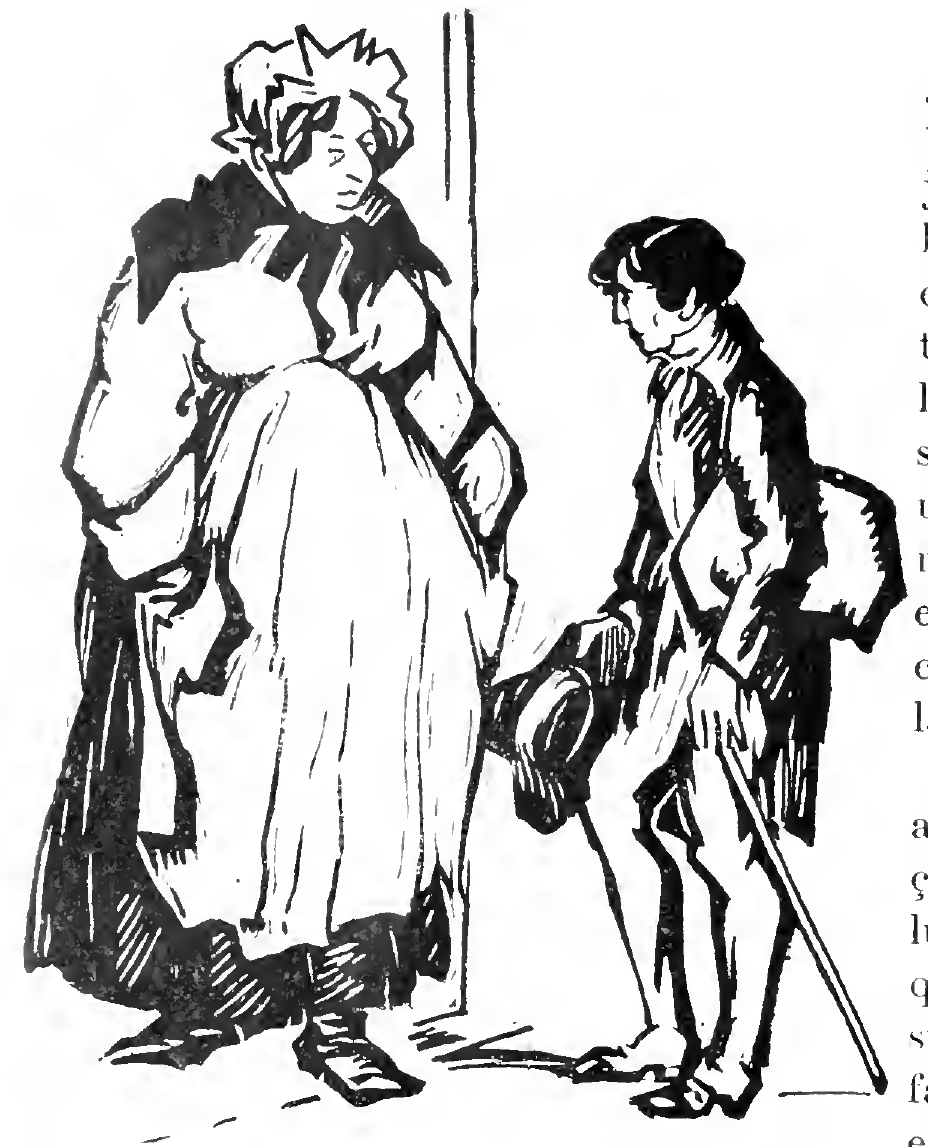
Certainly, my pretty little abbé, the hostess of the Ambassadeurs said to him, I will keep your bourgeois clothes for you and even have them dusted often. These days, it is not good to leave a cloth coat untouched. She took a key and led him herself into a room, recommending him to write down the list of what he was leaving.
Good God! how fine you look like that, Monsieur l'abbé Sorel! the stout woman said to him when he came down to the kitchen; I am going to have a good dinner served to you; and, she added in a low voice,it will cost you only twenty sous, instead of the fifty that everyone pays; for your little purse must be spared.
"I have ten louis," replied Julien with a certain pride.
"Ah! good God," replied the good hostess, alarmed, "do not speak so loud; there are many bad characters in Besançon. They will steal that from you in less than no time. Above all, never go into the cafés, they are full of bad characters."
"Really!" said Julien, to whom this word gave food for thought.
"Come only to me, I will make coffee for you. Remember that you will always find here a friend and a good dinner for twenty sous; that is plain speaking, I hope. Go and sit down at the table, I will serve you myself."
"I cannot eat," Julien told her, "I am too moved; I am going into the seminary as I leave your house. The good woman let him go only after filling his pockets with provisions. At last Julien made his way toward the terrible place; the hostess, from her doorway, pointed out the road to him.