About this book
Julien Sorel climbs from sawmill to salon, torn between the red of the army and the black of the church. Stendhal's 1830 novel, free to read online.
THE PROPERTY OF THE POOR
A virtuous curé and without intrigue is a Providence for the village.
FLEURY.
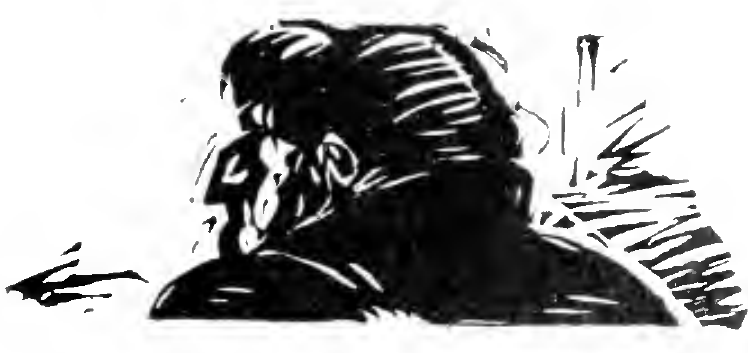
It must be known that the curé of Verrières, an old man of eighty, but who owed to the brisk air of these mountains a health and a character of iron, had the right to visit at any hour the prison, the hospital, and even the beggars' depot. It was precisely at six o'clock in the morning that M. Appert, who from Paris was recommended to the curé, had had the wisdom to arrive in a curious little town. At once he had gone to the presbytery.
On reading the letter written to him by M. le marquis de La Mole, peer of France, and the richest landowner of the province, the curé Chélan remained pensive.
I am old and loved here, he said to himself at last, half aloud, they would not dare! Turning at once to the gentleman from Paris, with eyes in which, despite his great age, shone that sacred fire which announces the pleasure of doing a fine action a little dangerous:
"Come with me, sir, and in the presence of the jailer and especially of the overseers of the beggars' depot, be so good as to express no opinion on the things we shall see." M. Appert understood that he had to do with a man of heart; he followed the venerable curé, visited the prison, the hospice, the depot, asked many questions, and, despite strange answers, did not permit himself the slightest mark of blame.
This visit lasted several hours. The curé invited M. Appert to dinner, who claimed to have letters to write: he did not wish to compromise further his generous companion. Toward three o'clock, these gentlemen went to finish the inspection of the beggars' depot, and then returned to the prison. There, they found at the door the jailer, a kind of giant six feet high and with bowed legs; his ignoble face had become hideous by the effect of terror.
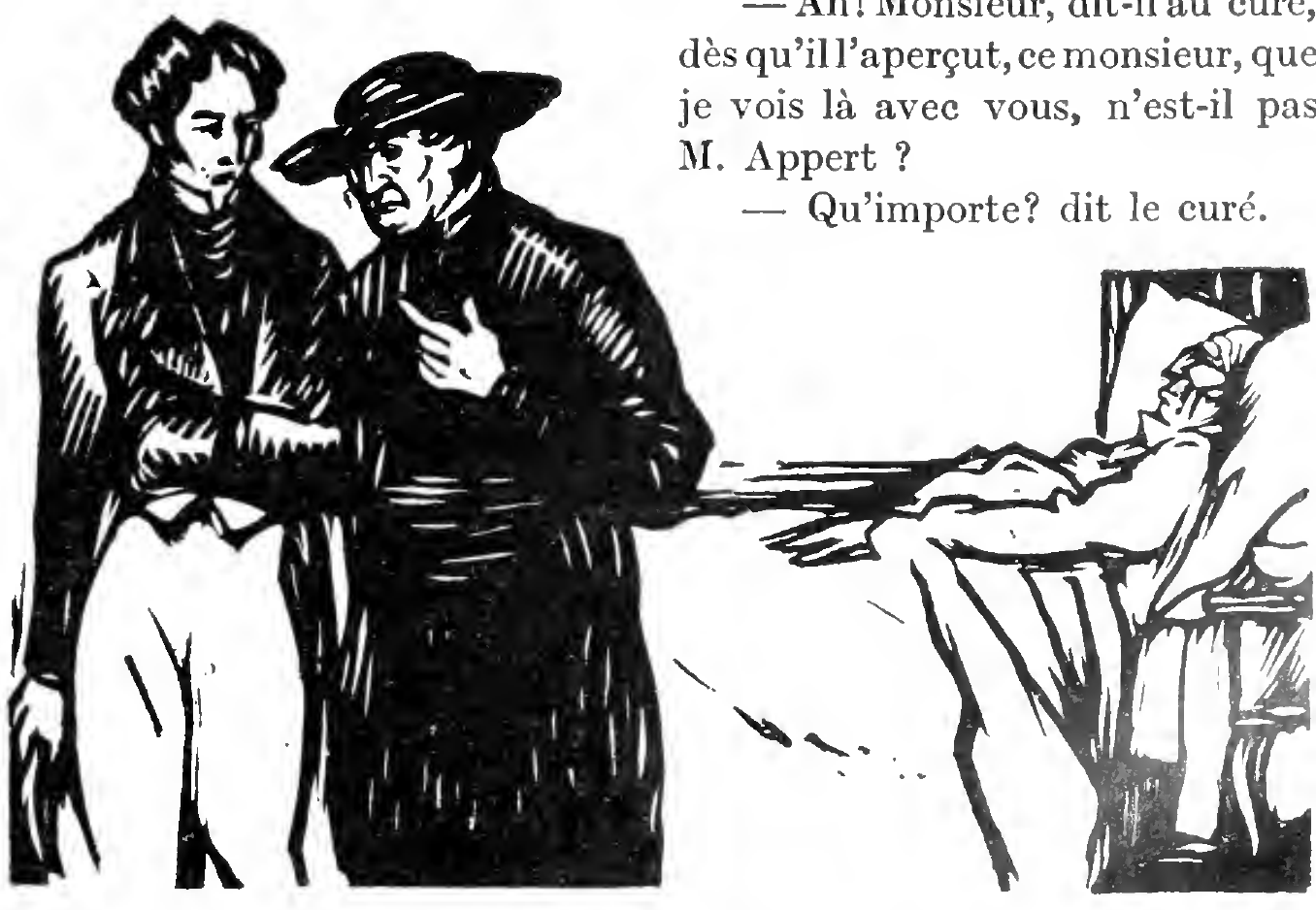
"Ah! Monsieur," he said to the curé, as soon as he saw him, "this gentleman, whom I see there with you, is he not M. Appert?"
"What does it matter?" said the curé.
2
"It is that since yesterday I have the most precise order, and that M. le préfet has sent by a gendarme who must have galloped all night, not to admit M. Appert into the prison."
"I declare to you, Monsieur Noiroud," said the curé, "that this traveler, who is with me, is M. Appert. Do you recognize that I have the right to enter the prison at any hour of the day or night, and with whom I please to accompany me?"
"Yes, Monsieur le curé," said the jailer, in a low voice, and lowering his head like a bulldog whom fear of the stick makes obey reluctantly. "Only, Monsieur le curé, I have a wife and children, if I am denounced I shall be dismissed; I have only my place to live by."
"I should be quite as sorry to lose mine," replied the good curé, in a voice more and more moved.
"What a difference!" replied the jailer quickly; "you, Monsieur le curé, everyone knows that you have 800 livres of income, good land in the sun..."
Such are the facts which, commented upon, exaggerated in twenty different ways, had for two days been stirring all the hateful passions of the little town of Verrières. At this moment, they served as text for the little discussion that M. de Rênal was having with his wife. In the morning, followed by M. Valenod, director of the beggars' depot, he had gone to the curé to express to him the most lively displeasure. M. Chélan was protected by no one; he felt all the weight of their words.
"Well, Messieurs, I shall be the third curé, eighty years of age, to be dismissed in this neighborhood. I have been here fifty-six years; I have baptized almost all the inhabitants of the town, which was only a village when I arrived. I marry young people every day, whose grandfathers I once married. Verrières is my family; but I said to myself, on seeing the stranger: 'This man, come from Paris, may be in truth a liberal, there are only too many of them; but what harm can he do to our poor and to our prisoners?'"
The reproaches of M. de Rênal, and especially those of M. Valenod, the director of the beggars' depot, becoming more and more sharp:
— "Well, gentlemen, have me dismissed," the old curé had cried in a trembling voice. "I shall none the less go on living in the district. Everyone knows that forty-eight years ago I inherited a field worth 800 livres; I shall live on that income. I make no savings out of my position, I don't, gentlemen, and that is perhaps why I am not so frightened when people talk of making me lose it."
M. de Rênal got on very well with his wife; but not knowing what to reply to this idea, which she timidly repeated to him: "What harm can this
gentleman from Paris do to the prisoners?", he was on the point of losing his temper altogether when she uttered a cry. Her second son had just climbed onto the parapet of the
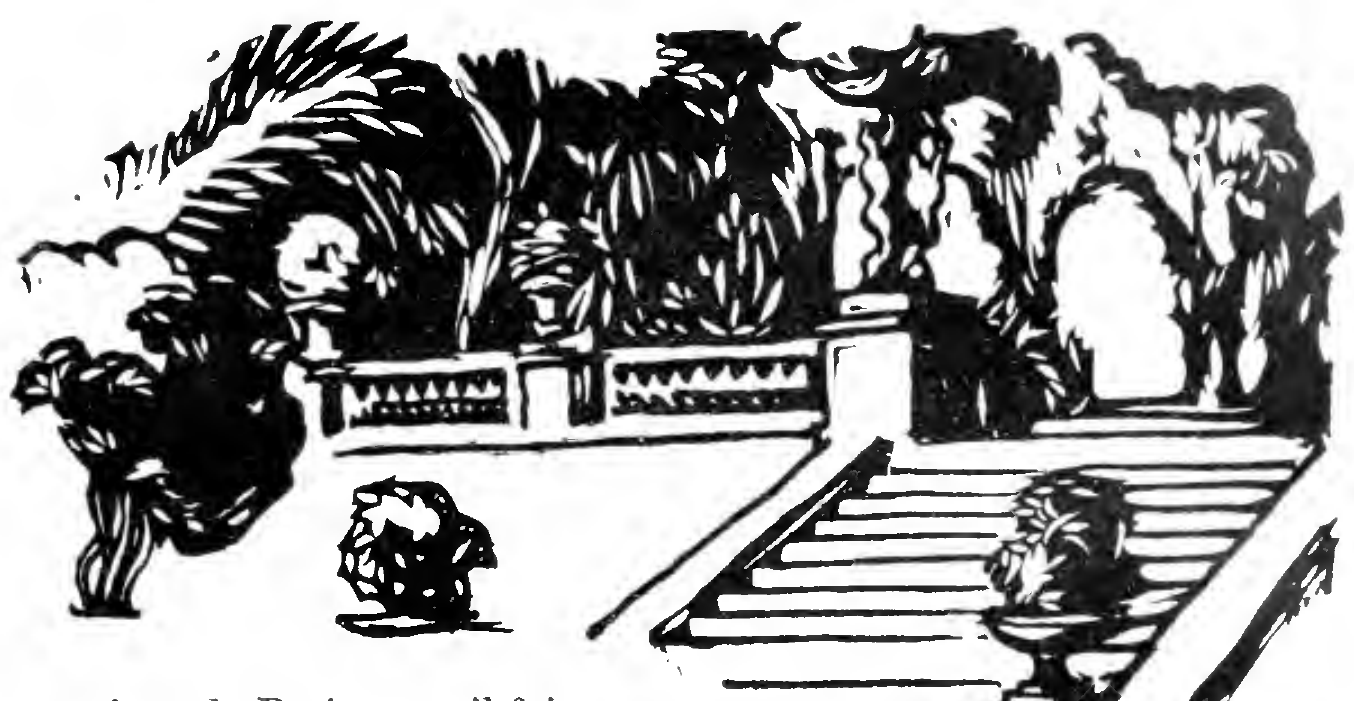
terrace wall and was running along it, although that wall stood more than twenty feet above the vineyard on the other side. For fear of frightening her son and making him fall, Madame de Rênal dared not speak to him. At last the child, laughing at his own prowess, having looked at his mother, saw her pallor, jumped down onto the walk and ran to her. He was soundly scolded.
This little incident changed the course of the conversation.
— "I am absolutely determined to take Sorel, the son of the sawyer, into my household," said M. de Rênal; "he will keep an eye on the children, who are beginning to become too much of a handful for us. He is a young priest, or as good as one, a good Latinist, and he will make the children make progress; for he has a firm character," said the curé. "I shall give him 300 francs and his board. I had some doubts about his morality; for he was the Benjamin of that old surgeon, a member of the Legion of Honour, who, on the pretext that he was their cousin, had come to take lodgings with the Sorels. That man might very well be at bottom nothing but a secret agent of the Liberals; he said that the air of our mountains did his asthma good; but that is not proven. He had served through all Buonaparte's campaigns in Italy, and had even, it is said, signed [a document] against the Empire at the time. This Liberal used to teach the son Sorel Latin, and left him the quantity of books he had brought with him. And so I should never have thought of putting the carpenter's son near our children; but the curé, precisely on the eve of the scene that has just embroiled us forever, told me that this Sorel has been studying theology for three years, with the intention of entering the seminary; he is therefore not a Liberal, and he is a Latinist.
This arrangement suits in more ways than one, continued M. de Rênal, looking at his wife with a diplomatic air; Valenod is quite proud of the two fine Normands he has just bought for his calèche. But he has no tutor for his children.
— He might well take ours away from us.
— So you approve of my plan? said M. de Rênal, thanking his wife with a smile for the excellent idea she had just had. Come, then, that is settled.
— Ah! good heavens! my dear friend, how quickly you make up your mind!
— That is because I have character, I do, and the curé has seen it well enough. Let us conceal nothing, we are surrounded by liberals here. All these linen-drapers envy me, I am certain of it; two or three of them are becoming rich men; well then, I rather like them to see M. de Rênal's children going for a walk under the guidance of their tutor. It will be imposing. My grandfather often told us that in his youth he had had a tutor. It may cost me a hundred écus, but that must be classed as a necessary expense for the support of our rank.
This sudden resolution left Madame de Rênal very thoughtful. She was a tall woman, well made, who had been the beauty of the country, as they say in these mountains. She had a certain air of simplicity, and youth in her gait; in the eyes of a Parisian, this naive grace, full of innocence and vivacity, would even have gone so far as to recall ideas of gentle voluptuousness. Had she learned of this kind of success, Madame de Rênal would have been greatly ashamed of it. Neither coquetry nor affectation had ever come near this heart. M. Valenod, the rich director of the dépôt, was said to have paid court to her, but without success, which had cast a singular brilliance upon her virtue; for this Valenod, a tall young man built like a strong man, with a ruddy face and thick black side-whiskers, was one of those coarse, impudent and noisy beings whom in the provinces they call fine men.
Madame de Rênal, very timid and of an apparently very uneven character, was above all shocked by the continual movement and the loud bursts of voice of M. Valenod. The distaste she had for what at Verrières they call gaiety had earned her the reputation of being very proud of her birth. She did not think about it, but had been very glad to see the inhabitants of the town come to her house less often. We shall not conceal that in the eyes of their ladies she passed for a fool, because, without any policy whatsoever toward her husband, she let slip the finest opportunities to have fine hats bought for her in Paris or Besançon. Provided they left her alone to wander in her beautiful garden, she never complained.
She was a naive soul, who had never even risen so far as to judge her husband, and to admit to herself that he bored her. She supposed, without saying so to herself, that between husband and wife there were no sweeter relations. She loved M. de Rênal especially when he spoke to her of his plans for their children, one of whom he destined for the sword, the second for the magistracy, and the third for the Church. In short, she found M. de Rênal much less boring than all the men of her acquaintance.
This conjugal judgment was reasonable. The mayor of Verrières owed his reputation for wit and good tone to half a dozen pleasantries which he had inherited from an uncle. The old Captain de Rênal had served before the Revolution in the infantry regiment of M. le duc d'Orléans, and, when he went to Paris, was admitted to the prince's salons. He had seen there Madame de Montesson, the famous Madame de Genlis, M. Ducret, the inventor of the Palais-Royal. These personages reappeared only too often in M. de Rênal's anecdotes. But little by little this memory of things so delicate to relate had become a labor for him, and for some time now he repeated only on great occasions his anecdotes relating to the house of Orléans. As he was moreover very polite, except when money was being discussed, he passed, with reason, for the most aristocratic personage in Verrières.
-: