About this book
Julien Sorel climbs from sawmill to salon, torn between the red of the army and the black of the church. Stendhal's 1830 novel, free to read online.
THE PLEASURES OF THE COUNTRYSIDE
O rus quando ego te aspiciam! HORACE.
“Monsieur is no doubt waiting for the Paris mail coach?” said the master of an inn where he stopped for lunch. “Today’s or tomorrow’s, it makes little difference to me,” said Julien.
The mail coach arrived while he was pretending to be indifferent. There were two empty seats.
“What! It’s you, my poor Falcoz,” said the traveler arriving from the direction of Geneva to the one who was getting into the carriage at the same time as Julien.
“I thought you were settled near Lyon,” said Falcoz, “in a delightful valley by the Rhône?”
“Nicely settled. I’m running away.”
“What! You’re running away? You, Saint-Giraud! With that sober face of yours, you’ve committed some crime?” said Falcoz, laughing.
“Upon my word, it would be just as well. I’m fleeing the abominable life people lead in the provinces. I love the freshness of the woods and rural tranquility, as you know; you’ve often accused me of being romantic. I never wanted to hear a word about politics, and politics drives me away.”
“But what party are you on?”
“None, and that’s what ruins me. Here is my entire political life: I love music, painting; a good book is an event for me; I’m about to turn forty-four. How much life do I have left? Fifteen, twenty, thirty years, at most? Well, I maintain that in thirty years the ministers will be a little more skillful, but just as honest as those of today. The history of England serves me as a mirror for our future. There will always be a king who wants to increase his prerogative; always the ambition to become a deputy, the glory and the hundreds of thousands of francs earned by Mirabeau will keep the rich people of the provinces awake: they will call that being liberal and loving the people. Always the desire to become a peer or a gentleman of the bedchamber will win over the ultras. On the ship of state, everyone will want to attend to the maneuvering, for it pays well. Will there never be a poor little place for the simple passenger?”
“To the point, to the point—that must be highly amusing with your tranquil character. Is it the latest elections that are driving you out of the provinces?”
“My trouble goes back further. Four years ago I was forty years old and had five hundred thousand francs; I am four years older today, and probably fifty thousand francs poorer, which I am going to lose on the sale of my château of Montfleury, near the Rhône, a superb position.
In Paris, I was weary of that perpetual comedy to which what you call the civilization of the nineteenth century obliges one. I thirsted for plainness and simplicity. I bought an estate in the mountains near the Rhône—nothing so beautiful under the sky.
The village vicar and the local gentry courted me for six months; I gave them dinners. ‘I have left Paris,’ I told them, ‘to spend my life never speaking or hearing a word about politics. As you see, I subscribe to no newspaper. The fewer letters the postman brings me, the happier I am.’ That was not what the vicar wanted; soon I was beset by a thousand indiscreet requests, petty harassments, and so on. I wanted to give two or three hundred francs a year to the poor; they asked me for it for pious associations: that of Saint Joseph, that of the Virgin, and so on. I refused; then I was subjected to a hundred insults. I was foolish enough to be stung by it. I could no longer go out in the morning to enjoy the beauty of our mountains without finding some annoyance that pulled me from my reveries and disagreeably reminded me of men and their malice. At the Rogation processions, for example, whose singing I like (it is probably a Greek melody), my fields are no longer blessed, because, says the vicar, they belong to an impious man. A devout old peasant woman’s cow dies; she says it is because of the proximity of a pond that belongs to me, an impious philosopher from Paris, and eight days later I find my fish belly-up, poisoned with lime. Petty harassment surrounds me in every form. The justice of the peace, an honest man but afraid for his post, always rules against me. The peace of the countryside is a hell for me. Once I was seen abandoned by the vicar, head of the village congregation, and not supported by the retired captain, head of the liberals, everyone fell upon me, down to the mason I had kept alive for a year, down to the wheelwright who wanted to cheat me with impunity while repairing my plows.In order to have some support and yet win a few of my lawsuits, I became a liberal; but, as you say, those devilish elections come along, and I am asked for my vote—”
“For an unknown man?”
“Not at all, for a man I know only too well. I refused—frightful imprudence! From that moment, there I was with the liberals on my hands too, and my position became intolerable. I believe that if it had entered the vicar’s head to accuse me of having murdered my servant, there would have been twenty witnesses from both sides who would have sworn they had seen the crime committed.”
“You want to live in the countryside without serving your neighbors’ passions, without even listening to their gossip. What a mistake!...”
“Well, it is repaired. Montfleury is for sale; I am losing fifty thousand francs, if necessary, but I am overjoyed; I am leaving that hell of hypocrisy and petty harassment. I am going to seek solitude and rural peace in the only place where they exist in France, on a fourth floor overlooking the Champs-Élysées. And even then I am still deliberating whether I will not begin my political career, in the quartier du Roule, by offering the blessed bread to the parish.”
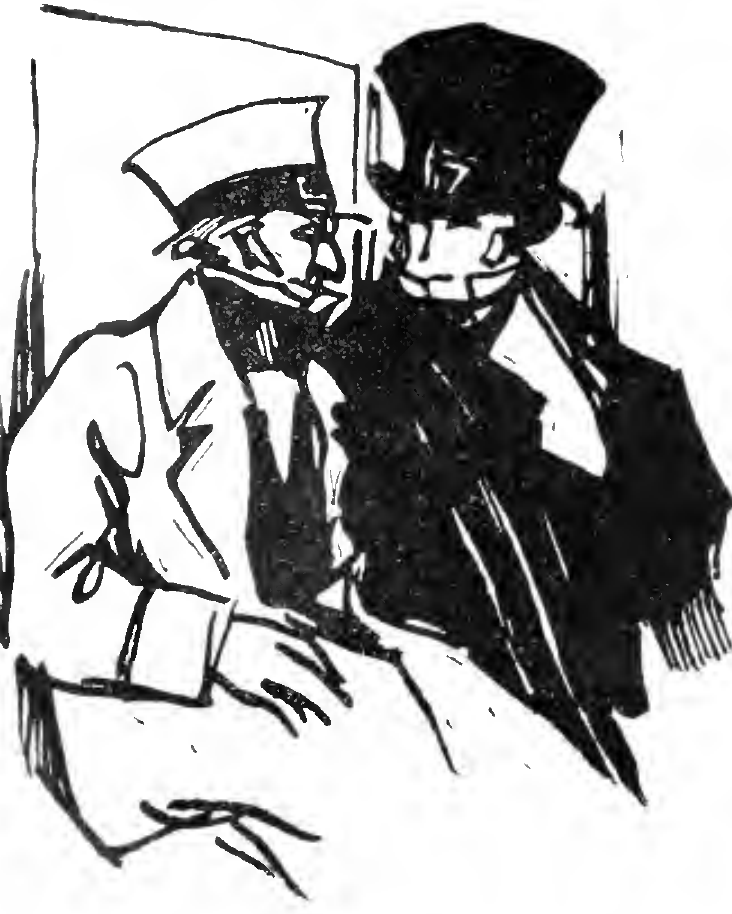
“None of that would have happened to you under Bonaparte,” said Falcoz, with eyes shining with wrath and regret.
“To be sure, but why did your Bonaparte not know how to stay in place? Everything I suffer today, he is the one who did it.”
Here Julien's attention redoubled. He had understood from the first word that the Bonapartist Faleoz was the childhood friend of M. de Rênal, repudiated by him in 1816, and that the philosopher Saint-Giraud must be the brother of that chief clerk at the prefecture of ... who knew how to have the houses of the communes knocked down to him cheaply.
— And all that is your Bonaparte's doing, Saint-Giraud went on: an honest man, as inoffensive as ever there was, with forty years and five hundred thousand francs, cannot settle in the provinces and find peace there; his priests and his nobles drive him out.
— Ah! don't speak ill of him, cried Faleoz, never was France so high in the esteem of the peoples as during the thirteen years he reigned. Then there was greatness in everything that was done.
— Your emperor, confound him, retorted the man of forty-four, was great only on the fields of battle, and when he restored the finances around 1802. What is the meaning of all his conduct since? With his chamberlains, his pomp and his receptions at the Tuileries, he gave a new edition of all the monarchical sillinesses. It was corrected; it might have lasted another century or two. The nobles and the priests have wanted to return to the old one, but they do not have the iron hand needed to retail it to the public.
— That is certainly the language of a former printer!
— Who is it that drives me from my land? continued the printer in anger. The priests, whom Napoleon recalled by his concordat, instead of
treating them as the State treats physicians, lawyers, astronomers, of seeing in them only citizens, without worrying about the industry by which they seek to earn their living. Would there be insolent gentlemen today, if your Bonaparte had not made barons and counts? No, the fashion for that had passed. After the priests, it is the little country nobles who have given me the most ill humor, and forced me to become a liberal.
The conversation was endless; this text will occupy France for another half-century. As Saint-Giraud kept repeating that it was impossible to live in the provinces, Julien timidly brought up the example of M. de Rênal.
"By Jove, young man, you're a fine one!" cried Falcoz; "he made himself the hammer so as not to be the anvil, and a terrible hammer at that. But I see him overwhelmed by Valenod. Do you know that rascal? There's the real one for you. What will your M. de Rênal say when he finds himself dismissed one of these fine mornings, and Valenod put in his place?"
"He will be left face to face with his crimes," said Saint-Giraud. "So you know Verrières, young man? Well! Bonaparte, whom heaven confound, he and his monarchical fripperies, has made possible the reign of the Rênal and Chélan families, which has brought about the reign of the Valenod and Maslon families."
This conversation of gloomy politics astonished Julien, and distracted him from his voluptuous reveries.
He was but little moved by the first aspect of Paris, glimpsed in the distance. His castles in Spain concerning his future lot had to struggle with the still present memory of the twenty-four hours he had just spent at Verrières. He swore to himself never to abandon his friend's children, and to leave everything in order to protect them, if the impertinences of the priests gave us the republic and persecutions against the nobles.
What would have happened on the night of his arrival at Verrières, if, at the moment when he was leaning his ladder against the casement of Madame de Rênal's bedroom, he had found that room occupied by a stranger, or by M. de Rênal?
But what delights, too, those first two hours, when his friend sincerely wished to send him away and he pleaded his cause, seated beside her in the darkness! A soul like Julien's is attended by such memories throughout a whole life. The rest of the interview was already merging with the early days of their love, fourteen months before.
Julien was roused from his deep reverie because the carriage stopped. They had just entered the courtyard of the posting-house, rue J.-J.-Rousseau. "I want to go to Malmaison," he said to a cabriolet that drew near.
"At this hour, Monsieur, and why?"
"What does it matter to you? Drive on."
Every true passion thinks only of itself. That is why, it seems to me, passions are ridiculous in Paris, where one's neighbor always claims that one is thinking a great deal about him. I shall refrain from recounting Julien's transports at Malmaison. He wept. What! in spite of the ugly white walls built this year, which cut that park into pieces? — Yes, Monsieur, for Julien as for posterity, there was nothing between Arcole, Saint Helena and Malmaison.
In the evening, Julien hesitated a great deal before entering the theater; he had strange ideas about that place of perdition.
A profound mistrust prevented him from admiring living Paris; he was touched only by the monuments left by his hero.
So here I am in the center of intrigue and hypocrisy! Here reign the protectors of the abbé de Frilair.
On the evening of the third day, curiosity got the better of his plan to see everything before presenting himself to the abbé Pirard. This abbé explained to him, in a cold tone, the kind of life that awaited him at M. de La Mole's.
"If after a few months you are not useful, you will return to the seminary, but by the front door. You are going to lodge with the marquis, one of the greatest noblemen of France. You will wear black, but like a man in mourning, and not like an ecclesiastic. I require that three times a week you pursue your studies in theology at a seminary, where I shall arrange for you to be presented. Every day at noon you will install yourself in the marquis's library, who expects to employ you in writing letters for lawsuits and other business. The marquis writes, in two words, in the margin of each letter he receives, the kind of reply that must be made to it. I have maintained that after three months you will be capable of drafting these replies, so that, out of twelve that you present to the marquis for signature, he may be able to sign eight or nine. In the evening, at eight o'clock, you will put his desk in order, and at ten you will be free.
"It may be," continued the abbé Pirard, "that some old lady or some man with a gentle tone will hint at immense advantages, or quite crudely offer you gold to show him the letters received by the marquis..."
"Ah! Monsieur!" cried Julien, blushing.
"It is singular," said the abbé with a bitter smile, "that, poor as you are, and after a year at the seminary, you still have these virtuous indignations left. You must have been very blind!"
"Can it be the force of blood?" said the abbé half aloud, as though speaking to himself. "What is singular," he added, looking at Julien, "is that the marquis knows you... I do not know how. He gives you, to begin with, a hundred louis in salary. He is a man who acts only by caprice; that is his failing; he will vie with you in childishness. If he is pleased, your salary may later rise to as much as eight thousand francs.But you understand clearly," resumed the abbé in a sour tone, "that he is not giving you all that money for your
fine eyes. It is a question of being useful. In your place, I should speak very little, and above all I should never speak of what I do not know.Ah!" said the abbé, "I have made inquiries on your behalf; I was forgetting M. de La Mole's family. He has two children, a daughter and a son of nineteen, elegant in the extreme, a sort of madman who never knows at noon what he will do at two o'clock. He has wit, bravery; he served in the Spanish war. The marquis hopes, I do not know why, that you will become the friend of the young Comte Norbert. I have told him you were a great Latinist; perhaps he counts on your teaching his son a few ready-made phrases about Cicero and Virgil.
"In your place, I should never let myself be bantered by this handsome young man; and, before yielding to his perfectly polite advances, though a little spoiled by irony, I should make him repeat them more than once.
"I shall not conceal from you that the young Comte de La Mole must at first despise you, because you are only a petty bourgeois. His grandfather was of the court, and had the honor of having his head cut off in the Place de Grève, on April 26, 1574, for a political intrigue.
"You, you are the son of a carpenter of Verrières, and moreover in the pay of his father. Weigh well these differences, and study the history of that family in Moreri; all the flatterers who dine at their house make from time to time what they call delicate allusions.Take care how you reply to the pleasantries of M. le Comte Norbert de La Mole, squadron commander of hussars and future peer of France, and do not come to me afterward with complaints."
"It seems to me," said Julien, blushing a great deal, "that I should not even reply to a man who despises me."
"You have no idea of that contempt; it will show itself only by exaggerated compliments. If you were a fool, you might be taken in by it; if you wished to make your fortune, you ought to be taken in by it."
"The day when all this no longer suits me," said Julien, "shall I be considered ungrateful if I return to my little cell no. 103?"
“Doubtless,” replied the abbé, “all the sycophants of the household will slander you, but I shall appear myself. Adsum qui feci. I shall say that this resolution comes from me.”
Julien was distressed by the bitter and almost malicious tone he detected in M. Pirard; this tone completely spoiled his last reply.
The fact was that the abbé was troubled in conscience at loving Julien, and it was with a sort of religious terror that he interfered so directly in another’s fate.
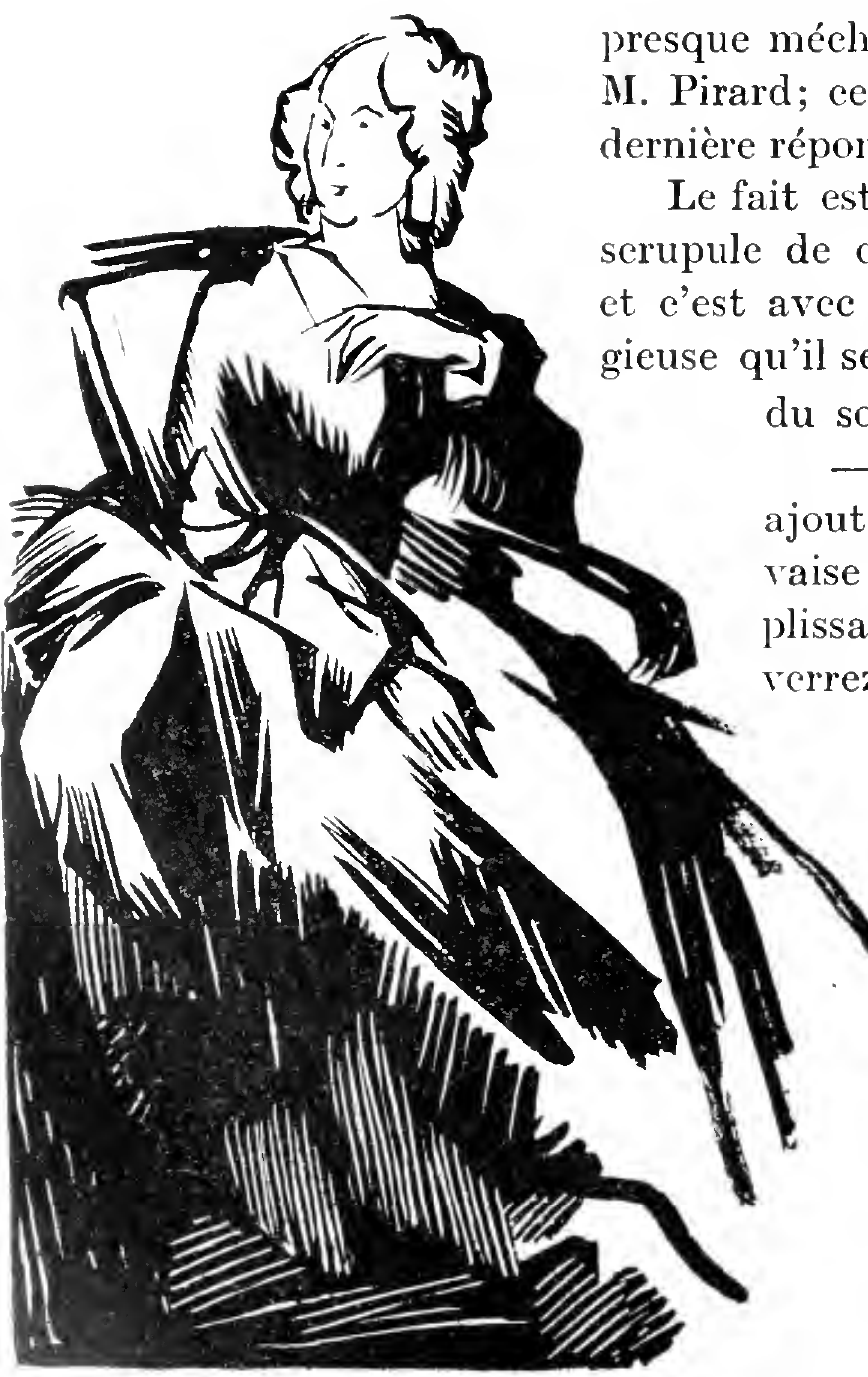
“You will see still,” he added with the same ungraciousness, and as though performing a painful duty, “you will see Madame la Marquise de La Mole. She is a tall blonde woman, devout, haughty, perfectly polite, and still more insignificant. She is the daughter of the old due de Chaulnes, so well known for his aristocratic prejudices. This great lady is a sort of epitome, in high relief, of what fundamentally constitutes the character of women
1 of her rank. She does not conceal, she, that having had ancestors who went to the Crusades is the only advantage she esteems. Money comes only long afterward: does that surprise you? we are no longer in the provinces, my friend.
You will see in her drawing room several great noblemen speaking of our princes with a singularly flippant tone. For Madame de La Mole, she lowers her voice out of respect every time she names a prince and especially a princess. I would not advise you to say in her presence that Philip II and Henry VIII were monsters. They were kings, which gives them imprescriptible rights to the respect of beings without birth, such as you and I. Nevertheless,” added M. Pirard, “we are priests, for she will take you for one; in that capacity she regards us as valets de chambre necessary to her salvation.
“Monsieur,” said Julien, “it seems to me that I shall not be long in Paris.”
“Good; but observe that there is no fortune, for a man of our order, except through the great nobles. With that indefinable something, at least for me, that there is in your character, if you do not make a fortune, you will be persecuted; there is no middle course for you. Do not deceive yourself. Men see that they do not please you when they address you; in a social country like this, you are doomed to misfortune if you do not attain to respect.”
What would you have become in Besançon without this caprice of the Marquis de La Mole? One day you will understand all the singularity of
what he is doing for you, and, if you are not a monster, you will have for him and his family an eternal gratitude. How many poor abbés, more learned than you, have lived for years in Paris on the fifteen sous of their mass and the ten sous of their arguments at the Sorbonne!... Remember what I told you last winter about the early years of that scoundrel Cardinal Dubois. Would your pride, by any chance, believe itself to have more talent than he?
I, for example, a quiet and mediocre man, I counted on dying in my seminary; I had the childishness to become attached to it. Well! I was about to be dismissed when I handed in my resignation. Do you know what my fortune was? I had five hundred and twenty francs of capital, neither more nor less; not a friend, barely two or three acquaintances. M. de La Mole, whom I had never seen, pulled me out of that bad pass; he had only to say a word, and I was given a curacy whose parishioners are well-to-do people, above coarse vices, and the income makes me ashamed, so disproportionate is it to my work. I have spoken to you at such length only to put a little lead in that head of yours.
One more word: I have the misfortune to be irascible; it is possible that you and I may cease to speak to each other.
If the haughtiness of the marquise, or the bad jokes of her son, make this house decidedly unbearable to you, I advise you to finish your studies in some seminary thirty leagues from Paris, and rather to the north than to the south. There is more civilization in the north and, he added, lowering his voice, I must confess it, the proximity of the Paris newspapers frightens the little tyrants.
If we continue to find pleasure in seeing each other, and the marquis's house does not suit you, I offer you the place of my vicar, and I will share with you by halves what this curacy yields. I owe you that and more still, he added, interrupting Julien's thanks, for the singular offer you made me at Besançon. If instead of five hundred and twenty francs I had had nothing, you would have saved me.
The abbé had lost his cruel tone of voice. To his great shame, Julien felt tears in his eyes; he was dying to throw himself into his friend's arms: he could not help saying to him, with the most manly air he could assume:
— I have been hated by my father since the cradle; that was one of my great misfortunes; but I shall no longer complain of chance, I have found a father in you, Monsieur.
— Good, good, said the abbé, embarrassed; then, happening very aptly upon a word of a seminary director: One must never say chance, my child, always say Providence.
The cab stopped; the driver lifted the bronze knocker of an immense door; it was the Hôtel de La Mole; and so that passers-by could not doubt it, these words could be read on a black marble above the door.
.
This affectation displeased Julien. They are so afraid of the Jacobins! They see a Robespierre and his cart behind every hedge; they often laugh themselves to death over it, and they thus display their house so that the rabble may recognize it in case of a riot, and pillage it. He communicated his thought to the abbé Pirard.
— Ah! poor child, you will soon be my vicar. What a frightful idea has come to you there!
— I find nothing so simple, said Julien.
The gravity of the porter and especially the cleanliness of the courtyard had struck him with admiration. It was a beautiful sunshine.
— What magnificent architecture! he said to his friend.
It was one of those houses with so flat a facade in the Faubourg Saint-Germain, built around the time of Voltaire's death. Never have fashion and beauty been so far apart.