About this book
Julien Sorel climbs from sawmill to salon, torn between the red of the army and the black of the church. Stendhal's 1830 novel, free to read online.
A PLOT
Disconnected remarks, meetings brought about by chance, turn into proofs of the last evidence, in the eyes of a man of imagination, if he has some game in his heart.
SCHILLER.
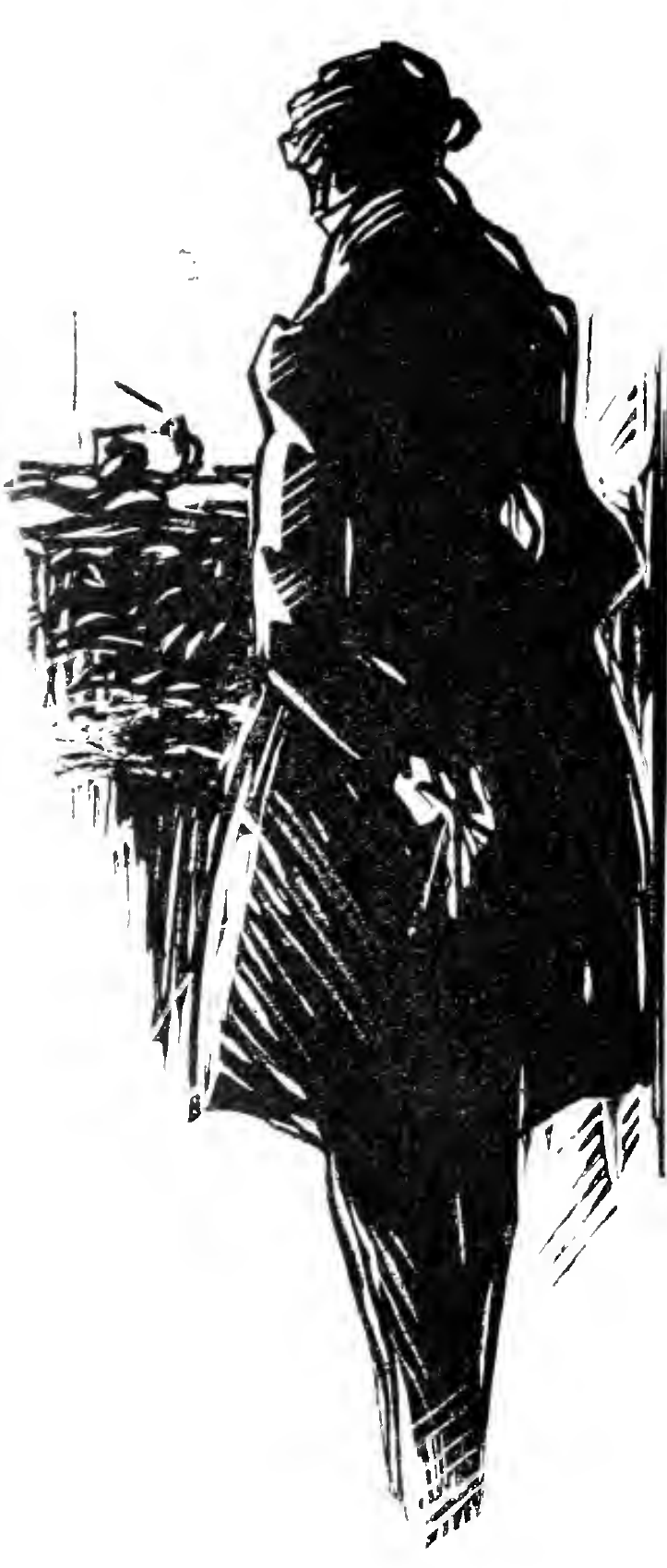
The next day he again surprised Norbert and his sister speaking of him. On his arrival, a silence of death established itself as on the previous day. His suspicions knew no bounds. Can these amiable young people have undertaken to make a fool of me? It must be admitted that this is much more probable, much more natural than a supposed passion of Mademoiselle de La Mole for a poor devil of a secretary. In the first place, have these people passions? Mystifying is their strong point. They are jealous of my poor little superiority of speech. Being jealous is another of their weaknesses. Everything is explained in this system. Mademoiselle de La Mole wants to persuade me that she singles me out, simply to make a spectacle of me to her so-called betrothed.
This cruel suspicion changed Julien's whole moral position. This idea found in his heart a beginning of love which it had no difficulty in destroying. This love was founded only on Mathilde's rare beauty, or rather on her queenly ways and her admirable attire. In this Julien was still a parvenu. A pretty woman of the great world is, so it is asserted, what astonishes most a peasant who is a man of wit, when he arrives at the first ranks of society. It was not Mathilde's character that had made Julien dream the preceding days. He had enough sense to understand that he did not know that character. All that he saw of it might be mere appearance.
For example, for anything in the world Mathilde would not have missed mass on a Sunday; almost every day she accompanied her mother to it. If in the drawing room of the Hôtel de La Mole some imprudent person forgot where he was, and permitted himself the most remote allusion to a pleasantry against the true or supposed interests of the throne or the altar, Mathilde at once became of an icy seriousness. Her glance, which was so piquant, resumed all the impassive haughtiness of an old family portrait.
But Julien had made sure that she always had one or two of Voltaire's most philosophical volumes in her room. He himself often stole a few volumes from the beautiful edition so magnificently bound. By moving each volume slightly away from its neighbor, he concealed the absence of the one he was taking; but soon he noticed that another person was reading Voltaire. He resorted to a seminarian's cunning: he placed a few pieces of horsehair on the volumes he supposed might interest Mademoiselle de La Mole. They would disappear for entire weeks.
M. de La Mole, exasperated with his bookseller, who sent him all the fake Memoirs, charged Julien with buying all the slightly piquant novelties. But, so that the venom would not spread through the house, the secretary had orders to deposit these books in a small library located in the marquis's own room. He soon became certain that, however slightly these new books were hostile
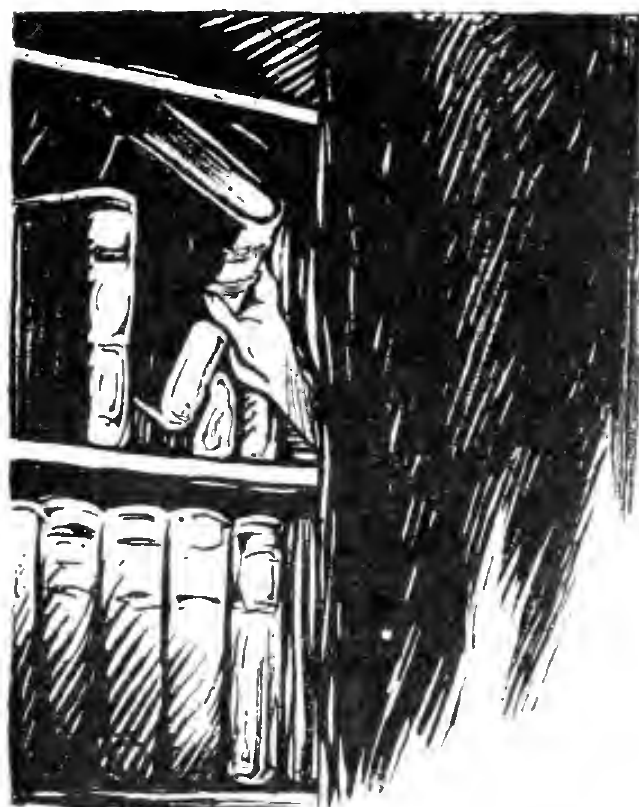
to the interests of the throne and the altar, they did not delay in disappearing. To be sure, it was not Norbert who read them.
Julien, exaggerating this experience, believed Mademoiselle de La Mole capable of Machiavelli's duplicity. This supposed villainy was a charm in his eyes, almost the only moral charm she had. The boredom of hypocrisy and of virtuous talk drove him to this excess.
He excited his imagination more than he was carried away by his love.
It was after losing himself in reveries about the elegance of Mademoiselle de La Mole's figure, about the excellent taste of her dress, about the whiteness of her hand, about the beauty of her arm, about the disinvoltura of all her movements, that he found himself in love. Then, to complete the charm, he believed her a Catherine de' Medici. Nothing was too profound or too villainous for the character he attributed to her. It was the ideal of the Maslons, the Frilairs, and the Castanèdes whom he had admired in his youth. It was, in a word, for him the ideal of Paris.
Was there ever anything more pleasant than to believe in depth or villainy in the Parisian character?
It is impossible that this little rogue is mocking me, thought Julien. One knows very little of his character if one does not already see the dark and cold expression that came into his eyes as he answered Mathilde's. A bitter irony rebuffed the assurances of friendship that Mademoiselle de La Mole, astonished, dared hazard two or three times.
Stung by this sudden oddness, the heart of this young girl—naturally cold, bored, sensitive to wit—became as passionate as it was in her nature to be. But there was also much pride in Mathilde's character, and the birth of a sentiment that made all her happiness depend on another was accompanied by a dark sadness.
Julien had already profited enough since his arrival in Paris to distinguish that this was not the dry sadness of boredom. Instead of being eager, as formerly, for evenings, spectacles, and distractions of every kind, she fled them.
Music sung by Frenchmen bored Mathilde to death, and yet Julien, who made it a duty to attend the Opera's exits, noticed that she had herself taken there as often as she could. He thought he could discern that she had lost a little of the perfect measure that shone in all her actions. She sometimes answered her friends with jests outrageous in their stinging energy. It seemed to him that she had taken a dislike to the Marquis de Croisenois. That young man must love money furiously, to not abandon this girl, rich as she is! thought Julien. And for his part, indignant at the outrages done to masculine dignity, he redoubled his coldness toward her. Often he went so far as impolite replies.
However resolved he was not to be duped by Mathilde's marks of interest, they were so evident on certain days, and Julien, whose eyes were beginning to open, found her so pretty, that he was sometimes embarrassed by them.
The adroitness and long-suffering of these young people of the great world will end by triumphing over my little experience, he said to himself; one must leave and put an end to all this. The Marquis had just entrusted him with the administration of a quantity of small lands and houses he owned in the lower Languedoc. A journey was necessary; M. de La Mole consented to it with regret. Except for matters of high ambition, Julien had become another self.
When all is said and done, they have not caught me, Julien said to himself as he prepared his departure. Whether the jests Mademoiselle de La Mole makes at those gentlemen are real or only intended to inspire me with confidence, I have amused myself with them.
If there is no conspiracy against the carpenter's son, Mademoiselle de La Mole is inexplicable, but she is so for the Marquis de Croisenois at least as much as for me. Yesterday, for example, her mood was quite real, and I had the pleasure of making a young man as noble and as rich as I am beggarly and plebeian wince by my favor. That is the finest of my triumphs; it will cheer me in my post-chaise as I race across the plains of Languedoc.
He had made his departure a secret, but Mathilde knew better than he that he was going to leave Paris the next day, and for a long time. She had recourse to a mad headache, which the stifling air of the drawing room increased. She spoke much in the garden, and so pursued with her biting jests Norbert, the Marquis de Croisenois, Caylus, de Luz, and some other young men who had dined at the Hôtel de La Mole, that she forced them to leave. She looked at Julien in a strange way.
That look is perhaps a comedy, thought Julien; but that hurried breathing, but all that turmoil! Bah! he said to himself, who am I to judge all these things? It is a question here of the most sublime and the most refined among the women of Paris. That hurried breathing which was on the point of touching me, she will have studied it in Léontine Fay, whom she loves so much.
They had remained alone; the conversation was obviously languishing. No! Julien feels nothing for me, Mathilde said to herself, truly unhappy.
As he took leave of her, she gripped his arm forcefully:
"You will receive a letter from me this evening," she said to him in a voice so altered that the sound of it was unrecognizable.
This circumstance touched Julien at once.
"My father," she continued, "has a just esteem for the services you render him. You must not leave tomorrow; find a pretext." And she moved away on the run.
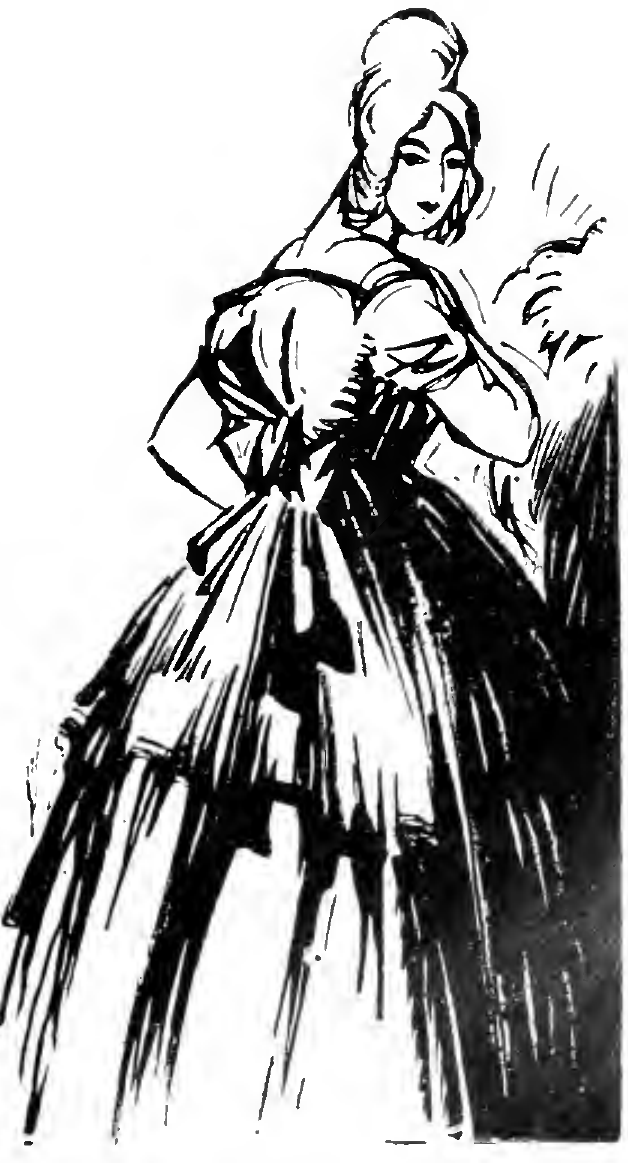
Her figure was charming. It was impossible to have a prettier foot; she ran with a grace that delighted Julien; but would one guess what his second thought was after she had quite disappeared? He was offended by the imperious tone with which she had said that word must. Louis XV too, at the moment of dying, was keenly stung by the word must, awkwardly employed by his chief physician, and yet Louis XV was not an upstart.
An hour later, a lackey handed a letter to Julien; it was quite simply a declaration of love.
There is not too much affectation in the style, Julien said to himself, seeking by his literary remarks
to contain the joy that contracted his cheeks and forced him to laugh in spite of himself.
So at last I, he cried out suddenly, passion being too strong to be contained, I, poor peasant, have a declaration of love from a great lady! As for me, that is not bad, he added, compressing his joy as much as possible. I have known how to preserve the dignity of my character. I did not say that I loved. He set about studying the shape of the characters; Mademoiselle de La Mole had a pretty little English hand. He needed some physical occupation to distract himself from a joy that verged on delirium.
"Your departure obliges me to speak... It would be beyond my strength to see you no more..."
A thought struck Julien like a discovery, interrupted the examination he was making of Mathilde's letter, and redoubled his joy. I triumph over the Marquis de Croisenois, he cried, I, who say only serious things! And he is so handsome! he has mustaches, a charming uniform; he always finds, just at the right moment, a witty and refined word to say.
Julien had a delicious moment; he wandered at random in the garden, mad with happiness.
Later he went up to his office and had himself announced at the Marquis de La Mole's, who fortunately had not gone out. He easily proved to him, by showing him some marked papers that had arrived from Normandy, that the care of the Norman lawsuits obliged him to postpone his departure for Languedoc.
"I am very glad that you are not leaving," the Marquis said to him, when they had finished talking business; "I like to see you." Julien went out; this word embarrassed him.
And I am going to seduce his daughter! perhaps render impossible that marriage with the Marquis de Croisenois, who is fleeing the charm of his future: if he is not a duke, at least his daughter will have a stool at court. Julien had the idea of leaving for Languedoc despite Mathilde's letter, despite the explanation given to the Marquis. This flash of virtue vanished very quickly.
How good I am, he said to himself, I, a plebeian, to pity a family of that rank! I, whom the Duc de Chaulnes calls a servant! How does the Marquis increase his immense fortune? By selling stock, when he learns at the Château that there will be the appearance of a coup d'état the next day. And I, cast to the lowest rank by a stepmotherly Providence, I to whom it has given a noble heart and not a thousand francs of income, that is to say no bread, exactly speaking, no bread: I, to refuse a pleasure that offers itself! A limpid spring that comes to quench my thirst in the burning desert of mediocrity through which I travel so painfully! Faith, not so stupid; everyone for himself in this desert of egoism that is called life.
And he recalled certain looks filled with disdain, addressed to him by Madame de La Mole, and especially by the ladies her friends.
The pleasure of triumphing over the Marquis de Croisenois completed the rout of this memory of virtue.
How I wish he would become angry! said Julien; with what assurance I would now give him a sword thrust. And he made the gesture of the thrust in second. Before this, I was a pedant, basely abusing a little courage. After this letter, I am his equal.
Yes, he said to himself with infinite voluptuousness and speaking slowly, our merits, the marquis's and mine, have been weighed, and the poor carpenter from the Jura comes out ahead.
Good! he exclaimed. there is the signature of my reply found. Do not go imagining, Mademoiselle de La Mole, that I forget my station. I will make you understand and feel quite well that it is for the son of a carpenter that you betray a descendant of the famous Guy de Croisenois, who followed Saint Louis on the crusade.
Julien could not contain his joy. He was obliged to go down into the garden. His room, where he had locked himself in, seemed too narrow for him to breathe in.
I, a poor peasant from the Jura, he repeated to himself ceaselessly, I, condemned always to wear this dismal black coat! Alas! twenty years earlier, I would have worn the uniform like them! At that time a man like me was killed, or a general at thirty-six. This letter, which he held tightly in his hand, gave him the stature and bearing of a hero. Now, it is true, with this black coat, at forty, one has a hundred thousand francs in salary and the blue cordon like Monsieur the Bishop of Beauvais.
verné! My compatriot Granvelle, for example.
Little by little Julien's agitation calmed down; prudence floated to the surface. He said to himself, like his master Tartuffe, whose role he knew by heart:
I may believe these words an honest artifice.I will not trust such gentle speeches, Unless some small favor from her, for which I sigh, Comes to assure me of all that they have been able to tell me.TARTUFFE, act IV, scene v.
Tartuffe too was undone by a woman, and he was well worth any other man... My reply can be shown..., and here is the remedy we find for that, he added, pronouncing slowly, and with the accent of a ferocity that held itself in check, we begin it with the most passionate phrases from the sublime Mathilde's letter.Yes, but four lackeys of M. de Croisenois will rush upon me and snatch the original from me.No, for I am well armed, and I am accustomed, as is well known, to firing on lackeys.Well then! one of them has courage; he rushes upon me. He has been promised a hundred napoleons. I kill him or wound him, so much the better, that is what they want. I am thrown into prison quite legally; I appear before the police court, and I am sent, with all justiceand equity on the part of the judges, to keep company in Poissy with Messrs. Fontan and Magalon. There I sleep with four hundred beggars pell-mell... and I would have some pity for those people, he cried, rising impetuously. Do they have any for the people of the third estate when they have them in their power! That word was the last sigh of his gratitude toward M. de La Mole, who, in spite of himself, had tormented him until then.
Gently, Gentlemen aristocrats, I understand this little stroke of Machiavellianism; the abbé Maslon or M. Castanède of the seminary could not have done better. You will take the provocative letter from me, and I shall be the second volume of Colonel Caron at Colmar.
One moment, Gentlemen, I am going to send the fatal letter in deposit, in a well-sealed package, to M. l'abbé Pirard. That man is an honest man, a Jansenist, and as such safe from the seductions of the budget. Yes, but he opens letters... it is to Fouqué that I shall send this one.
It must be admitted, Julien's look was atrocious, his physiognomy hideous; it breathed crime without alloy. He was the unhappy man at war with all society.
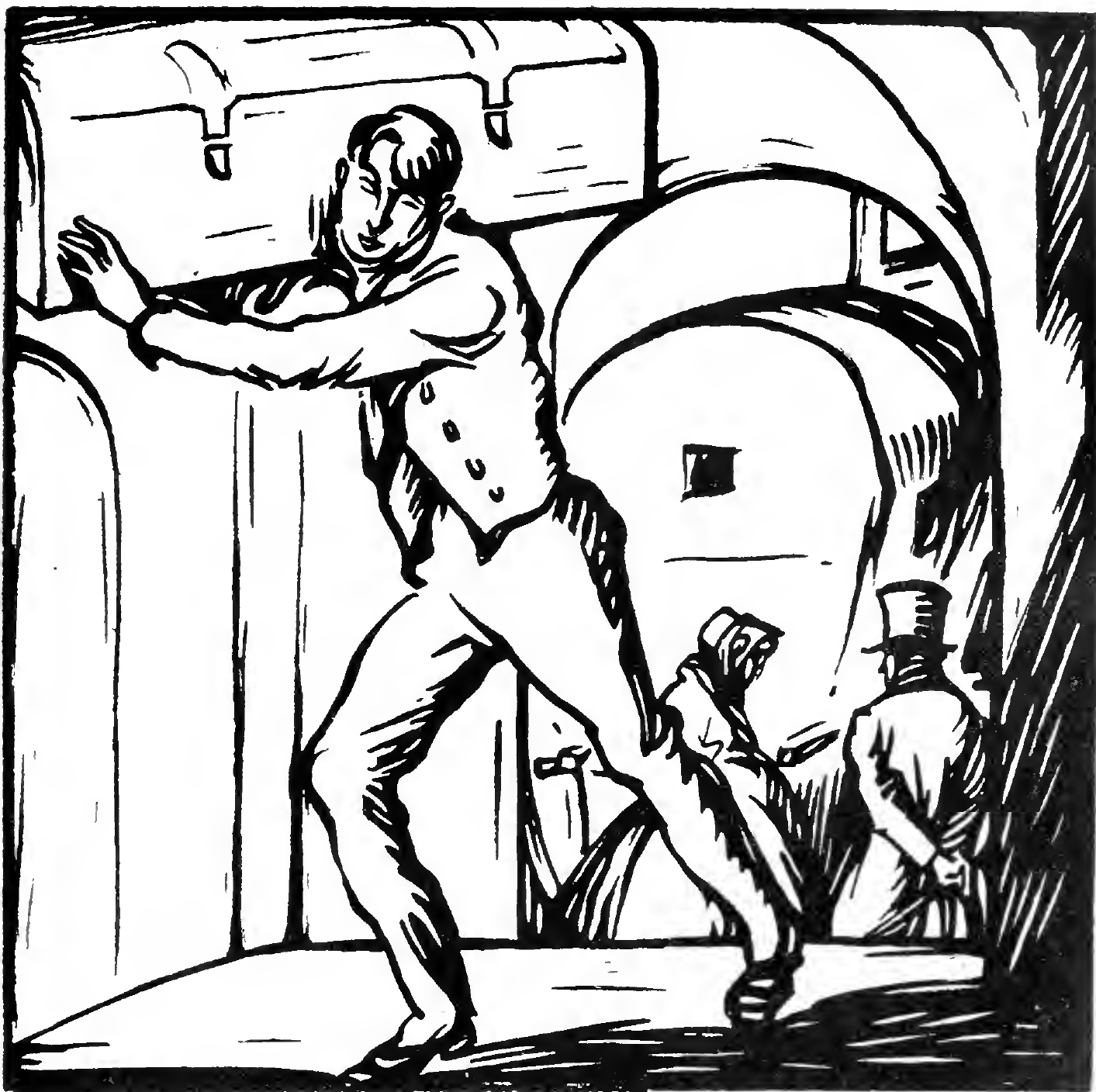
To arms! cried Julien. And with a leap he cleared the steps of the hotel's perron. He entered the stall of the writing-master in the street; he frightened him. Copy this, he said to him, giving him Mademoiselle de La Mole's letter.
While the writing-master was working, he himself wrote to Fouqué; he begged him to keep a precious deposit for him. But, he said to himself, interrupting himself, the dark cabinet at the post office will open my letter and return to you the one you are looking for...; no, Gentlemen. He went and bought an enormous Bible from a Protestant bookseller, hid Mathilde's letter very skillfully in the cover, had the whole thing packed up, and his package departed by the diligence, addressed to one of Fouqué's workmen, whose name no one in Paris knew.
:
That done, he returned joyful and nimble to the Hôtel de La Mole. Now for us! he cried, locking himself in his room and throwing off his coat.
"What! Mademoiselle," he wrote to Mathilde, "it is Mademoiselle de La Mole who, through the hands of Arsène, her father's lackey, has a letter all too seductive delivered to a poor carpenter from the Jura, doubtless to make sport of his simplicity..." And he transcribed the clearest phrases of the letter he had just received.
His own would have done honor to the diplomatic prudence of M. le chevalier de Beauvoisis. It was still only ten o'clock; Julien,drunk with happiness and with the feeling of his power, so new to a poor devil, entered the Italian Opera. He heard his friend Geronimo sing. Never had music exalted him to such a degree. He was a god (1).