About this book
Julien Sorel climbs from sawmill to salon, torn between the red of the army and the black of the church. Stendhal's 1830 novel, free to read online.
XVI THE NEXT DAY
He turn'd his lip to hers, and with his hand Call'd back the tangles of her wandering hair. Don Juan, c. i, st. 170.
Happily, for Julien's glory, Madame de Rênal had been too agitated, too astonished, to perceive the foolishness of the man who in a moment had become everything in the world to her.
As she urged him to withdraw, seeing the day break:
— Oh! my God, she said, if my husband has heard a noise, I am lost. Julien, who had time to make phrases, remembered this one:
— Would you regret life?
— Ah! very much at this moment! but I would not regret having known you.
Julien found it dignified to return deliberately in broad daylight and imprudently.
The continuous attention with which he studied his slightest actions, in the mad idea of appearing a man of experience, had only one advantage; when he saw Madame de Rênal again at breakfast, his conduct was a masterpiece of prudence.
As for her, she could not look at him without blushing to the eyes, and could not live an instant without looking at him; she was aware of her turmoil, and her efforts to hide it redoubled it. Julien raised his eyes to her only once. At first, Madame de Rênal admired his prudence. Soon, seeing that this single glance was not repeated, she was alarmed: "Can it be that he no longer loves me, she said to herself; alas! I am very old for him; I am ten years older than he."
Passing from the dining room into the garden, she pressed Julien's hand. Surprised by such an extraordinary mark of love, he looked at her with passion; for she had seemed to him very pretty at lunch; and, while lowering his eyes, he had spent his time detailing her charms. That look consoled Madame de Rênal; it did not remove all her worries, but her worries almost entirely removed her remorse toward her husband.
At lunch, this husband had noticed nothing; it was not the same with Madame Derville; she believed Madame de Rênal on the point of succumbing. Throughout the day, her bold and incisive friendship did not spare her half-words intended to paint for her, in hideous colors, the danger she was running.
Madame de Rênal burned to find herself alone with Julien; she wanted to ask him if he still loved her. Despite the unalterable gentleness of her character, she was several times on the point of making her friend understand how important she was.
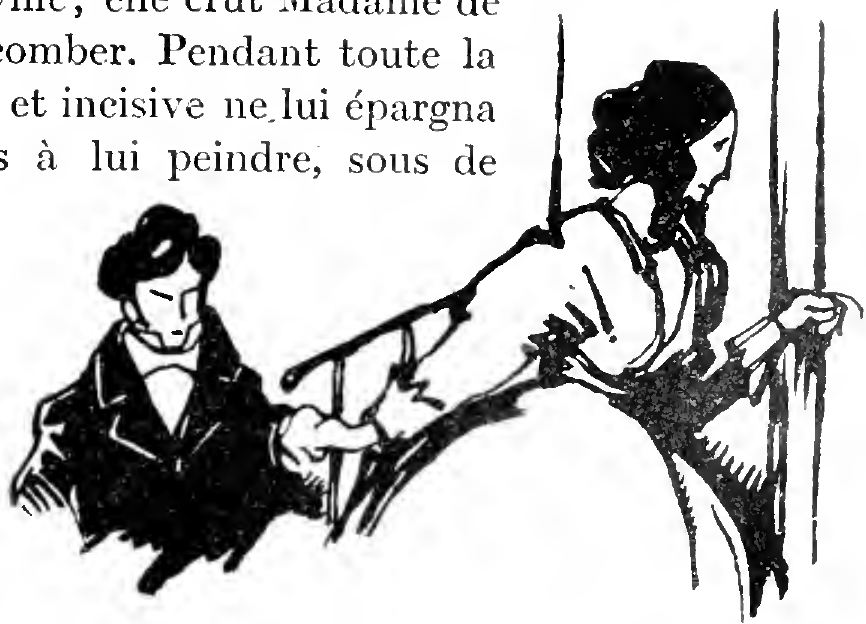
In the evening, in the garden, Madame Derville arranged things so well that she found herself placed between Madame de Rênal and Julien. Madame de Rênal, who had formed a delicious image of pressing Julien's hand and carrying it to her lips, could not even address a word to him.
This contretemps increased her agitation. She was devoured by remorse. She had scolded Julien so much for the imprudence he had committed in coming to her house the previous night that she trembled lest he not come this one. She left the garden early and went to settle herself in her room. But, unable to endure her impatience, she came and pressed her ear against Julien's door. Despite the uncertainty and the passion devouring her, she did not dare enter. This action seemed to her the basest of baseness, for it serves as the text of a provincial saying.
The servants were not all in bed. Prudence finally obliged her to return to her room. Two hours of waiting were two centuries of torment.
But Julien was too faithful to what he called duty to fail to carry out, point by point, what he had prescribed for himself.
As one o'clock struck, he slipped softly out of his room, made sure that the master of the house was sound asleep, and appeared at Madame de Rênal's. That day he found more happiness with his friend, for he thought less constantly about the role he had to play. He had eyes to see and ears to hear. What Madame de Rênal told him about her age helped give him some assurance.
"Alas! I am ten years older than you! How can you love me?" she kept repeating, without design, and because this idea oppressed her.
Julien did not understand this misfortune, but he saw that it was real, and he almost forgot all his fear of being ridiculous.
The foolish idea of being regarded as a subordinate lover, because of his obscure birth, likewise disappeared. As Julien's transports reassured his timid mistress, she recovered a little happiness and the ability to judge her lover. Fortunately, that day he scarcely had at all that borrowed air which had made the previous day's rendezvous a victory, but not a pleasure. Had she noticed his attention to playing a role, this sad discovery would have forever taken all happiness from her. She could have seen in it nothing but a sad effect of the disproportion in their ages.
Although Madame de Rênal had never thought about theories oflove, the difference in age is, after that of fortune, one of the great commonplaces of provincial joking whenever love is in question.
Within a few days, Julien, restored to all the ardor of his age, was madly in love.
One must admit, he said to himself, that she has an angelic goodness of soul, and one could not be prettier.
He had almost entirely lost the idea of the role he had to play. In a moment of abandon, he even confessed all his anxieties to her. This confidence raised to its height the passion he inspired. So I have hadno happy rival! Madame de Rênal said to herself with delight. She dared to question him about the portrait in which he took such interest; Julien swore to her that it was that of a man.
When Madame de Rênal had enough composure left to reflect, she could not get over her astonishment that such happiness existed, and that she had never suspected it.
"Ah!" she said to herself, "if I had known Julien ten years ago, when I could still pass for pretty!"
Julien was very far from such thoughts. His love was still ambition; it was the joy of possessing, he, a poor creature so unhappy and so despised, a woman so beautiful. His acts of adoration, his transports at the sight of his friend's charms, ended by reassuring her somewhat about the difference in age. If she had possessed a little of that savoir-vivre which a woman of thirty has long enjoyed
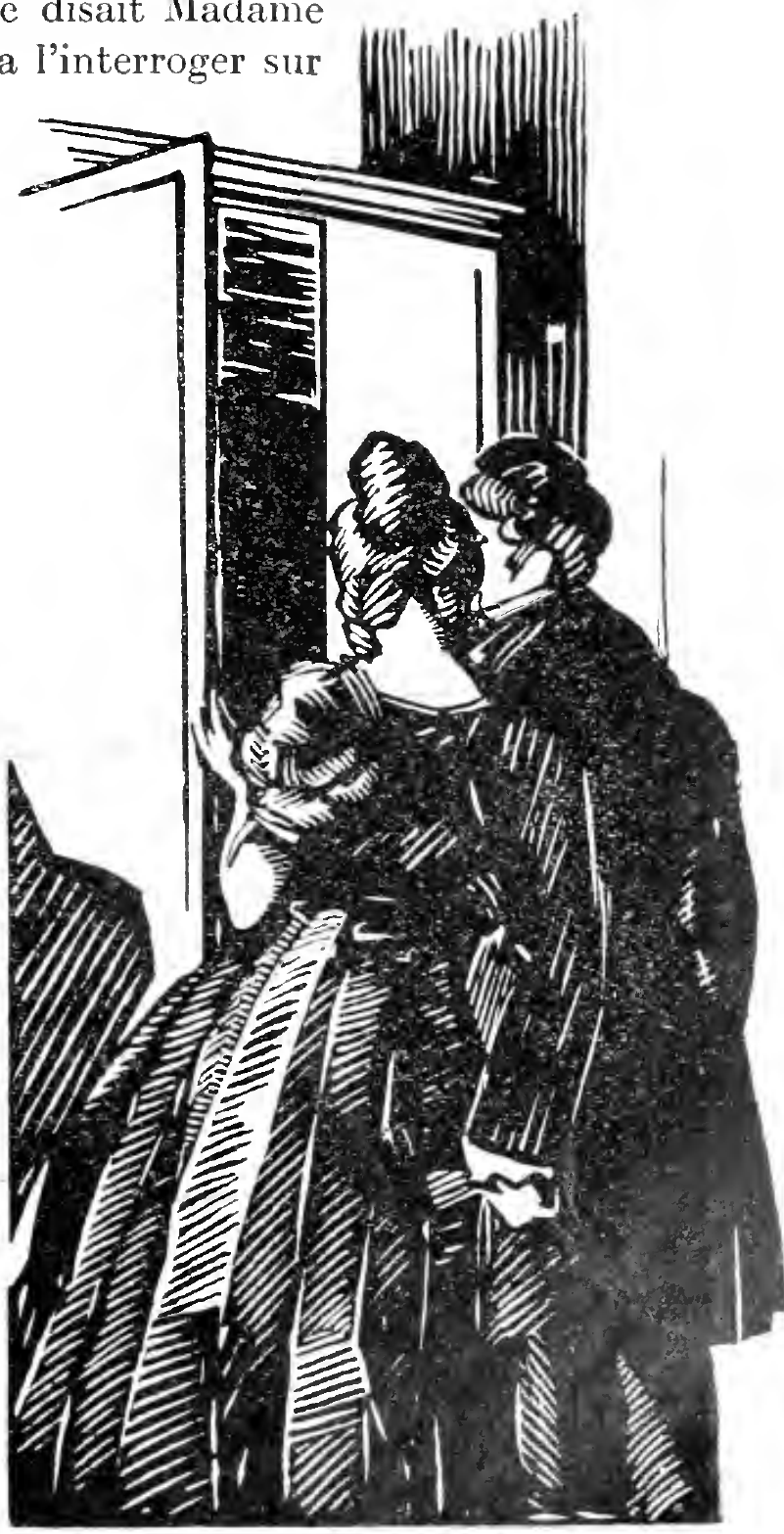
in more civilized countries, she would have trembled for the duration of a love that seemed to live only on surprise and the ravishment of self-esteem.
In his moments of forgetfulness of ambition, Julien admired with transport even Madame de Rênal's hats, even her dresses. He could not tire of the pleasure of smelling their perfume. He would open her wardrobe and remain whole hours admiring the beauty and arrangement of everything he found there. His friend, leaning on him, watched him; he looked at those jewels, those fripperies which, on the eve of a marriage, fill a wedding basket.
I might have married such a man! Madame de Rênal sometimes thought; what a soul of fire! what a ravishing life with him!
As for Julien, never had he found himself so near those terrible instruments of feminine artillery. It is impossible, he said to himself, that in Paris they have anything more beautiful! Then he found no objection to his happiness. Often the sincere admiration and transports of his mistress made him forget the vain theory that had made him so stiff and almost so ridiculous in the first moments of this liaison. There were moments when, despite his habits of hypocrisy, he found an extreme sweetness in confessing to this great lady who admired him his ignorance of a host of little usages. His mistress's rank seemed to raise him above himself. Madame de Rênal, for her part, found the sweetest of moral voluptuousness in thus instructing, in a host of little things, this young man full of genius, who was regarded by everyone as destined one day to go so far. Even the subprefect and M. Valenod could not help admiring him; they seemed to him less stupid because of it. As for Madame Derville, she was far from having to express the same feelings. Desperate at what she thought she divined, and seeing that wise advice was becoming odious to a woman who, literally, had lost her head, she left Vergy without giving an explanation that no one took care to ask of her. Madame de Rênal shed a few tears over it, and soon it seemed to her that her felicity redoubled. By this departure she found herself almost all day tête-à-tête with her lover.
Julien gave himself up all the more to the sweet society of his friend because, whenever he was too long alone with himself, Fouqué's fatal proposal came to agitate him again. In the first days of this new life, there were moments when he, who had neverloved, who had never been loved by anyone, found such delicious pleasure in being sincere that he was on the point of confessing to Madame de Rênal the ambition that until then had been the very essence of his existence. He would have liked to be able to consult her about the strange temptation that Fouqué's proposal gave him; but a small event prevented all frankness.