About this book
Julien Sorel climbs from sawmill to salon, torn between the red of the army and the black of the church. Stendhal's 1830 novel, free to read online.
ELECTIVE AFFINITIES
They know not how to touch the heart save by bruising it.
A MODERN.
The children adored him, but he did not care for them at all; his mind was elsewhere. Nothing that these brats could do ever tried his patience. Cold, just, impassive, and yet loved, because his arrival had in some sort driven boredom out of the house, he was a good tutor. For his own part, he felt nothing but hatred and horror for the fashionable society to which he was admitted—at the foot of the table, it is true, which perhaps explains the hatred and horror. There were certain state dinners at which he could scarcely contain his hatred for everything around him. On Saint-Louis' day, among others, M. Valenod was keeping the bank at M. de Rênal's. Julien was on the point of betraying himself; he fled into the garden on the pretext of looking after the children. What eulogies of probity! he cried; one would think it was the only virtue; and yet what consideration, what base respect for a man who has evidently doubled and trebled his fortune since he has been administering the property of the poor! I would wager that he even makes something out of the funds intended for foundlings, those poor creatures whose misery is even more sacred than that of others! Ah! monsters, monsters! And I too am a sort of foundling, hated by my father, my brothers, my whole family.
A few days before Saint-Louis' day, Julien, walking alone and saying his breviary in a little wood called the Belvédère, which overlooks the Cours de la Fidélité, had sought in vain to avoid his two brothers, whom he saw coming from afar along a lonely path. The jealousy of these coarse workmen had been so provoked by the handsome black coat, by the extremely neat appearance of their brother, by the sincere contempt he had for them, that they had beaten him until they left him unconscious and covered with blood. Madame de Rênal, walking with M. Valenod and the sub-prefect, happened by chance to come into the little wood; she saw Julien lying on the ground and thought him dead. Her alarm was such that it made M. Valenod jealous.
He took fright too soon. Julien found Madame de Rênal very beautiful, but he hated her because of her beauty; it was the first reef that had nearly halted his fortune. He spoke to her as little as possible, in order to make people forget the transport which, on the first day, had carried him away to kiss her hand.
Élisa, Madame de Rênal's maid, had not failed to fall in love with the young tutor; she often spoke of him to her mistress. Mademoiselle Élisa's love had earned Julien the hatred of one of the footmen. One day he heard the man say to Élisa: You will not speak to me any more, since that filthy tutor came into the house. Julien did not deserve this insult; but, by the instinct of a handsome boy, he redoubled his care for his person. M. Valenod's hatred redoubled also. He said publicly that so much coquetry did not become a young abbé. Apart from the cassock, it was the costume Julien wore.
Madame de Rênal noticed that he spoke more often than usual to Mademoiselle Élisa; she learned that these conversations were caused by the scantiness of Julien's very small wardrobe. He had so little linen that he was obliged to have it washed very often outside the house, and it was for these little services that Élisa was useful to him. This extreme poverty, which she had not suspected, touched Madame de Rênal; she felt a desire to make him presents, but did not dare; this inner resistance was the first painful feeling that Julien caused her. Until then the name of Julien and the feeling of a pure and wholly intellectual joy had been synonymous for her. Tormented by the idea of Julien's poverty, Madame de Rênal spoke to her husband of making him a present of linen.
— What folly! he replied. What! make presents to a man with whom we are perfectly satisfied, and who serves us well? it would be in the case of his neglecting himself that we should need to stimulate his zeal.
Madame de Rênal was humiliated by this way of seeing things; she would not have noticed it before Julien's arrival. She never saw the extreme neatness of the young abbé's dress, otherwise very simple, without saying to herself: This poor boy, how can he manage?
Little by little, she pitied everything that Julien lacked, instead of being shocked by it.
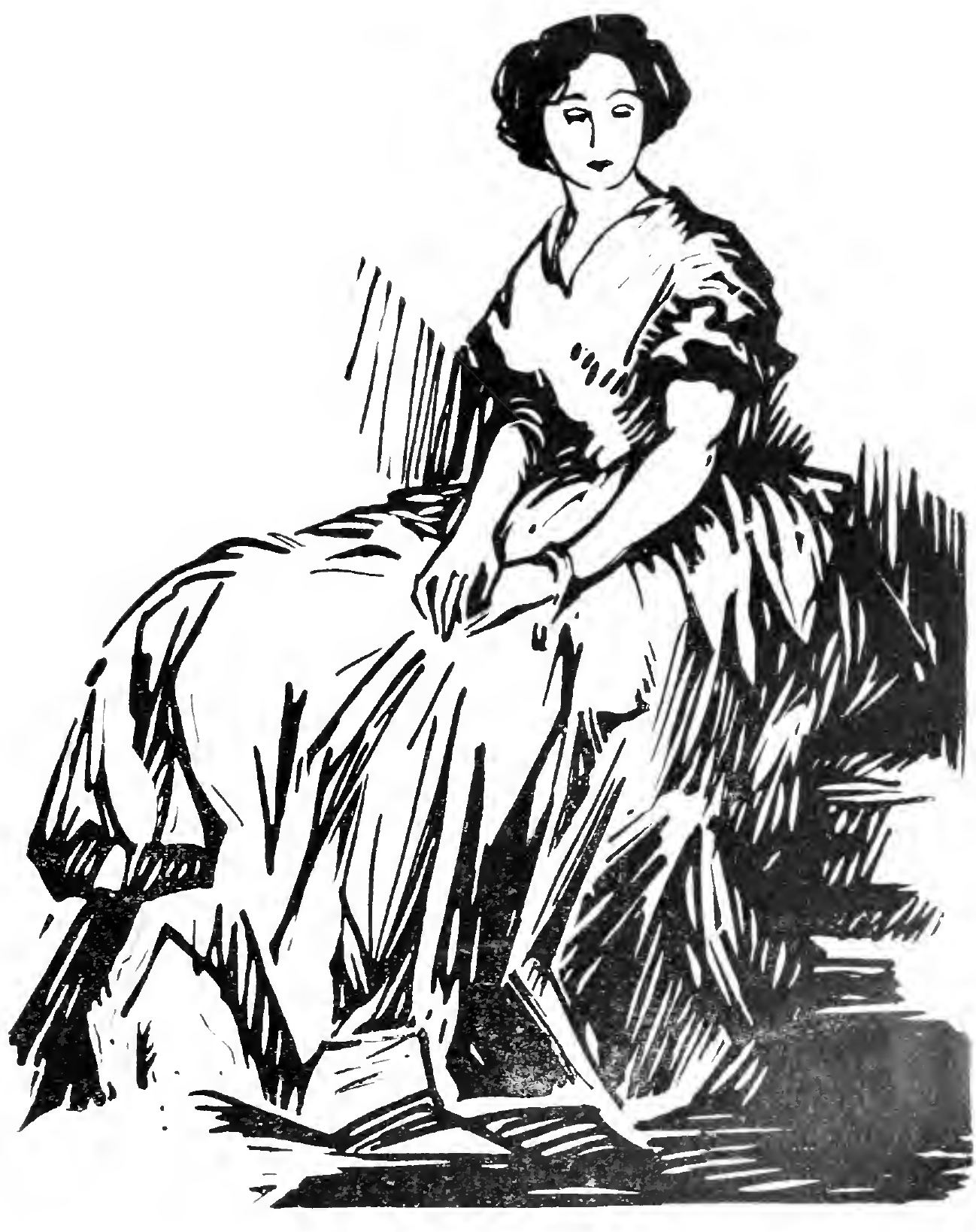
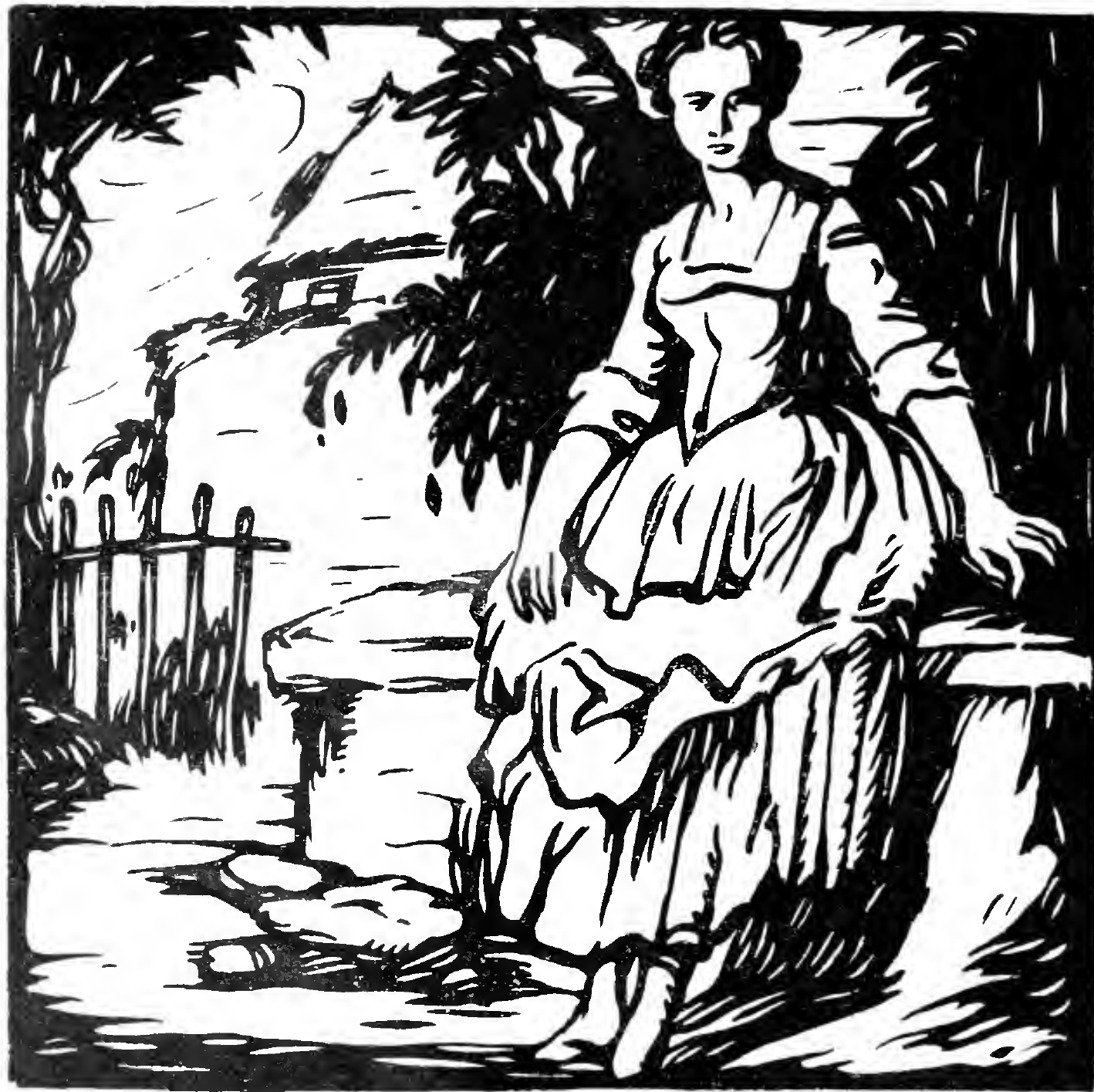
Madame de Rênal was one of those provincial women whom one may very well take for fools during the first fortnight one sees them. She had no experience of life, and did not care to talk. Endowed with a delicate and disdainful soul, that instinct for happiness natural to all beings meant that, most of the time, she gave no attention to the actions of the coarse personages among whom chance had thrown her. She would have been noticed for her naturalness and liveliness of mind, had she received the slightest education; but as an heiress, she had been brought up among nuns who were passionate adorers of the Sacred Heart of Jesus, and animated by a violent hatred for the French,

the enemies of the Jesuits. Madame de Rênal had had enough sense soon to forget, as absurd, everything she had learned at the convent; but she put nothing in its place, and ended by knowing nothing. The early flatteries of which she had been the object, as heiress to a great fortune, and a decided inclination to passionate devotion, had given her a wholly inward manner of living. With the appearance of the most perfect condescension, and of an abnegation of will which the husbands of Verrières held up as an example to their wives, and which was the pride of M. de Rênal, the habitual conduct of her soul was in fact the result of the haughtiest humor. Such a princess, cited for her pride, gives infinitely more attention to what her gentlemen do around her, than this woman, so gentle, so modest in appearance, gave to all that her husband said or did. Until Julien's arrival, she had really had attention only for her children. Their little illnesses, their pains, their little joys, occupied all the sensibility of this soul which, in life, had adored only God, when she was at the Sacred Heart of Besançon.
Without deigning to say so to anyone, a attack of fever in one of her sons put her almost in the same state as if the child had been dead. A coarse burst of laughter, a shrug of the shoulders, accompanied by some trivial maxim on the folly of women, had constantly greeted confidences of this kind of grief, which the need of unbosoming herself had led her to make to her husband in the first years of their marriage. These sorts of pleasantries, especially when they bore on the illnesses of her children, turned the dagger in Madame de Rênal's heart. This is what she found in place of the eager and honeyed flatteries of the Jesuit convent where she had spent her youth. Her education was made by grief. Too proud to speak of this kind of sorrow, even to her friend Madame Derville, she imagined that all men were like her husband, M. Valenod, and the sub-prefect Charcot de Maugiron. Coarseness, and the most brutal insensibility to everything that was not a matter of money, precedence, or crosses; blind hatred for any reasoning that contradicted them, seemed to her natural to that sex, like wearing boots and a felt hat.
After long years, Madame de Rênal was not yet accustomed to these money-people among whom she had to live.
Hence the success of the little peasant Julien. She found sweet enjoyments, all brilliant with the charm of novelty, in the sympathy of this noble and proud soul. Madame de Rênal soon forgave him his extreme ignorance, which was one grace the more, and the rudeness of his manners, which she managed to correct. She found that he was worth listening to, even when people spoke of the most commonplace things, even when it was a question of a poor dog run over, as he crossed the street, by a peasant's cart going at a trot. The spectacle of this pain made her husband burst into his loud laugh, while she saw the handsome black eyebrows of Julien, so well arched, contract. Generosity, nobility of soul, humanity seemed to her little by little to exist only in this young abbé. She felt for him alone all the sympathy and even the admiration that these virtues excite in well-born souls.
In Paris, Julien's position with regard to Madame de Rênal would soon have been simplified; but in Paris, love is the child of novels. The young tutor and his timid mistress would have found in three or four novels, and even in the couplets of the Gymnase, the illumination of their situation. The novels would have traced out for them the role to play, shown them the model to imitate; and this model, sooner or later, and though with no pleasure at all, and perhaps grudgingly, vanity would have forced Julien to follow.
In a small town in the Aveyron or the Pyrenees, the slightest incident would have been made decisive by the fire of the climate. Under our darker skies, a poor young man, who is ambitious only because the delicacy of his heart makes him need some of the enjoyments that money gives, sees every day a woman of thirty, sincerely virtuous, occupied with her children, and who takes no examples of conduct from novels whatsoever. Everything goes slowly, everything is done little by little in the provinces; there is more naturalness.
Often, when thinking of the poverty of the young tutor, Madame de Rênal was moved to the point of tears. Julien caught her one day weeping outright.
— Ah! Madame, has some misfortune befallen you?
— No, my friend, she replied: call the children; let us go for a walk.
She took his arm and leaned on it in a manner that seemed singular

to Julien. It was the first time that she had called him my friend.
Towards the end of the walk, Julien noticed
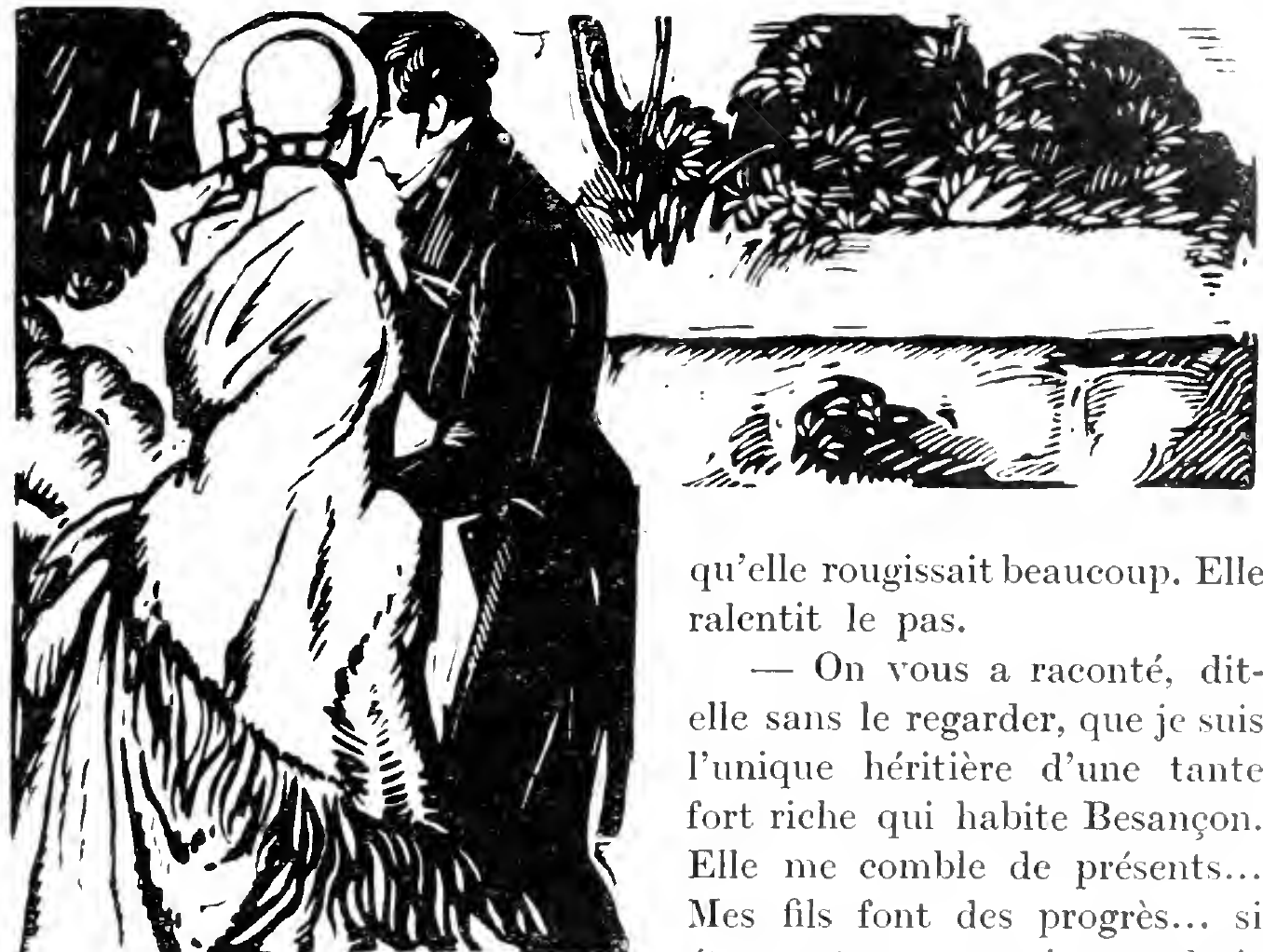
[her] begging him to accept a small present, as a mark of my gratitude. It is only a matter of a few louis to get you some linen. But... she added, blushing still more, and she stopped speaking.
What, Madame? said Julien.
— It would be useless, she continued, lowering her head, to speak of this to my husband.
— I am small, Madame, but I am not base, replied Julien, stopping, his eyes shining with anger, and drawing himself up to his full height; that is something you have not thought about enough. I would be less than a valet if I put myself in the position of hiding from M. de Rênal anything whatsoever relating to my money.
Madame de Rênal was crushed.
— M. the mayor, continued Julien, has given me five times thirty-six francs since I have been living in his house; I am ready to show my expense book to M. de Rênal and to anyone at all, even to M. Valenod, who hates me.
After this outburst, Madame de Rênal had remained pale and trembling, and the walk ended without either of them being able to find a pretext to renew the dialogue. Love for
Madame de Rênal became more and more impossible in Julien's proud heart; as for her, she respected him, she admired him; she had been scolded for it. Under the pretext of repairing the involuntary humiliation she had caused him, she allowed herself the most tender attentions. The novelty of these manners made Madame de Rênal happy for eight days. Their effect was to appease in part Julien's anger; he was far from seeing in them anything that could resemble a personal taste.
— That is how, he said to himself, these rich people are: they humiliate, and then believe they can make everything right again with a few monkey tricks!
Madame de Rênal's heart was too full, and still too innocent, for her, despite her resolutions on that point, not to tell her husband about the offer she had made to Julien and the way in which she had been rebuffed.
— How, replied M. de Rênal, keenly stung, could you tolerate a refusal on the part of a servant?And as Madame de Rênal cried out at that word:
— I speak, Madame, as the late M. the Prince de Condé did, presenting his chamberlains to his new wife: "All these people," he told her, "are our servants." I read you that passage from the Mémoires de Besenval, essential for precedence. Everything that is not a gentleman who lives in your house and receives a salary is your servant. I am going to say two words to this Monsieur Julien, and give him a hundred francs.
— Ah! my friend, said Madame de Rênal trembling, at least not in front of the servants!
— Yes, they might be jealous, and with reason, said her husband, moving away and thinking about the amount of the sum.
Madame de Rênal fell onto a chair, almost fainting with grief. He is going to humiliate Julien, and through my fault! She felt horror for her husband, and hid her face with her hands. She firmly resolved never to make confidences again.
When she saw Julien again, she was all trembling; her breast was so contracted that she could not manage to pronounce the slightest word. In her embarrassment, she took his hands and pressed them.
— Well! my friend, she said to him at last, are you pleased with my husband?
— How could I not be? replied Julien with a bitter smile; he gave me a hundred francs.
Madame de Rênal looked at him as if uncertain.
Give me your arm, she said at last in a tone of courage
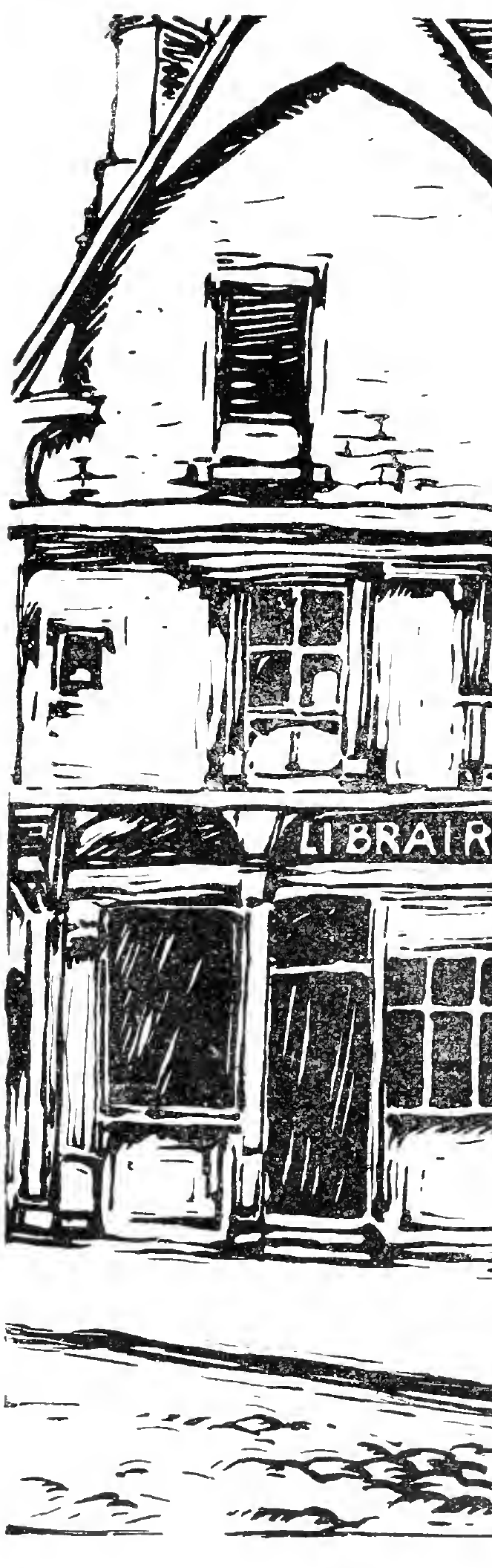
She dared to go as far as the bookseller's in Verrières, despite his dreadful reputation for liberalism. There she chose ten louis' worth of books, which she gave to her sons. But these books were those she knew Julien desired. She insisted that there, in the bookseller's shop, each of the children write his name on the books that had fallen to his share. While Madame de Rênal was happy at the kind of reparation she had the audacity to make to Julien, he was astonished at the quantity of books he saw at the bookseller's. Never had he dared enter so profane a place;his heart was pounding. Far from thinking of guessing what was happening in Madame de Rênal's heart, he was dreaming deeply of the means there might be, for a young student of theology, to procure some of these books. At last he had the idea that it would be possible with some skill to persuade M. de Rênal that his sons ought to be given, as a subject for composition, the history of celebrated gentlemen born in the province. After a month of efforts, Julien saw this idea succeed, and to such a degree that, some time later, he dared hazard, while speaking to M. de Rênal, the mention of a transaction far more painful for the noble mayor; it was a matter of contributing to the fortune of a liberal, by taking out a subscription at the bookseller's. M. de Rênal readily agreed that it was wise to give his eldest son a visual idea of several works that he would hear mentioned in conversation when he should be at the Military School; but Julien saw M. the mayor persist in not going further. He supposed a secret reason, but could not guess it.
— I was thinking, Monsieur, he said to him one day, that it would be highly improper for the name of a good gentleman such as a Rênal to appear on the dirty register of the bookseller. — M. de Rênal's brow cleared. — It would also be a very bad mark, continued Julien, in a humbler tone, for a poor student of theology, if it could one day be discovered that his name had been on the register of a bookseller who lends books. The liberals might accuse me of having asked for the most infamous books; who knows even if they would not go so far as to write after my name the titles of those perverse books. But Julien was straying from the trail. He saw the mayor's physiognomy resume the expression of embarrassment and ill humor. Julien fell silent. I have my man, he said to himself.
A few days later, the eldest of the children, questioning Julien about a book announced in the Quotidienne, in the presence of M. de Rênal:
— To avoid any subject of triumph for the Jacobin party, said the young tutor, and yet to give myself the means of answering M. Adolphe, we could have a subscription taken out at the bookseller's by the last of your servants.
— There is an idea that is not bad, said M. de Rênal, evidently very joyful.
— However, it would be necessary to specify, said Julien with that grave and almost unhappy air that suits certain people so well when they see the success of the affairs they have longest desired, it would be necessary to specify that the servant may not take any novels.Once in the house, these books dangerous for the girls of Madame and for the servant himself could corrupt them.
— You are forgetting political pamphlets, added M. de Rênal with a haughty air. He wanted to hide the admiration that the learned mezzo-termine invented by his children's tutor gave him.
Julien's life was thus composed of a series of little negotiations; and their success occupied him much more than the feeling of marked preference that it would have depended only on himself to read in Madame de Rênal's heart.
The moral position in which he had been situated all his life was repeated in the mayor of Verrières. There, as at his father's sawmill, he profoundly despised the people with whom he lived, and was hated by them. Every day, in the accounts given by the sub-prefect, by M. Valenod, by the other friends of the household, on the occasion of things that had just happened before their eyes, he saw how little their ideas resembled reality. Did an action seem to him admirable, it was precisely that one which drew the blame of the people around him. His inward retort was always: What monsters or what fools! The amusing thing, with so much pride, is that often he understood absolutely nothing of what was being said.
Of life, he had spoken with sincerity only to the old surgeon-major; the few ideas he had were relative to Bonaparte's campaigns in Italy, or to surgery. His young courage took pleasure in the circumstantial account of the most painful operations; he would say to himself:—I should not have flinched.
The first time that Madame de Rênal attempted
with him a conversation foreign to the education of the children, he began to speak of surgical operations; she turned pale and begged him to stop.
Julien knew nothing beyond that. Thus, spending his life with Madame de Rênal, the most singular silence established itself between them as soon as they were alone. In the drawing room, whatever the humility of his bearing, she found in his eyes an air of intellectual superiority toward everything that came to her house. Was she alone for a moment with him, she saw him visibly embarrassed. She was uneasy about it, for her woman's instinct made her understand that this embarrassment was by no means tender.
From I know not what idea taken from some tale of good society, such as the old surgeon-major had seen, as soon as silence fell in a place where he found himself with a woman, Julien felt humiliated, as if this silence had been his particular fault. This sensation was a hundred times more painful in a tête-à-tête. His imagination, filled with the most exaggerated, the most Spanish notions about what a man ought to say when he is alone with a woman, offered him in his confusion only inadmissible ideas. His soul was in the clouds, and yet he could not emerge from the most humiliating silence. Thus his severe air, during his long walks with Madame de Rênal and the children, was increased by the most cruel sufferings. He despised himself horribly. If by misfortune he forced himself to speak, it happened that he said the most ridiculous things. To crown his misery, he saw and exaggerated his absurdity; but what he did not see was the expression of his eyes: they were so beautiful and announced so ardent a soul that, like good actors, they sometimes gave a charming meaning to what had none. Madame de Rênal remarked that, alone with her, he never managed to say anything fine except when, distracted by some unforeseen event, he did not think of turning a compliment well. As the friends of the house did not spoil her by presenting new and brilliant ideas, she delighted in the flashes of Julien's wit.
Since the fall of Xapoléon, every appearance of gallantry has been severely banished from the morals of the province. People are afraid of being dismissed. Rascals seek support in the congregation; and hypocrisy has made the finest progress even among the liberal classes. Ennui redoubles. No other pleasure remains but reading and agriculture.
Madame de Rênal, the rich heiress of a devout aunt, married at sixteen to a worthy gentleman, had never in her life experienced or seen anything that remotely resembled love. It was hardly anyone but her confessor, the good curé Chélan, who had spoken to her of love, in connection with the pursuits of M. Valenod, and had painted him such a disgusting picture of it that the word represented to her only the most abject libertinism. She regarded as an exception, or even as entirely outside nature, love such as she had found it in the very small number of novels that chance had placed before her eyes. Thanks to this ignorance, Madame de Rênal, perfectly happy, incessantly occupied with Julien, was far from making herself the slightest reproach.