About this book
Julien Sorel climbs from sawmill to salon, torn between the red of the army and the black of the church. Stendhal's 1830 novel, free to read online.
THE MINISTRY OF VIRTUE
But if I take this pleasure with so much prudence and circumspection, it will no longer be a pleasure for me.
Lope de Vega.
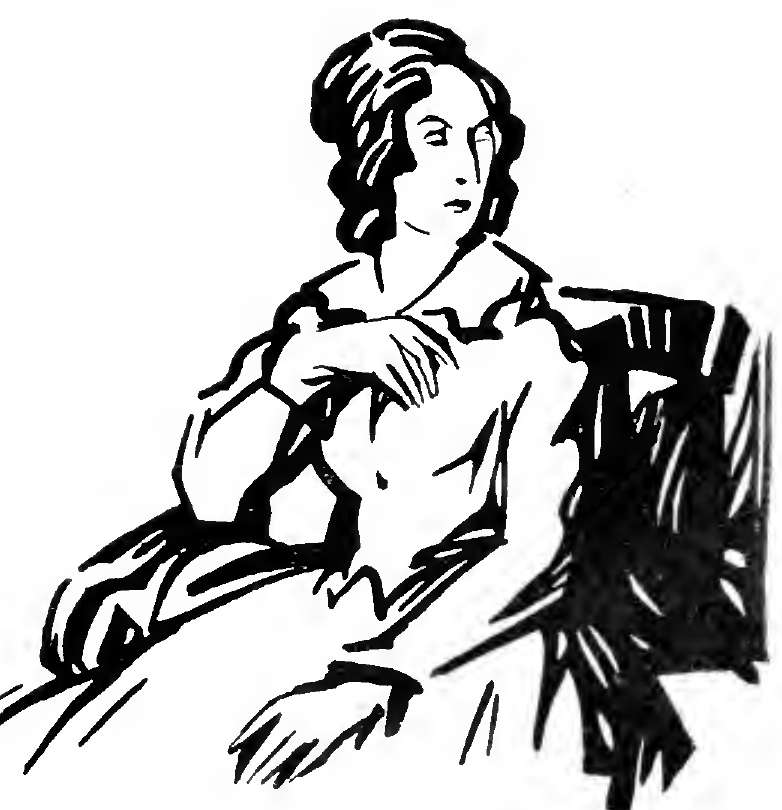
SCARCELY back in Paris, and on leaving the study of the Marquis de La Mole, who appeared greatly disconcerted by the despatches presented to him, our hero hastened to Count Altamira. To the advantage of being condemned to death, this handsome foreigner joined much gravity and the happiness of being devout; these two merits, and, more than all, the Count's high birth, suited Madame de Fervagues perfectly, who saw him a great deal.
Julien gravely confessed to him that he was deeply in love with her.
"That is the purest and loftiest virtue," replied Altamira, "only a little jesuitical and emphatic. There are days when I understand every single word she uses, but I do not understand the sentence as a whole. She often gives me the impression that I do not know French as well as people say I do. This acquaintance will make your name pronounced; it will give you weight in the world. But let us go to Bustos," said Count Altamira, who was a methodical mind; "he paid court to Madame the Maréchale."
Don Diego Bustos made him explain the matter at length, saying nothing, like a lawyer in his study. He had a large monk's face, with black moustaches, and an unparalleled gravity; otherwise, a good carbonaro.
"I understand," he said at last to Julien. "Has the Maréchale de Fervagues had lovers, or has she not? Have you, in this way, some hope of succeeding? That is the question. Which is to tell you that, for my part, I failed. Now that I am no longer stung by it, I reason it out thus; often she is in a bad humour, and, as I shall soon tell you, she is not lacking in vindictiveness.
I do not find in her that bilious temperament which is that of genius, and which casts over all actions, as it were, a varnish of passion. It is, on the contrary, to the phlegmatic and tranquil manner of the Dutch that she owes her rare beauty and her colours so fresh."
Julien was growing impatient at the slowness and the unshakeable phlegm of the Spaniard; from time to time, in spite of himself, a few monosyllables escaped him.
"Do you wish to listen to me?" don Diego Bustos said to him gravely.
"Pardon the juria francese: I am all ears," said Julien.
"The Maréchale de Fervagues is, then, greatly addicted to hatred; she pursues pitilessly people whom she has never seen, lawyers, poor devils of men of letters who have made songs like Collé, you know?
J'ai la marotte D'aimer Marotte, etc.
And Julien had to endure the whole quotation. The Spaniard was quite pleased to sing in French.
This divine song was never listened to with more impatience. When it was finished: "The Maréchale," said don Diego Bustos, "had the author of this song dismissed:
Un jour l'amour au cabaret.
Julien shuddered lest he should want to sing it. He contented himself with analysing it. Really it was impious and scarcely decent.
"When the Maréchale flew into a rage against this song," said don Diego, "I observed to her that a woman of her rank ought not to read all the foolish things that are published. Whatever progress piety and gravity may make, there will always be in France a cabaret literature. When Madame de Fervagues had had taken away from the author, a poor devil on half pay, a post worth eighteen hundred francs: 'Beware,' I said to him, 'you have attacked this rhymester with your weapons, he can answer you with his rhymes; he will make a song about virtue. The gilded drawing-rooms will be for you; people who like to laugh will repeat his epigrams.' Do you know, Monsieur, what the Maréchale answered me? 'For the interest of the Lord all Paris would see me walk to martyrdom; it would be a novel spectacle in France. The people would learn to respect quality. It would be the finest day of my life.' Never were her eyes more beautiful."
"And she has superb ones," cried Julien.
"I see that you are in love... Well then," went on don Diego Bustos gravely, "she has not the bilious constitution that leads to vengeance. If she likes to harm people, however, it is because she is unhappy; I suspect some inner unhappiness there. Would she not be a prude weary of her trade?"
The Spaniard looked at him in silence for a full minute.
"That is the whole question," he added gravely, "and it is from there that you may derive some hope. I have reflected on it a great deal during
the two years that I have made myself her very humble servant. All your future, Monsieur, who are in love, depends on this great problem. Is she a prude weary of her trade, and wicked because she is unhappy?"
.
"Or else," said Altamira, emerging at last from his deep silence, "would it be what I have told you twenty times? quite simply French vanity; it is the memory of her father, the famous cloth merchant, that makes the unhappiness of this character naturally narrow and dry. There would be only one happiness for her, that of living in Toledo, and of being tormented by a confessor who would show her every day hell wide open."
As Julien was going out: "Altamira tells me that you are one of us," don Diego said to him, graver than ever. "One day you will help us to reconquer our liberty, so I wish to help you in this little amusement. It is well that you should know the Maréchale's style: here are four letters in her hand."
"I shall copy them," cried Julien, "and bring them back to you."
"And will no one ever learn from you a word of what we have said?"
"Never, on my honour!" cried Julien.
"So may God help you!" added the Spaniard, and he silently escorted Altamira and Julien to the stairs.
This scene somewhat cheered our hero; he was on the point of smiling. And there is the devout Altamira, he said to himself, helping me in an enterprise of adultery.
During the whole of don Diego Bustos's grave conversation, Julien had been attentive to the hours struck by the clock of the Hôtel d'Aligre.
The dinner hour was approaching, he was therefore going to see Mathilde again! He went in, and dressed with great care.
First folly, he said to himself as he went downstairs; I must follow the prince's orders to the letter.
He went back up to his room, and put on a travelling costume as simple as could be.

:
Now, he thought, it is a question of glances. It was only half past five, and they dined at six. He had the idea of going down to the drawing-room, which he found deserted. At the sight of the blue sofa, he was moved to tears; soon his cheeks became burning. I must wear out this foolish sensibility, he said to himself angrily; it would betray me. He took a newspaper to have something to hold, and passed three or four times from the drawing-room to the garden.
It was only trembling and well hidden by a great oak that he dared to raise his eyes to the window of Mademoiselle de la Mole. It was hermetically closed; he was on the point of falling, and remained for a long time leaning against the oak; then, with an unsteady step, he went to look again at the gardener's ladder.
The link, once forced by him in circumstances, alas! so different, had not been mended. Carried away by a movement of madness, Julien pressed it to his lips.
After having wandered for a long time from the drawing-room to the garden, Julien found himself horribly tired; this was a first success which he felt keenly. My glances will be dull and will not betray me! Little by little, the guests arrived in the drawing-room; never did the door open without casting a mortal perturbation into Julien's heart.
They sat down at table. At last Mademoiselle de La Mole appeared, still faithful to her habit of making people wait for her. She blushed a great deal on seeing Julien; they had not told her of his arrival. Following Prince Korasoff's recommendation, Julien looked at her hands; they were trembling. Himself perturbed beyond all expression by this discovery, he was fortunate enough to appear merely tired.
M. de La Mole sang his praises. The Marquise addressed him a moment later and complimented him on his weary air. Julien kept saying to himself at every moment: I must not look too much at Mademoiselle de La Mole, but my gaze must not flee her either. I must appear as I really was nine days before my misfortune. He had reason to be satisfied with his success, and remained in the drawing room... Attentive for the first time to the mistress of the house, he made every effort to make the men of the company talk and to keep the conversation lively.
His politeness was rewarded: toward eight o'clock, Madame the Maréchale de Fervagues was announced. Julien slipped away and soon reappeared, dressed with the greatest care. Madame de La Mole was infinitely grateful to him for this mark of respect, and wished to show him her satisfaction by speaking of his journey to Madame de Fervagues. Julien stationed himself beside the Maréchale in such a way that his eyes might not be noticed by Mathilde. Placed thus, according to all the rules of the art, Madame de Fervagues became for him the object of the most dumbfounded admiration. It was with a tirade on this sentiment that the first of the fifty-three letters Prince Korasoff had made him a gift of began.
The Maréchale announced that she was going to the Opéra-Buffa. Julien hurried there; he found the Chevalier de Beauvoisis, who took him into a box belonging to the gentlemen of the Chamber, right next to Madame de Fervagues's box. Julien looked at her constantly. I must, he said to himself as he returned to the hotel, keep a siege journal; otherwise I shall forget my attacks. He forced himself to write two or three pages on this tedious subject, and thus succeeded, admirable thing! in hardly thinking at all of Mademoiselle de La Mole.
Mathilde had almost forgotten him during his journey. After all, he is only a common being, she thought; his name will always remind me of the greatest fault of my life. I must return in good faith to the vulgar ideas of wisdom and honor; a woman has everything to lose in forgetting them. She showed herself disposed at last to permit the conclusion of the arrangement with the Marquis de Croisenois, prepared so long ago. He was mad with joy; one would have greatly astonished him by telling him that there was resignation at the bottom of this way of feeling in Mathilde which made him so proud.
All Mademoiselle de La Mole's ideas changed at the sight of Julien. In truth, he is my husband, she said to herself; if I return in good faith to wise ideas, it is evidently he whom I must marry.
She expected importunities, sorrowful airs on Julien's part; she prepared her answers: for doubtless, on leaving the dinner table, he would try to address a few words to her. Far from it, he remained firmly in the drawing room, his eyes did not even turn toward the garden, God knows with what difficulty! It is better to have this explanation at once, thought Mademoiselle de La Mole; she went alone into the garden, Julien did not appear there. Mathilde came to stroll near the French windows of the drawing room; she saw him very busy describing to Madame de Fervagues the old ruined clauteaux that crown the hillsides along the banks of the Rhine and give them so much character. He was beginning to come off not badly in the sentimental and picturesque phrase that is called wit in certain drawing rooms.
:
Prince Korasoff would have been very proud, had he been in Paris: this evening was exactly what he had predicted.
valier of the order. The Marquis de La Mole had the same pretension for his son-in-law; they combined their efforts, and the marshal's wife came almost every day to the Hôtel de La Mole. It was from her that Julien learned that the Marquis was about to become minister: he was offering the Camarilla a very ingenious plan for annihilating the Charter, without commotion, in three years.
Julien could hope for a bishopric, if M. de La Mole reached the ministry; but in his eyes all these great interests had as it were been covered with a veil. His imagination no longer perceived them except vaguely and so to speak in the distance. The frightful misfortune that made a maniac of him showed him all the interests of life in his manner of being with Mademoiselle de La Mole. He calculated that after five or six years of attentions, he would succeed in making her love him again.
This so cold head had, as one sees, descended to a state of complete unreason. Of all the qualities that had once distinguished him, there remained to him only a little firmness. Materially faithful to the plan of conduct dictated by Prince Korasoff, each evening he placed himself rather near Madame de Fervagues's armchair, but it was impossible for him to find a word to say.
The effort he imposed on himself to appear cured in Mathilde's eyes absorbed all the forces of his soul; he remained beside the marshal's wife like a being barely animated; even his eyes, as in extreme physical suffering, had lost all their fire.
As Madame de La Mole's way of seeing things was never anything but a counterproof of the opinions of that husband who could make her a duchess, for some days she had been extolling Julien's merit to the skies.