About this book
Julien Sorel climbs from sawmill to salon, torn between the red of the army and the black of the church. Stendhal's 1830 novel, free to read online.
ENTRY INTO THE WORLD
Ridiculous and touching memory: the first salon where at eighteen one has appeared alone and without support! the glance of a woman was enough to intimidate me. The more I wished to please, the more awkward I became. I formed the most false ideas about everything; either I gave myself up without reason, or I saw in a man an enemy, because he had looked at me with a grave air. But then, in the midst of the frightful misfortunes of my timidity, what a beautiful day a fine day was! KANT. ULIEN stopped dumbfounded in the middle of the courtyard. — Do have a reasonable air, said the abbé Pirard; horrible ideas come to you, and then you are nothing but a child! Where is Horace's nil mirari? (Never any enthusiasm.) Think that this population of lackeys, seeing you established here, will mock you; they will see in you an equal, unjustly placed above them. Under the outward appearances of good nature, of good advice, of the desire to guide you, they will try to make you fall into some gross blunder.
— I defy them, said Julien, biting his lip, and he resumed all his mistrust.
The salons which these gentlemen crossed on the first floor, before reaching the marquis's study, would have seemed to you, O my reader, as sad as they were magnificent. If they were given to you as they are, you would refuse to live in them; it is the fatherland of yawning and of sad reasoning. They redoubled Julien's enchantment. How can one be unhappy, he thought, when one lives in so splendid a dwelling!
At last these gentlemen arrived at the ugliest of the rooms of this superb apartment: there was barely daylight in it; there was found a little thin man, with a lively eye and a blond wig. The abbé turned toward Julien and presented him. It was the marquis. Julien had great difficulty in recognizing him, so polite did he find his air. He was no longer
the great lord with so haughty a mien, of the abbey of Bray-le-Haut. It seemed to Julien that his wig had far too much hair. With the help of this sensation, he was not at all intimidated. The descendant of the friend of Henri III seemed to him at first to have a rather paltry appearance. He was very thin and moved about a great deal. But he soon noticed that the marquis had a politeness even more agreeable to the interlocutor than that of the bishop of Besançon himself. The audience did not last three minutes. On going out, the abbé said to Julien:
— You looked at the marquis as you would have looked at a picture. I am not a great Greek in what these people call politeness; soon you will know more of it than I: but finally the boldness of your glance seemed to me hardly polite.
They had got back into the cab; the driver stopped near the boulevard; the abbé introduced Julien into a series of great salons. Julien noticed that there was no furniture. He was looking at a magnificent gilded clock, representing a subject very
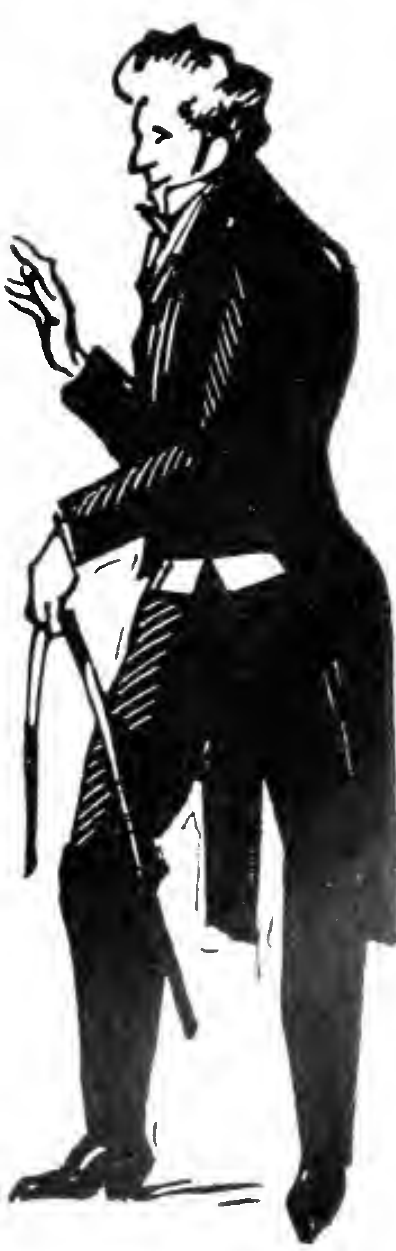
indecent in his view, when a very elegant gentleman approached with a laughing air. Julien made a half-bow.
The gentleman smiled and put his hand on his shoulder. Julien shuddered and jumped back. He blushed with anger. The abbé Pirard, despite his gravity, laughed till he wept. The gentleman was a tailor.
— I give you back your freedom for two days, the abbé said to him as he was leaving; only then can you be presented to Madame de La Mole. Anyone else would keep you like a young girl, during these first moments of your stay in this new Babylon. Lose yourself at once, if you must lose yourself, and I shall be delivered from the weakness I have of thinking about you. The day after tomorrow morning, this tailor will bring you two suits; you will give five francs to the boy who fits them on you. For the rest, do not let these Parisians hear the sound of your voice. If you say a single word, they will find the secret of mocking you. That is their talent. The day after tomorrow, be at my house at noon... Go, lose yourself... I was forgetting, go order some boots, some shirts, a hat at the addresses here.
Julien was looking at the handwriting of these addresses.
— It is the marquis's hand, said the abbé; he is an active man who foresees everything, and who prefers doing to commanding. He takes you into his service so that you may spare him this kind of trouble. Will you have enough wit to carry out well all the things this man will indicate to you by half-words? The future will show it: beware!
Julien entered without saying a single word the shops of the workmen indicated by the addresses; he noticed that he was received there with respect, and the bootmaker, in writing his name in his register, put M. Julien de Sorel.
At the Père-Lachaise cemetery, a very obliging gentleman, and still more liberal in his talk, offered to point out to Julien the tomb of Marshal Ney, whom a clever policy deprives of the honor of an epitaph. But on parting from this liberal, who, with tears in his eyes, almost embraced him, Julien no longer had a watch. It was rich in this experience that, two days later, at noon, he presented himself to the abbé Pirard, who looked at him a great deal.
— You are perhaps going to become a fop, the abbé said to him with a severe air. Julien had the appearance of a very young man, in full mourning; he was in truth very handsome, but the good abbé was himself too provincial to see that Julien still had that shoulder movement which in the provinces is at once elegance and importance. On seeing Julien,
the marquis judged his graces in a manner so different from that of the good abbé, that he said to him:
“Would you have any objection to M. Sorel taking dancing lessons?”
The abbé remained petrified.
“No,” he replied at last, “Julien is not a priest.”
The Marquis, climbing two at a time the steps of a small back staircase, went himself to install our hero in a pretty attic room overlooking the immense garden of the hôtel. He asked him how many shirts he had taken from the linen room.
“Two,” replied Julien, intimidated to see so great a lord descend to such details.
“Very good,” resumed the Marquis with a serious air and with a certain imperious and curt tone that gave Julien food for thought; “very good! take twenty-two more shirts. Here is the first quarter of your wages.”
On coming down from the attic, the Marquis called an elderly man: “Arsène,” he said to him, “you will serve M. Sorel.” A few minutes later, Julien found himself alone in a magnificent library; this moment was delicious. So as not to be surprised in his emotion, he went and hid in a small dark corner; from there he contemplated with rapture the gleaming backs of the books: “I shall be able to read all that,” he said to himself. “And how could I be displeased here? M. de Rênal would have thought himself dishonored forever by a hundredth part of what the Marquis de La Mole has just done for me.”
“But let us see the copies to be made.” This work finished, Julien dared to approach the books; he nearly went mad with joy on opening an edition of Voltaire. He ran to open the library door so as not to be surprised. He then gave himself the pleasure of opening each of the eighty volumes. They were magnificently bound; it was themasterpiece of the best craftsman in London. It did not take so much to carry Julien’s admiration to its height.
An hour later, the Marquis came in, looked at the copies, and remarked with astonishment that Julien wrote that with two l’s, cella. “Would all that the abbé told me of his learning be simply a tale?” The Marquis, greatly discouraged, said to him gently:
“You are not sure of your spelling?”
“It is true,” said Julien, without in the least thinking of the harm he was doing himself; he was touched by the Marquis’s kindness, which reminded him of the gruff tone of M. de Rênal.
“All this experience of a little Franche-Comté abbé is time lost,” thought the Marquis; “but I had so great a need of a reliable man!”
“That is written only with one l,” the Marquis told him; “when your copies are finished, look up in the dictionary the words whose spelling you are not sure of.”
At six o’clock the Marquis sent for him; he looked with evident distress at Julien’s boots: “I have a fault to reproach myself with, I did not tell you that every day at half past five you must dress.”
Julien looked at him without understanding.
“I mean put on stockings. Arsène will remind you; today I shall make your excuses.”
As he finished these words, M. de La Mole was having Julien pass into a drawing room resplendent with gilding. On similar occasions, M. de Rênal never failed to double his pace so as to have the advantage of passing through the door first. The petty vanity of his former employer made Julien step on the Marquis’s feet and hurt him a great deal because of his gout. “Ah! he is clumsy into the bargain,” said the latter to himself. He presented him to a tall woman of imposing aspect. It was the Marquise. Julien found her air impertinent, a little like Madame de Maugiron, the subprefect’s wife of the arrondissement of Verrières, when she attended the dinner of Saint-Charles. A little disturbed by the extreme magnificence of the drawing room, Julien did not hear what M. de La Mole was saying. The Marquise barely deigned to look at him. There were some men among whom Julien recognized with inexpressible pleasure the young Bishop of Agde, who had deigned to speak to him a few months earlier at the ceremony of Bray-le-Haut. This young prelate was doubtless frightened by the tender eyes that Julien’s timidity fixed upon him, and did not care to recognize this provincial.
The men assembled in this drawing room seemed to Julien to have something sad and constrained about them; people speak low in Paris, and do not exaggerate small things.
A pretty young man, with moustaches, very pale and very slender, entered toward half past six: he had a very small head.
“You will always make people wait for you,” said the Marquise, whose hand he kissed.
Julien understood that this was the Comte de La Mole. He found him charming from the first glance.
“Is it possible,” he said to himself, “that this is the man whose offensive jests are to drive me from this house!”
By dint of examining Comte Norbert, Julien noticed that he was in boots and spurs. “And I must be in shoes, apparently as an inferior.” They sat down at table. Julien heard the Marquise say a severe word, raising her voice slightly. Almost at the same time he noticed a young person, extremely blonde and verywell made, who came and sat down opposite him. She did not please him, however; looking at her attentively, he thought he had never seen such beautiful eyes; but they announced a great coldness of soul. Later, Julien found that they had the expression of boredom that examines, but that remembers the obligation to be imposing. Madame de Rênal had very beautiful eyes, however, he said to himself, the world complimented her on them; but they had nothing in common with these. Julien did not have enough experience to distinguish that it was with the fire of wit that Mademoiselle Mathilde’s eyes—for thus he heard her named—shone from time to time. When Madame de Rênal’s eyes became animated, it was with the fire of passions, or from the effect of a generous indignation at the recital of some wicked action. Toward the end of the meal, Julien found a word to express the kind of beauty of Mademoiselle de La Mole: “They are scintillating,” he said to himself. Besides, she cruelly resembled her mother, who displeased him more and more, and he ceased to look at her.
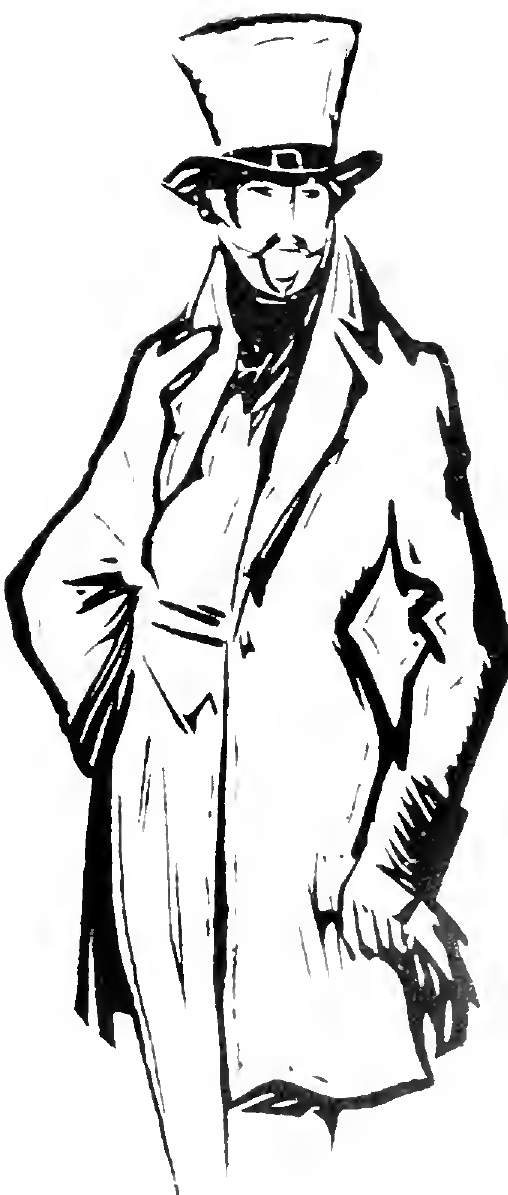
On the other hand, Comte Norbert seemed to him admirable in every respect. Julien was so taken with him that he did not have the idea of being jealous of him and hating him because he was richer and nobler than he.
1
Julien found that the Marquis had an air of being bored.
Toward the second course, he said to his son: “Norbert, I ask your kindnesses for M. Julien Sorel, whom I have just taken onto my staff, and of whom I intend to make a man, if cella can be.”
“He is my secretary,” said the Marquis to his neighbor, “and he writes that with two l’s.”
Everyone looked at Julien, who gave Norbert a bow a little too marked; but in general they were pleased with his look.
The Marquis must have spoken of the kind of education Julien had received, for one of the guests attacked him on Horace: “It is precisely in speaking of Horace that I succeeded with the Bishop of Besançon,” Julien said to himself. “Apparently they know only that author.” From that moment he was master of himself. This movement was made easy because he had just decided that Mademoiselle de La Mole would never be a woman in his eyes. Since the seminary he put men at the worst, and let himself be intimidated by them only with difficulty. He would have enjoyed all his coolness if the dining room had been furnished with less magnificence. It was, in fact, two mirrors eight feet high each, and in which he sometimes looked at his interlocutor while speaking of Horace, which still overawed him. His sentences were not too long for a provincial. He had beautiful eyes, whose trembling or happy timidity, when he had answered well, redoubled their brilliance. He was found agreeable. This sort of examination cast a little interest into a grave dinner. The Marquis gave his Julien’s interlocutor a sign to press him vigorously. “Would it be possible that he knew something?” he thought.
Julien replied by inventing his own ideas, and lost enough of his timidity to show—not wit, a thing impossible for one who does not know the language used in Paris—but he had new ideas, though presented without grace or aptness, and it was seen that he knew Latin perfectly.
Julien's adversary was a member of the Académie des Inscriptions, who happened by chance to know Latin; he found Julien to be a very good humanist, no longer feared making him blush, and genuinely sought to embarrass him. In the heat of the combat, Julien finally forgot the magnificent furnishingsof the dining room, and came to set forth on the Latin poets ideas that his interlocutor had read nowhere. As an honest man he gave credit for them to the young secretary. Fortunately, a discussion was begun on the question of whether Horace had been poor or rich; a amiable, voluptuous, and carefree man, writing verses for his own amusement, like Chapelle, the friend of Molière and La Fontaine; or a poor devil of a poet laureate, following
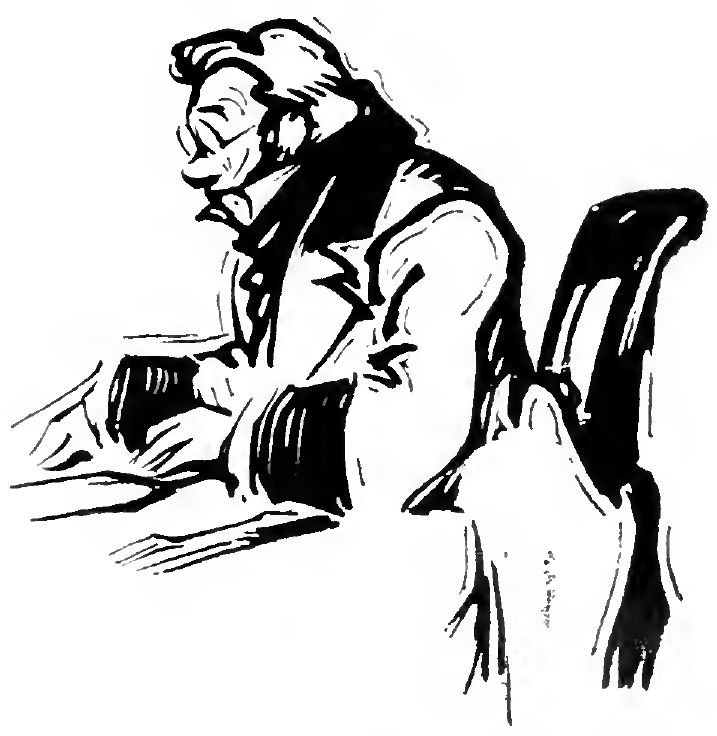
the court and writing odes for the king's birthday, like Southey, the accuser of Lord Byron. They spoke of the state of society under Augustus and under George IV; in both eras the aristocracy was all-powerful; but in Rome, it saw power wrested from it by Maecenas, who was merely a simple knight; and in England it had reduced George IV to roughly the state of a doge of Venice. This discussion seemed to draw the Marquis out of the state of torpor into which boredom had plunged him at the beginning of dinner.
Julien understood nothing of all the modern names, such as Southey, Lord Byron, George IV, which he heard pronounced for the first time. But it did not escape anyone that whenever the question was of facts that had taken place in Rome, and whose knowledge could be deduced from the works of Horace, Martial, Tacitus, etc., he had an incontestable superiority. Julien unceremoniously seized upon several ideas that he had learned from the Bishop of Besançon, in the famous discussion he had had with that prelate; these were not the least appreciated.
When people tired of talking about poets, the marquise, who made it a rule to admire everything that amused her husband, deigned to look at Julien. The awkward manners of this young abbé might conceal a learned man, said the academician who was near her to the marquise; and Julien heard something of it. Set phrases suited the mind of the mistress of the house well enough; she adopted this one about Julien, and gave herself credit for having invited the academician to dinner. He has amused M. de La Mole, she thought.