About this book
Julien Sorel climbs from sawmill to salon, torn between the red of the army and the black of the church. Stendhal's 1830 novel, free to read online.
SORROWS OF A FUNCTIONARY
Il piacere di alzar la testa tutto l'anno, è ben pagato da certi quarti d'ora che bisogna passar.
CASTI.
BUT let us leave this little man to his little fears; why has he taken a man of heart into his house, when what he needed was the soul of a valet? Why cannot he choose his people? The ordinary course of the nineteenth century is that, when a powerful and noble being encounters a man of heart, he kills him, exiles him, imprisons him, or humiliates him so thoroughly that the other has the folly to die of grief. By chance here, it is not yet the man of heart who suffers. The great misfortune of the small towns of France and of governments by election, like that of New York, is to be unable to forget that there exist in the world beings like M. de Rênal. In the midst of a town of twenty thousand inhabitants, these men make public opinion, and public opinion is terrible in a country that has the charter. A man endowed with a noble, generous soul, and who would have been your friend, but who lives a hundred leagues away, judges you by the public opinion of your town, which is made by the fools whom chance has caused to be born noble, rich, and moderate. Woe to him who distinguishes himself!
Immediately after dinner, they set out again for Vergy; but, two days later, Julien saw the whole family return to Verrières.
An hour had not passed before, to his great astonishment, he discovered that Madame de Rênal was making a mystery of something to him. She interrupted her conversations with her husband as soon as he appeared, and seemed almost to desire that he should go away. Julien did not need to be given this notice twice. He became cold and reserved; Madame de Rênal noticed it and sought no explanation. Is she going to give me a successor? thought Julien. Only the day before yesterday, so intimate with me! But they say that is how these great ladies behave. It is like kings, never more attentions than to the minister who, on returning home, will find his letter of dismissal.
Julien remarked that in these conversations, which ceased at his approach, there was often mention of a large house belonging to the commune of Verrières, old, but spacious and convenient, and situated opposite the church, in the most commercial part of the town. What can there be in common between this house and a new lover? Julien asked himself. In his grief he repeated those pretty lines of François Ier, which seemed new to him, because it was not a month since Madame de Rênal had taught them to him. Then, by how many oaths, by how many caresses, was each of these lines not belied!
Souvent femme varie, Bien fol est qui s'y fie.
M. de Rênal set out by post for Besançon. This journey was decided upon in two hours; he appeared greatly tormented. On his return, he threw a large packet covered with gray paper onto the table.
— There is that foolish business, he said to his wife.
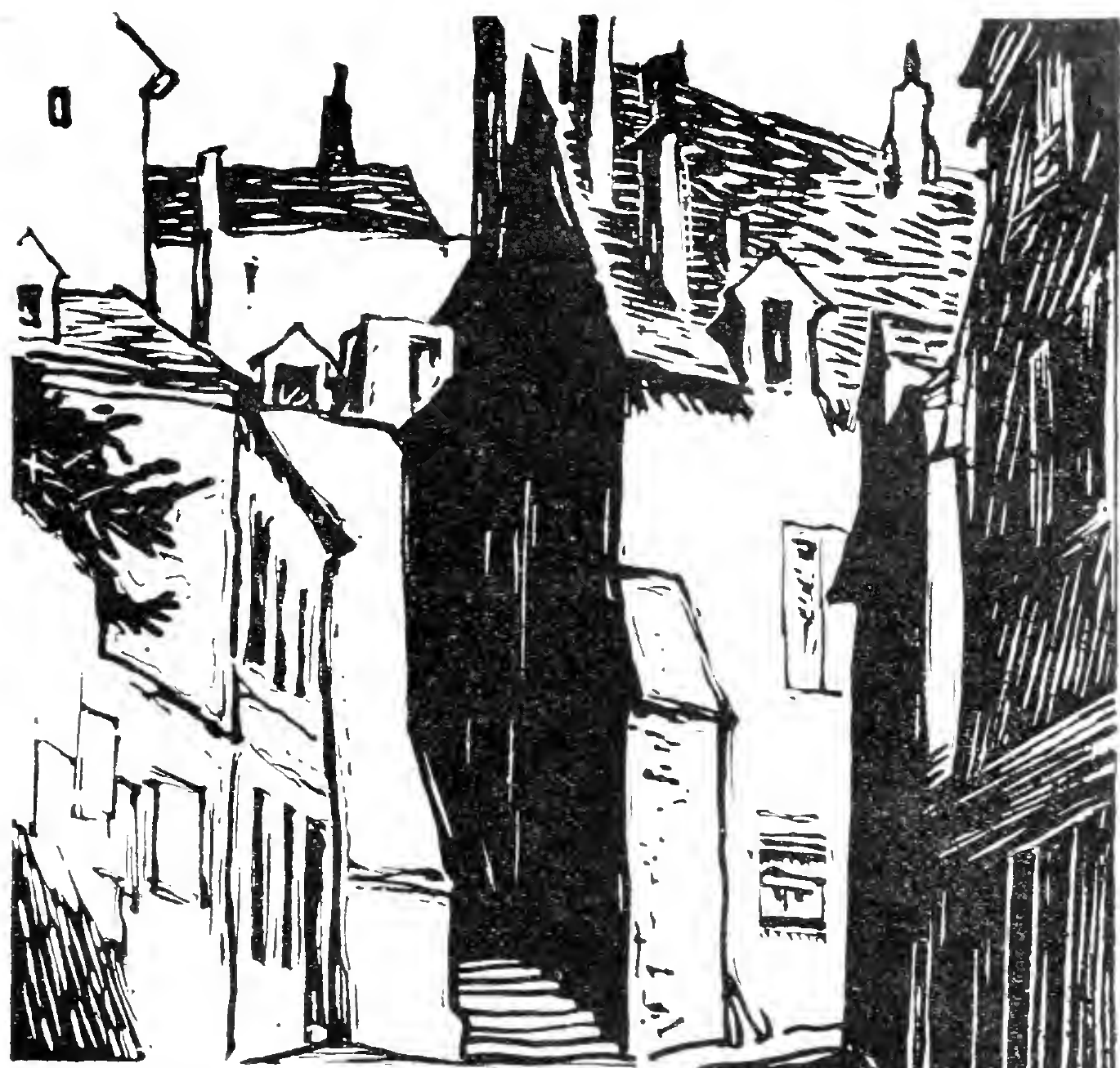
An hour later, Julien saw the bill-poster carrying off this large packet; he followed him eagerly. I shall learn the secret at the first street corner. He waited, impatient, behind the bill-poster, who with his big brush was daubing the back of the poster. Hardly was it in place when Julien's curiosity saw there the very detailed announcement of the letting by public auction of that large and old house whose name recurred so often in M. de Rênal's conversations with his wife. The adjudication of the lease was announced for the next day at two o'clock, in the communal hall, at the extinguishing of the third candle. Julien was greatly disappointed; he found the delay a little short: how would all the competitors have time to be informed? Besides, this poster, which was dated a fortnight earlier and which he reread in full in three different places, told him nothing.
He went to visit the house to let. The porter, not seeing him approach, was saying mysteriously to a neighbor:
— Bah! bah! lost trouble. M. Maslon has promised him that he shall have it for three hundred francs; and as the mayor was balking, he was sent for to the bishop's palace by M. the grand vicar de Friair.
Julien's arrival seemed greatly to disturb the two friends, who added not another word.
Julien did not miss the adjudication of the lease. There was a crowd in a poorly lit room; but everyone was eyeing one another in a singular fashion. All eyes were fixed on a table, where Julien perceived, in a tin dish, three little ends of lighted candle. The bailiff was crying: Three hundred francs, gentlemen!
— Three hundred francs! that is too much, said a man, in a low voice, to his neighbor. And Julien was between the two of them. It is worth more than eight hundred; I mean to cover this bid.
— That is spitting in the air. What will you gain by making enemies of M. Maslon, M. Valenod, the bishop, his terrible grand vicar de Friair, and the whole clique?
— Three hundred and twenty francs, said the other, shouting.
— Wretched beast! replied his neighbor. And there is precisely a spy of the mayor's, he added, pointing to Julien.
Julien turned sharply to punish this remark; but the two Francs-Comtois were no longer paying him any attention. Their composure restored his own. At that moment, the last end of candle went out, and the drawling voice of the bailiff adjudged the house, for nine years, to M. de Saint-Giraud, chief of the office at the prefecture of ***, and for three hundred and thirty francs.
As soon as the mayor had left the room, the remarks began. There are thirty francs that Grogeot's imprudence costs the commune, said one. — But M. de Saint-Giraud, came the reply, will avenge himself on Grogeot, he shall feel it.
— What an infamy! said a stout man to Julien's left: a house for which I myself would have given eight hundred francs for my factory, and I should have made a good bargain.
— Bah! replied a young liberal manufacturer, is not M. de Saint-Giraud of the congregation? have not his four children
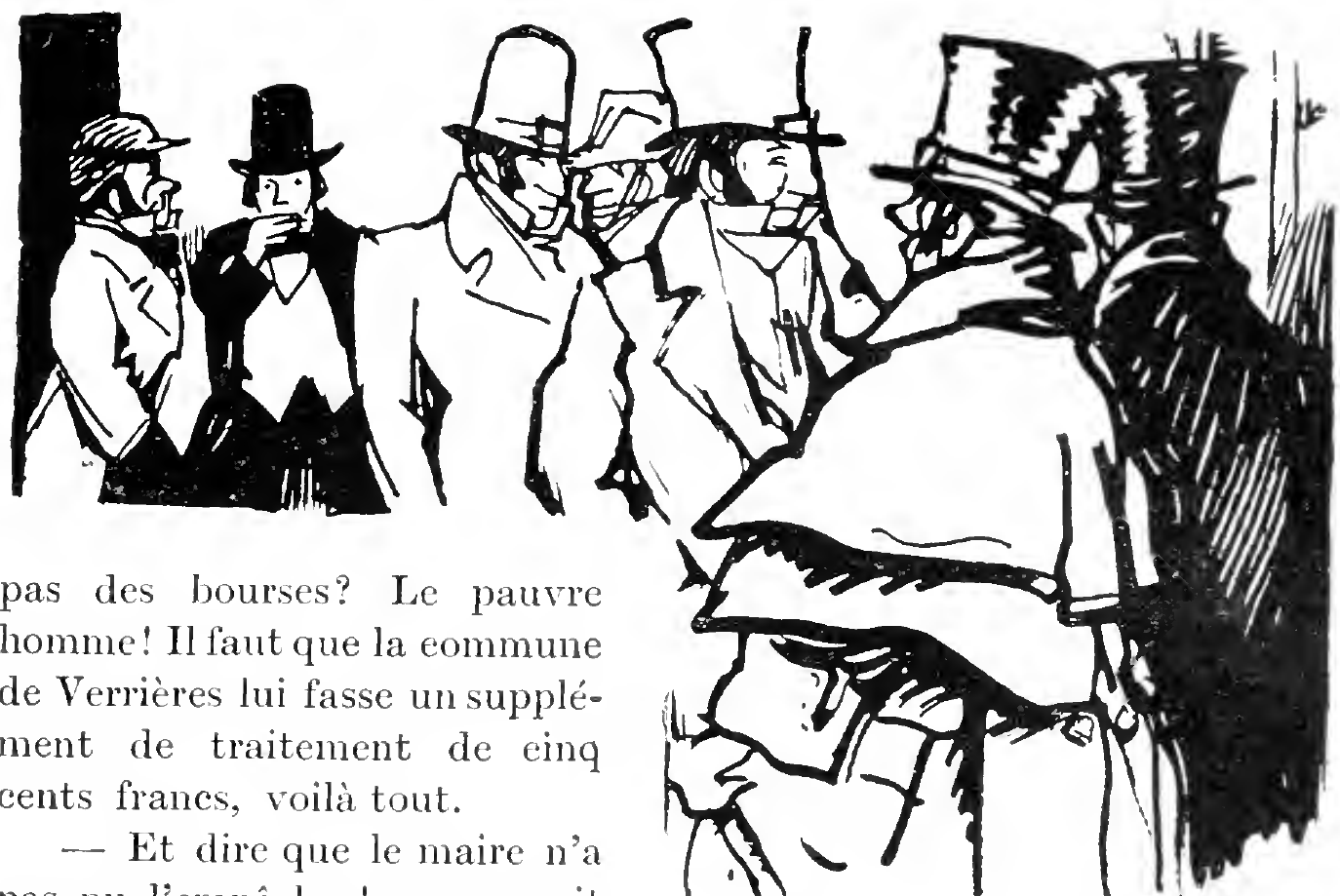
obtained a third? For he is ultra, he is, to be sure; but he does not steal.
He does not steal? retook another; no, it is pigeon that flies. All that goes into a great common purse, and everything is shared at the end of the year. But there is that little Sorel; let us be off.
Julien returned in a very bad humor; he found Madame de Rênal very sad.
You have just come from the adjudication? she said to him.
Yes, Madame, where I had the honor of passing for M. the mayor's spy.
Had he not believed it, he would have made a journey.
At that moment, M. de Rênal appeared; he was very gloomy. Dinner passed without a word being said. M. de Rênal ordered Julien to follow the children to Vergy; the journey was sad. Madame de Rênal consoled her husband.
You should be accustomed to it, my friend.
In the evening, they sat in silence around the domestic hearth; the crackling of the burning beech was the only distraction. It was one of those moments of sadness that are met with in the most united families. One of the children cried out joyfully:
Someone is ringing! someone is ringing!
"By Jove! if it's M. de Saint-Giraud coming to worry me again under pretext of thanking me," exclaimed the mayor, "I'll tell him plainly what I think of him;it's too much. It's to Valenod that he'll owe his thanks, and it's I who am compromised. What is one to say, if those cursed Jacobin newspapers get hold of this anecdote and make a M. Ninety-five of me?"
A very fine-looking man, with big black side-whiskers, was entering at this moment in the servant's wake.
"Monsieur le maire, I am il signor Geronimo. Here is a letter that M. le chevalier de Beauvoisis, attached to the embassy at Naples, gave me for you when I left; it is only nine days ago," added the signor Geronimo, with a cheerful air, looking at Madame de Rênal. "The signor de Beauvoisis, your cousin, and my good friend, Madame, says that you know Italian."
The Neapolitan's good humour changed this dreary evening into a very gay one. Madame de Rênal insisted upon giving him supper. She set her whole household in motion; she wished at any cost to distract Julien's mind from the description of spy which, twice during that day, he had heard ringing in his ears. The signor Geronimo was a celebrated singer, a man of good society, and yet very cheerful—qualities which, in France, are scarcely any longer compatible. He sang after supper a little duettino with Madame de Rênal. He told charming stories. At one o'clock in the morning the children cried out, when Julien proposed that they should go to bed.
"One more of those stories," said the eldest.
"It is my own, signorino," replied il signor Geronimo. "Eight years ago, I was like you a young pupil of the conservatorio of Naples,I mean I was your age; but I had not the honour of being the son of the illustrious mayor of the pretty town of Verrières." This word made M. de Rênal sigh, he looked at his wife.
Signor Zingarelli, continued the young singer, exaggerating a little his accent which made the children burst out laughing—Signor Zingarelli was an excessively severe master. He is not liked at the Conservatory; but he wants one always to act as though one loved him. I used to go out as often as I could; I went to the little theatre of San-Carlino, where I heard music of the gods: but, oh heavens! how was I to scrape together the eight sous that the entrance to the pit costs? An enormous sum, said he, looking at the children, and the children laughed. Signor Giovannone, director of San-Carlino, heard me singing. I was sixteen: "That child is a treasure," said he.
—"Will you let me engage you, my dear friend?" he came and said to me.
—"And how much will you give me?"
—"Forty ducats a month." Gentlemen, that is a hundred and sixty francs. I thought I saw the heavens open.
—"But how," said I to Giovannone, "am I to get the severe Zingarelli to let me go out?"
—"Lascia fare a me."
—"Laissez faire à moi!" cried the eldest of the children.
—Just so, my young lord. Signor Giovannone said to me: "Caro, first a little bit of an engagement." I sign: he gives me three ducats. Never had I seen so much money. Then he tells me what I must do.
The next day I ask an audience of the terrible Signor Zingarelli. His old valet shows me in.
—"What do you want, you bad lot?" says Zingarelli.
—"Maestro," said I, "I repent of my faults: never will I leave the Conservatory by climbing over the iron grille. I am going to redouble my diligence."
—"If I were not afraid of spoiling the finest bass voice I have ever heard, I would put you in prison on bread and water for a fortnight, you rascal."
—"Maestro," I went on, "I am going to be the model of the whole school, credete a me. But I ask you a favour: if anyone comes to ask for me to sing outside, refuse me. For pity's sake, say that you cannot."
—"And who the devil do you suppose would ask for a bad scamp like you? Do you think I would ever allow you to leave the Conservatory? Are you trying to make a fool of me? Be off! be off!" said he, trying to give me a kick in the backside—or else look out for dry bread and prison.
An hour later, Signor Giovannone arrives at the director's.
—"I come to ask you to make my fortune," he says to him; "grant me Geronimo. Let him sing at my theatre, and this winter I marry my daughter."
—"What do you want to do with that bad lot?" Zingarelli says to him. "I will not; you shall not have him; and besides, even if I consented, he will never want to leave the Conservatory; he has just sworn it to me."
—"If it is only a question of his will," says Giovannone gravely, drawing from his pocket my engagement, "carta canta! here is his signature."
At once Zingarelli, furious, hangs on his bell: "Turn Geronimo out of the Conservatory," he cries, boiling with rage. So I was turned out, laughing loudly. The same evening I sang the air del Moltiplico. Polichinelle wants to get married and counts on his fingers the objects he will need in his household, and keeps getting confused at every moment in this calculation.
—Ah! pray, Monsieur, sing us that air, said Madame de Rênal.
Geronimo sang, and everyone wept with laughing. Signor Geronimo did not go to bed until two in the morning, leaving that family enchanted with his good manners, his complaisance, and his gaiety.
The next day, M. and Madame de Rênal handed him the letters he needed at the court of France.
So, everywhere falsehood, said Julien. There is Signor Geronimo going to London with sixty thousand francs a year in salary. Without the cleverness of the director of San-Carlino, his divine voice would perhaps have been known and admired only ten years later... Upon my word, I would rather be a Geronimo than a Rênal. He is not so honoured in society, but he does not have the grief of making adjudications like today's, and his life is gay.
One thing astonished Julien: the solitary weeks spent at Verrières, in M. de Rênal's house, had been for him a period of happiness. He had encountered disgust and sad thoughts only at the dinners to which he had been invited; in that solitary house, could he not read, write, reflect, without being disturbed? At every moment he was not torn from his brilliant reveries by the cruel necessity of studying the movements of a base soul, and further, in order to deceive it by hypocritical steps or words.
Would happiness be so near me!... The expense of such a life is a small thing; I can at my choice marry Mademoiselle Élisa, or become Fouqué's partner... But the traveller who has just climbed a steep mountain sits down at the summit, and finds perfect pleasure in resting. Would he be happy if he were forced to rest forever?
Madame de Rênal's mind had come to fatal thoughts.
Despite her resolutions, she had confessed to Julien the whole business of the adjudication. He will therefore make me forget all my oaths! she thought.
She would have sacrificed her life without hesitation to save her husband's, if she had seen him in peril. She was one of those noble and romantic souls for whom to perceive the possibility of a generous action, and not to do it, is the source of a remorse almost equal to that of a committed crime. However, there were fatal days when she could not chase away the image of the excess of happiness she would taste if, becoming a widow suddenly, she could marry Julien.
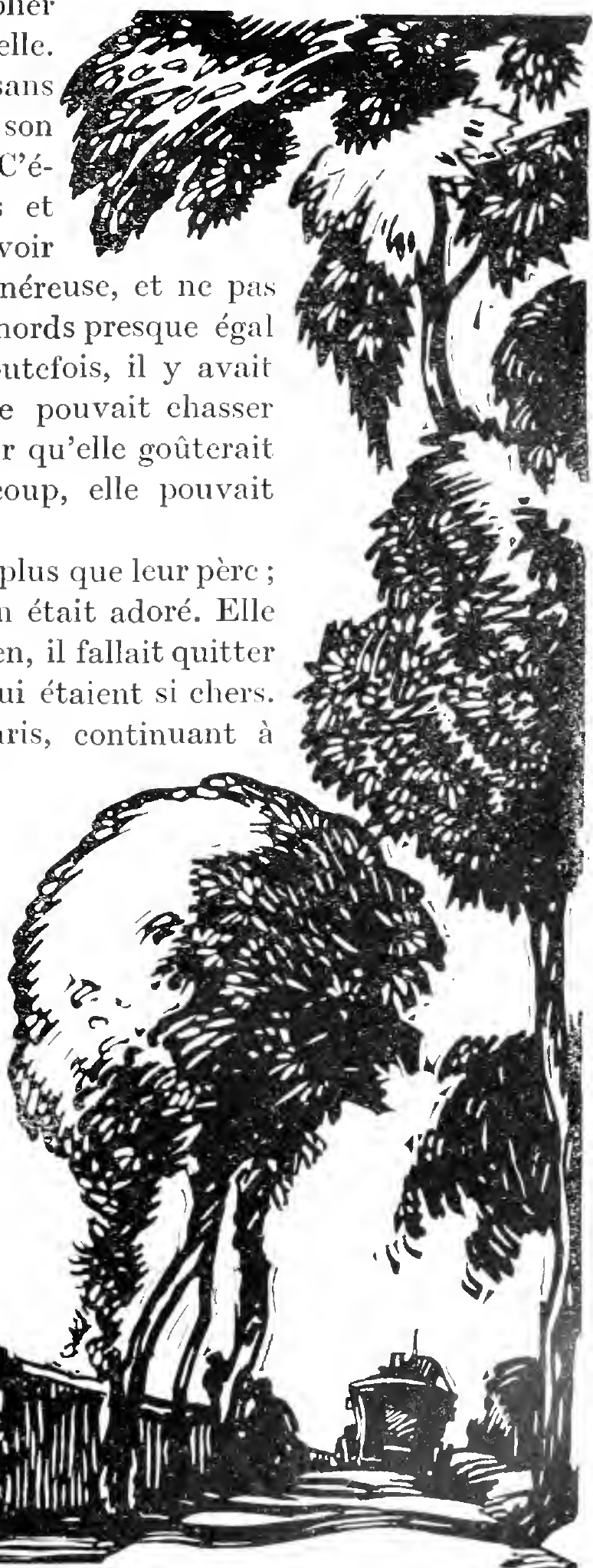
He loved her sons much more than their father did; despite his severe justice, he was adored by them. She felt clearly that in marrying Julien, she would have to leave this Vergy whose shades were so dear to her. She saw herself living in Paris, continuing to give her sons an education that made everyone admire them. Her children, she, Julien, all were perfectly happy.
Strange effect of marriage, as the nineteenth century has made it! The boredom of married life surely kills love, when love has preceded marriage. And yet, said a philosopher, it soon brings,
among people rich enough not to work, the profound boredom of all tranquil pleasures. And it is only dry souls, among women, that it does not predispose to love.
The philosopher's reflection makes me excuse Madame de Rênal, but she was not excused at Verrières, and the whole town, without her suspecting it, was occupied only with the scandal of her loves. Because of this great affair, that autumn they were less bored there than usual.
The autumn, a part of the winter passed very quickly. They had to leave the woods of Vergy. The good company of Verrières was beginning to be indignant that its anathemas made so little impression on M. de Rênal. In less than eight days, grave persons, who compensate themselves for their habitual seriousness by the pleasure of fulfilling these kinds of missions, gave him the cruellest suspicions, but using the most measured terms.
M. Valenod, who played a close game, had placed Élisa in a noble and highly esteemed family, in which there were five women. Élisa, fearing, she said, that she would not find a place during the winter, had asked this family for only about two thirds of what she received at M. the mayor's. Of her own accord, this girl had had the excellent idea of going to confess to the former curé Chélan and at the same time to the new one, in order to tell them both the details of Julien's love affairs.
The day after his arrival, at six o'clock in the morning, the abbé Chélan sent for Julien:
— I ask you nothing, he said to him, I beg you, and if need be I order you, to say nothing; I require that within three days you leave for the seminary of Besançon, or for the dwelling of your friend Fouqué, who is always disposed to make you a magnificent lot. I have foreseen everything, arranged everything, but you must leave, and not return to Verrières for a year.
Julien did not answer; he was examining whether his honor ought to consider itself offended by the cares that M. Chélan, who after all was not his father, had taken for him.
— Tomorrow at the same hour, I shall have the honor of seeing you again, he said at last to the curé.
M. Chélan, who counted on carrying the day by main force over so young a man, spoke a great deal. Wrapped in the most humble attitude and countenance, Julien did not open his mouth.
He went out at last, and ran to warn Madame de Rênal, whom he found in despair. Her husband had just spoken to her with a certain frankness. The natural weakness of her character, supported by the prospect of the inheritance of Besançon, had decided him to consider her perfectly innocent. He had just confessed to her the strange state in which he found the public opinion of Verrières. The public was wrong, it was misled by envious people, but after all what was to be done?
Madame de Rênal had for a moment the illusion that Julien might accept M. Valenod's offers and remain at Verrières. But this was no longer the simple and timid woman of the previous year; her fatal passion, her remorse had enlightened her. She soon had the grief of proving to herself, while listening to her husband, that a separation at least momentary had become indispensable. Far from me, Julien will fall back into his projects of ambition so natural when one has nothing. And I, great God! I am so rich! and so uselessly for my happiness! He will forget me. Amiable as he is, he will be loved, he will love. Ah! unhappy woman... Of what can I complain? Heaven is just, I have not had the merit of putting an end to the crime, it takes my judgment from me. It depended only on me to win Élisa over by dint of money, nothing was easier for me. I did not take the trouble to reflect for a moment, the mad imaginations of love absorbed all my time. I am perishing.
Julien was struck by one thing: on learning the terrible news of his departure, Madame de Rênal found no selfish objection. She was obviously making efforts not to weep.
"We need firmness, my friend." She cut off a lock of her hair. "I do not know what I shall do," she told him, "but if I die, promise me never to forget my children. Whether near or far, try to make honest people of them. If there is a new revolution, all the nobles will have their throats cut, their father will perhaps emigrate because of that peasant killed on a roof. Watch over the family... Give me your hand. Farewell, my friend! These are the last moments. This great sacrifice made, I hope that in public I shall have the courage to think of my reputation."
Julien had expected despair. The simplicity of these farewells touched him.
"No, I do not receive your farewells thus. I shall go; they wish it; you wish it yourself. But, three days after my departure, I shall return to see you by night."
Madame de Rênal's existence was changed. Julien loved her, then, since of his own accord he had found the idea of seeing her again! Her dreadful grief turned into one of the keenest movements of joy she had experienced in her life. Everything became easy for her. The certainty of seeing her friend again stripped these last moments of all that was heartrending about them. From that instant, Madame de Rênal's conduct, like her countenance, was noble, firm, and perfectly seemly.
M. de Rênal soon returned; he was beside himself. He finally spoke to his wife of the anonymous letter received two months earlier.
"I want to take it to the Casino, to show everyone that it is from that infamous Valenod, whom I took from the workhouse to make one of the richest bourgeois of Verrières. I shall shame him publicly, and then I shall fight him. This is too much."
I could be a widow, great God! thought Madame de Rênal. But almost at the same instant she said to herself:
If I do not prevent this duel, as I certainly can, I shall be the murderess of my husband.
Never had she managed her vanity with such skill. In less than two hours she made him see, and always by reasons found by himself, that it was necessary to show more friendship than ever to M. Valenod, and even to take Élisa back into the house. Madame de Rênal needed courage to resolve to see that girl again, the cause of all her misfortunes. But this idea had come from Julien.
Finally, after having been set on the track three or four times, M. de Rênal arrived, all by himself, at the financially very painful idea that what would be most disagreeable to him would be for Julien, amid the effervescence and the talk of all Verrières, to remain there as tutor to M. Valenod's children. Julien's obvious interest was to accept the offers of the director of the poorhouse. It was important, on the contrary, to M. de Rênal's glory that Julien leave Verrières to enter the seminary of Besançon or that of Dijon. But how to persuade him to it, and then how would he live there?
:
:
:
:
:
:
:
:
:
::
M. de Rênal, seeing the imminence of the financial sacrifice, was more in despair than his wife. As for her, after this conversation, she was in the position of a man of heart who, weary of life, has taken a dose of stramonium; he acts only by reflex, so to speak, and no longer takes interest in anything. Thus it came about that Louis XIV, dying, said: "When I was king." Admirable words!
:
:
:
The next day, at the first light of morning, M. de Rênal received an anonymous letter. This one was in the most insulting style. The coarsest words applicable to his position were to be seen in every line. It was the work of some old subordinate. This letter brought him back to the thought of fighting with M. Valenod. Soon his courage rose to ideas of immediate execution. He went out alone, and
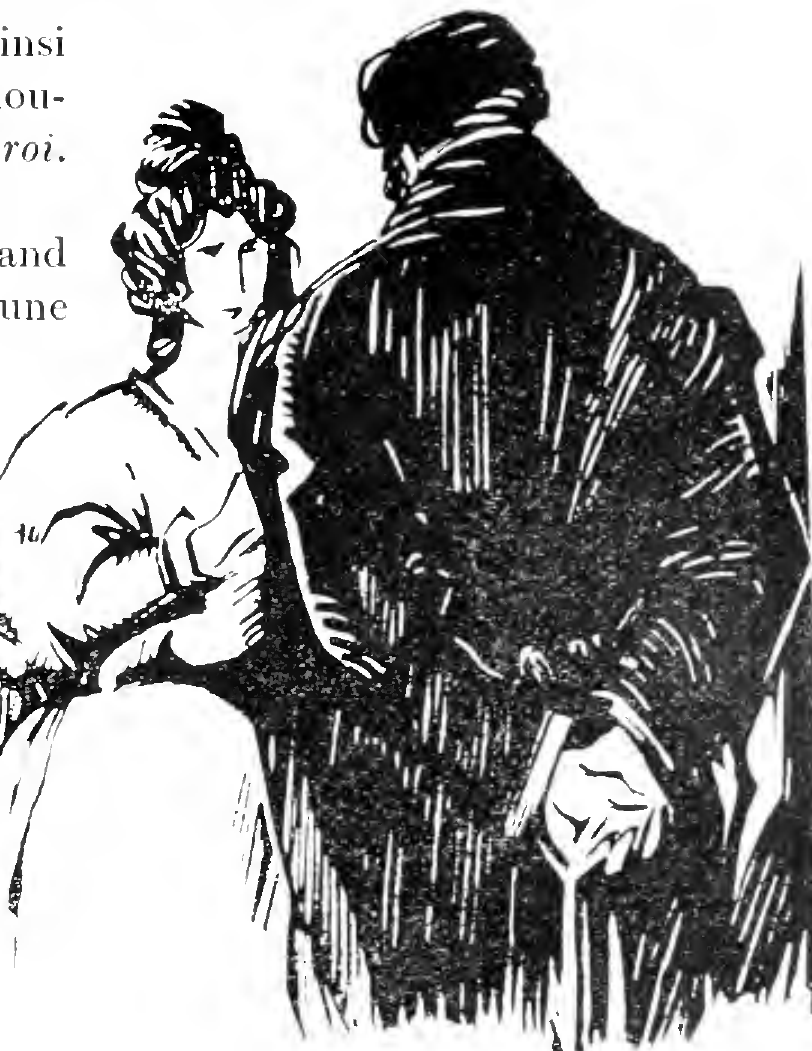
went to the gunsmith's to take pistols, which he had loaded.
In fact, he said to himself, should the severe administration of Emperor Napoleon return to the world, I have not a penny of knavery to reproach myself with. At most I have closed my eyes, but I have good letters in my desk that authorize me to do so.
Madame de Rênal was frightened by her husband's cold anger; she reminded him of the fatal idea of widowhood that she had so much difficulty in repelling. She shut herself in with him. For several hours she spoke to him in vain; the new anonymous letter decided him. Finally she succeeded in transforming his courage to give M. Valenod a slap into that of offering six hundred francs to Julien for a year of his pension in a seminary. M. de Rênal, cursing a thousand times the day when he had had the fatal idea of taking a tutor into his house, forgot the anonymous letter.
He consoled himself a little with a thought he did not tell his wife: with skill, and by taking advantage of the young man's romantic ideas, he hoped to engage him, for a smaller sum, to refuse M. Valenod's offers.
Madame de Rênal had far more difficulty in proving to Julien that, by making to her husband's proprieties the sacrifice of a place worth eight
hundred francs, which the director of the depot publicly offered him, he could without shame accept compensation.
"But," Julien kept saying, "never have I had, even for an instant, the project of accepting these offers. You have too accustomed me to elegant life; the coarseness of these people would kill me."
Cruel necessity, with its iron hand, bent Julien's will. His pride offered him the illusion of accepting only as a loan the sum offered by the mayor of Verrières, and of giving him a note bearing repayment in five years with interest.
Madame de Rênal always had a few thousand francs hidden in the little grotto of the mountain.
She offered them to him trembling, and feeling too keenly that she would be refused with anger.
"Do you wish," Julien said to her, "to make the memory of our loves abominable?"
At last Julien left Verrières. M. de Rênal was very happy; at the fatal moment of accepting money from him, this sacrifice proved too much for Julien. He refused flatly. M. de Rênal threw his arms around his neck, tears in his eyes. Julien having asked him for a certificate of good conduct, he could not find, in his enthusiasm, terms magnificent enough to extol his conduct. Our hero had five louis in savings, and counted on asking Fouqué for a similar sum.
He was deeply moved. But a league from Verrières, where he was leaving so much
love, he thought only of the happiness of seeing a capital, a great garrison town like Besançon.
During this short absence of three days, Madame de Rênal was deceived by one of the cruelest disappointments of love. Her life was passable; between her and extreme misfortune there was this last interview she was to have with Julien. She counted the hours, the minutes that separated her from it. Finally, during the night of the third day, she heard from afar the agreed signal. After having passed through a thousand dangers, Julien appeared before her.
From that moment, she had only one thought: This is the last time I shall see him. Far from responding to her friend's eagerness, she was like a corpse barely animated.If she forced herself to tell him that she loved him, it was with an awkward air that almost proved the contrary. Nothing could distract her from the cruel idea of eternal separation. The suspicious Julien believed for a moment that he was already forgotten. His words, barbed in that direction, were received only with great tears flowing in silence, and almost convulsive squeezings of the hand.
"But, good God! how do you expect me to believe you?" Julien replied to his friend's cold protestations; "you would show a hundred times more sincere affection to Madame Derville, to a mere acquaintance."
Madame de Rênal, petrified, did not know what to answer.
"It is impossible to be more unhappy... I hope I am going to die... I feel my heart growing cold..."
Such were the longest replies he could obtain from her.
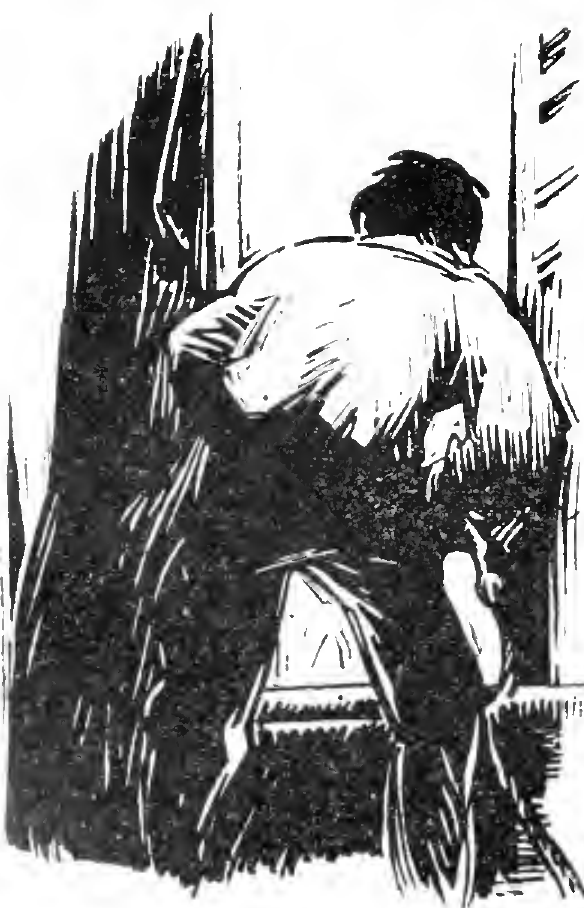
When the approach of day made departure necessary, Madame de Rênal's tears ceased entirely. She watched him tie a knotted rope to the window without a word, without returning his kisses. In vain Julien said to her:
"Here we are arrived at the state you so wished for. Henceforth you will live without remorse. At the slightest indisposition of your children, you will no longer see them in the grave."
"I am sorry that you cannot kiss Stanislas," she said to him coldly.
Julien ended by being deeply struck by the lukewarm embraces of this living corpse; he could think of nothing else for several leagues. His soul was devastated, and before crossing the mountain, as long as he could see the steeple of Verrières, he often turned around.