About this book
Julien Sorel climbs from sawmill to salon, torn between the red of the army and the black of the church. Stendhal's 1830 novel, free to read online.
LITTLE EVENTS
Then there were sighs, the deeper for suppression, And stolen glances, sweeter for the theft, And burning blushes, though for no transgression.
Don Juan, c. 1, st. 74.
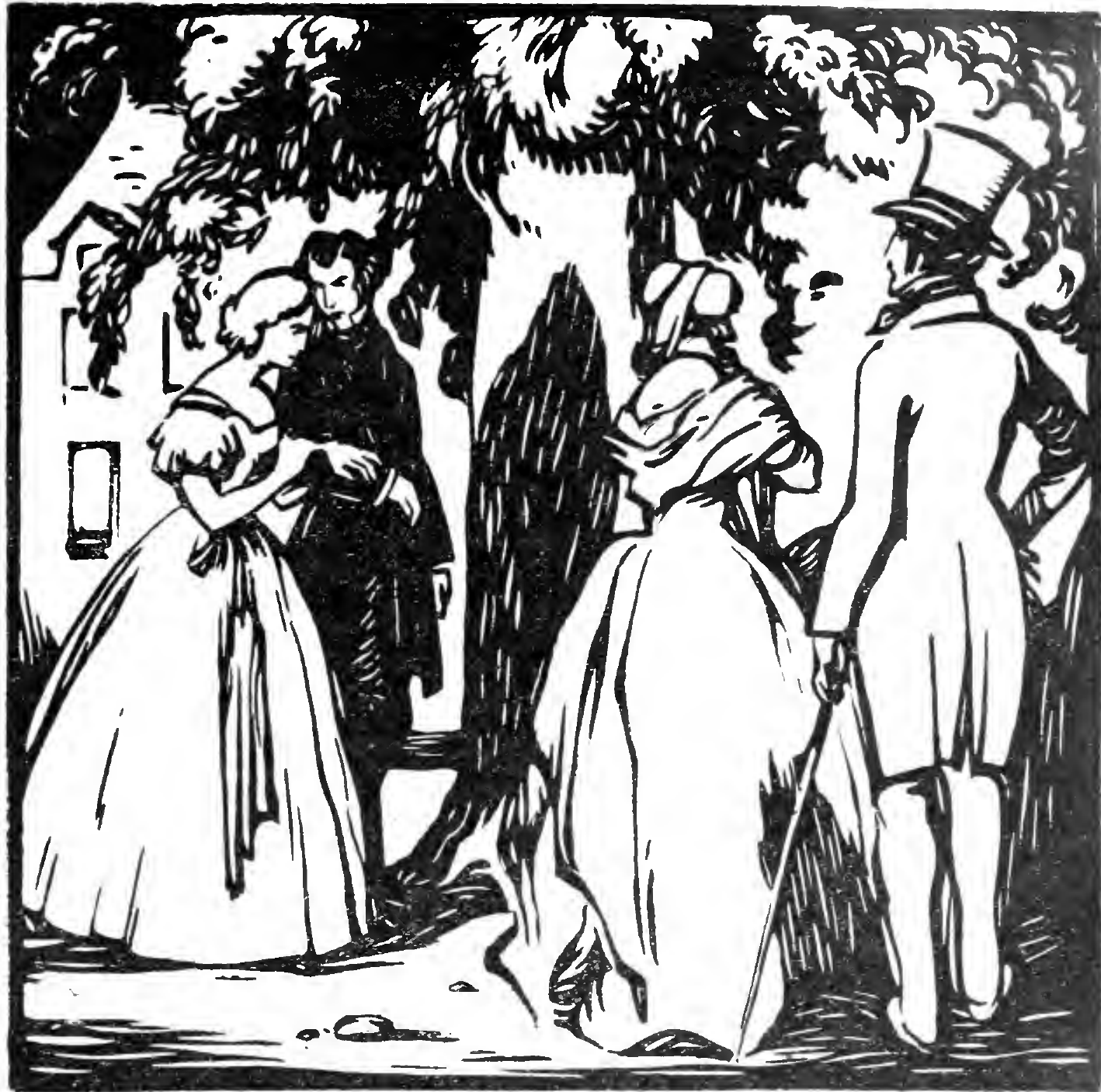
THE angelic sweetness that Madame de Rênal owed to her character and to her present happiness was slightly altered only when she happened to think of her maid Élisa. This girl came into an inheritance, went to confess to the curé Chélan, and admitted to him her plan to marry Julien. The curé felt genuine joy at his friend's happiness; but his surprise was extreme when Julien told him with a resolute air that Mademoiselle Élisa's offer could not suit him.
—Take care, my child, about what is going on in your heart, said the curé, frowning; I congratulate you on your vocation, if it is to it alone that you owe your contempt for a fortune more than sufficient. It is fifty-six full years since I became curé of Verrières, and yet, in all likelihood, I am about to be dismissed. This grieves me, and nevertheless I have eight hundred livres of income. I share this detail with you so that you will not delude yourself about what awaits you in the priestly state. If you think of courting men who hold power, your eternal loss is assured. You may make your fortune, but you will have to harm the wretched, flatter the sub-prefect, the mayor, the man held in esteem, and serve his passions: such conduct, which in the world is called knowing how to live, may, for a layman, not be absolutely incompatible with salvation, but in our state one must choose; it is a matter of making one's fortune in this world or in the next, there is no middle way. Go, my dear friend, reflect, and come back in three days to give me a definitive answer. I glimpse with sorrow, at the bottom of your character, a somber ardor that does not announce to me the moderation and the perfect self-denial of earthly advantages necessary to a priest; I have high hopes for your mind; but, allow me to tell you, added the good curé, with tears in his eyes, in the priestly state, I tremble for your salvation.
Julien was ashamed of his emotion; for the first time in his life, he saw himself loved; he wept with delight, and went to hide his tears in the great woods above Verrières.
—Why this state I find myself in? he said to himself at last; I feel that I would give my life a hundred times over for this good curé Chélan, and yet he has just proved to me that I am nothing but a fool. It is him above all that I need to deceive, and he sees through me. This secret ardor he speaks of is my plan to make my fortune. He believes me unworthy to be a priest, and that precisely when I imagined that the sacri
fice of fifty louis of income was going to give him the highest idea of my piety and my vocation.
In the future, Julien continued, I shall count only on the parts of my character that I have tested. Who would have told me that I would find pleasure in shedding tears? that I would love the man who proves to me that I am nothing but a fool!
Three days later, Julien had found the pretext he should have armed himself with from the first day; this pretext was a slander, but what does it matter? He admitted to the curé, with much hesitation, that a reason he could not explain to him, because it would harm a third party, had at first turned him away from the projected union. This was to accuse Élisa's conduct. M. Chélan found in his manners a certain worldly fire, quite different from the one that should have animated a young Levite.
—My friend, he said to him again, be a good country bourgeois, estimable and educated, rather than a priest without a vocation.
Julien responded to these new remonstrances very well, as far as the words went: he found the words that a fervent young seminarian would have used; but the tone in which he pronounced them, but the poorly hidden fire that blazed in his eyes, alarmed M. Chélan.
One must not judge Julien too harshly; he correctly invented the words of a cautious and prudent hypocrisy. That is not bad for his age. As for tone and gestures, he lived with country people; he had been deprived of the sight of great models. Later on, scarcely had it been granted him to approach these Gentlemen, than he was admirable in gestures as in words.
Madame de Rênal was astonished that her maid's new fortune did not make the girl happier; she saw her going constantly to the curé and coming back with tears in her eyes; at last Élisa spoke to her of her marriage.
.
Madame de Rênal believed herself ill; a kind of fever prevented her from finding sleep; she lived only when she had before her eyes her maid or Julien. She could think only of them and of the happiness they would find in their household. The poverty of that little house, where they would have to live on fifty louis of income, painted itself to her in ravishing colors. Julien could very well become a lawyer at Bray, the sub-prefecture two leagues from Verrières; in that case she would see him sometimes.
Madame de Rênal sincerely believed she was going to go mad; she said so to her husband, and at last fell ill. That same evening, as her
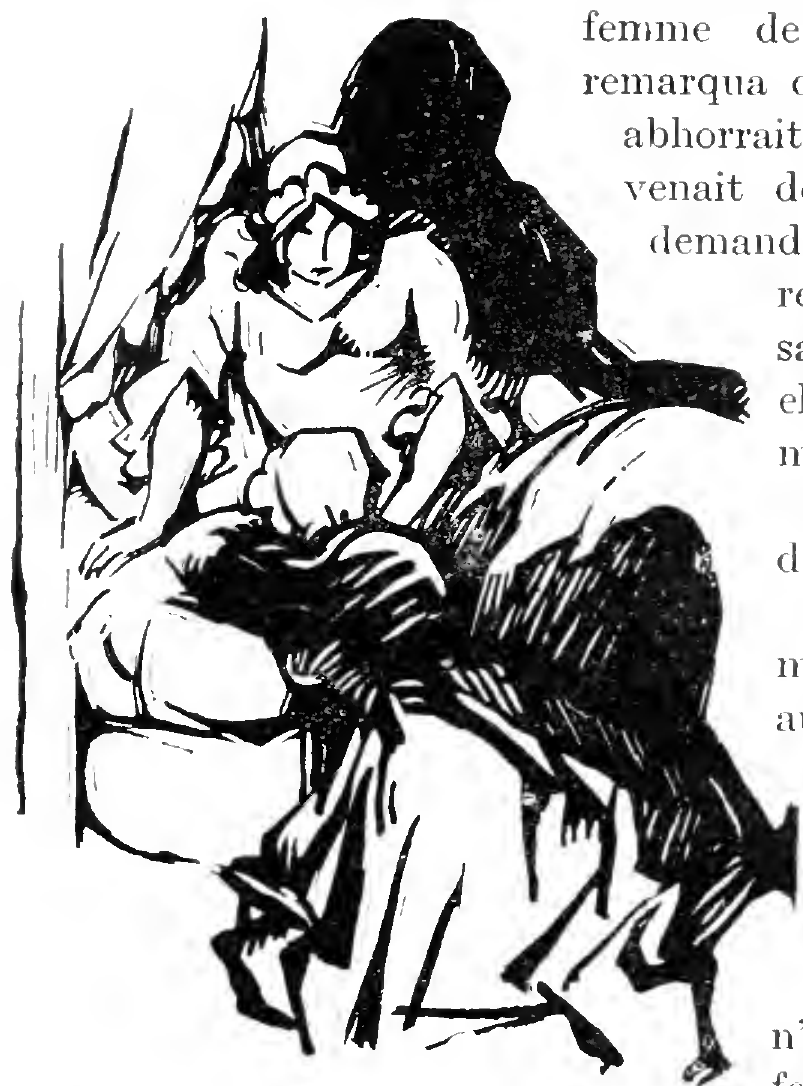
maid was serving her, she noticed that the girl was weeping. She abhorred Élisa at that moment, and had just spoken sharply to her; she begged her pardon. Élisa's tears redoubled; she said that if her mistress permitted it, she would tell her all her misfortune.
Speak, replied Madame de Rênal.
Well, Madame, he refuses me; wicked people must have spoken ill of me to him, he believes them.
Who refuses you? said Madame de Rênal, scarcely breathing.
And who, Madame, if not M. Julien? replied the maid, sobbing.M. le curé could not overcome his resistance; for M. le curé thinks he ought not to refuse an honest girl on the pretext that she has been a maid. After all, M. Julien's father is nothing but a carpenter; how did he himself earn his living before being at Madame's?
Madame de Rênal was no longer listening; the excess of happiness had almost taken away her use of reason. She had herself told several times over the assurance that Julien had refused in a positive manner, and one that no longer allowed a return to a wiser resolution.
I want to make a last effort, she said to her maid, I shall speak to M. Julien.
The next day after breakfast, Madame de Rênal gave herself the delicious voluptuousness of pleading her rival's cause, and of seeing Élisa's hand and fortune constantly refused for an hour.
Little by little Julien emerged from his constrained answers, and finally came to reply with wit to Madame de Rênal's wise representations. She could not resist the torrent of happiness that flooded her soul after so many days of despair. She felt quite faint. When she had recovered and was well settled in her room, she sent everyone away. She was profoundly astonished.
"Can it be that I am in love with Julien?" she said to herself at last.
This discovery, which at any other moment would have plunged her into remorse and deep agitation, was for her only a singular spectacle, but as it were indifferent. Her soul, exhausted by all that she had just experienced, had no sensibility left in the service of the passions.
Madame de Rênal tried to work, and fell into a deep sleep; when she awoke, she was not as frightened as she ought to have been. She was too happy to be able to take anything amiss. Naive and innocent, this good provincial woman had never tortured her soul in order to try to wrest from it a little sensibility to some new shade of feeling or misfortune. Entirely absorbed, before Julien's arrival, by that mass of work which, far from Paris, is the lot of a good mother of a family, Madame de Rênal thought of the passions as we think of the lottery: a certain duping and a happiness sought by fools.
The dinner bell rang; Madame de Rênal blushed a great deal when she heard Julien's voice, as he brought in the children. A little adroit since she had loved, to explain her blush she complained of a frightful headache.
"That's how all women are," M. de Rênal replied to her, with a loud laugh. "There's always something to be mended about those machines!"
Although accustomed to this kind of wit, this tone of voice shocked Madame de Rênal. To distract herself, she looked at Julien's countenance; he would have been the ugliest of men, yet in that instant he would have pleased her.
Attentive to copying the habits of the people of the court, from the first fine days of spring, M. de Rênal established himself at Vergy; it is the village made famous by the tragic adventure of Gabrielle. A few hundred paces from the picturesque ruins of the old Gothic church, M. de Rênal possesses an old château with its four towers, and a garden laid out like that of the Tuileries, with quantities of box borders and avenues of chestnut trees trimmed twice a year. A neighboring field, planted with apple trees, served as a promenade. Eight or ten magnificent walnut trees stood at the end of the orchard; their immense foliage rose perhaps to eighty feet in height.
"Each of these cursed walnut trees," M. de Rênal would say, when his wife admired them, "costs me the harvest of half an arpent; wheat cannot grow in their shade."
The sight of the countryside seemed new to Madame de Rênal; her admiration went as far as transports. The feeling that animated her gave her wit and resolution. On the second day after arriving at Vergy, M. de Rênal having returned to town for the affairs of the mayoralty, Madame de Rênal hired workmen at her own expense. Julien had given her the idea of a little gravel path that would wind through the orchard and beneath the great walnut trees, and allow the children to walk there early in the morning without their shoes being wet by the dew. This idea was put into execution less than twenty-four hours after being conceived. Madame de Rênal spent the whole day gaily with Julien directing the workmen.

When the mayor of Verrières returned from town, he was quite surprised to find the path made. His arrival also surprised Madame de Rênal; she had forgotten his existence. For two months he spoke with ill humor of the boldness that had been shown in making, without consulting him, so important a repair, but Madame de Rênal had carried it out at her own expense, which consoled him a little.
She spent her days running with her children in the orchard, and hunting butterflies. Large hoods of light gauze had been constructed, with which the poor lepidopterans were caught. It is the barbarous name that Julien was teaching Madame de Rênal. For she had had M. Godart's beautiful work sent from Besançon; and Julien told her of the singular habits of these poor creatures.
They were pinned, without pity, with pins into a large cardboard frame also arranged by Julien.
At last there was a subject of conversation between Madame de Rênal and Julien; he was no longer exposed to the dreadful torture that moments of silence gave him.
They talked to each other incessantly, and with extreme interest, though always about very innocent things. This active, occupied, and gay life was to everyone's taste, except Mademoiselle Élisa, who found herself overwhelmed with work. Never during carnival, she said, when there is a ball at Verrières, has Madame taken such pains with her toilette; she changes her dresses two or three times a day.
As our intention is to flatter no one, we shall not deny that Madame de Rênal, who had a superb complexion, had dresses made for her that left her arms and bosom very much uncovered. She was very well made, and this manner of dressing suited her to perfection.
"Never have you been so young, Madame," her friends from Verrières who came to dine at Vergy would say to her. (It is a manner of speaking of the country.)
A singular thing, which will find little credence among us, was that it was without direct intention that Madame de Rênal gave herself to so much care. She found pleasure in it; and, without thinking otherwise, all the time she did not spend hunting butterflies with the children and Julien, she worked with Élisa at making dresses. Her only trip to Verrières was caused by the desire to buy new summer dresses that had just been brought from Mulhouse.
She brought back to Vergy a young woman of her relatives. Since her marriage, Madame de Rênal had become insensibly attached to Madame Derville, who had formerly been her companion at the Sacré-Cœur. Madame Derville laughed a great deal at what she called her cousin's mad ideas: "Alone, I would never think of them," she would say. These unforeseen ideas that in Paris would have been called sallies, Madame de Rênal was ashamed of as of a foolishness when she was with her husband; but the presence of Madame Derville gave her courage. She first told her her thoughts in a timid voice; when these ladies had been alone for a long time,
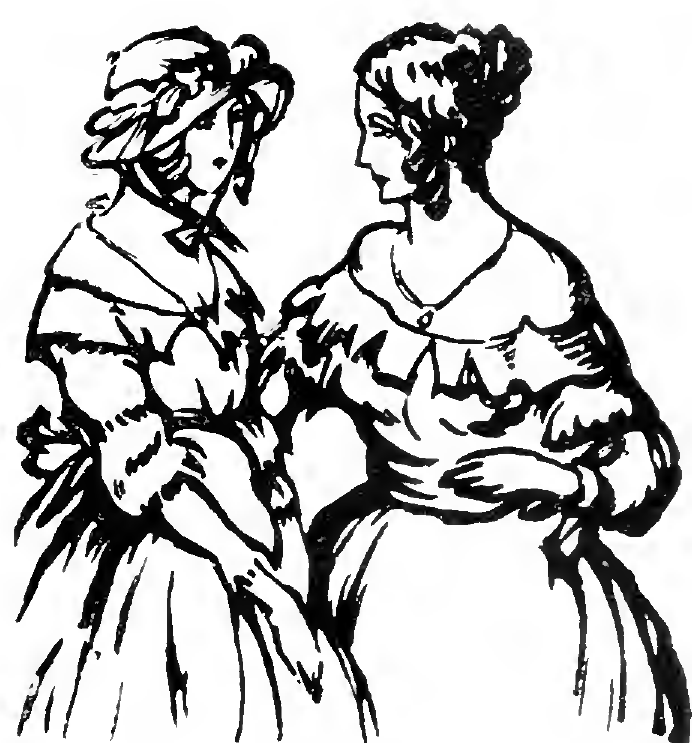
Madame de Rênal's mind would become animated, and a long solitary morning would pass like an instant and leave the two friends quite gay. On this visit the reasonable Madame Derville found her cousin much less gay and much happier.
Julien, for his part, had lived as a true child since his stay in the country, as happy to run after butterflies as the pupils. After so much constraint and clever policy, alone, far from the eyes of men, and, by instinct, not fearing Madame de Rênal, he gave himself up to the pleasure of existing, so vivid at that age, and amid the most beautiful mountains in the world.
From the arrival of Madame Derville, it seemed to Julien that she was his friend; he hastened to show her the view that one has from the end of the new path beneath the great walnut trees; in fact, it is equal, if not superior, to the most admirable that Switzerland and the lakes of Italy can offer. If one climbs the steep slope that begins a few paces from there, one soon arrives at great precipices bordered by oak woods, which advance almost to the river. It is on the summits of these sheer-cut rocks that Julien, happy, free, and even something more, king of the house, led the two friends, and enjoyed their admiration for these sublime prospects.
"It is for me like Mozart's music," said Madame Derville.
The jealousy of his brothers, the presence of a despotic and ill-humored father had spoiled for Julien the countryside around Verrières. At Vergy, he found none of these bitter memories for the first time in his life; he saw no enemy. When M. de Rênal was in town, which happened often, he dared to read; soon, instead of reading at night, and still taking care to hide his lamp at the bottom of an overturned flower vase, he could give himself up to sleep; by day, in the interval between the children's lessons, he came to these rocks with the book, the sole rule of his conduct and object of his transports. He found there at once happiness, ecstasy, and consolation in moments of discouragement.
Certain things that Napoleon said about women, several discussions on the merit of fashionable novels under his reign gave him then, for the first time, some ideas that any other young man of his age would have had long since.
The great heat arrived. The habit was taken of spending the evenings under an immense linden tree a few paces from the house. The darkness there was profound. One evening, Julien was speaking with animation, he enjoyed with delight the pleasure of speaking well and to young women; while gesturing, he touched the hand of Madame de Rênal, which was resting on the back of one of those painted wooden chairs that are placed in gardens.
This hand withdrew very quickly; but Julien thought that it was his duty to obtain that this hand should not be withdrawn when he touched it. The idea of a duty to fulfill, and of giving himself up to ridicule, or rather of not incurring it, banished all pleasure from his heart.