About this book
Julien Sorel climbs from sawmill to salon, torn between the red of the army and the black of the church. Stendhal's 1830 novel, free to read online.
LXXII
n leading Julien to prison, they had introduced him into a room intended for those condemned to death. He who ordinarily noticed even the smallest circumstances had not perceived that they were not taking him back up to his dungeon. He was thinking of what he would say to Madame de Rênal if, before the last moment, he had the happiness of seeing her. He thought that she would interrupt him, and wanted with the first word to be able to paint for her all his repentance. After such an action, how could he persuade her that I love only her? for after all, I wanted to kill her out of ambition or out of love for Mathilde..
On getting into bed he found sheets of coarse linen. His eyes were opened. Ah! I am in a cell, he said to himself, as one condemned to death. That is right...
Count Altamira was telling me that, on the eve of his death, Danton said in his deep voice: It is strange, the verb to guillotine cannot be conjugated in all its tenses; one can well say: I shall be guillotined, thou shalt be guillotined, but one does not say: I have been guillotined.
Why not, replied Julien, if there is another life?... Upon my word, if I find the God of the Christians, I am lost: he is a despot, and, as such, he is filled with ideas of vengeance; his Bible speaks only of atrocious punishments. I have never loved him; I have never even wanted to believe that one loved him sincerely. He is without pity (and he recalled several passages from the Bible). He will punish me in an abominable manner...
But if I find the God of Fénelon! He will perhaps say to me: You will be forgiven much, because you have loved much...
Have I loved much? Ah! I loved Madame de Rênal, but my conduct has been atrocious. There, as elsewhere, simple and modest merit was abandoned for what is brilliant...
But also, what a prospect!... Colonel of hussars, if we had war; secretary of legation during peace; then ambassador... for soon I would have known affairs..., and even if I had been only a fool, the son-in-law of the Marquis de La Mole had no rivalry to fear? All my follies would have been forgiven, or rather counted as merits. A man of merit, and enjoying the greatest existence in Vienna or London...
— Not precisely, Monsieur, guillotined in three days.
Julien laughed heartily at this sally of his mind. In truth, man has two beings in him, he thought. Who the devil was thinking of that malicious reflection?
Well! yes, my friend, guillotined in three days, he replied to the interrupter. Monsieur de Cholin will rent a window, sharing the cost with Abbé Maslon. Well, for the price of renting that window, which of these two worthy personages will rob the other?
This passage from Rotrou's Venceslas suddenly came back to him:
LADISLAS
...My soul is all ready.
THE KING, father of Ladislas.
The scaffold is so too; carry your head there.
A fine reply! he thought, and he fell asleep. Someone woke him in the morning by gripping him tightly.
— What, already! said Julien, opening a haggard eye. He believed himself in the hands of the executioner.
It was Mathilde. Fortunately, she did not understand me. This reflection restored all his composure. He found Mathilde changed as if by six months of illness: she was truly unrecognizable.
— That infamous Frilair has betrayed me, she was saying to him as she wrung her hands; fury prevented her from weeping.
— Was I not handsome yesterday when I spoke? replied Julien. I was improvising, and for the first time in my life! It is true that it is to be feared that it may also be the last.
At that moment, Julien was playing on Mathilde's character with all the composure of a skillful pianist touching the piano... The advantage of an illustrious birth is lacking to me, it is true, he added, but Mathilde's great soul has raised her lover up to her. Do you believe that Boniface de La Mole was better before his judges?
Mathilde, that day, was tender without affectation, like a poor girl living on a fifth floor; but she could not obtain simpler words from him. He was, without knowing it, returning to her the torment she had often inflicted on him.
The sources of the Nile are unknown, Julien said to himself; it has not been granted to the eye of man to see the king of rivers in the state of a simple stream: thus no human eye will ever see
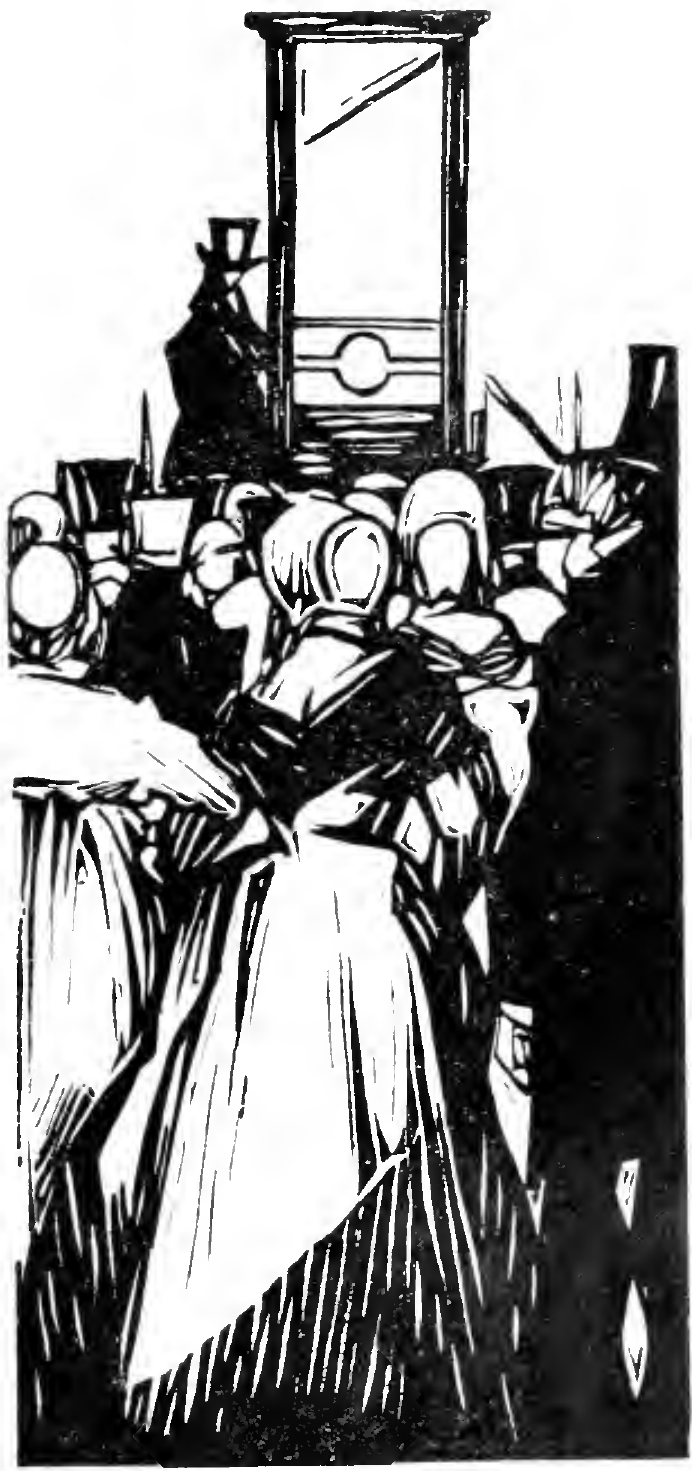
Julien weak, first because he is not weak. But I have a heart that is easy to touch; the most commonplace words, if spoken with a true accent, can soften my voice and even make my tears flow. How many times have dry hearts not despised me for this defect! They believed that I was begging for mercy: that is what must not be endured. They say that the memory of his wife moved Danton at the foot of the scaffold; but Danton had given strength to a nation of fops, and kept the enemy from reaching Paris... I alone know what I might have done... For others, I am at most nothing but a PERHAPS.
If Madame de Rênal were here, in my dungeon, instead of Mathilde, could I have answered for myself? The excess of my despair and of my repentance would have passed, in the eyes of the Valenods and of all the patricians of the country, for the ignoble fear of death; they are so proud, these weak hearts, whom their financial position places above temptations! See what it is, MM. de Moirod and de Cholin, who have just condemned me to death, would have said, to be born the son of a carpenter! One can become learned, skillful, but the heart!... the heart cannot be learned.
Even with this poor Mathilde, who is weeping now, or rather who can weep no longer, he said, looking at her red eyes... And he clasped her in his arms: the sight of a true grief made him forget his syllogism... She has wept all night perhaps, he said to himself; but one day, what shame will this memory not cause her! She will regard herself as having been led astray, in her earliest youth, by the base ways of thinking of a plebeian... Le Croisenois is weak enough to marry her, and, upon my word, he will do well. She will make him play a role,
By the right that a firm and vast mind in its designs has over the coarse mind of vulgar humans.
Ah, now! here is something amusing: since I must die, all the verses I ever knew in my life come back to my memory. It will be a sign of decadence...
Mathilde kept repeating to him in a lifeless voice: He is there in the next room. At last he paid attention to her words. Her voice is weak, he thought, but all that imperious character is still in her accent. She lowers her voice so as not to become angry.
"And who is there?" he said to her gently.
"The lawyer, to make you sign your appeal."
"I shall not appeal."
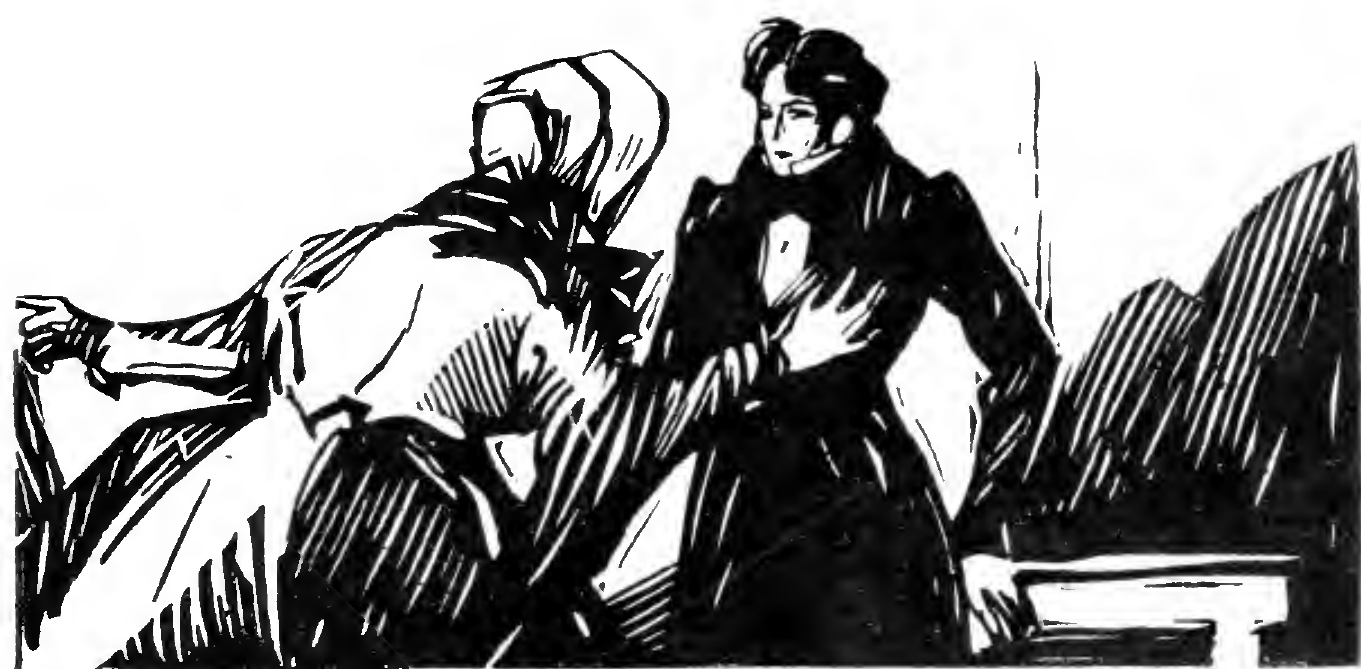
"What! you will not appeal," she said, rising with eyes flashing with anger, "and why, if you please?"
"Because, at this moment, I feel the courage to die without making too great a fool of myself. And who can tell me that in two months, after a long stay in this damp dungeon, I shall be so well disposed? I foresee interviews with priests, with my father... Nothing in the world could be so disagreeable to me. Let us die."
This unforeseen contrariety awakened all the haughty side of Mathilde's character. She had not been able to see the abbé de Frilair before the hour at which the dungeons of the prison of Besançon are opened; her fury fell back upon Julien. She adored him, and for a good quarter of an hour he found again in her imprecations against his character, in her regrets at having loved him, all that proud soul which had once overwhelmed him with such poignant insults in the library of the Hôtel de La Mole.
"Heaven owed it to the glory of your race to cause you to be born a man," he said to her.
But as for me, he thought, I should be a fine dupe to live two months longer in this disgusting place, exposed to everything that the patrician faction can invent of infamy and humiliation, and having as my only consolation the imprecations of this madwoman... Well, the day after tomorrow morning, I fight a duel with a man known for his coolness and for a remarkable skill... Very remarkable, said the Mephistophelian party; he never misses his shot.(1)
Well, so be it, at the good hour (Mathilde continued to be eloquent). By Jove, no, he said to himself, I shall not appeal.
This resolution taken, he fell into a reverie... The postman in passing will bring the newspaper at six o'clock as usual; at eight o'clock, after M. de Rênal has read it, Élisa, walking on tiptoe, will come and lay it on his bed. Later she will awaken: all at once, while reading, she will be disturbed; her pretty hand will tremble; she will read as far as these words: At ten o'clock and five minutes he had ceased to exist.
She will weep hot tears, I know her; in vain I sought to assassinate her, all will be forgotten, and the person whose life I sought to take will be the only one who will sincerely weep for my death.
Ah! this is an antithesis! he thought, and, for a good quarter of an hour that the scene Mathilde was making for him still lasted, he thought only of Madame de Rênal. In spite of himself, and although often answering what Mathilde said to him, he could not detach his soul from the memory of the bedroom at Verrières. He saw the Besançon gazette on the orange taffeta counterpane. He saw that hand so white clutching it with a convulsive movement; he saw Madame de Rênal weeping... He followed the course of each tear on that charming face.
Mademoiselle de La Mole, unable to obtain anything from Julien, brought in the lawyer. He was fortunately a former captain of the army of Italy, of 1796, where he had been a comrade of Manuel.
For form's sake, he combated the condemned man's resolution. Julien, wishing to treat him with esteem, set out all his reasons for him.
"Faith, one may think as you do," M. Félix Vaneau finally said to him; that was the lawyer's name. "But you have three full days to appeal, and it is my duty to return every day. If a volcano were to open beneath the prison, between now and two months, you would be saved. You may die of illness," he said, looking at Julien.
Julien shook his hand. "I thank you, you are a brave man. I shall think about this."
And when Mathilde finally went out with the lawyer, he felt much more friendship for the lawyer than for her.