About this book
Julien Sorel climbs from sawmill to salon, torn between the red of the army and the black of the church. Stendhal's 1830 novel, free to read online.
LXXIV
As soon as he had gone out, Julien wept a great deal, and wept at dying. Little by little he told himself that, if Madame de Rênal had been at Besançon, he would have confessed his weakness to her...
.
.
At the moment when he regretted most the absence of this adored woman, he heard Mathilde’s step.
The worst of misfortunes in prison, he thought, is not being able to shut one’s door. Everything Mathilde said to him only irritated him.
.
.
She told him that, on the day of the judgment, M. de Valenod, having in his pocket his appointment as prefect, had dared to mock M. de Frilair and to give himself the pleasure of condemning him to death.
“What an idea your friend had, M. de Friair has just told me, to go awakening and attacking the little vanity of this bourgeois aristocracy! Why speak of caste? He pointed out to them what they ought to do in their political interest: those simpletons were not thinking of it and were ready to weep. This caste interest came to mask in their eyes the horror of condemning to death. It must be admitted that M. Sorel is very new to affairs. If we do not manage to save him by the appeal for mercy, his death will be a sort of suicide...”
Mathilde was careful not to tell Julien what she did not yet suspect: that the abbé de Friair, seeing Julien lost, believed it useful to his ambition to aspire to become his successor.
Almost beside himself, from impotent anger and vexation: “Go listen to a mass for me,” he said to Mathilde, “and leave me a moment’s peace.” Mathilde, already very jealous of Madame de Rênal’s visits, and who had just learned of her departure, understood the cause of Julien’s mood and burst into tears.
Her grief was real; Julien saw it and was only the more irritated.

He had an imperious need of solitude, and how was he to procure it?
At last, Mathilde, after having tried every argument to soften him, left him alone, but almost at the same instant Fouqué appeared.
“I need to be alone,” he said to this faithful friend... And as he saw him hesitate: “I am composing a memorial for my appeal for mercy... besides... do me a favor, never speak to me of death. If I need any particular services that day, let me be the first to speak to you of them.”
When Julien had at last procured solitude, he found himself more overwhelmed and more cowardly than before. The little strength that remained to this weakened soul had been exhausted in disguising his state from Mademoiselle de La Mole and from Fouqué.
Toward evening an idea consoled him.
If this morning, at the moment when death appeared to me so ugly, I had been warned of the execution, the eye of the public would have been a spur to glory; perhaps my bearing would have had something stiff about it, like that of a timid fop entering a drawing room. A few clear-sighted people, if there are any among these provincials, might have guessed my weakness... but no one would have seen it.
And he felt delivered from a part of his misfortune. I am a coward at this moment, he repeated to himself as he sang, but no one will know it.
An event almost more disagreeable still awaited him the next day. For a long time his father had been announcing his visit; that day, before Julien awoke, the old white-haired carpenter appeared in his cell.
Julien felt weak; he expected the most disagreeable reproaches. To complete his painful sensation, that morning he felt keenly the remorse of not loving his father.
Chance has placed us side by side on the earth, he said to himself while the turnkey arranged the cell a little, and we have done each other about all the harm possible. He comes at the moment of my death to give me the last blow.
The old man's severe reproaches began as soon as they were without witnesses.
Julien could not hold back his tears. What an unworthy weakness! he said to himself with rage. He will go everywhere exaggerating my lack of courage; what a triumph for Valenod and for all the platitudinous hypocrites who reign at Verrières! They are very great in France, they unite all social advantages. Until now I could at least say to myself: They receive money, it is true, all honors accumulate upon them, but I have nobility of heart.
And here is a witness whom everyone will believe, and who will certify to all Verrières, and exaggerating it, that I was weak before death! I shall have been a coward in this ordeal that everyone understands!
Julien was near despair. He did not know how to send his father away. And to feign in such a way as to deceive this old man so clear-sighted was at that moment altogether beyond his strength.
His mind rapidly ran through all the possibilities. "I have made savings!" he suddenly exclaimed.
This word of genius changed the old man's physiognomy and Julien's position.
"How am I to dispose of it?" continued Julien, more calmly. The effect produced had been a whole feeling of inferiority.The old carpenter was burning with the desire not to let this money escape, of which it seemed that Julien wished to leave a part to his brothers. He spoke for a long time and with fire. Julien was able to be facetious.
"Well then! the Lord has inspired me for my will. I shall give a thousand francs to each of my brothers and the rest to you."
"Very well," said the old man, "this rest is owed to me: but since God has given you the grace to touch your heart, if you wish to die a good Christian, it is fitting to pay your debts. There are still the expenses of your food and education which I have advanced, and of which you do not think..."
So this is fatherly love! Julien repeated to himself, his soul grieved, when at last he was alone. Soon the jailer appeared.
"Sir, after the visit of the grandparents, I always bring my guests a bottle of good champagne. It is a little dear, six francs the bottle, but it rejoices the heart."
"Bring three glasses," Julien told him with a child's eagerness, "and let in two of the prisoners whom I hear walking in the corridor."
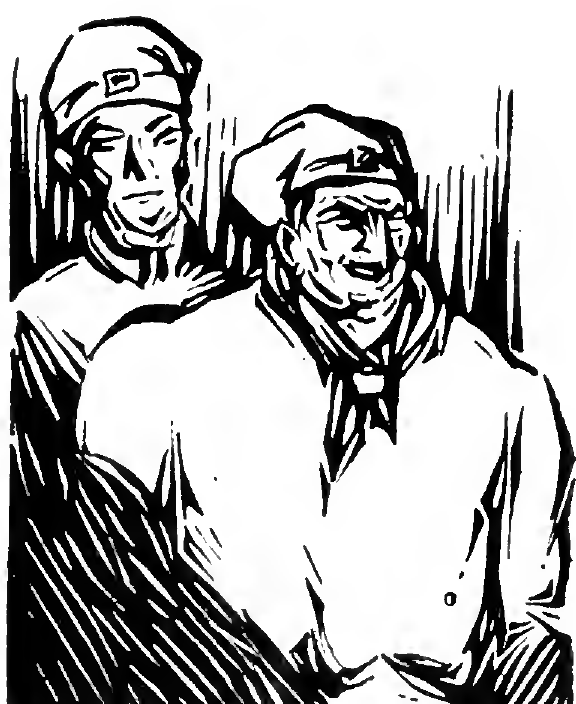
The jailer brought him two galley slaves who had fallen into recidivism and who were preparing to return to the bagne. They were very gay scoundrels and truly very remarkable for their finesse, courage and coolness.
"If you give me twenty francs," said one of them to Julien, "I will tell you my life in detail. It is choice stuff."
"But you are going to lie to me?" said Julien.
"Not at all," he answered; "my friend here, who is jealous of my twenty francs, will denounce me if I say anything false."
His story was abominable. It showed a courageous heart, in which there remained only one passion, that of money.
After their departure, Julien was no longer the same man. All his anger against himself had disappeared. The atrocious pain, poisoned by the pusillanimity to which he had been a prey since Madame de Rênal's departure, had turned into melancholy.
In proportion as I should have been less duped by appearances, he said to himself, I should have seen that the salons of Paris are peopled with honest men such as my father, or with clever scoundrels such as these galley slaves. They are right, never do men of the salon rise in the morning with that poignant thought: How shall I dine? And they boast of their probity!and, called to the jury, they sternly condemn the man who has stolen a silver cover because he felt himself fainting with hunger!
But is there a court, is it a question of losing or gaining a portfolio, my honest men of the salon fall into crimes exactly similar to those which the necessity of dining has inspired in these two galley slaves...
There is no natural right: that word is only an ancient piece of nonsense well worthy of the attorney-general who hunted me down the other day, and whose
ancestor was enriched by a confiscation of Louis XIV. There is right only when there is a law to forbid doing such a thing, under penalty of punishment. Before the law, there is natural only the force of the lion, or the need of the being who is hungry, who is cold, need in a word... No, the people whom we honor are only rascals who have had the good fortune not to be caught in the act. The accuser whom society launches after me has been enriched by an infamy... I have committed a murder, and I am justly condemned, but, except for that single action, the Valenod who condemned me is a hundred times more harmful to society.
Well! added Julien sadly, but without anger, in spite of his avarice, my father is worth more than all those men. He never loved me. I am about to fill the measure by dishonoring him with an infamous death. This fear of lacking money, this exaggerated view of the wickedness of men which is called avarice, makes him see a prodigious motive of consolation and security in a sum of three or four hundred louis which I can leave him. One Sunday after dinner, he will show his gold to all his envious fellows of Verrières. At that price, his look will say to them, which of you would not be charmed to have a guillotined son?
This philosophy might be true, but it was of a nature to make one desire death. Thus passed five long days. He was polite and gentle toward Mathilde, whom he saw exasperated by the most lively jealousy. One evening Julien was seriously thinking of giving himself death. His soul was unnerved by the profound misfortune into which Madame de Rênal's departure had thrown him. Nothing pleased him any more, neither in real lifenor in imagination. The lack of exercise was beginning to alter his health and to give him the exalted and weak character of a young German student. He was losing that manly loftiness which repels by an energetic oath certain unsuitable ideas with which the soul of the unhappy is assailed.
I have loved truth... Where is it?... Everywhere hypocrisy, or at least charlatanism, even among the most virtuous, even among the greatest: and his lips took on the expression of disgust... No, man cannot trust man.
Madame de ***, making a collection for her poor orphans, told me that such and such a prince had just given ten louis; a lie. But what am I saying? Napoleon at Saint Helena!... Pure charlatanism, a proclamation in favor of the king of Rome.
Great God! if such a man, and still when misfortune ought to recall him severely to duty, stoops to charlatanism, what is to be expected of the rest of the species?...
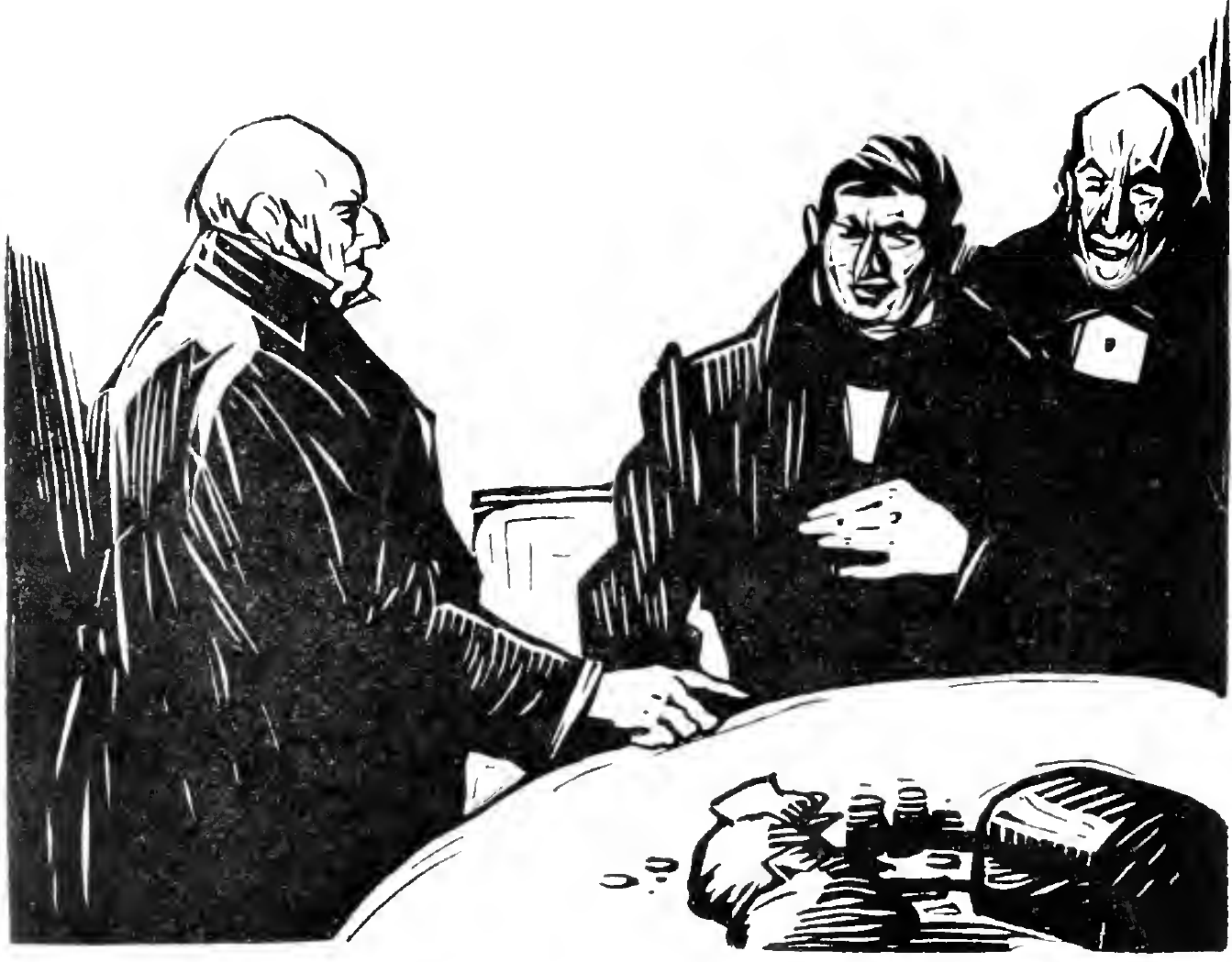
Where is truth? In religion... Yes, added he with the bitter smile of the most extreme contempt, in the mouth of the Maslons, the Frilairs, the Castanèdes... Perhaps in true Christianity, whose priests
would not be better paid than the apostles were?... But Saint Paul was paid by the pleasure of commanding, of speaking, of making himself talked about...
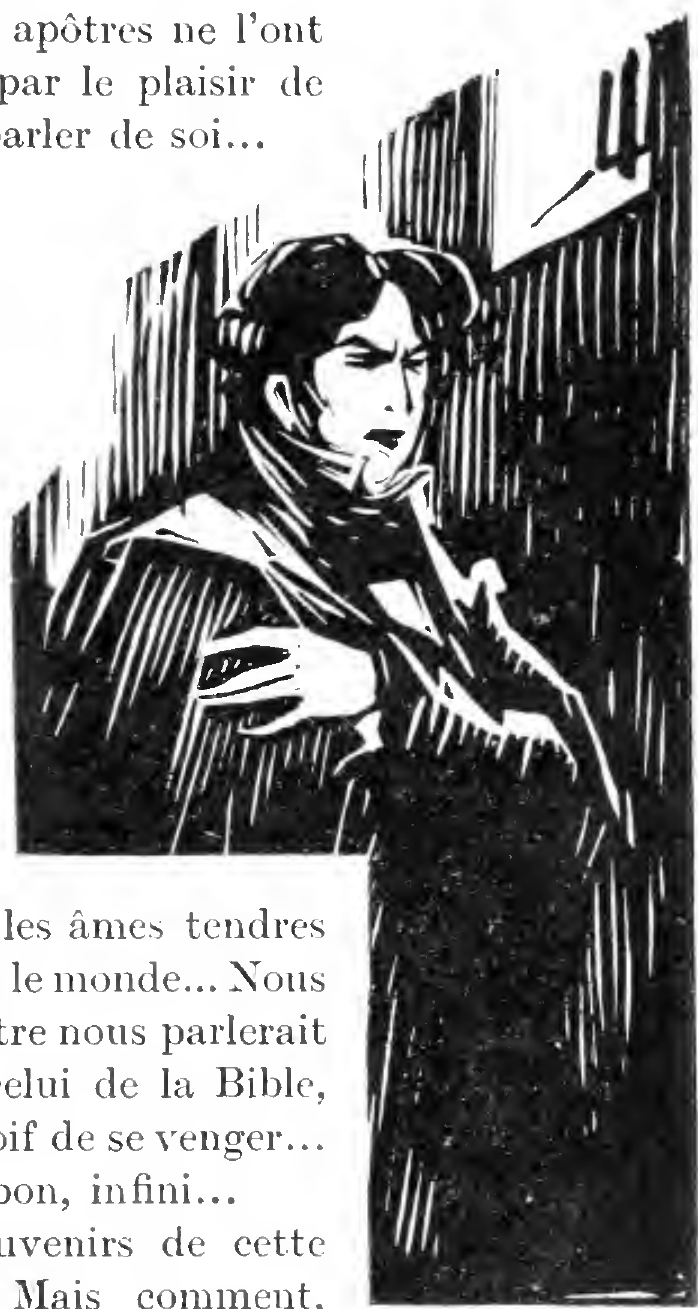
Ah! if there were a true religion... Fool that I am! I see a Gothic cathedral, venerable stained-glass windows; my weak heart pictures to itself the priest of those windows... My soul would understand him, my soul has need of him... I find only a fop with dirty hair... apart from the agreeableness, a Chevalier de Beauvoisis.
But a true priest, a Massillon, a Fénelon... Massillon consecrated Dubois. The Memoirs of Saint-Simon have spoiled Fénelon for me; but after all a true priest... Then tender souls would have a meeting point in the world... We should not be isolated... This good priest would speak to us of God. But what God? Not the one of the Bible, a little cruel despot full of the thirst to avenge himself... but the God of Voltaire, just, good, infinite...
He was agitated by all the memories of that Bible which he knew by heart... But how, as soon as three are together, believe in that great name God, after the frightful abuse our priests make of it? Live isolated!... What torment!...
I am becoming mad and unjust, said Julien, striking his forehead. I am isolated here in this dungeon; but I have not lived isolated on the earth; I had the powerful idea of duty. The duty I had prescribed for myself, wrongly or rightly... has been like the trunk of a solid tree to which I clung during the storm; I wavered, I was agitated. After all I was only a man... but I was not carried away. It is the damp air of this dungeon that made me think of isolation...
And why be a hypocrite still by cursing hypocrisy? It is neither death, nor the dungeon, nor the damp air—it is the absence of Madame de Rênal that overwhelms me. If, at Verrières, to see her, I were obliged to live entire weeks hidden in the cellars of her house, would I complain?The influence of my contemporaries carries the day, he said aloud and with a bitter laugh. Speaking alone with myself, two steps from death, I am still a hypocrite... O nineteenth century!
... A hunter fires a shot in a forest, his prey falls, he rushes to seize it. His shoe strikes an anthill two feet high, destroys the ants' dwelling, scatters the ants far and wide, their eggs... The most philosophical among the ants will never be able to understand that black, immense, frightful body: the hunter's boot, which has all at once penetrated their home with incredible speed, and preceded by a dreadful noise, accompanied by bursts of a reddish fire.
... Thus death, life, eternity—things quite simple for anyone who had organs vast enough to conceive them...
A mayfly is born at nine o'clock in the morning on the long days of summer, to die at five o'clock in the evening; how would it understand the word night?
Give it five more hours of existence, it sees and understands "what night is."
Thus I, I shall die at twenty-three. Give me five years of life to live with Madame de Rênal...
He began to laugh like Mephistopheles. What madness to debate these great problems!
10 I am a hypocrite as if there were someone there to listen to me;
20 I forget to live and to love, when I have so few days left to live... Alas! Madame de Rênal is absent; perhaps her husband will no longer let her return to Besançon and continue to dishonor herself.
Here is what isolates me, and not the absence of a just, good, all-powerful God, not wicked, not greedy for vengeance...
Ah! if He existed... alas! I would fall at His feet: I have deserved death, I would say to Him; but, great God, good God, indulgent God, give me back the one I love!
The night was then far advanced. After an hour or two of peaceful sleep, Fouqué arrived.
Julien felt strong and resolute, like the man who sees clearly into his own soul.