About this book
Julien Sorel climbs from sawmill to salon, torn between the red of the army and the black of the church. Stendhal's 1830 novel, free to read online.
AN OLD SWORD
I now mean to be serious;—it is time, Since laughter now-a-days is deem'd too serious A jest at vice by virtue's called a crime.
Don Juan, c. xiii.
She did not appear at dinner. In the evening she came for a moment to the drawing-room, but did not look at Julien. This conduct seemed to him strange: But, he thought, I do not know their customs; she will give me some good reason for all this. But, agitated by the most extreme curiosity, he studied the expression of Mathilde's features; he could not hide from himself that she looked dry and spiteful. Evidently she was not the same woman who, on the previous night, had shown, or feigned, transports of happiness too excessive to be true.
The next day, and the day after, the same coldness on her part; she did not look at him, did not notice his existence. Julien, devoured by the keenest anxiety, was a thousand leagues from the feelings of triumph which alone had animated him on the first day. Can it be, he said to himself, a return to virtue? But that word was very bourgeois for the haughty Mathilde.
In the ordinary positions of life she hardly believes in religion, thought Julien, she loves it as being very useful to the interests of her caste.
But out of simple delicacy may she not be bitterly reproaching herself for the fault she has committed? Julien believed that he was her first lover.
But, he said to himself at other moments, it must be admitted that there is nothing ingenuous, simple, or tender in her whole manner of being; never have I seen her more lofty. Would she despise me? It would be like her to reproach herself for what she has done for me, for the sole reason of the baseness of my birth.
While Julien, full of the prejudices drawn from books and from his memories of Verrières, pursued the chimera of a tender mistress who no longer thinks of her own existence from the moment she has made her lover happy, Mathilde's vanity was furious against him.
As she had not been bored for two months, she no longer feared boredom; thus, without being able in the least to suspect it, Julien had lost his greatest advantage.
I have given myself a master! said Mademoiselle de La Mole, a prey to the blackest sorrow. He is full of honour, very well; but if I drive his vanity to extremes, he will avenge himself by making known the nature of our relations. Never had Mathilde had a lover, and in this circumstance of life which gives some tender illusions even to the driest souls, she was a prey to the most bitter reflections.
He has an immense empire over me, since he reigns by terror and can punish me with an atrocious penalty if I drive him to extremes. This single idea was enough to make Mademoiselle de La Mole insult him. Courage was the first quality of her character. Nothing could give her any agitation and cure her of a fund of boredom ceaselessly reborn, save the idea that she was playing heads or tails with her whole existence.
On the third day, as Mademoiselle de La Mole obstinately refused to look at him, Julien followed her after dinner, and evidently in spite of herself, into the billiard-room.
— Well, Monsieur, so you believe you have acquired very powerful rights over me, he was told by her with a wrath barely restrained, since, in opposition to my will, evidently declared, you presume to speak to me?... Do you know that no one in the world has ever dared so much?
Nothing was more amusing than the dialogue of these two lovers; without suspecting it, they were animated one against the other by the sentiments of the most lively hatred. As neither of them had an enduring character, and as, moreover, they had the habits of good company, they soon came to declaring plainly that they were quarrelling for ever.
— I swear to you an eternal secret, said Julien, I would even add that never will I address a word to you, if your reputation could not suffer from this too marked change. He bowed with respect and left her.
He was accomplishing without too much difficulty what he believed to be a duty; he was far from believing himself deeply in love with Mademoiselle de La Mole. Doubtless he had not loved her three days before, when she had hidden him in the great mahogany wardrobe. But everything changed swiftly in his soul from the moment he saw himself for ever embroiled with her.
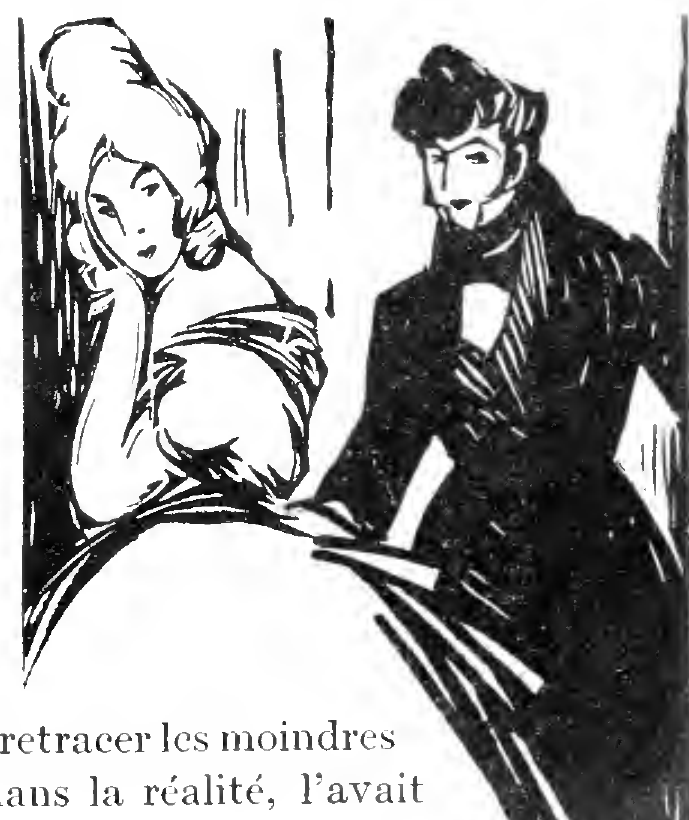
His cruel memory began to retrace for him the slightest circumstances of that night which in reality had left him so cold.
On the very night that followed the declaration of eternal quarrel, Julien almost went mad when obliged to admit to himself that he loved Mademoiselle de La Mole.
Terrible struggles followed this discovery: all his feelings were turned upside down.
Two days later, instead of being proud in the presence of M. de Croisenois, he would almost have embraced him, bursting into tears.
The habit of misfortune gave him a glimmer of good sense; he decided to leave for Languedoc, packed his trunk, and went to the post-office.
He felt faint when, on arriving at the office of the mail-coaches, he was told that, by a singular chance, there was a place for the next day in the coach for Toulouse. He booked it and returned to the Hôtel de La Mole to announce his departure to the Marquis.
M. de La Mole had gone out. More dead than alive, Julien went to wait for him in the library. What became of him on finding Mademoiselle de La Mole there?
On seeing him appear she assumed an air of spitefulness which it was impossible for him to mistake.
Carried away by his misfortune, bewildered by surprise, Julien had the weakness to say to her, in the tenderest tone, which came from the soul: So you no longer love me?
— I am horrified at having given myself to the first comer, said Mathilde, weeping with rage against herself.
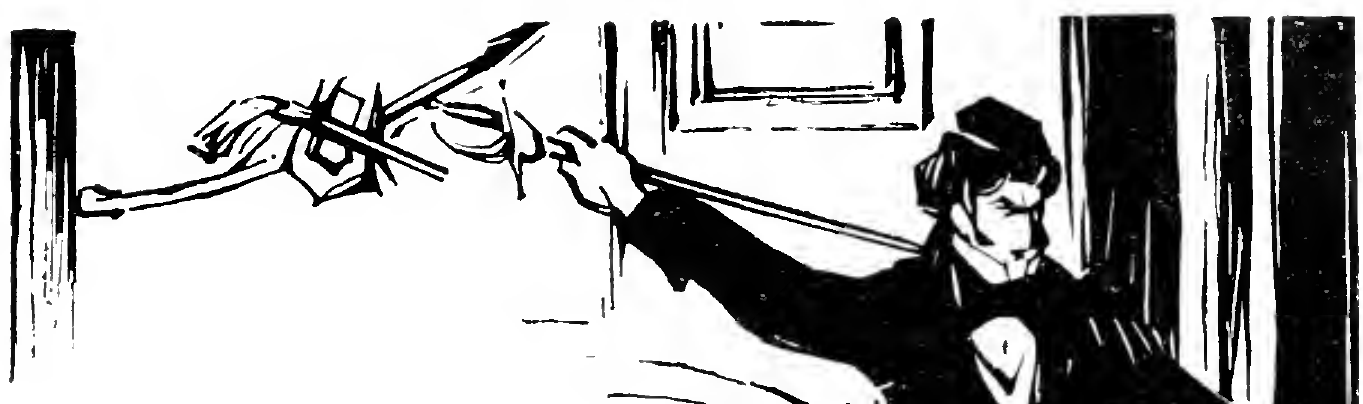
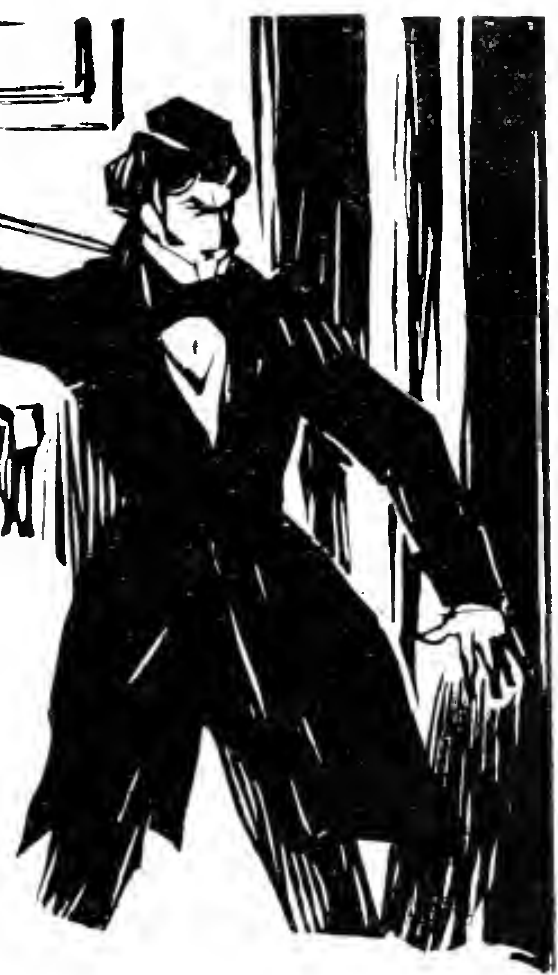
— To the first comer! cried Julien, and he sprang upon an old medieval sword which was kept in the library as a curiosity.
His grief, which he believed extreme at the moment when he had addressed Mademoiselle de La Mole, had just been increased a hundredfold by the tears of shame which he saw her shedding. He would have been the happiest of men had he been able to kill her.
At the moment when he had just drawn the sword with some difficulty from its ancient scabbard, Mathilde, happy in so novel a sensation, advanced proudly towards him; her tears had dried.
The idea of the Marquis de La Mole, his benefactor, presented itself vividly to Julien. I would kill his daughter! he said to himself, what horror! He made a movement to throw away the sword. Certainly, he thought, she will burst out laughing at the sight of this melodramatic movement: it was to this idea that he owed the return of all his self-possession. He looked at the blade of the old sword curiously and as though he were seeking some spot of rust on it, then he put it back in the scabbard, and with the greatest calm replaced it on the gilded bronze nail which supported it.
All this movement, very slow towards the end, lasted a good minute; Mademoiselle de La Mole looked at him in astonishment. So I have been on the point of being killed by my lover! she said to herself. This idea transported her to the finest days of the century of Charles IX and Henri III.
She was motionless in front of Julien, who had just put back his sword; she was looking at him with eyes in which there was no longer any hatred. It must be admitted that she was very seductive at that moment; certainly no woman had ever resembled a Parisian doll less (that
word was Julien's great objection to the women of this country).
I am going to fall back into some weakness for him, thought Mathilde; this is precisely the moment when he would believe himself my lord and master, after a relapse, and at the very moment when I have just spoken to him so firmly. She fled.
My God! how beautiful she is! said Julien, seeing her run: there is this creature who threw herself into my arms with such fury not eight days ago... and those moments will never return! and it is through my own fault! and, at the moment of an action so extraordinary, so interesting to me, I was not sensitive to it!... I must admit that I was born with a very flat and very unhappy character.
The Marquis appeared: Julien hastened to announce his departure to him.
For where? said M. de La Mole.
For Languedoc.
No, if you please, you are reserved for higher destinies; if you leave, it will be for the North... indeed, in military terms, I confine you to the hotel. You will oblige me by never being absent more than two or three hours; I may need you at any moment.
Julien bowed, and withdrew without a word, leaving the Marquis greatlyastonished; he was in no condition to speak, he shut himself up in his room. There, he could exaggerate in freedom all the atrocity of his fate.
So, he thought, I cannot even go away! God knows how many days the Marquis will keep me in Paris; great God! what will become of me? and not a friend whom I could consult: the Abbé Pirard would not let me finish the first sentence, Count Altamira would propose that I affiliate myself with some conspiracy.
And yet I am mad, I feel it; I am mad!
Who will be able to guide me, what will become of me?