About this book
Julien Sorel climbs from sawmill to salon, torn between the red of the army and the black of the church. Stendhal's 1830 novel, free to read online.
AN AMBITIOUS MAN
There is only one nobility, the title of duke; marquis is ridiculous; at the word duke one's head turns.
The marquis de La Mole received the abbé Pirard without any of those little grand-seigneurial manners, so polite but so impertinent to anyone who understands them. That would have been time wasted, and the marquis was far enough advanced in great affairs to have no time to lose.
For six months he had been intriguing to have accepted at once by the king and by the nation a certain ministry which, out of gratitude, would make him a duke.
For long years the marquis had asked his lawyer in Besançon in vain for a clear and precise statement on his lawsuits in Franche-Comté. How could the celebrated lawyer have explained them to him, if he did not understand them himself?
The little square of paper that the abbé handed him explained everything.
— My dear abbé, the marquis said to him, after dispatching in less than five minutes all the formulas of politeness and inquiry about personal matters; my dear abbé, in the midst of my supposed prosperity, I lack the time to occupy myself seriously with two rather important little things: my family and my affairs. I look after the fortune of my house on a grand scale, I can carry it far; I look after my pleasures, and that is what must come before everything, at least in my eyes, he added, surprising astonishment in the abbé Pirard's eyes. Although a man of sense, the abbé was amazed to see an old man speak so frankly of his pleasures.
Work certainly exists in Paris, continued the great lord, but perched on the fifth floor; and as soon as I come near a man, he takes an apartment on the second floor, and his wife takes a day at home; consequently no more work, no more effort than to be or to appear a man of the world. That is their only business as soon as they have bread.
For my lawsuits, strictly speaking, and even for each lawsuit taken separately, I have lawyers who kill themselves; one of them died of a chest illness the day before yesterday. But for my affairs in general, would you believe it, Monsieur, that for three years I have given up finding a man who, while he writes for me, deigns to think a little seriously about what he is doing? Besides, all this is only a preface.
I esteem you, and I shall dare to add, although seeing you for the first time, I love you. Will you be my secretary, with eight thousand francs in salary, or with double? I shall still gain by it, I swear to you; and I shall make it my business to preserve your fine living for you, for the day when we no longer suit each other.
The abbé refused; but toward the end of the conversation, the genuine embarrassment in which he saw the marquis suggested an idea to him.
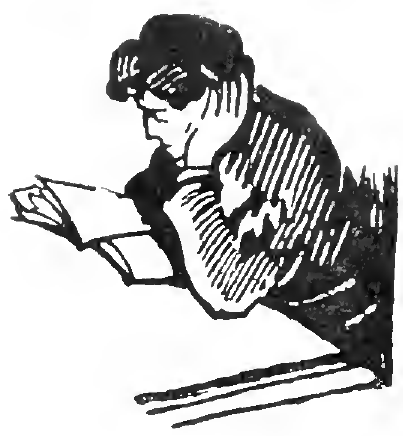
"I have left at the back of my seminary a poor young man who, if I am not mistaken, is going to be harshly persecuted there. If he were only a simple religious, he would already be in pace.
Up to now this young man knows only Latin and Holy Scripture; but it is not impossible that one day he may display great talents either for preaching or for the direction of souls. I do not know what he will do; but he has the sacred fire, he can go far. I was counting on giving him to our bishop, if ever one should come to us who had a little of your way of seeing men and affairs."
"Where does your young man come from?" said the marquis.
"He is said to be the son of a carpenter from our mountains, but I would rather believe him the natural son of some rich man. I have seen him receive an anonymous or pseudonymous letter with a bill of exchange for five hundred francs."
"Ah! it is Julien Sorel," said the marquis.
"How do you know his name?" said the abbé, astonished; and as he blushed at his question:
"That is what I shall not tell you," replied the marquis.
"Well then!" resumed the abbé, "you could try to make him your secretary; he has energy, reason; in a word, it is an experiment worth attempting."
"Why not?" said the marquis; "but would he be a man to let his palm be greased by the prefect of police or by anyone else to play the spy in my house? That is my whole objection."
On the favorable assurances of the abbé Girard, the marquis took a thousand-franc note:
— Send this viaticum to Julien Sorel; have him come to me.
— One can see plainly, said the abbé Girard, that you live in Paris. You do not know the tyranny that weighs upon us poor provincials, and in particular upon priests who are not friends of the Jesuits. They will not consent to let Julien Sorel leave, they will know how to cover themselves with the most skilful pretexts, they will answer me that he is ill, that the post has lost the letters, etc., etc.
— I shall take one of these days a letter from the minister to the bishop, said the Marquis.
— I was forgetting a precaution, said the abbé: this young man, although born very low, has a lofty heart; he will be of no use if his pride is alarmed; you would make him stupid.
— That pleases me, said the Marquis; I shall make him my son's comrade, will that suffice?
Some time afterwards, Julien received a letter in an unknown hand bearing the postmark of Chalon; he found in it a money order on a merchant of Besançon, and notice to proceed to Paris without delay. The letter was signed with a fictitious name, but on opening it Julien had started: a leaf had fallen at his feet; it was the sign agreed upon between him and the abbé Pirard.
Less than an hour later, Julien was summoned to the bishop's palace, where he was received with wholly fatherly kindness. While quoting Horace, Monseigneur paid him, upon the lofty destinies that awaited him in Paris, compliments most adroit, and which, by way of thanks, awaited explanations. Julien could say nothing, first because he knew nothing, and Monseigneur conceived a great regard for him. One of the little priests of the palace wrote to the mayor, who hastened to bring himself a passport signed, but in which the traveller's name had been left blank.
In the evening before midnight, Julien was at Fouqué's, whose sober mind was more astonished than charmed by the future that seemed to await his friend.
— It will end for you, said this liberal elector, in a government place, which will oblige you to some step that will be vilified in the newspapers. It is through your shame that I shall have news of you. Remember that, even financially speaking, it is better to earn a hundred louis in a good timber trade, of which one is the master, than to receive four thousand francs from a government, were it even that of King Solomon.
Julien saw in all this only the pettiness of mind of a country bourgeois. He was at last about to appear upon the stage of great things. The happiness of going to Paris, which he pictured to himself as peopled with men of great wit, very intriguing, very hypocritical, but also as polite as the bishop of Besançon and the bishop of Agde, eclipsed everything in his eyes. He represented himself to his friend as deprived of his free will by the letter of the abbé Pirard.
The next day towards noon, he arrived at Verrières the happiest of men. He counted upon seeing Madame de Rênal again. He went first to his protector, the good abbé Chélan. He found a severe reception.
— Do you think you owe me any obligation? said M. Chélan, without returning his greeting. You will lunch with me, during which time someone will go and hire you another horse, and you will leave Verrières without seeing anyone.
— To hear is to obey, replied Julien with a seminary air; and there was no further question but of theology and fine Latinity.
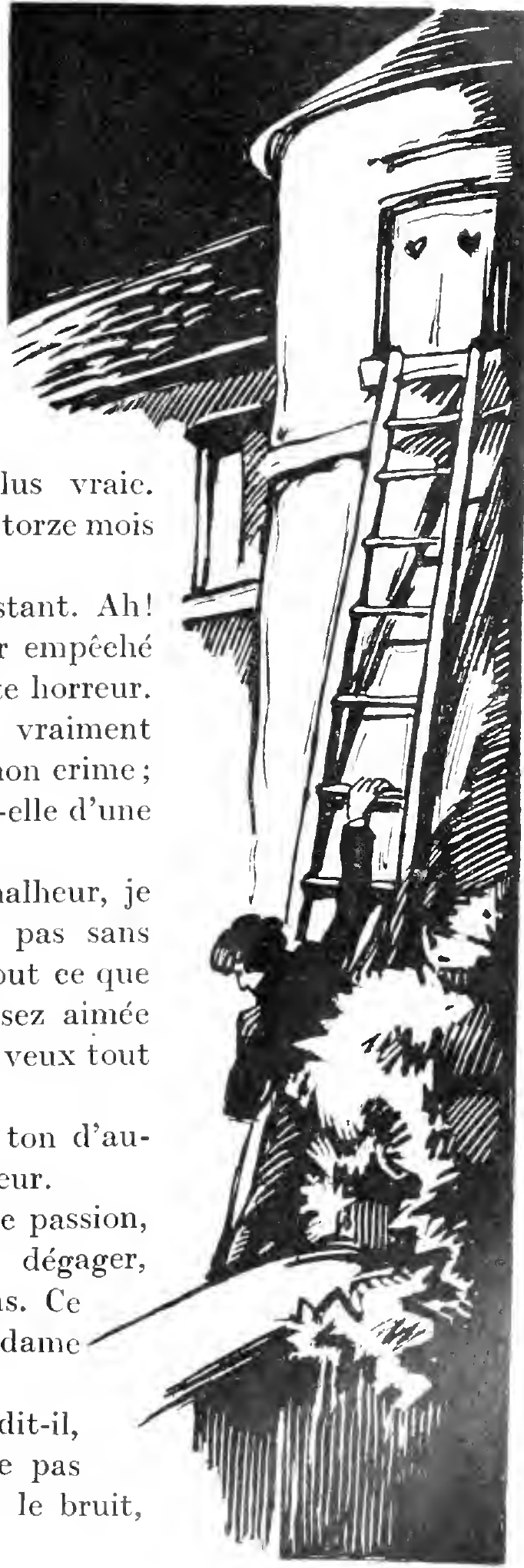
He mounted his horse, rode a league, after which, perceiving a wood and no one to see him enter it, he plunged into it. At sunset he sent back the horse. Later, he entered a peasant's house, who consented to sell him a ladder and to follow him carrying it as far as the little wood that overlooks the COURS DE LA FIDÉLITÉ, at Verrières.
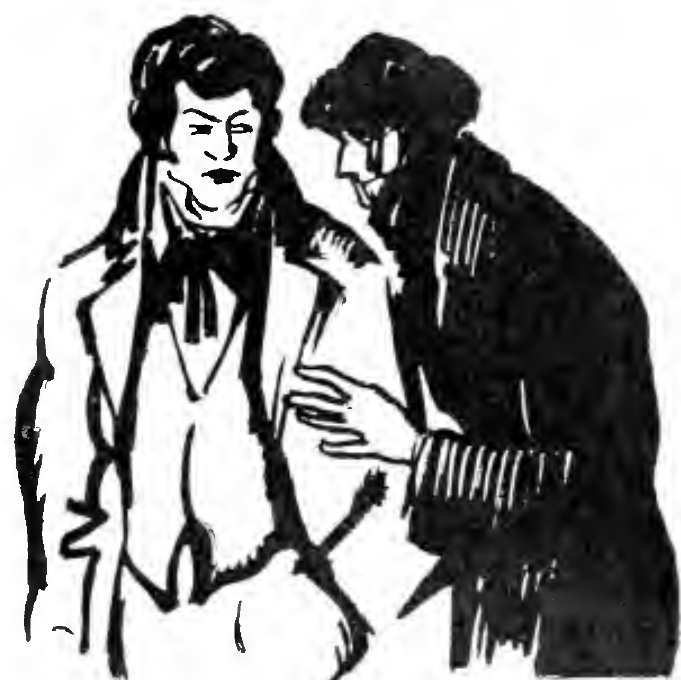
— I am a poor refractory conscript... or a smuggler, said the peasant, taking leave of him, but what does it matter! my ladder is well paid for, and I myself am not without having passed a few turns of the watch in my life.
The night was very dark. Towards one in the morning, Julien, loaded with his ladder, entered Verrières. He descended as early as he could into the bed of the torrent, which crosses M. de Rênal's magnificent gardens at a depth of ten feet, and is contained between two walls. Julien climbed easily up the ladder. What welcome will the watchdogs give me? he thought. That is the whole question. The dogs barked, and advanced at a gallop upon him; but he whistled softly, and they came and fawned upon him.
Then climbing back from terrace to terrace, although all the gates were closed, it was easy for him to reach beneath the window of Madame de Rênal's bedroom, which, on the garden side, is only eight or ten feet above the ground.
There was in the shutters a little opening in the shape of a heart, which Julien knew well. To his great sorrow, this little opening was not lighted by the inner light of a night lamp.
Great God! he said to himself; this night, this room is not occupied by Madame de Rênal! Where will she be sleeping? The family is at Verrières, since I found the dogs; but I may meet in this room, without a night lamp, M. de Rênal himself or a stranger, and then, what a scandal!
The most prudent course was to withdraw; but this course filled Julien with horror. If it is a stranger, I shall run away at full speed, abandoning my ladder; but if it is she, what reception awaits me? She has fallen into repentance and the highest piety, I cannot doubt it; but after all, she still has some memory of me, since she has just written to me. This reason decided him.
His heart trembling, but nevertheless resolved to perish or to see her, he threw little stones against the shutter; no answer. He set his ladder against the side of the window, and himself knocked against the shutter, first gently, then more loudly. However dark it may be, someone may fire a shot at me, thought Julien. This idea reduced the mad enterprise to a question of bravery.
This room is uninhabited tonight, thought he, or whatever person sleeps in it, is awake now. So there is nothing more to spare towards her; I must only try not to be heard by the persons who sleep in the other rooms.
He descended, placed his ladder against one of the shutters, climbed up again, and passing his hand through the heart-shaped opening, he had the good fortune to find fairly quickly the iron wire attached to the hook that fastened the shutter. He pulled this iron wire; it was with an inexpressible joy that he felt that this shutter was no longer held and yielded to his effort. I must open it little by little, and make my voice recognized. He opened the shutter enough to pass his head through, and repeating in a low voice: It is a friend.
He assured himself, by listening, that nothing disturbed the profound silence of the room. But decidedly, there was no night lamp, even half extinguished, in the fireplace: that was a very bad sign.
Beware the shot! He reflected a little; then, with his finger, he dared to knock against the pane: no answer; he knocked more loudly. Even if I must break the pane, it must be ended. As he was knocking very loudly, he thought he glimpsed, in the midst of the darkness, something like a white shadow crossing the room. At last, there was no longer any doubt, he saw a shadow that seemed to advance with an extreme slowness. Suddenly he saw a cheek pressed against the pane against which was his eye.
He started, and drew back a little. But the night was so black that, even at that distance, he could not distinguish whether it was Madame de Rênal. He feared a first cry of alarm; he heard the dogs prowling and half growling around the foot of his ladder. It is I, he repeated rather loudly, a friend. No answer; the white phantom had disappeared. Deign to open to me, I must speak to you, I am too unhappy! and he knocked in a way to break the pane.
A sharp little noise made itself heard; the window bolt was giving way; he pushed the casement open and leaped lightly into the room.The white phantom was moving away; he seized it by the arms; it was a woman. All his ideas ofcourage vanished. If it is she, what will she say? What became of him when he gathered from a little cry that it was Madame de Rênal?
He clasped her in his arms; she was trembling and had barely the strength to push him away.
— Wretch! what are you doing?
Her convulsive voice could scarcely articulate these words.
Julien saw in them the most genuine indignation.
— I have come to see you after fourteen months of cruel separation.
— Leave, leave me this instant. Ah! Monsieur Chélan, why did you prevent me from writing to him? I would have forestalled this horror. She pushed him back with truly extraordinary strength. I repent of my crime; heaven has deigned to enlighten me, she repeated in a broken voice. Leave! Flee!
— After fourteen months of misfortune, I certainly shall not leave you without having spoken to you. I want to know everything you have done. Ah! I have loved you enough to deserve this confidence... I want to know everything.
Despite Madame de Rênal, this tone of authority held sway over her heart.
Julien, who was holding her closely with passion and resisting her efforts to free herself, ceased pressing her in his arms. This movement somewhat reassured Madame de Rênal.
— I am going to pull up the ladder, he said, so that it does not compromise us if some servant, awakened by the noise, makes a round.
— Ah! get out, get out, on the contrary, he was told with an admirable anger. What do men matter to me? It is God who sees the dreadful scene you are making for me and who will punish me for it. You are basely abusing the feelings I once had for you, but which I no longer have. Do you hear me, Monsieur Julien?
He was drawing back the ladder very slowly so as not to make any noise.
— Is your husband in town? he said to her, not to defy her, but carried away by the old habit.
— Do not speak to me like that, I beg you, or I shall call my husband. I am already only too guilty for not having driven you away, whatever might have come of it. I pity you, she said, seeking to wound his pride, which she knew to be so irritable.
This refusal to use the familiar "tu," this abrupt way of breaking a bond so tender, and on which he still counted, carried Julien's transport of love to the point of delirium.
— What! is it possible that you no longer love me! he said to her with one of those accents of the heart which are so difficult to hear calmly.
She did not answer; for his part, he was weeping bitterly.
In truth, he no longer had the strength to speak.
— So I am completely forgotten by the only being who has ever loved me! What is the good of living now? All his courage had left him as soon as he no longer had to fear the danger of meeting a man; everything had vanished from his heart except love.
He wept for a long time in silence. He took her hand, she tried to withdraw it; and yet, after a few almost convulsive movements, she let him keep it. The darkness was extreme; they found themselves both seated on Madame de Rênal's bed.
What a difference from what it was fourteen months ago! thought Julien; and his tears redoubled. So absence surely destroys all a man's feelings.
— Deign to tell me what has happened to you, Julien said at last, embarrassed by his silence and in a voice broken by tears.
— No doubt, replied Madame de Rênal in a hard voice, whose tone had something dry and reproachful toward Julien, my wanderings were known in the town when you left! There had been so much imprudence in your conduct! Some time afterward, when I was in despair, the respectable M. Chélan came to see me. For a long time he tried in vain to obtain a confession. One day he had the idea of taking me into that church in Dijon where I made my first communion. There he dared to speak first... Madame de Rênal was interrupted by her tears. What a moment of shame! I confessed everything. That man, so good, deigned not to overwhelm me with the weight of his indignation; he grieved with me. At that time I wrote you letters every day which I did not dare send you; I carefully hid them, and when I was too unhappy, I shut myself in my room and read my letters over again.
At last, M. Chélan obtained my promise that I would hand them over to him... A few, written with a little more prudence, had been sent to you; you did not answer me.
— Never, I swear to you, did I receive any letter from you at the seminary.
— Great God! who can have intercepted them?
— Judge of my grief: before the day I saw you in the cathedral, I did not know whether you were still alive.
— God granted me the grace to understand how greatly I was sinning against Him, against my children, against my husband, resumed Madame de Rênal. He never loved me as I believed then that you loved me...
Julien threw himself into her arms, truly without design and beside himself. But Madame de Rênal pushed him away, and continued with considerable firmness:
— My respectable friend M. Chélan made me understand that in marrying M. de Rênal I had pledged him all my affections, even those I did not know, and which I had never experienced before a fatal attachment... Since the great sacrifice of those letters, which were so dear to me, my life has passed, if not happily, at least with enough tranquillity. Do not disturb it; be a friend to me... the best of my friends. Julien covered her hands with kisses; she felt that he was still weeping. Do not weep, you cause me so much pain... Tell me in your turn what you have done. Julien could not speak. I want to know the kind of life you led at the seminary, she repeated, then you will go.
Without thinking about what he was relating, Julien spoke of the intrigues and countless jealousies he had at first encountered, then of his calmer life since he had been appointed tutor.
— It was then, he added, that after a long silence, which was doubtless meant to make me understand what I see only too well today, that you no longer loved me and that I had become indifferent to you... Madame de Rênal pressed her hands together; it was then that you sent me a sum of five hundred francs.
— Never, said Madame de Rênal.
— It was a letter stamped from Paris and signed Paul Sorel, so as to defeat all suspicion.
A little discussion arose about the possible origin of this letter. The moral position changed. Without knowing it, Madame de Rênal and Julien had left the solemn tone; they had returned to that of a tender friendship. They did not see each other, so profound was the darkness, but the sound of the voice told everything. Julien passed his arm around his friend's waist; this movement had many dangers. She tried to move Julien's arm away, but he, with considerable skill, drew her attention at that moment to an interesting circumstance in his story. This arm was as if forgotten and remained in the position it occupied.
After many conjectures about the origin of the letter with the five hundred francs, Julien had resumed his story; he was becoming a little more master of himself as he spoke of his past life, which, compared with what was happening to him at this instant, interested him so little. His attention was fixed entirely on the manner in which he was going to end his visit. You are going to leave now, he was told again and again, from time to time and in a curt tone.
What a shame for me if I am sent away! it will be a remorse to poison my whole life, he said to himself; never will she write to me. God knows when I shall return to this country! From that moment, all that was heavenly in Julien's position swiftly vanished from his heart. Seated beside a woman whom he adored, almost holding her in his arms, in that room where he had been so happy, in the midst of a profound darkness, distinguishing quite well that for some time she had been weeping, feeling from the movement of her breast that she was sobbing; he had the misfortune to become a cold politician, almost as calculating and as cold as when, in the seminary courtyard, he saw himself exposed to some unpleasant joke on the part of one of his comrades stronger than himself. Julien was prolonging his story, and spoke of the unhappy life he had led since his departure from Verrières. So, Madame de Rênal said to herself, after a year's absence, almost entirely deprived of any token of remembrance, while I was forgetting him, he was occupied only with the happy days he had found at Vergy. Her sobs redoubled. Julien saw the success of his story.
He understood that he must try the last recourse: he came abruptly to the letter he had just received from Paris.
— I have taken leave of Monseigneur the bishop.
— What, you are not returning to Besançon! you are leaving us forever?
— Yes, replied Julien, in a resolute tone; yes, I am abandoning a country where I am forgotten even
by what I loved most in my life, and I am leaving it never to see it again. I am going to Paris...
— You are going to Paris! cried Madame de Rênal, rather loudly.
Her voice was almost stifled by tears, and showed all the excess of her agitation. Julien needed this encouragement; he was about to attempt a step that could decide everything against him; and before this exclamation, seeing nothing in it, he was absolutely ignorant of the effect he was managing to produce. He hesitated no longer; the fear of remorse gave him complete command over himself; he added coldly as he rose:
— Yes, Madame, I leave you forever, be happy; farewell.
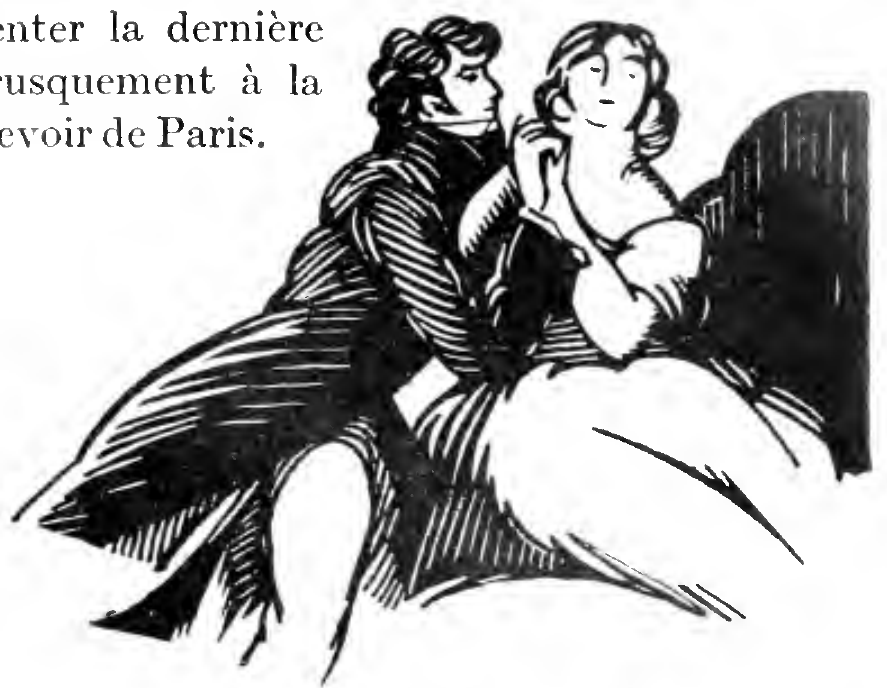
He took a few steps toward the window; already he was opening it. Madame de Rênal rushed toward him and threw herself into his arms.
Thus, after three hours of dialogue, Julien obtained what he had so passionately desired during the first two. A little sooner arrived, the return to tender feelings, the eclipse of remorse in Madame de Rênal would have been a divine happiness; thus obtained with art, it was no more than a pleasure. Julien insisted absolutely, against his friend's entreaties, on lighting the night-light.
— Do you want, then, he said to her, that no memory remain to me of having seen you? The love that is in these charming eyes will then be lost to me? the whiteness of this pretty hand will then be invisible to me? Think that I am leaving you perhaps for a very long time!
Madame de Rênal had nothing to refuse to this idea, which made her dissolve in tears. But dawn was beginning to trace vividly the outlines of the firs on the mountain to the east of Verrières. Instead
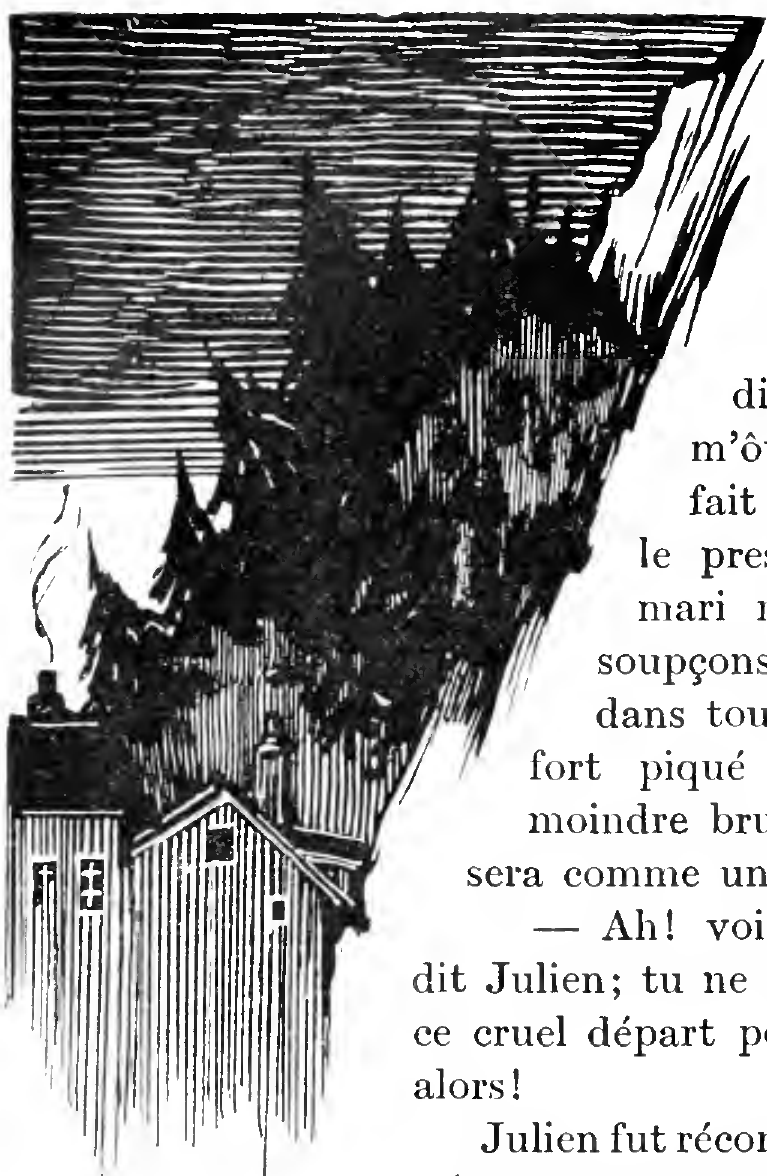
of leaving, Julien, drunk with voluptuousness, asked Madame de Rênal to spend the whole day hidden in her room, and to leave only the following night.
And why not? she answered. This fatal relapse takes from me all esteem for myself, and makes my misfortune forever, and she pressed him to her heart. My husband is no longer the same, he has suspicions; he believes that I led him into all this affair, and shows himself very piqued against me. If he hears the slightest noise I am lost, he will drive me out—will be like the wretched woman that I am.
Ah! there is a sentence of M. Chélan's, said Julien; you would not have spoken to me like that before that cruel departure for the seminary; you loved me then!
Julien was rewarded for the coolness he had put into this word: he saw his friend suddenlyforget the danger which her husband's presence made her run, to think of the far greater danger of seeing Julien doubt her love. The day was growing rapidly and lighting the room vividly; Julien found again all the delights of pride when he could see once more, in his arms and almost at his feet, this charming woman, the only one he had ever loved and who, a few hours earlier, was wholly given over to the fear of a terrible God and to the love of her duties. Resolutions strengthened by a year of constancy had not been able to hold out against his courage.
Soon noise was heard in the house; a thing of which she had not thought came to trouble Madame de Rênal.
That wicked Élisa is going to come into the room, what is to be done with that enormous ladder? she was saying to her friend; where can we hide it? I am going to carry it to the loft, she cried suddenly, with a sort of glee.
But we have to go through the servant's room, said Julien, astonished.
— I shall leave the ladder in the corridor, I shall call the servant and give him an errand.
— Think of preparing a word for the case where the servant, passing by the ladder in the corridor, notices it.
— Yes, my angel, said Madame de Rênal, giving him a kiss. You, think of hiding quickly under the bed, if, during my absence, Élisa comes in here.
Julien was astonished at this sudden gaiety. So, he thought, the approach of a material danger, far from troubling her, gives her back her gaiety, because she forgets her remorse! A truly superior woman! ah! there is a heart in which it is glorious to reign! Julien was delighted.
Madame de Rênal took the ladder; it was obviously too heavy for her. Julien was going to her aid; he admired that elegant figure which was so far from announcing strength, when suddenly, without help, she seized the ladder and lifted it as she would have done a chair. She carried it rapidly into the corridor of the third floor where she laid it along the wall. She called the servant, and to leave him time to dress, went up to the dovecote. Five minutes later, on her return to the corridor, she found the ladder no longer there. What had become of it? If Julien had been out of the house, this danger would scarcely have touched her. But, at this moment, if her husband were to see that ladder! this incident could be abominable. Madame de Rênal ran everywhere. At last she discovered this ladder under the roof where the servant had carried it and even hidden it. This circumstance was singular; formerly it would have alarmed her.
What does it matter to me, she thought, what can happen in twenty-four hours, when Julien will have gone? will not everything then be horror and remorse for me?
She had something like a vague idea of having to leave life, but what does it matter! After a separation which she had believed eternal, he was restored to her, she saw him again, and what he had done to reach her showed so much love!
While telling Julien the incident of the ladder:
.
— What shall I answer my husband, she said to him, if the servant tells him that he found that ladder? She mused for a moment. It will take them twenty-four hours to discover the peasant who sold it to you: and throwing herself into Julien's arms, pressing him with a convulsive movement: Ah! to die thus! she exclaimed, covering him with kisses; but you must not die of hunger, she said, laughing.
Come; first I am going to hide you in Madame Derville's room, which is always kept locked. She went to keep watch at the end of the corridor, and Julien passed through at a run. Take care not to open, if anyone knocks, she said to him, locking him in; in any case, it would only be a joke of the children playing among themselves.
— Have them come into the garden, under the window, said Julien, so that I may have the pleasure of seeing them, have them talk.
— Yes, yes, Madame de Rênal called to him as she went away.
She soon returned with oranges, biscuits, a bottle of Malaga wine; it had been impossible for her to steal any bread.
— What is your husband doing? said Julien.
— He is writing drafts of contracts with peasants.
But eight o'clock had struck, there was a great deal of noise in the house. If Madame de Rênal had not been seen, she would have been sought everywhere; she was obliged to leave him. Soon she returned, against all prudence, bringing him a cup of coffee; she was trembling lest he die of hunger. After breakfast, she succeeded in bringing the children under the window of Madame Derville's room. He found them greatly grown, but they had taken on a common air, or else his ideas had changed. Madame de Rênal spoke to them of Julien. The eldest answered with affection and regret for the former tutor; but it turned out that the younger ones had almost forgotten him.
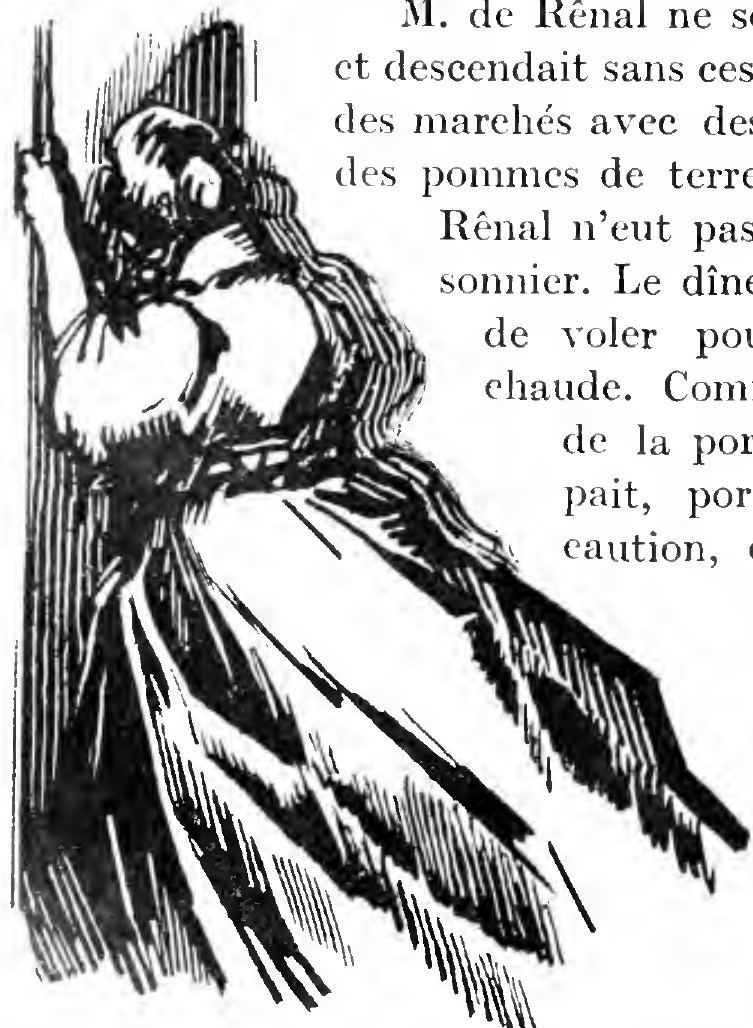
M. de Rênal did not go out that morning; he went up and down incessantly in the house, busy making bargains with peasants, to whom he was selling potatoes. Until dinner, Madame de Rênal did not have a single moment to give to her prisoner. When dinner had struck and been served, she had the idea of stealing a plate of hot soup for him. As she approached noiselessly the door of the room he occupied, carrying this plate with care, she found herself face to face with the servant who had hidden the ladder that morning. At that moment, he too was advancing noiselessly in the corridor and as if listening. Probably Julien had walked imprudently. The servant moved a little away, confused.
"
Madame de Rênal entered boldly into Julien's room; this encounter made him shudder.
— You are afraid! she said to him; I, I would brave all the dangers in the world and without blinking. I fear only one thing, and that is the moment when I shall be alone after your departure; and she left him, running away.
— Ah! said Julien, exalted, remorse is the only danger that this sublime soul dreads!
At last evening came. M. de Rênal went to the Casino.
His wife had announced a frightful migraine, she retired to her room, hastened to send Élisa away, and rose again quickly to go and open the door for Julien.
It turned out that he really was dying of hunger. Madame de Rênal went to the pantry to look for bread. Julien heard a loud cry. Madame de Rênal came back and told him that, entering the pantry without light, approaching a cupboard where the bread was kept, and extending her hand, she had touched a woman's arm. It was Élisa who had uttered the cry heard by Julien.
— What was she doing there?
— She was stealing some sweets, or else she was spying on us, said Madame de Rênal with complete indifference. But fortunately I found a pie and a large loaf.
— What is there then? said Julien, pointing to the pockets of her apron.
Madame de Rênal had forgotten that, since dinner, they were filled with bread.
Julien clasped her in his arms with the most vivid passion; never had she seemed so beautiful to him. Even in Paris, he said to himself confusedly, I shall not be able to meet a greater character. She had all the left, for she was stronger than her father's. She had a head larger and heavier than her father's. She had acourageous head of a being who fears only dangers of another order and far more terrible.
While Julien was eating his supper with a hearty appetite, and his friend was teasing him about the simplicity of the meal—for she had a horror of speaking seriously—the door of the room was suddenly shaken violently. It was M. de Rênal.
"Why have you locked yourself in?" he shouted at her.
Julien had only time to slip under the sofa.
"What! you are fully dressed," said M. de Rênal as he entered; "you are having supper, and you have locked your door!"
On ordinary days, this question, asked with all the conjugal dryness, would have troubled Madame de Rênal, but she felt that her husband had only to stoop a little to catch sight of Julien; for M. de Rênal had thrown himself upon the chair that Julien had occupied a moment before, opposite the sofa.
The migraine served as an excuse for everything. While her husband in turn was telling her at length the incidents of the pool he had won at the Casino billiard table, a pool of nineteen francs, upon my word! he added, she caught sight of Julien's hat on a chair, three paces in front of them. Her composure redoubled; she began to undress, and, at a certain moment, passing quickly behind her husband, she threw a dress over the chair with the hat.
M. de Rênal left at last. She begged Julien to begin again the account of his life at the seminary. Yesterday I was not listening to you; I was thinking, while you were speaking, only of obtaining from myself the resolution to send you away.
She was imprudence itself. They were talking very loudly; and it might have been two o'clock in the morning when they were interrupted by a violent knock at the door. It was M. de Rênal again.
"Open the door for me at once, there are thieves in the house!" he was saying. "Saint-Jean found their ladder this morning."
"This is the end of everything," cried Madame de Rênal, throwing herself into Julien's arms. "He is going to kill us both; he does not believe in thieves; I am going to die in your arms, happier in my death than I have been in my life. She did not answer her husband at all, who was losing his temper; she was kissing Julien passionately.
“Save Stanislas’s mother,” he told her, with a commanding look. “I’ll jump from the study window into the courtyard and get away through the garden—the dogs know me. Make a bundle of my clothes and throw it into the garden as soon as you can. In the meantime, let them break the door down. Above all, no confessions—I forbid it. Better that he should have suspicions than certainties.”“You’ll kill yourself jumping!” was her only answer and her only worry.
She went with him to the study window; then she took the time to hide his clothes. At last she opened the door to her husband, who was boiling with rage. He looked into the bedroom, into the study, without saying a word, and disappeared. Julien’s clothes were thrown to him; he seized them and ran quickly toward the bottom of the garden on the side of the Doubs.
As he ran, he heard a bullet whistle past, and immediately afterward the sound of a gunshot.
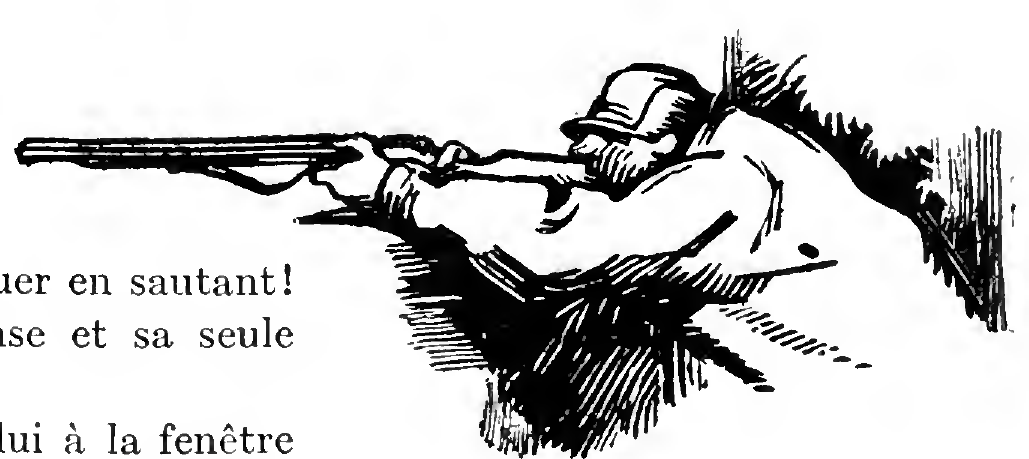
“That’s not M. de Rênal,” he thought. “He shoots too badly for that.” The dogs were running silently beside him; a second shot apparently broke a dog’s leg, for it began to utter pitiful cries. Julien jumped over the wall of a terrace, ran about fifty paces under cover, and set off fleeing in another direction. He heard voices calling to one another, and clearly saw the servant, his enemy, fire a shot; a farmer also came shooting from the other side of the garden, but by then Julien had reached the bank of the Doubs, where he dressed.
An hour later, he was a league from Verrières, on the road to Geneva. “If they have suspicions,” thought Julien, “it’s on the road to Paris that they’ll look for me.”