About this book
Julien Sorel climbs from sawmill to salon, torn between the red of the army and the black of the church. Stendhal's 1830 novel, free to read online.
THE STOCKINGS WITH THE OPENWORK
A novel is a mirror carried along a high road.
SAINT-REAL.
WHEN Julien perceived the picturesque ruins of the old church of Vergy, he remarked that since the day before the day before he had not thought once of Madame de Rênal. "The other day on leaving, that woman reminded me of the infinite distance which separates us; she treated me like the son of a workman. No doubt she wished to mark her repentance for having let me hold her hand the evening before... She is very pretty though, that hand! what charm! what nobility in the glances of that woman!"
:
The possibility of making a fortune with Fouqué gave a certain facility to Julien's reasonings; they were no longer so often spoiled by irritation, and the keen sense of his poverty and of his baseness in the eyes of the world. Placed as on a high promontory, he could judge, and dominated so to speak the extreme poverty and the ease which he still called riches. He was far from judging his position as a philosopher, but he had enough clear-sightedness to feel himself different after this little journey in the mountain.
He was struck by the extreme trouble with which Madame de Rênal listened to the little account of his journey which she had asked of him.
Fouqué had had projects of marriage, unhappy loves; long confidences on this subject had filled the conversations of the two friends. Having found happiness too soon, Fouqué had perceived that he was not the only one loved. All these tales had astonished Julien; he had learned many new things. His solitary life, all of imagination and mistrust, had kept him away from all that could enlighten him.
During his absence, life had been for Madame de Rênal only a succession of different tortures, but all intolerable; she was really ill.
"Above all," Madame Derville said to her when she saw Julien arrive, "indisposed as you are, you will not go this evening into the garden, the damp air would redouble your malaise."
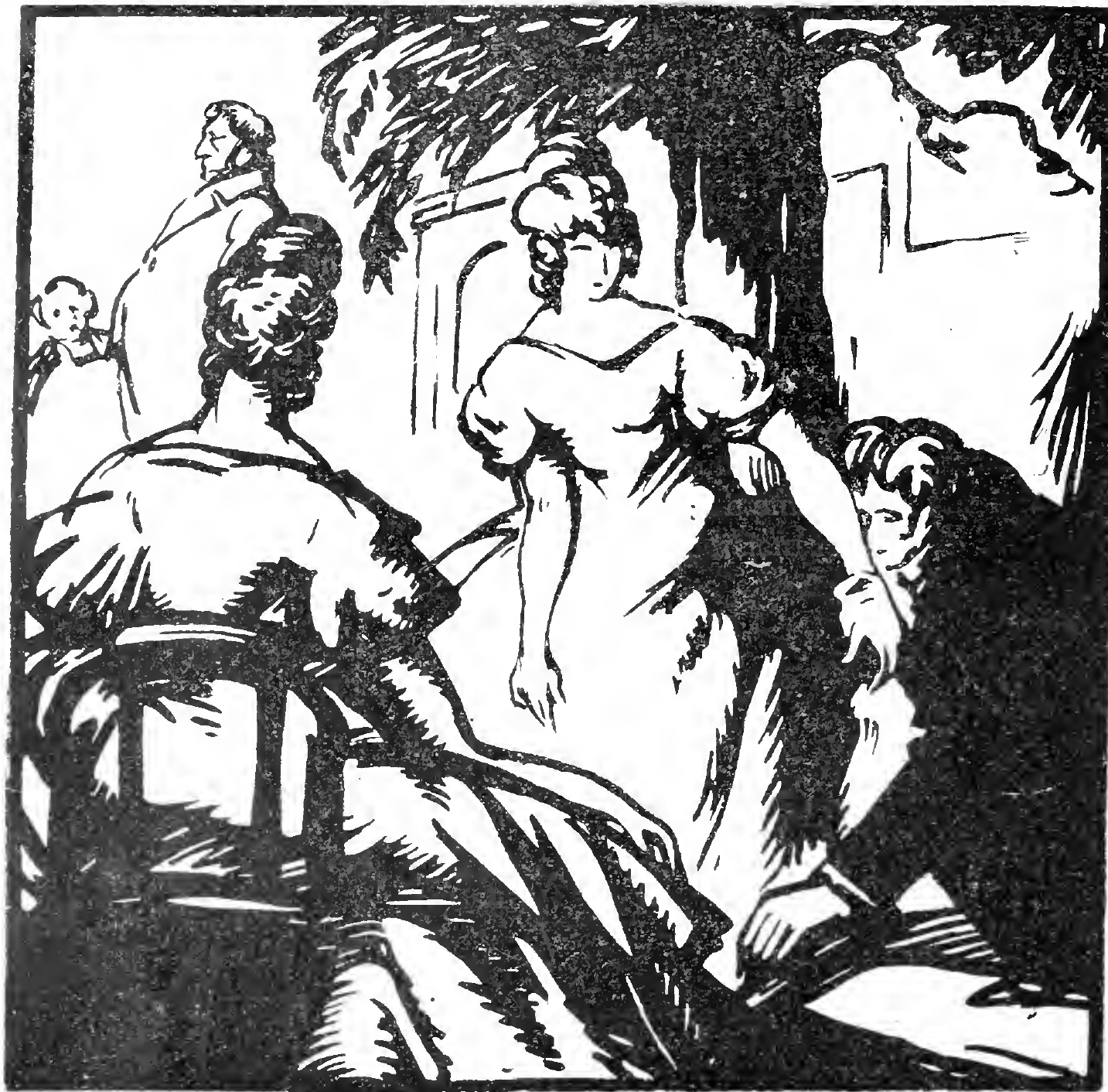
Madame Derville saw with astonishment that her friend, always scolded by M. de Rênal because of the excessive simplicity of her toilet, had just put on openwork stockings and charming little shoes arrived from Paris. For three days Madame de Rênal's only distraction had been to cut out and have made in all haste by Élisa a summer dress, of a pretty little stuff very much in fashion. Hardly could this dress be finished a few moments after Julien's arrival; Madame de Rênal put it on at once. Her friend had no more doubts. "She loves, the unfortunate woman!" said Madame Derville to herself. She understood all the singular appearances of her illness.
She saw her speak to Julien. Paleness succeeded the most vivid redness. Anxiety was painted in her eyes fixed on those of the young tutor. Madame de Rênal expected at every moment that he was going to explain himself, and announce that he was leaving the house or remaining in it. Julien was careful to say nothing on this subject, to which he was not giving a thought. After frightful struggles, Madame de Rênal at last dared to say to him, in a trembling voice, in which all her passion was painted:
"Will you leave your pupils to place yourself elsewhere?"
Julien was struck by the uncertain voice and the glance of Madame de Rênal. "That woman loves me," he said to himself; "but after this passing moment of weakness, which her pride reproaches her for, and as soon as she no longer fears my departure, she will take up her pride again." This view of the respective position was, in Julien, rapid as lightning; he replied, hesitating:
"I should have much pain in leaving children so amiable and so well born, but perhaps it will be necessary. One has duties also towards oneself."
In pronouncing the word so well born (it was one of those aristocratic words which Julien had learned recently), he animated himself with a profound sentiment of anti-sympathy.
"In the eyes of that woman," he said to himself, "I am not well born."
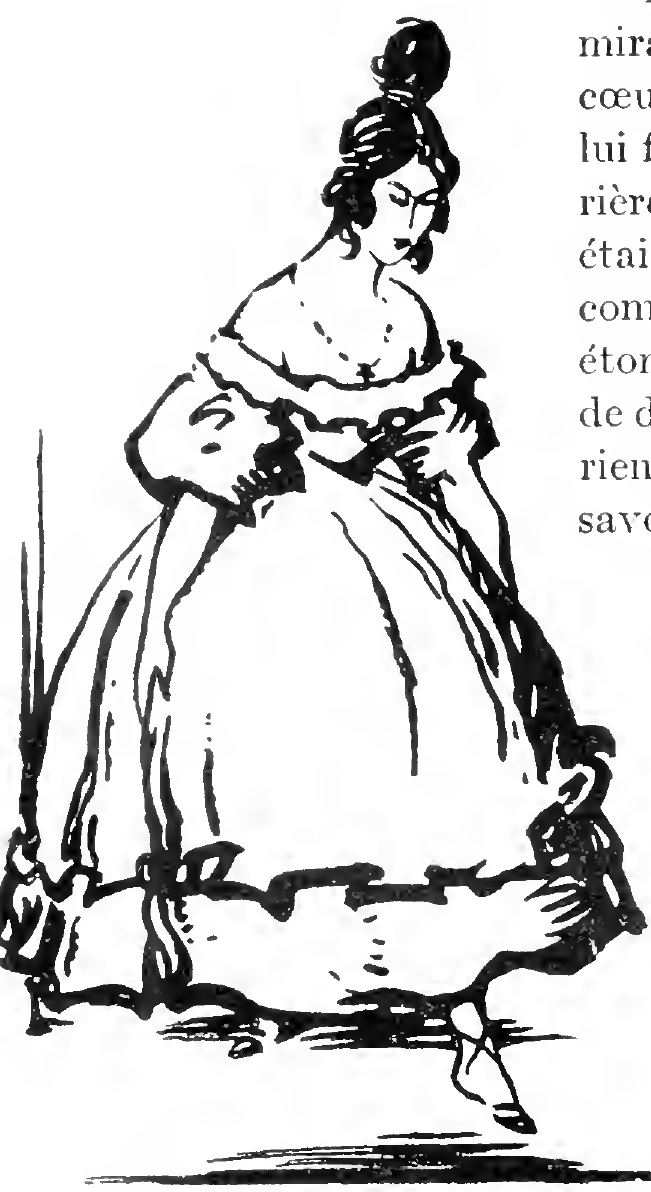
Madame de Rênal, listening to him, admired his genius, his beauty, she had her heart pierced by the possibility of departure which he allowed her to glimpse. All her friends of Verrières, who, during Julien's absence, had come to dine at Vergy, had paid her compliments as if in emulation on the astonishing man whom her husband had had the good fortune to unearth. It was not that anyone understood anything of the progress of the children. The feat of knowing his Bible by heart, and moreover in Latin, had struck the inhabitants of Verrières with an admiration which will perhaps last a century.
Julien, speaking to no one, was ignorant of all that. If Madame de Rênal had had the slightest presence of mind, she would have complimented him on the reputation he had won, and Julien's pride, once reassured, would have been gentle and amiable toward her, all the more so because the new dress seemed to him charming. Madame de Rênal, also pleased with her pretty dress and with what Julien said about it, had wanted to take a turn in the garden; soon she confessed that she was incapable of walking. She had taken the traveler's arm, and, far from increasing her strength, the contact of that arm deprived her of it entirely.
It was night; they had scarcely sat down when Julien, availing himself of his former privilege, dared to bring his lips close to the arm of his pretty neighbor and to take her hand. He was thinking of the boldness Fouqué had displayed with his mistresses, and not of Madame de Rênal; the word well-born still weighed upon his heart. His hand was pressed, which gave him no pleasure. Far from being proud, or at least grateful for the feeling that Madame de Rênal was betraying that evening by signs all too obvious, her beauty, her elegance, her freshness found him almost insensible. Purity of soul, the absence of any hateful emotion, doubtless prolong the duration of youth. It is the countenance that ages first in most pretty women.
Julien was sullen all evening; until then he had been angry only at the chance of society; since Fouqué had offered him an ignoble means of reaching comfort, he had been in ill humor with himself. Entirely absorbed in his thoughts, though from time to time he said a few words to these ladies, Julien ended, without noticing it, by letting go of Madame de Rênal's hand. This action overwhelmed the soul of that poor woman; she saw in it the manifestation of her fate.
Certain of Julien's affection, perhaps her virtue might have found strength against him. Trembling at the thought of losing him forever, her passion led her astray to the point of taking back Julien's hand, which, in his distraction, he had left resting on the back of a chair. This action roused the young ambitious man; he would have wished that all those noble sifiers who, at table, when he was at the lower end with the children, had looked at him with such a protective smile, could have witnessed it. This woman cannot despise me:
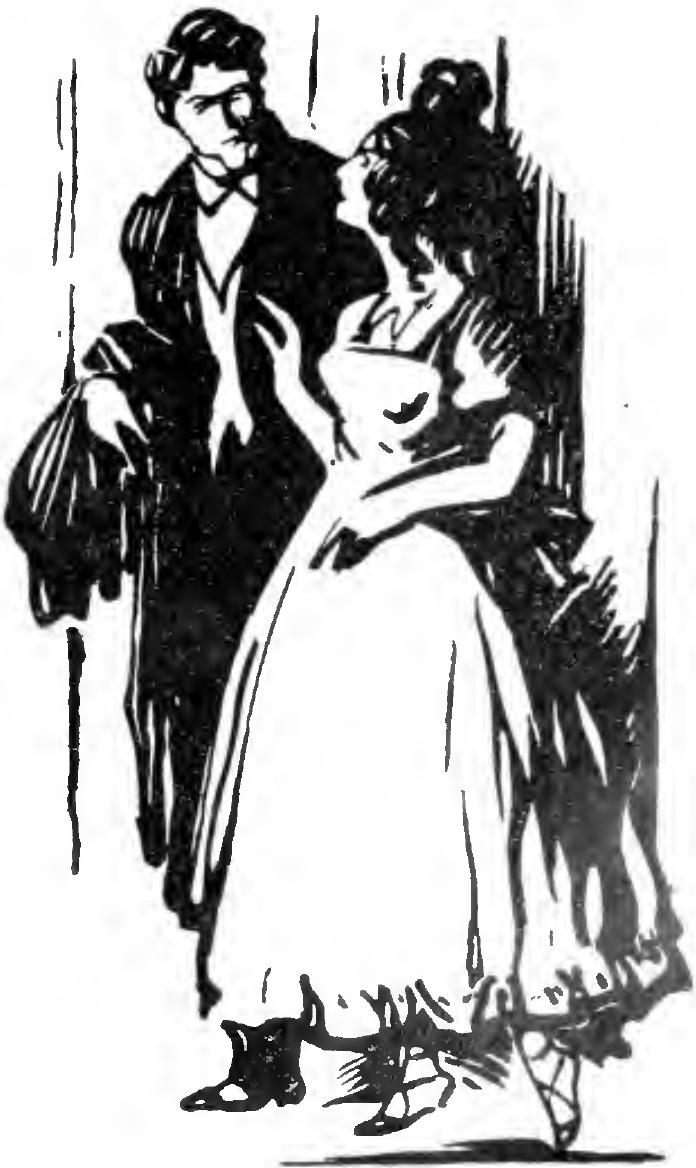
in that case, he said to himself, I must be sensitive to her beauty; I owe it to myself to be her lover. Such an idea would not have occurred to him before the naive confidences made by his friend.
The sudden determination he had just taken formed a pleasant distraction. He said to himself: I must have one of these two women; he perceived that he would have greatly preferred to court Madame Derville; not that she was more agreeable, but she had always seen him as a tutor honored for his learning, and not as a carpenter's workman, with a ratine coat folded under his arm, as he had appeared to Madame de Rênal.
It was precisely as a young workman, blushing to the whites of his eyes, stopped at the door of the house and not daring to ring, that Madame de Rênal pictured him with the most charm.
Continuing the review of his position, Julien saw that he must not think of conquering Madame Derville, who probably noticed the taste Madame de Rênal had for him. Forced to return to the latter: What do I know of this woman's character? Julien said to himself. Only this: before my journey, I took her hand, she withdrew it; today I withdraw my hand, she seizes it and presses it. Fine occasion to return to her all the contempt she has had for me. God knows how many lovers she has had! she perhaps decides in my favor only because of the ease of the meetings.
Such, alas! is the misfortune of an excessive civilization. At twenty, the soul of a young man, if he has some education, is a thousand leagues from the letting go, without which love is often only the most tedious of duties.
I owe it to myself all the more, continued Julien's little vanity, to succeed with this woman, since if I ever make a fortune, and someone reproaches me with the base employment of tutor, I shall be able to suggest that love had thrown me into that position.
Julien again moved his hand away from Madame de Rênal's, then took it again and pressed it. As they were returning to the drawing room, toward midnight, Madame de Rênal said to him in a half-voice:
— You will leave us, you will go away?
Julien answered with a sigh:
— I must indeed leave, for I love you with passion; it is a fault... and what a fault for a young priest! Madame de Rênal leaned on his arm! and with such abandon that her cheek felt the warmth of Julien's.
The nights of these two beings were so different. Madame de Rênal was exalted by the transports of the most elevated moral voluptuousness. A coquettish young girl who loves early grows accustomed to the turmoil of love; when she reaches the age of true passion, the charm of novelty is lacking. As Madame de Rênal had never read novels, all the nuances of her happiness were new to her. No sad truth came to freeze her, not even the specter of the future. She saw herself as happy in ten years as she was at this moment. The very idea of virtue and of fidelity sworn to M. de Rênal, which had agitated her a few days before, presented itself in vain; it was dismissed like an importunate guest. Never will I grant anything to Julien, said Madame de Rênal; we shall live in the future as we have lived for a month. It will be a friend.
.