About this book
Julien Sorel climbs from sawmill to salon, torn between the red of the army and the black of the church. Stendhal's 1830 novel, free to read online.
THE HELL OF THE FAUBOURG
In cutting this diamond, an unskilful lapidary has taken from it some of its brightest sparks. In the Middle Ages—what do I say?—even under Richelieu, the Frenchman had a strong will.
MIRABEAU.
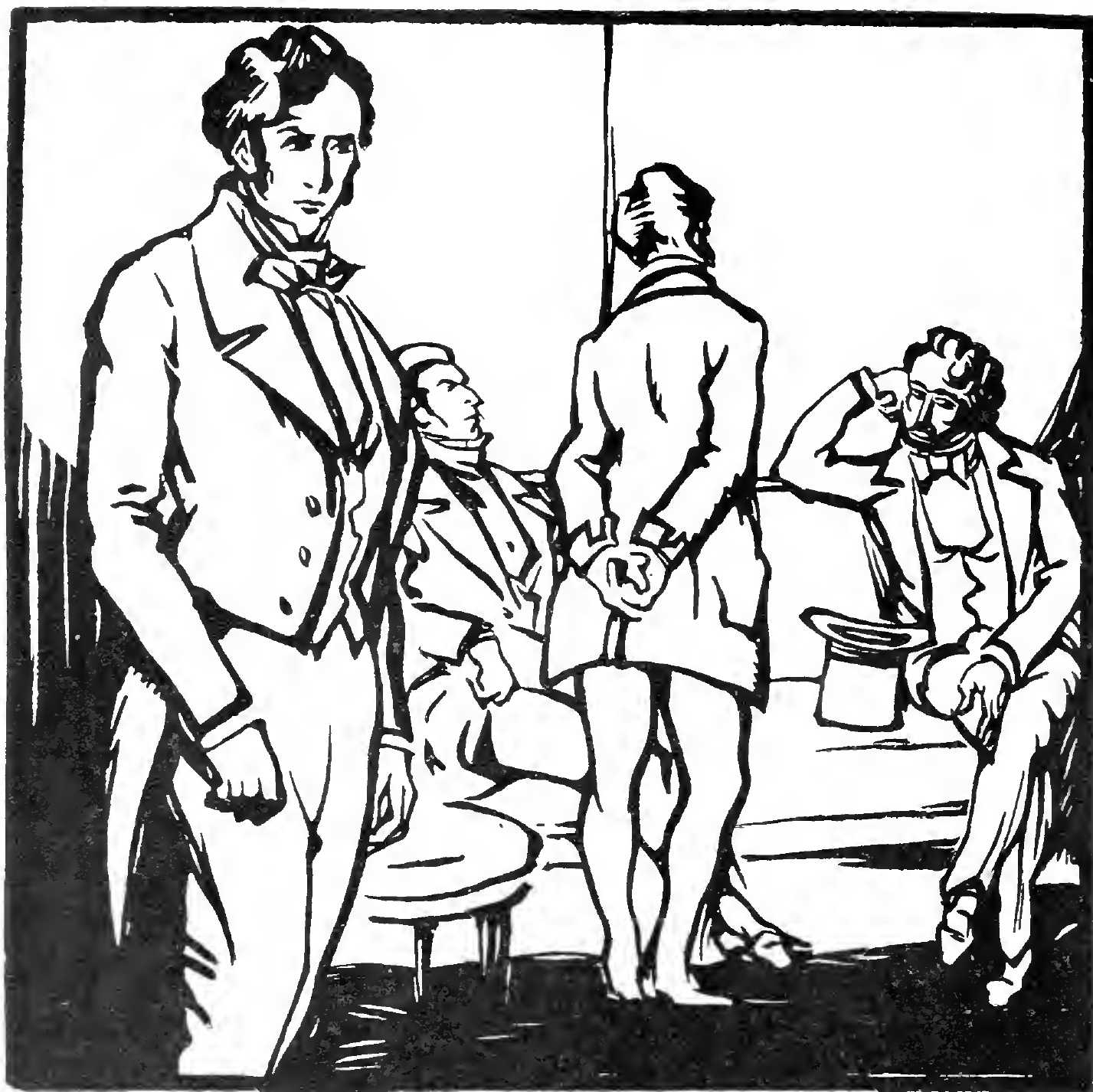
JULIEN found the Marquis furious: for the first time in his life, perhaps, this nobleman was guilty of bad form; he overwhelmed Julien with every insult that came to his lips. Our hero was astonished, impatient, but his gratitude was not shaken by it. How many fine projects, long cherished in the depths of his mind, the poor man saw crumbling in an instant! But I owe him an answer; my silence would only increase his anger. The answer was supplied by the role of Tartuffe.
"I am not an angel... I served you well, you paid me with generosity... I was grateful, but I am twenty-two years old... In this house, my thoughts were understood only by you, and by that charming person..."
"Monster!" cried the Marquis. "Charming! Charming! The day you found her charming, you should have fled."
"I tried to; then I asked you to let me go to Languedoc."
Weary of pacing about in fury, the Marquis, subdued by grief, flung himself into an armchair; Julien heard him say in an undertone: "This is no wicked man."
"No, I am not one toward you," cried Julien, falling at his knees. But he felt an extreme shame at this movement, and rose again very quickly.
The Marquis was genuinely distraught. At the sight of this movement he began again to overwhelm him with atrocious insults, worthy of a cab driver. The novelty of these oaths was perhaps a distraction.
"What! my daughter is to be called Madame Sorel! what! my daughter is not to be a duchess!" Every time these two ideas presented themselves so clearly, M. de La Mole was tortured and the movements of his soul were no longer voluntary. Julien feared to be beaten.
In the lucid intervals, and when the Marquis was beginning to grow accustomed to his misfortune, he addressed to Julien reproaches that were fairly reasonable.
"You should have fled, Monsieur," he said to him. "It was your duty to flee... You are the last of men..."
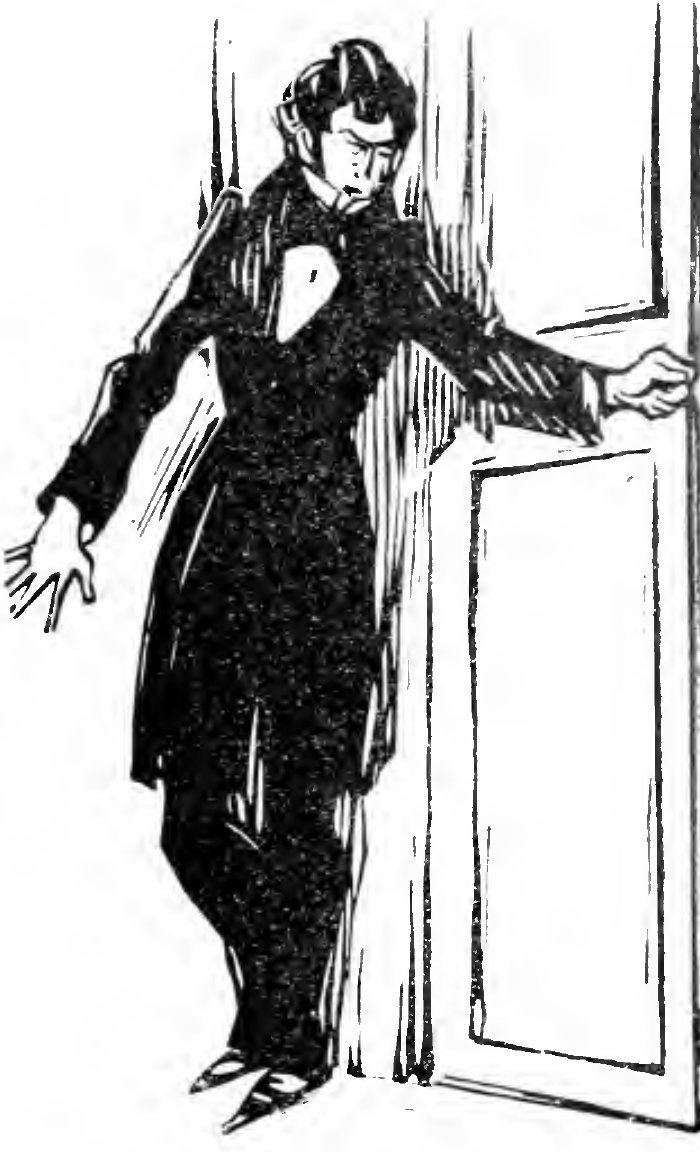
Julien approached the table and wrote:
For a long time life has been insupportable to me; I am putting an end to it. I beg Monsieur le Marquis to accept, with the expression of a boundless gratitude, my apologies for the embarrassment that my death in his house may cause.
"Will Monsieur le Marquis deign to run through this paper... Kill me," said Julien, "or have me killed by your valet. It is one o'clock in the morning, I am going to walk in the garden by the wall at the far end."
"Go to the devil," the Marquis shouted at him as he was leaving.
I understand, thought Julien; he would not be sorry to see me spare his valet the method of my death... Let him kill me, by all means, that is a satisfaction I offer him... But, hang it, I love life... I owe myself to my son.
This idea, which for the first time appeared so clearly to his imagination, occupied him entirely after the first few minutes of his walk given over to the sense of danger.
This interest, so new, made him a prudent being. I need advice to guide me with this hot-headed man... He has no reason, he is capable of anything. Fouqué is too far away; besides, he would not understand the feelings of a heart such as the Marquis's.
Count Altamira... Am I sure of eternal silence? My asking for advice must not be an action, and complicate my position. Alas! there remains to me only the gloomy Abbé Pirard... his mind is narrowed by Jansenism... A rascally Jesuit would know the world, and would suit me better... M. Pirard is capable of beating me, at the mere mention of the crime.
The genius of Tartuffe came to Julien's aid: Well then, I shall go and confess to him. Such was the last resolution he took in the garden, after having walked about for two whole hours. He no longer thought that he might be surprised by a gunshot; sleep was overcoming him.
The next day, very early in the morning, Julien was several leagues from Paris, knocking at the door of the severe Jansenist. He found, to his great astonishment, that he was not too surprised by his confidence.
"I may perhaps have reproaches to make myself," said the Abbé, more anxious than irritated. "I had thought I guessed this love. My friendship for you, poor unhappy boy, prevented me from warning the father..."
"What is he going to do?" Julien said to him eagerly.
(He loved the Abbé at that moment, and a scene would have been very painful to him.)
"I see three courses," Julien continued: "1) M. de La Mole can have me put to death; and he told him of the suicide letter he had left with the Marquis; 2) have me shot at by Count Norbert, who would challenge me to a duel.
"You would accept?" said the Abbé furiously, and rising.
"You do not let me finish. Certainly I shall never fire at the son of my benefactor.
3) He can send me away. If he says to me: Go to Edinburgh, to New York, I shall obey. Then Mademoiselle de La Mole's position can be concealed; but I shall not suffer my son to be done away with.
"That will be, have no doubt of it, the first idea of this corrupt man..."
In Paris, Mathilde was in despair. She had seen her father about seven o'clock. He had shown her Julien's letter; she trembled lest he might have thought it noble to put an end to his life: And without my permission? she said to herself with a grief that was anger.
"If he is dead, I shall die," she said to her father. "It is you who will have caused his death... You will perhaps rejoice in it... But I swear it by his shades, first I shall go into mourning, and shall be publicly Madame veuve Sorel, I shall send out my announcement cards, count upon it... You will find me neither pusillanimous nor cowardly."
Her love went to the point of madness. In his turn, M. de La Mole was taken aback.
He began to see events with some reason. At lunch, Mathilde did not appear. The Marquis was delivered from an immense weight, and above all flattered, when he noticed that she had said nothing to her mother.
Julien was dismounting from his horse. Mathilde had him summoned, and threw herself into his arms almost in view of her maid. Julien was not very grateful for this transport; he emerged from his long conference with the abbé Pirard a highly diplomatic and calculating man. His imagination was extinguished by the calculation of possibilities. Mathilde, with tears in her eyes, informed him that she had read his suicide letter.
"My father may change his mind; do me the pleasure of leaving at once for Villequier. Mount your horse again, leave the house before they rise from the table."
As Julien did not abandon his astonished and cold air, she had a fit of tears.
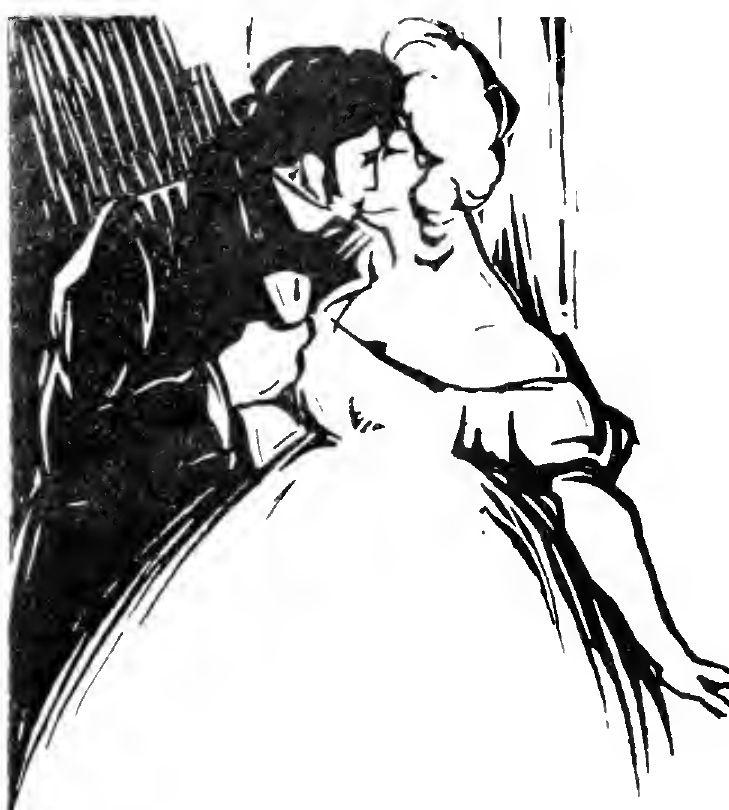
"Let me manage our affairs," she cried with rapture, and clasping him in her arms. "You know very well that it is not voluntarily that I separate from you. Write under cover to my maid; let the address be in a foreign hand, I will write you volumes. Farewell! flee."
This last word wounded Julien, he obeyed nevertheless. It is fatal, he thought, that even in their best moments, these people find the secret of shocking me.
Mathilde resisted with firmness all her father's prudent plans. She would never consent to establish the negotiation on any other basis than this: She would be Madame Sorel, and would live poorly with her husband in Switzerland, or at her father's house in Paris. She rejected far from her the proposal of a clandestine childbirth. "Then would begin for me the possibility of calumny and dishonor. Two months after the marriage, I will go traveling with my husband, and it will be easy for us to suppose that my son was born at a suitable time."
At first greeted with transports of anger, this firmness ended by giving the Marquis doubts.
In a moment of tenderness: "Here!" he said to his daughter, "here is a deed of ten thousand livres of income, send it to your Julien, and let him very quickly put me in the impossibility of taking it back."
To obey Mathilde, whose love of command he knew, Julien had made forty leagues uselessly: he was at Villequier, settling the farmers' accounts; this benefaction of the Marquis was the occasion of his return. He went to ask asylum of the abbé Pirard, who, during his absence, had become Mathilde's most useful ally. Every time he was questioned by the Marquis, he proved to him that any other course than a public marriage would be a crime in the eyes of God.
"And fortunately," added the abbé, "the wisdom of the world here agrees with religion. Could one count for a single moment, with Mademoiselle de La Mole's impetuous character, on a secret which she would not have imposed upon herself? If the straightforward course of a public marriage is not admitted, society will occupy itself far longer with this strange misalliance. Everything must be said at once, without appearance or reality of the slightest mystery."
"That is true," said the Marquis thoughtfully. "In this system, to speak of this marriage after three days becomes the drivelling of a man without ideas. We should take advantage of some great anti-Jacobin measure of the government to slip in incognito in its train."
Two or three friends of M. de La Mole thought as Abbé Pirard did. The great obstacle, in their eyes, was Mathilde's decided character. But after so many fine reasonings, the Marquis's soul could not accustom itself to renouncing the hope of the tabouret for his daughter.
His memory and his imagination were filled with the trickeries and falsehoods of every kind that were still possible in his youth. To yield to necessity, to be afraid of the law seemed to him an absurd and dishonourable thing for a man of his rank. He was paying dearly now for those enchanting reveries which he had permitted himself for ten years concerning the future of this beloved daughter.
Who could have foreseen it? he said to himself. A girl of such a haughty character, of such an elevated genius, prouder than I of the name she bears! whose hand was asked of me in advance by all that is most illustrious in France!
We must renounce all prudence. This century is made to confound everything! we are marching toward chaos.

.