About this book
Julien Sorel climbs from sawmill to salon, torn between the red of the army and the black of the church. Stendhal's 1830 novel, free to read online.
WHAT IS THE DECORATION THAT DISTINGUISHES
Thy water does not refresh me, said the thirsty genie. — Yet it is the coolest well in all Diar-Bekir.
Pellico.
O ne day Julien was returning from the charming estate of Villequier, on the banks of the Seine, which M. de La Mole regarded with interest because, of all his estates, it was the only one that had belonged to the famous Boniface de La Mole. At the hôtel he found the Marquise and her daughter, who had just arrived from Hyères.
Julien was a dandy now, and understood the art of living in Paris. He was perfectly cold toward Mademoiselle de La Mole. He appeared to have kept no memory of the time when she so gaily asked him for details about the way he fell from his horse.
Mademoiselle de La Mole found him tall and pale. His figure and bearing had nothing provincial about them any longer; his conversation was another matter: there was still too much seriousness in it, too much positiveness. Despite these reasonable qualities, thanks to his pride, there was nothing subordinate about him; one simply felt that he still regarded too many things as important. But one could see that he was a man who would stand by what he said.
"He lacks lightness, but not wit," Mademoiselle de La Mole said to her father, joking with him about the cross he had given Julien. "My brother asked you for it for eighteen months, and he is a La Mole!"
"Yes; but Julien has the unexpected. That is what never happened to the La Mole you speak of."
Monsieur le duc de Retz was announced.
Mathilde felt seized by an irresistible yawn; she recognized the antique gildings and the old habitués of her father's salon. She formed a perfectly boring picture of the life she was about to resume in Paris. And yet at Hyères she had missed Paris.
And yet I am nineteen! she thought: this is the age of happiness, say all these fools with gilded slices. She looked at eight or ten volumes of new poetry, piled up during the journey through Provence on the console in the salon. She had the misfortune to have more wit than MM. de Croisenois, de Caylus, de Luz, and her other friends. She pictured everything they were going to say to her about the beautiful sky of Provence, poetry, the Midi, etc., etc.
Those beautiful eyes, in which breathed the deepest boredom and, worse still, the despair of finding pleasure, stopped on Julien. At least he was not exactly like anyone else.
"Monsieur Sorel," she said, with that quick, curt voice, with nothing feminine about it, that young women of the upper class use, "Monsieur Sorel, are you coming this evening to Monsieur de Retz's ball?"
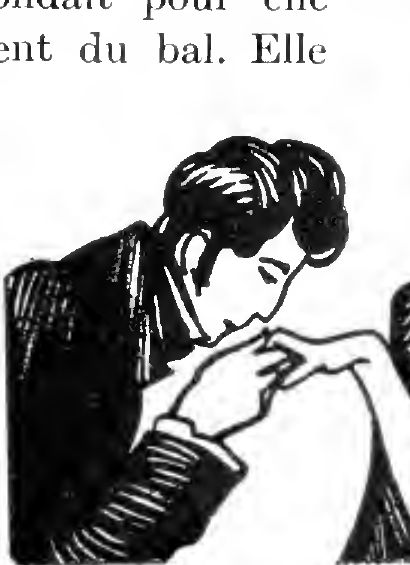
"Mademoiselle, I have not had the honor of being presented to Monsieur le duc." (One would have said that these words and this title scraped the mouth of the proud provincial.)
"He charged my brother to bring you to his house; and, if you had come there, you would have given me details about the estate of Villequier; there is talk of going there in the spring. I should like to know whether the château is habitable, and whether the surroundings are as pretty as they say. There are so many usurped reputations!"
Julien did not answer.
"Come to the ball with my brother," she added in a very dry tone.
Julien bowed respectfully. So even in the middle of a ball, I owe accounts to every member of the family. Am I not paid as a man of business? His bad humor added: God knows still whether what I say to the daughter will not thwart the plans of the father, the brother, the mother! It is a veritable court of a
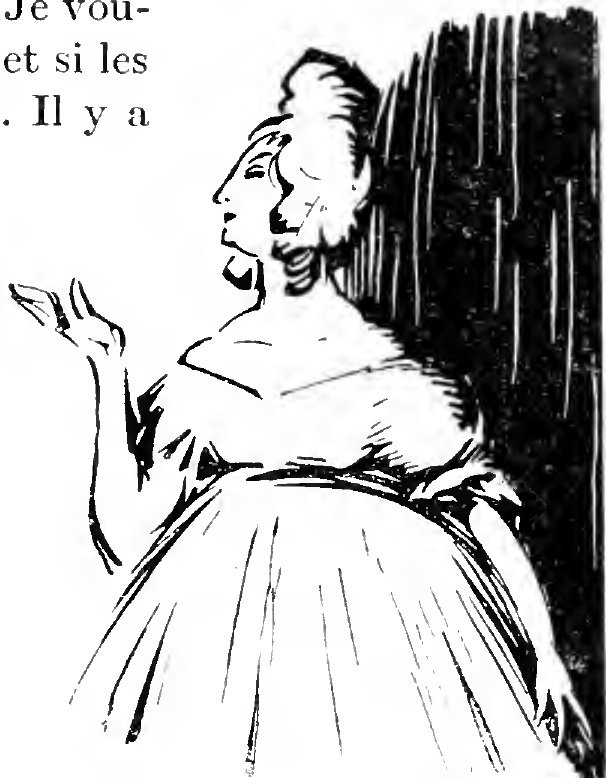
sovereign prince. One would have to be of a perfect nullity there, and yet give no one the right to complain.
How this great girl displeases me! he thought, watching Mademoiselle de La Mole walk, whom her mother had called over to present to several women among her friends. She exaggerates every fashion; her dress falls from her shoulders... she is even paler than before her journey... What colorless hair, from being so blond! one would say the daylight passes through it!... What haughtiness in that way of bowing, in that look! what queenly gestures! Mademoiselle de La Mole had just called her brother, at the moment when he was leaving the salon.
Count Norbert approached Julien:
"My dear Sorel," he said to him, "where do you want me to pick you up at midnight for Monsieur de Retz's ball? He expressly charged me to bring you."
"I know well to whom I owe so many kindnesses," replied Julien, bowing to the ground.
His bad humor, unable to find anything to criticize in the tone of politeness and even of interest with which Norbert had spoken to him, began to exercise itself on the reply that he, Julien, had made to this obliging word. He found in it a shade of baseness.
In the evening, on arriving at the ball, he was struck by the magnificence of the Hôtel de Retz. The entrance courtyard was covered by an immense tent of faded-red coutil with gold stars: nothing more elegant. Beneath this tent, the courtyard was transformed into a grove of orange trees and flowering rose-laurels. Care had been taken to bury the vases sufficiently, so the laurels and oranges seemed to spring from the earth. The path traveled by the carriages was sanded.
This whole ensemble appeared extraordinary to our provincial. He had no idea of such magnificence; in an instant his stirred imagination was a thousand leagues from his bad humor. In the carriage, on the way to the ball, Norbert was happy, and he saw everything in black; scarcely had they entered the courtyard when the roles changed.
Norbert was sensitive only to a few details which, amid so much magnificence, could not have been attended to. He estimated the expense of each thing, and, as he arrived at a high total, Julien noticed that he showed himself almost jealous of it and took on ill humor.
As for him, he arrived captivated, admiring, and almost timid from emotion, in the first of the salons where they were dancing. People were crowding at the door of the second, and the crowd was so great that it was impossible for him to advance. The decoration of this second salon represented the Alhambra of Granada.
"She is the queen of the ball, one must admit it," said a young man with a mustache, whose shoulder pressed into Julien's chest.
"Mademoiselle Fourmont, who all winter has been the prettiest, notices that she is descending to second place: see her singular air."
"Truly she is spreading every sail to please. See, see that gracious smile at the moment when she figures alone in that quadrille. It is, upon my honor, priceless."
"Mademoiselle de La Mole has the air of being mistress of the pleasure her triumph gives her, of which she is very well aware. One would say she fears to please whoever speaks to her."
"Very good! that is the art of seduction."
Julien was making vain efforts to catch sight of this seductive woman; seven or eight men taller than he were preventing him from seeing her.
"There is a great deal of coquetry in that noble reserve," resumed the young man with the mustache.
"And those great blue eyes that lower themselves so slowly at the moment when one would say they are on the point of betraying themselves," resumed the neighbor. "Upon my word, nothing more skillful."
"See how beside her the beautiful Fourmont looks common," said a third.
"That air of reserve means: How much amiability I would display toward you, if you were the man worthy of me!"
"And who can be worthy of the sublime Mathilde?" said the first: "some sovereign prince, handsome, witty, well made, a hero in war, and twenty years old at most."
"The natural son of the Emperor of Russia... for whom, in favor of this marriage, a sovereignty would be made, or quite simply the Comte de Thaler, with his air of a peasant dressed up..."
The door was cleared, Julien was able to enter.
Since she passes for so remarkable in the eyes of these dolls, she is worth the trouble of studying, he thought. I shall understand what perfection is for these people.
As he was looking about for her, Mathilde looked at him. My duty calls me, Julien said to himself; but there was no longer any temper in his expression save only his glance. Curiosity made him advance with a pleasure which the very low cut of Mathilde's gown over her shoulders quickly increased, in truth, in a manner little flattering to his self-esteem. Her beauty has youth in it, he thought. Five or six young men, among whom Julien recognised those whom he had heard at the door, were between her and him.
"You, Monsieur, who have been here all the winter," she said to him, "is it not true that this is the prettiest ball of the season?" He made no reply.
"This quadrille of Coulon's seems to me admirable; and the ladies dance it perfectly." The young men turned round to see who was the happy man from whom an answer was absolutely demanded. She was not encouraging.
"I should not be a good judge, Mademoiselle; I spend my life in writing: this is the first ball of this magnificence that I have seen."
The young men with moustaches were scandalised.
"You are a sage, Monsieur Sorel," was the reply, made with a more marked interest; "you regard all these balls, all these festivities, as a philosopher, as J.-J. Rousseau. These follies surprise you without seducing you."
A word had just reached Julien's imagination and driven from his heart every illusion. His lips assumed an expression of disdain perhaps a little exaggerated.
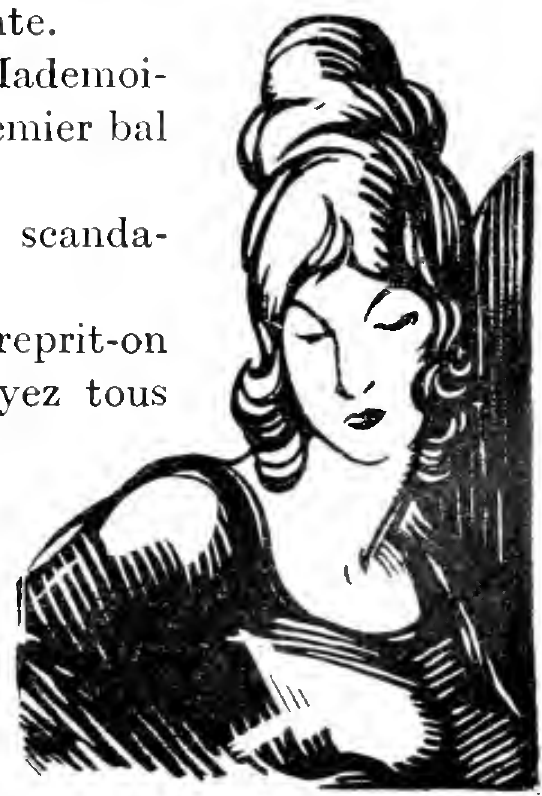
"J.-J. Rousseau," he replied, "is in my eyes nothing but a fool when he takes it upon himself to judge the great world; he did not understand it, and he brought to it the heart of a flunkey who has risen in the world."
"He made the Contrat Social," said Mathilde, in a tone of veneration.
"While preaching the republic and the overthrow of monarchical dignities, this upstart is drunk with happiness if a duke changes the direction of his walk after dinner to accompany one of his friends."
"Ah! yes, the Duc de Luxembourg at Montmorency accompanies a M. Coindet in the direction of Paris...," Mademoiselle de La Mole went on, with the pleasure and the abandon of the first enjoyment of pedantry. She was intoxicated with her learning, much as the academician was when he discovered the existence of King Feretrius. Julien's eye remained penetrating and severe. Mathilde had had a moment of enthusiasm: the coldness of her partner disconcerted her profoundly. She was all the more astonished since it was she who was accustomed to produce that effect upon others.
At that moment, the Marquis de Croisenois was eagerly making his way toward Mademoiselle de La Mole. For an instant he stood three paces from her, unable to penetrate the crowd. He looked at her, smiling at the obstacle. The young Marquise de Rouvray was near him; she was a cousin of Mathilde. She was giving her arm to her husband, who had been so only for a fortnight. The Marquis de Rouvray, also very young, had all the love that a man takes on who, making a marriage of convenience arranged solely by the notaries, finds a perfectly beautiful person. M. de Rouvray was to be a duke upon the death of a very aged uncle.
While the Marquis de Croisenois, unable to pierce the crowd, was looking at Mathilde with a laughing air, she was resting her large eyes, of a celestial blue, upon him and his neighbors. What could be duller, she said to herself, than all this group! There is Croisenois, who claims to be marrying me; he is gentle, polite, he has perfect manners like M. de Rouvray. Were it not for the boredom they cause, these gentlemen would be quite amiable. He too will follow me to the ball with that limited and contented air. A year after the marriage, my carriage, my horses, my dresses, my château twenty leagues from Paris, all that will be as good as possible, exactly what is needed to make a parvenue die of envy, a Comtesse de Roiville for example; and after that?...
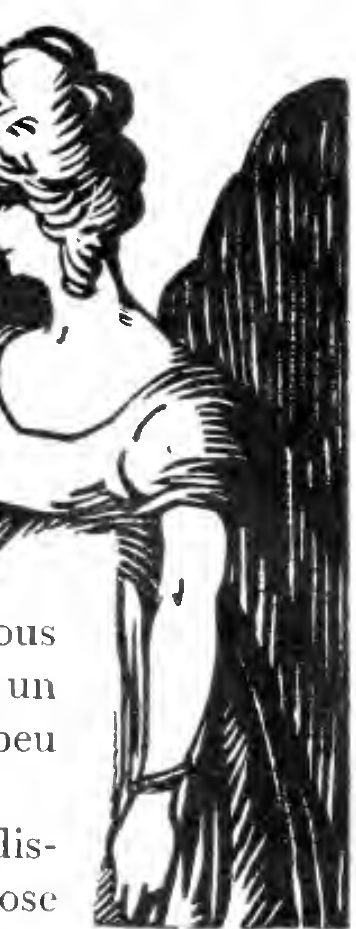
Mathilde was bored in hope. The Marquis de Croisenois managed to approach her and spoke to her, but she was dreaming without listening to him. The sound ofhis words blended for herwith the humming of the ball. Shemechanically followed with her eye Julien, who had moved away with a respectful air, but proud and discontented. She noticed in a corner, far from the circulating crowd, the Comte Altamira, condemned to death
in his country, whom the reader already knows. Under Louis XIV, one of his relatives had married a Prince de Conti; this memory protected him a little against the police of the congregation.
I see only the death sentence that distinguishes a man, thought Mathilde: it is the only thing that cannot be bought.
Ah! that is a good witticism I have just said to myself! what a pity that it did not come in such a way as to do me honor! Mathilde had too much taste to bring into the conversation a witticism made in advance; but she also had too much vanity not to be delighted with herself. An air of happiness replaced in her features the appearance of boredom. The Marquis de Croisenois, who was still speaking, thought he glimpsed success, and redoubled his fluency.
What could a malicious person object to my witticism? said Mathilde to herself. I would answer the critic: A title of baron, of viscount, that can be bought; a cross, that is given; my brother has just received one, what did he do? a rank, that is obtained. Ten years of garrison, or a relative who is Minister of War, and one is a squadron commander like Norbert. A great fortune!... that is still the most difficult thing and consequently the most meritorious. That is funny! it is the opposite of everything the books say... Well! for fortune, one marries the daughter of M. Rothschild.
Really my witticism has depth. The death sentence is still the only thing that no one has thought of soliciting.
"Do you know the Comte Altamira?" she said to M. de Croisenois.She had the air of returning from so far away, and this question had so littleconnection with everything the poor marquis had been saying to her for five minutes, that his amiability was disconcerted. He was nevertheless a man of wit and highly renowned as such.
Mathilde has a singularity, he thought; it is a drawback, but she gives her husband such a fine social position! I do not know how this Marquis de La Mole does it; he is connected with the best of every party; he is a man who cannot sink. And besides, this singularity of Mathilde's can pass for genius. With high birth and much fortune, genius is not a ridiculous thing, and then what distinction! She has so well, moreover, when she wishes, that mixture of wit, character, and aptness, which makes perfect amiability... As it is so difficult to do two things well at once, the marquis answered Mathilde with a vacant air, and as if reciting a lesson:
"Who does not know that poor Altamira?" And he told her the story of his failed conspiracy, ridiculous, absurd.
"Very absurd!" said Mathilde, as if speaking to herself, but he acted. I want to see a man, bring him to me, she said to the marquis, very eloquent.
The Comte Altamira was one of the most declared admirers of Mademoiselle de La Mole's haughty and almost impertinent air; she was, according to him, one of the most beautiful persons in Paris.
"How beautiful she would be on a throne!" he said to M. de Croisenois; and he allowed himself to be led without difficulty.
There is no lack of people in society who would like to establish that nothing is in such bad taste as a conspiracy in the nineteenth century; it smacks of the Jacobin. And what is uglier than the unsuccessful Jacobin?
Mathilde's glance mocked Altamira a little with M. de Croisenois, but she listened to him with pleasure.
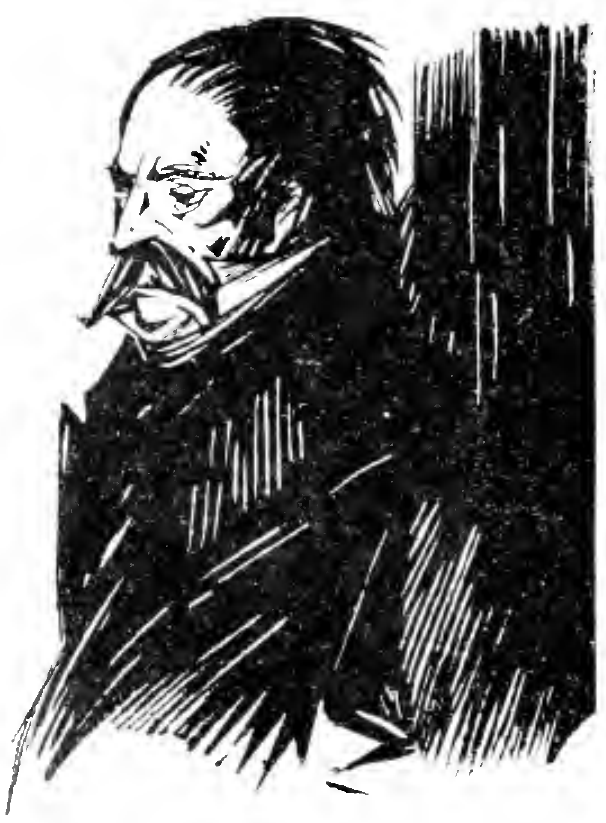
A conspirator at a ball, that is a pretty contrast, she thought. She found in this one, with his black moustaches, the face of the lion when it rests; but she soon perceived that his mind had only one attitude: utility, admiration for utility.Except for what could give his country the government of the two Chambers, the young count foundthat nothing was worthy of his attention. He left Mathilde with pleasure, the prettiest person at theball, because he saw a Peruvian general enter. Despairing of Europe as M. de Metternich has arranged it, the poor Altamira was reduced to thinking that, when the States ofSouth America are strong and powerful, they will be able to restore to Europethe liberty that Mirabeau sent them (1).A whirlwind of young men with moustaches had approached Mathilde.She had clearly seen that Altamira was notseduced, and was piqued byhis departure; she saw his blackeye shine as he spoke to the Peruviangeneral. Mademoiselle de LaMole looked at the young Frenchmenwith that deep seriousness thatnone of her rivals could imitate. Which of them, she thought, could get himself condemned to death, even supposing all favorable chances?
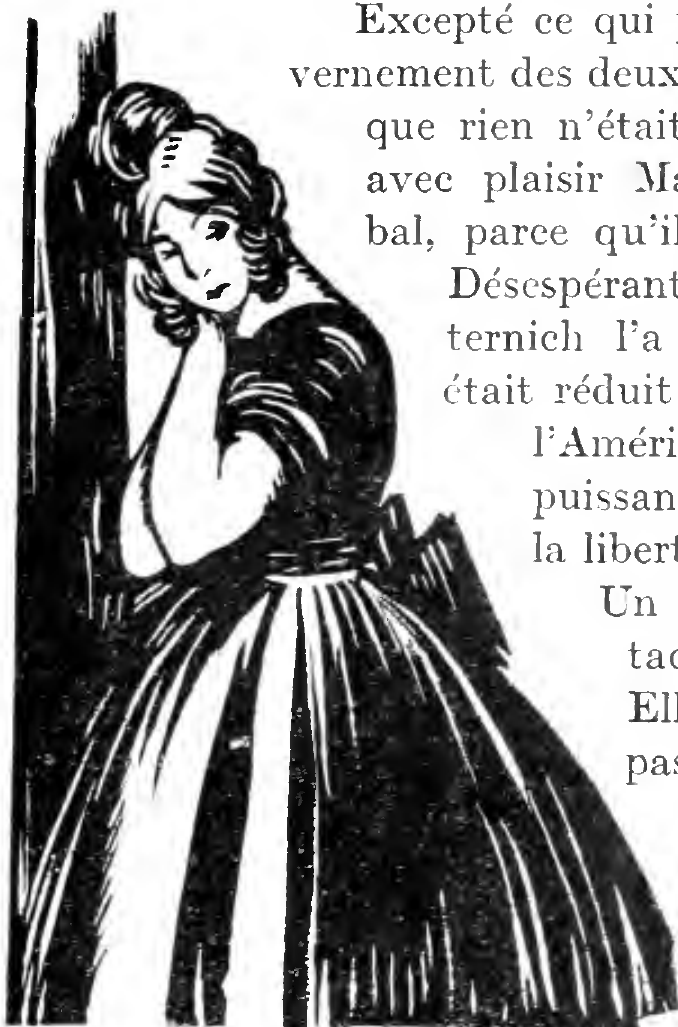
This singular glance flattered those who had little wit, but alarmed the others. They dreaded the explosion of some biting word and some difficult reply.
High birth gives a hundred qualities whose absence would offend me: I see it by the example of Julien, thought Mathilde; but it blights those qualities of the soul that cause one to be condemned to death.
At that moment someone near her was saying: This Comte Altamira is the second son of the Prince de San Nazaro-Pimentel; he is a Pimentel who attempted to save Conradin, beheaded in 1268. He is one of the noblest families of Naples.
“There we are,” Mathilde said to herself, “that proves my maxim nicely: high birth takes away the strength of character without which one never gets condemned to death! So I am predestined to be unreasonable this evening. Since I am only a woman like any other, well then, I must dance.” She yielded to the urgings of the Marquis de Croisnois, who for an hour had been soliciting a galop. To distract herself from her philosophical misery, Mathilde wished to be perfectly seductive; M. de Croisenois was delighted.
But neither the dance, nor the desire to please one of the handsomest men at court, nothing could distract Mathilde. It was impossible to be more admired. She was the queen of the ball, she saw it, but coldly.
“What a colorless life I shall spend with a being such as Croisenois!” she said to herself, as he led her back to her place an hour later... “Where is the pleasure for me,” she added sadly, “if, after six months’ absence, I do not find it in the midst of a ball that is the envy of every woman in Paris? And even then, I am surrounded there by the homage of a society that I cannot imagine better composed. There are no bourgeois here except a few peers and one or two Juliens perhaps. And yet,” she added with growing sadness, “what advantages has fate not given me! distinction, fortune, youth, everything, except happiness.
“The most doubtful of my advantages are still the ones they have spoken to me about all evening. Wit—I believe it, for I obviously frighten them all. If they dare approach a serious subject, after five minutes of conversation they arrive quite out of breath, and as though making a great discovery, at something I have been repeating to them for an hour. I am beautiful, I have that advantage for which Madame de Staël would have sacrificed everything, and yet it is a fact that I am dying of boredom. Is there any reason why I should be less bored when I have changed my name to that of the Marquis de Croisenois?”
“But, my God!” she added, almost with a desire to weep, “is he not a perfect man? he is the masterpiece of the education of this century; one cannot look at him without his finding something amiable, and even witty, to say to you; he is brave... But this Sorel is singular,” she said to herself, and her eye left its gloomy expression for an angry one. “I warned him that I had something to say to him, and he does not deign to reappear!”