About this book
Julien Sorel climbs from sawmill to salon, torn between the red of the army and the black of the church. Stendhal's 1830 novel, free to read online.
FIRST EXPERIENCE OF LIFE
The present time, great God! it is the ark of the Lord; woe to him who touches it.
DIDEROT.
THE reader will kindly allow us to give very few clear and precise facts about this period of Julien’s life. It is not that they are lacking—quite the contrary; but perhaps what he saw at the seminary is too black for the moderate coloring that we have sought to preserve in these pages. Contemporaries who suffer from certain things can remember them only with a horror that paralyzes every other pleasure, even that of reading a story.
:
Julien had little success in his attempts at hypocrisy of gesture; he fell into moments of disgust and even of complete discouragement. He was not succeeding, and in a wretched career at that. The slightest outside help would have sufficed to restore his heart; the difficulty to be overcome was not very great; but he was alone like a boat abandoned in the midst of the ocean. And even if I succeed, he said to himself; to have a whole life to spend in such bad company! Gluttons who think only of the omelette with bacon that they will devour at dinner, or abbés Castanède, for whom no crime is too black! They will attain power; but at what price, great God!
Man’s will is powerful, I read everywhere; but is it enough to overcome such disgust? The task of great men has been easy; however terrible the danger, they found it beautiful; and who can understand, except me, the ugliness of what surrounds me?
This moment was the most moving of his life. It was so easy for him to enlist in one of the fine regiments garrisoned at Besançon! He could become a master of Latin; he needed so little to subsist! but then no more career, no more future for his imagination; it was to die. Here is the detail of one of his sad days:
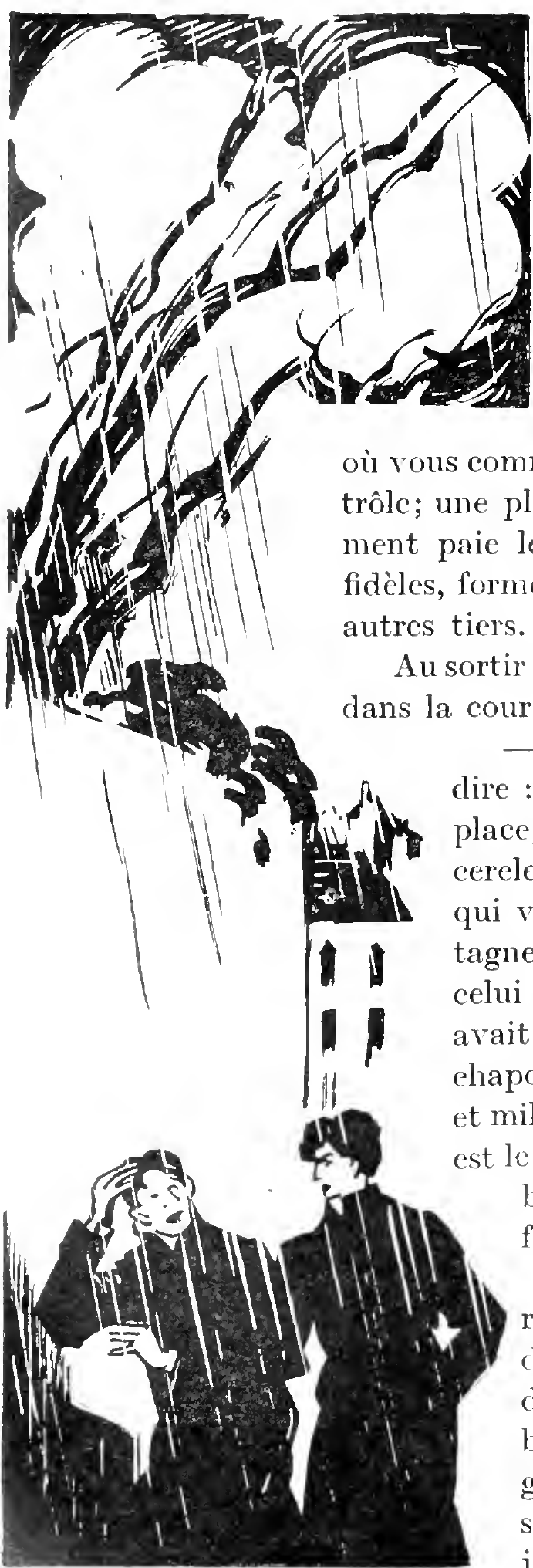
My presumption has so often applauded itself on my being different from the other young peasants! Well, I have lived long enough to see that difference engenders hatred, he said to himself one morning. This great truth had just been shown to him by one of his most stinging irresistible arguments. He had worked for eight days to please a pupil who lived in the odor of sanctity. He walked with him in the courtyard, listening submissively to nonsense that would put you to sleep standing up. Suddenly the weather turned to storm, thunder rumbled, and the saintly pupil cried out, repulsing him in a coarse manner:
“Listen; every man for himself in this world, I don’t want to be burned by lightning: God may strike you down like an impious man, like a Voltaire.”
His teeth clenched with rage and his eyes open toward the sky furrowed by lightning: I should deserve to be submerged if I fall asleep during the storm! cried Julien. Let us attempt the conquest of some other pedant.
The sacred history class of Abbé Castanède rang.
To these young peasants, so frightened by hard work and by the poverty of their fathers, Abbé Castanède taught that day that this being so
terrible in their eyes, the government, had real and legitimate power only by virtue of the delegation of the vicar of God on earth.
“Make yourselves worthy of the pope’s kindness by the holiness of your life, by your obedience, be like a staff in his hands,” he added, “and you will obtain a superb place where you will command as chief, far from all control; an immovable place, of which the government pays one third of the salary, and the faithful, formed by your sermons, the other two thirds.”
On leaving his class, M. Castanède stopped in the courtyard.
“It is truly of a curé that one can say: As the man is worth, so the place is worth,” he said to the pupils who formed a circle around him. “I have known, I who speak to you, mountain parishes whose casual fees were worth more than those of many town curés. There was as much money, not counting the fat capons, the eggs, the fresh butter, and a thousand pleasant details; and there the curé is the first without contradiction: no good meal where he is not invited, feted, etc.”
Hardly had M. Castanède gone back up to his room when the pupils divided into groups. Julien was in none of them; he was left like a scabby sheep. In all the groups, he saw a pupil toss a sou in the air, and if he guessed correctly at the game of heads or tails, his comrades concluded that he would soon have one of those cures with rich casual fees.
Then came the anecdotes. Such and such a young priest, barely ordained a year, having offered a private rabbit to the servant of an old curé, had obtained to be asked for as vicar, and, a few months later, since the curé had died very quickly, had replaced him in the good cure. Another had succeeded in getting himself designated as successor to

the cure of a large, very rich village, by attending all the meals of an old paralyzed curé, and carving his chickens for him gracefully.
The seminarians, like young men in all careers, exaggerated the effect of these small means which have something extraordinary about them and strike the imagination.
I must, Julien said to himself, accustom myself to these conversations. When they were not talking about sausages and good cures, they conversed about the worldly side of ecclesiastical doctrines; about the disputes of bishops and prefects, of mayors and curés. Julien saw the idea of a second God appear, but of a God far more to be feared and far more powerful than the other; this second God was the pope. They said to one another, but lowering their voices, and when they were quite sure of not being heard by M. Pirard, that if the pope does not take the trouble to name all the prefects and all the mayors of France, it is because he has committed that care to the king of France, by naming him eldest son of the Church.
It was around this time that Julien believed he could turn to account for his standing the book of The Pope, by M. de Maistre. To tell the truth, he astonished his comrades; but this was still a misfortune. He displeased them by setting forth their own opinions better than they themselves did. M. Chélan had been imprudent for Julien as he was for himself. After having given him the habit of reasoning correctly and of not letting himself be paid with vain words, he had neglected to tell him that, in the case of a little-considered being, this habit is a crime; for all good reasoning offends.
Julien’s speaking well was therefore a new crime for him. His comrades, by dint of thinking about him, managed to express in a single word all the horror he inspired in them: they nicknamed him MARTIN LUTHER; especially, they said, because of that infernal logic which made him so proud.
Several young seminarians had fresher complexions and could pass for prettier boys than Julien; but he had white hands and could not hide certain habits of delicate cleanliness. This advantage was not one in the sad house where fate had cast him. The dirty peasants among whom he lived declared that he had very loose morals. We fear to weary the reader with the account of the thousand misfortunes of our hero. For example, the strongest of his comrades wished to take up the habit of beating him; he was obliged to arm himself with an iron compass and to announce, but by signs, that he would use it. Signs cannot figure, in a spy’s report, as advantageously as words.

.