
About this book
Anna's love for Count Vronsky breaks against society, while Levin searches for meaning. Garnett's 1919 illustrated translation, free to read online.
CHAPTER XII
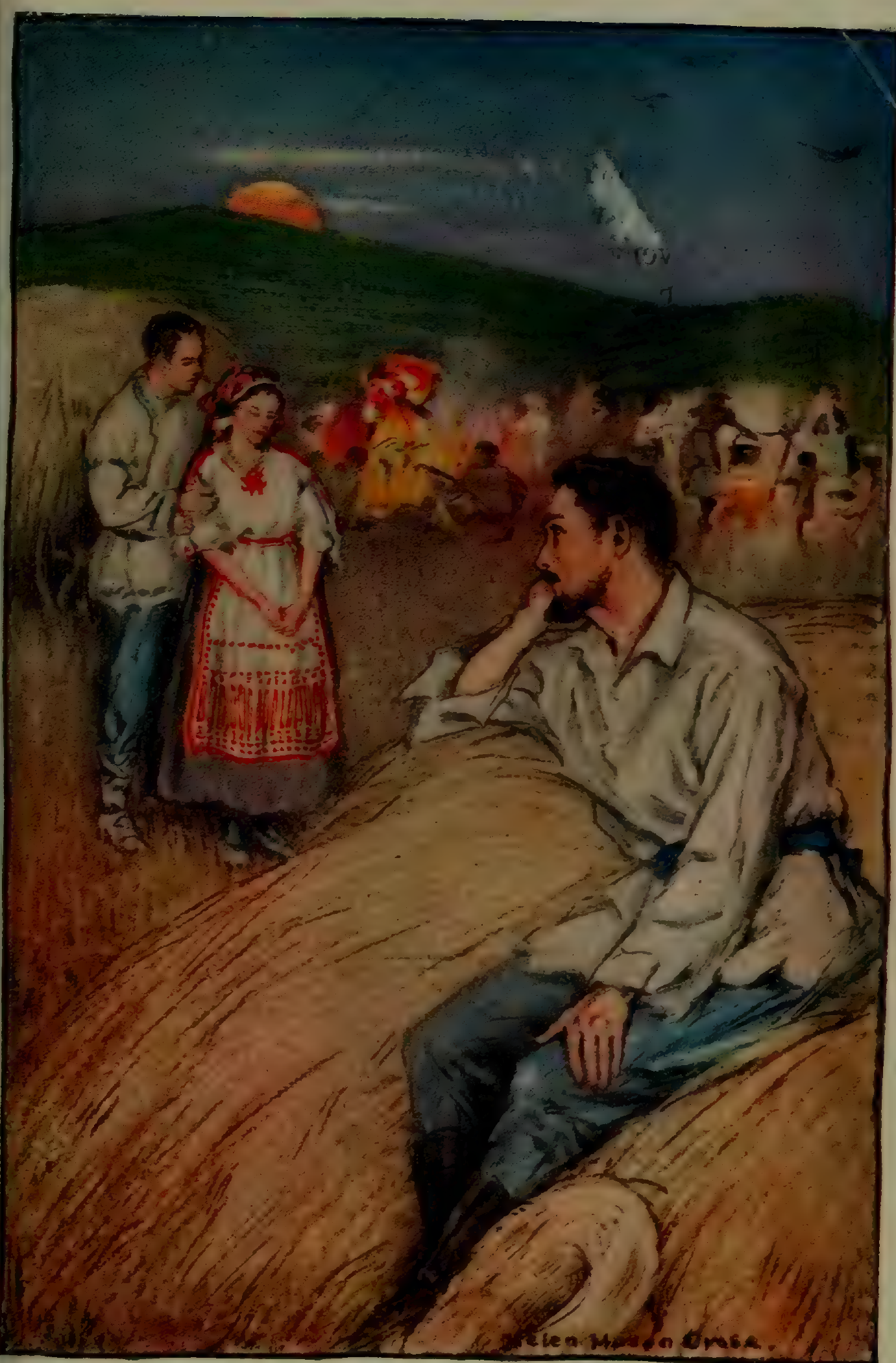
THE load was tied on. Ivan jumped down and took the niet, sleek horse by the bridle. The young wife flung the rake on the load, and with a bold step, swinging her arms, she ent to join the women, who were forming a ring for the hay- .akers' dance. Ivan drove off to the road and fell into line ith the other loaded carts. The peasant women, with their kes on their shoulders, gay with bright flowers, and chatter- g with ringing, merry voices, walked behind the hay- cart. ne wild untrained female voice broke into a song, and sang it one through a verse, and then the same verse was taken up id repeated by half a hundred strong healthy voices, of all rts, coarse and fine, singing in unison.
The women, all singing, began to come close to Levin, and e felt as though a storm were swooping down upon him with thunder of merriment. The storm swooped down, enveloped im and the haycock on which he was lying, and the other aycocks, and the wagon-loads, and the whole meadow and istant fields all seemed to be shaking and singing to the easures of this wild merry song with its shouts and whistles nd clapping. Levin felt envious of this health and mirth fulness; he longed to take part in the expression of this jc of life. But he could do nothing, and had to lie and lo on and listen. When the peasants, with their singing, ha vanished out of 'rht and hearing, a weary feeling of d spondency at h n isolation, his physical inactivity, h alienation from world, came over Levin.
Some of the y peasants who had been most active wangling with him over the hay, some whom he had treat with contumely, and who had tried to cheat him, those ve peasants had greeted him good- humoredly, and evidently ha not, were incapable of having any feeling of rancor again him, any regret, any recollection even of having tried to de ceive him. All that was drowned in a sea of merry commo labor. God gave the day, God gave the strength. And th day and the strength were consecrated to labor, and th labor was its own reward. For whom the labor? What woul be its fruits? These were idle considerations- - beside th point.
Often Levin had admired this life, often he had a sense c envy of the men who led this life; but to- day for the first tim especially under the influence of what he had seen in the att tude of Ivan Parmenov to his young wife, the idea present itself definitely to his mind that it was in his power to ex change the dreary, artificial, idle, and individualistic life h was leading for this laborious, pure, and social delightful life.
The old man who had been sitting beside him had long ag gone home; the people had all separated. Those who live near had gone home, while those who came from far were gath ered into a group for supper, and to spend the night in th meadow. Levin, unobserved by the peasants, still lay on th haycock, and still looked on and listened and mused. Th peasants who remained for the night in the meadow seareel slept all the short summer night. At first there was the sou of merry talk and laughing all together over the supper, the singing again and laughter.
All the long day of toil had left no trace in them but light ness of heart. Before the early dawn all was hushed. Nothing
1
2
3
4
5
6
7
8
9
10
11
12
13
14
15
16
17
18
19
20
21
22
23
24
25
26
27
28
29
30
31
38
39
40
41
42
43
44
45
46
47
48
49
50
51
52
53
54
55
56
57
58
59
60
61
67
68
69
70
71
72
73
74
75
76
77
78
79
80
81
82
83
84
85
86
87
88
89
90
91
98
99
100
101
102
103
104
105
106
107
108
109
110
111
112
113
114
115
116
117
118
119
120
121
125
126
127
128
129
130
131
132
133
134
135
136
137
138
139
140
141
142
143
144
145
146
147
148
149
150
151
155
156
157
158
159
160
161
162
163
164
165
166
167
168
169
170
171
172
173
174
175
176
177
178
179
180
181
185
186
187
188
189
190
191
192
193
194
195
196
197
198
199
200
201
202
203
204
205
206
207
208
209
210
211
215
216
217
218
219
220
221
222
223
224
225
226
227
228
229
230
231
232
233
234
235
236
237
238
239
240
241
245
246
247
248
249
250
251
252
253
254
255
256
257
258
259
260
261
262
263
264
265
266
267
268
269
270
271
274
275
276
277
278
279
280
281
282
283
284
285
286
287
288
289
290
291
292
293
294
295
296
297
298
299
300
301
305
306
307
308
309
310
311
312
313
314
315
316
317
318
319
320
321
322
323
324
325
326
327
328
329
330
331
335
336
337
338
339
340
341
342
343
344
345
346
347
348
349
350
351
352
353
354
355
356
357
358
359 as to be heard but the night sounds of the frogs that never eased in the marsh, and the horses snorting in the mist that rose over the meadow before the morning. Rousing himself, even got up from the haycock, and looking at the stars, he saw that the night was over.
"Well, what am I going to do? How am I to set about it?" he said to himself, trying to express to himself all the thoughts and feelings he had passed through in that brief night. All he thoughts and feelings he had passed through fell in to three separate trains of thought. One was the renunciation of his old life, of his utterly useless education. This renunciation gave him satisfaction, and was easy and simple. Another series of thoughts and mental images related to the life he longed to live now. The simplicity, the purity, the sanity of this life he felt clearly, and he was convinced he would find in it the content, the peace, and the dignity, of the lack of which he was so miserably conscious. But a third series of ideas turned upon the question how to effect this transition from the old fe to the new. And there nothing took clear shape for him. Have a wife? Have work and the necessity of work? Leave okrovskoe? Buy land? Become a member of a peasant community? Marry a peasant girl? How am I to set about?" he asked himself again, and could not find an answer. I haven't slept all night, though, and I can't think it out early," he said to himself. "I'll work it out later. One thing's certain, this night has decided my fate. All my old reams of home-life were absurd, not the real thing," he told
"‘How beautiful!' he thought, looking at the strange, as it ere, mother-of-pearl shell of white fleecy cloudlets resting ght over his head in the middle of the sky. “How exquisite all is in this exquisite night! And when was there time or that cloud-shell to form? Just now I looked at the sky, and there was nothing in it—only two white streaks. Yes, ad so imperceptibly too my views of life changed!”
He went out of the meadow and walked along the highroad wards the village. A slight wind arose, and the sky looked gray and sullen. The gloomy moment had come that usually precedes the dawn, the full triumph of light over darkness.
Shrinking from the cold, Levin walked rapidly, looking at the ground. "What's that? Some one coming," he thought, catching the tinkle of bells, and lifting his head. Forty paces from him a carriage with four horses harnessed abreast was driving towards him along the grassy highroad on which he was walking. The shaft-horses were tilted against the shafts by the ruts, but the dexterous driver sitting on the box held the shaft over the ruts, so that the wheels ran on the smooth part of the road.
This was all Levin noticed, and without wondering who it could be, he gazed absently at the coach.
In the coach was an old lady dozing in one corner, and at the window, evidently only just awake, sat a young girl holding in both hands the ribbons of a white cap. With a face full of light and thought, full of a subtle, complex inner life, that was remote from Levin, she was gazing beyond him at the glow of the sunrise.
At the very instant when this apparition was vanishing, the truthful eyes glanced at him. She recognized him, and her face lighted up with wondering delight.
He could not be mistaken. There were no other eyes like those in the world. There was only one creature in the world that could concentrate for him all the brightness and meaning of life. It was she. It was Kitty. He understood that she was driving to Ergushovo from the railway station. And everything that had been stirring Levin during that sleepless night, all the resolutions he had made, all vanished at once. He recalled with horror his dreams of marrying a peasant girl. There only, in the carriage that had crossed over to the other side of the road, and was rapidly disappearing, there only could he find the solution of the riddle of his life, which had weighed so agonizingly upon him of late.
She did not look out again. The sound of the carriage springs was no longer audible, the bells could scarcely be heard. The barking of dogs showed the carriage had reached he village, and all that was left was the empty fields all round, he village in front, and he himself isolated and apart from it ll, wandering lonely along the deserted highroad.
He glanced at the sky, expecting to find there the cloud- hell he had been admiring and taking as the symbol of the leas and feelings of that night. There was nothing in the sky in the least like a shell. There, in the remote heights above, a mysterious change had been accomplished. There was no trace f shell, and there was stretched over fully half the sky an ven cover of tiny and ever tinier cloudlets. The sky had rown blue and bright; and with the same softness, but with he same remoteness, it met his questioning gaze.
"No," he said to himself, "however good that life of simplicity and toil may be, I cannot go back to it. I love her."