The book you want may be available only in its original language. An AI reading edition can help you follow it, provided you start with a usable file and keep a realistic view of the translation. You are preparing a way to read, not creating an approved published edition.
First, check whether an existing translation is already available—sometimes it just goes by a different title or edition. Working directly with the source file you have on hand is easiest for personal reading; if you plan to share it publicly, check the original book's copyright and distribution license first.
Confirm the book, edition, and file
Open the original and check its title, author, volume number, chapter list, and ending. A preview, incomplete download, or differently numbered omnibus can look convincing until you reach the missing section.
Record the source language and any mixed-language passages you care about. Keep the untouched original, and give the translated file a separate name. If your source is protected or cannot be opened, resolve legitimate access first; do not assume a translation service removes protection.
Set a personal reading goal. Do you mainly want to follow the plot, understand a nonfiction argument, study the source language, or compare a particular passage? That choice affects the output and the amount of review you need.
Prefer an existing EPUB for continuous reading
A readable original EPUB is a convenient source for book translation because it already contains text and reading structure. Avoid turning it into PDF first without a reason.
If you only have a scanned PDF, recognition is part of the job. Use PDF conversion and check the recovered text and reading order. Renaming the file does not convert page images into editable words.
Choose EPUB for comfortable reading in an ebook reader. Markdown is useful when editing extracts or organizing research notes is the main task. Keep the source PDF for page references and difficult visual material whichever output you choose.
Translate the whole file, then read a representative chapter
In PDF Craft's EPUB translator, upload the complete EPUB, select your target language, and choose translation-only or bilingual output. Add a concise instruction if names, terminology, or tone need special treatment. Review Pricing and current task limits, then submit and download the finished file.
The whole-file workflow avoids manually copying each paragraph. It does not guarantee that every idiom, reference, or character voice will be correct. Instructions guide the result rather than enforce perfect consistency.
If you want to check the translation style first, try a short, representative excerpt. Before using trial credits, review the eligible file types, usage limits, and billing rules, then decide how to handle the full book.
After downloading, choose a chapter from beyond the opening. Check ordinary narration, dialogue or an explanation, a note, and any illustration. Does the book remain understandable when you read several pages continuously? If a passage changes the plot or argument, compare it directly with the source.
Keep the original close enough to use
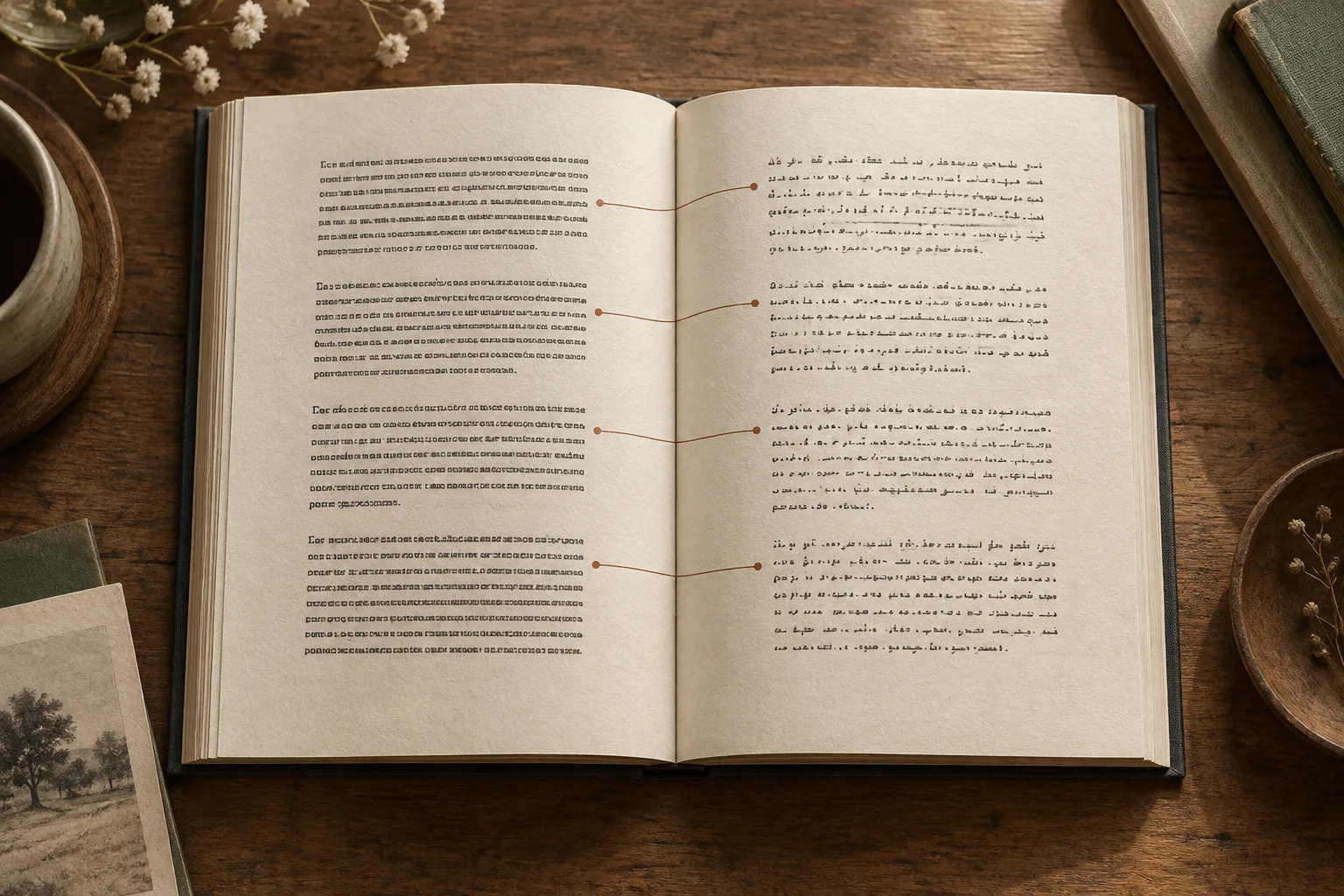
Translation-only output is simpler for uninterrupted reading. Bilingual output places each original passage before its translation, which can help when studying or checking meaning. It is a sequential arrangement, not necessarily parallel columns.
Keep both files in a clearly named folder or your reader's library. Use PDF Craft Desktop if it suits your reading and organization, or open the download in your preferred EPUB reader. Online translation and download do not require installing Desktop.
When you run into tricky passages, note the chapter and key locator words. If you do not know the source language, check standard words in reliable dictionaries and consult readers who know the original language for core nuances. Comparing multiple translation tools can offer different phrasing ideas and help unpack complex sentence structures.
Read with the right level of confidence
For leisure reading, a flagged awkward line may be acceptable. A quotation, technical instruction, or claim you plan to repeat needs stronger verification. Do not quietly treat the reading edition as an official translation.
Keep distribution separate from reading. Before sharing or publishing translated text, confirm the relevant permissions and arrange appropriate review. See AI versus human book translation for how the goal changes the process, and bilingual reading for choosing a comfortable way to compare the two languages.